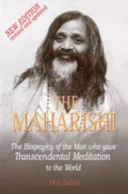
The Maharishi
 78
78

The Maharishi
Paul Mason’s The Maharishi offers a compelling, if at times dense, examination of the spiritual leader and his global impact. Rather than simply chronicling events, Mason attempts to dissect the philosophical architecture supporting the Maharishi's teachings, a commendable endeavor. The book's strength lies in its detailed exploration of concepts like pure consciousness and the mechanics of Transcendental Meditation, particularly how these were articulated for Western audiences. However, the narrative occasionally falters, becoming overly academic and losing the thread of the Maharishi's personal influence. A passage discussing the propagation of Vedic science in the late 20th century, for example, is meticulously researched but dry. Despite this, Mason successfully positions the Maharishi not just as a guru, but as a significant proponent of a particular philosophical synthesis. It is a solid scholarly entry for those seeking to understand the intellectual framework behind a major spiritual movement.
📝 Description
78
Paul Mason's 2005 biography, The Maharishi, examines the spiritual path and influence of a significant figure.
Published in 2005, Paul Mason's The Maharishi moves beyond simple biography to analyze the philosophical foundations and practical aspects of the spiritual teachings associated with Maharishi Mahesh Yogi. The book considers his impact on spiritual thought and practice, aiming for a balanced view of his global influence.
This work is for readers interested in the connections between spirituality, philosophy, and biography. It will especially appeal to those who study Eastern religious traditions and figures who introduced these ideas to the West. Students of comparative religion, the philosophy of religion, and those seeking to understand modern spiritual movements will find its content valuable. It addresses the serious inquirer rather than the casual reader.
The Maharishi entered a world where Eastern spiritual practices, particularly those disseminated by figures like Maharishi Mahesh Yogi through Transcendental Meditation, had gained significant traction following the counterculture movements. Mason's book situates these developments within the broader Western reception of Eastern mysticism and philosophy. This period saw growing academic and public interest in yoga, meditation, and non-dual traditions.
💡 Why Read This Book?
• Gain a nuanced understanding of the philosophical underpinnings of Transcendental Meditation, moving beyond superficial practice to grasp the Advaita Vedanta concepts Mason explicates, particularly concerning the nature of consciousness. • Appreciate the historical context of Eastern spirituality's reception in the West, specifically Mason's analysis of the 2005 publication era and its place in the ongoing dialogue about Vedic science. • Explore the practical application of meditation as presented by the Maharishi, as detailed in Mason's work, understanding its potential role in personal and collective well-being.
⭐ Reader Reviews
Honest opinions from readers who have explored this book.
❓ Frequently Asked Questions
What is the primary focus of Paul Mason's The Maharishi?
The book primarily focuses on the life, teachings, and philosophical underpinnings of Maharishi Mahesh Yogi, examining his influence on spiritual thought and practice, particularly his articulation of Advaita Vedanta for a global audience.
When was The Maharishi first published?
The Maharishi by Paul Mason was first published on January 1, 2005.
What philosophical tradition does The Maharishi draw from?
The work draws heavily from Advaita Vedanta, an influential school of Hindu philosophy that emphasizes the oneness of reality, and explores how these principles were adapted and presented by Maharishi Mahesh Yogi.
Is The Maharishi suitable for beginners in esotericism?
While accessible, the book is more suited for serious inquirers and students of comparative religion or philosophy of religion due to its detailed analysis of concepts and historical context.
Does the book discuss Transcendental Meditation?
Yes, the book delves into Transcendental Meditation, examining its mechanics and the philosophical concepts, such as pure consciousness, that underpin the practice as taught by Maharishi Mahesh Yogi.
What is the author's approach to the subject?
Paul Mason approaches the subject with a scholarly and analytical perspective, aiming to dissect the philosophical architecture and practical applications of the Maharishi's teachings rather than offering a simple biography.
🔮 Key Themes & Symbolism
Consciousness and Self-Realization
The Maharishi's teachings, as explored by Mason, place immense emphasis on the nature of pure consciousness. The book details how the Maharishi presented meditation, particularly Transcendental Meditation, as a direct means to access this state, leading to self-realization. This involves understanding consciousness not merely as an awareness of objects, but as the fundamental ground of being itself, a core tenet of Advaita Vedanta that Mason unpacks. The work examines the mechanics and purported benefits of this approach to spiritual development.
Advaita Vedanta in Modern Context
A significant theme is the adaptation and dissemination of Advaita Vedanta by Maharishi Mahesh Yogi. Mason analyzes how the ancient non-dualistic philosophy, which posits the unity of the individual soul (Atman) and the ultimate reality (Brahman), was translated into accessible practices for a global audience. The book scrutinizes the strategies employed to introduce concepts like 'Vedic science' to Western societies and the philosophical dialogues that ensued from this cross-cultural exchange.
Meditation as a Transformative Practice
The book extensively discusses meditation not just as a relaxation technique but as a profound tool for transformation. Mason explores the Maharishi's framework for how regular meditative practice can lead to increased clarity, reduced stress, and enhanced creativity, ultimately fostering inner peace and societal harmony. The work examines the systematic approach to meditation taught, highlighting its role in unlocking human potential according to the Maharishi's philosophy.
The Global Spread of Spiritual Ideas
The Maharishi chronicles the remarkable global journey of a spiritual leader and his teachings. Mason situates the Maharishi's work within the broader context of the late 20th and early 21st centuries, a period characterized by the increasing globalization of spiritual and philosophical ideas. The book touches upon the reception of these teachings in various cultures and the challenges and successes encountered in establishing a worldwide spiritual movement.
💬 Memorable Quotes
Direct passages from the work, attributed to the author.
“Consciousness is the field of all possibilities.”
— This statement captures the Maharishi's view that pure consciousness is not merely a passive state of awareness but an active, creative potential from which all phenomena arise. It implies that by accessing this fundamental level, one can tap into limitless possibilities for growth and understanding.
“The goal is to live life at its highest potential.”
— This reflects the practical outcome the Maharishi aimed for his followers to achieve. It suggests that spiritual practice isn't solely about abstract enlightenment but about enhancing one's ability to function effectively, joyfully, and fully in all aspects of daily life.
“Meditation is the art of developing awareness.”
— This highlights the core function of the meditative techniques taught by the Maharishi. It frames meditation not as an escape from reality, but as a method for sharpening one's perception and deepening one's understanding of oneself and the world.
“Vedic science offers a technology for total health.”
— This interpretation speaks to the Maharishi's integration of ancient Indian knowledge with a modern, scientific framework. It suggests that the principles derived from the Vedas are not merely philosophical but provide practical, systematic methods for achieving holistic well-being.
💡 Key Ideas
Editorial paraphrase of the work's core concepts — not direct quotes.
The universe is an expression of consciousness.
This paraphrase points to the non-dualistic underpinnings of the Maharishi's philosophy, aligning with Advaita Vedanta. It posits that the perceived external reality is not separate from the fundamental consciousness that observes it, suggesting an intrinsic unity.
🌙 Esoteric Significance
Tradition
The Maharishi's teachings, as presented by Mason, are deeply rooted in the Advaita Vedanta tradition of Hinduism. This school emphasizes non-dualism, the concept that reality is ultimately a single, undifferentiated consciousness. Mason's work explores how Maharishi Mahesh Yogi adapted these ancient philosophical tenets, particularly the concept of Brahman and Atman, into practical techniques like Transcendental Meditation, making them accessible to a global, often secular, audience.
Symbolism
Central to the Maharishi's system is the concept of 'pure consciousness' itself, often symbolized by silence or the unbound state beyond thought. The mantra, a key element of Transcendental Meditation, functions as a symbol of focus, a tool to direct the mind inward toward this silent awareness. The broader framework of Vedic science, invoked by the Maharishi, symbolizes a holistic worldview where spiritual principles are seen as fundamental laws governing the universe and human well-being.
Modern Relevance
Contemporary thinkers and practitioners in fields ranging from positive psychology to consciousness studies continue to draw from the Maharishi's framework. Schools of mindfulness and meditation, while often distinct, echo the emphasis on cultivating inner awareness and its potential benefits for mental health and personal development. The ongoing interest in the mind-body connection and holistic wellness practices demonstrates the enduring relevance of the principles Mason explores.
👥 Who Should Read This Book
• Students of comparative religion and philosophy: Those seeking to understand the historical and philosophical context of modern spiritual movements and the dissemination of Eastern thought in the West. • Practitioners of meditation: Individuals interested in a deeper, more philosophical understanding of meditation techniques, particularly Transcendental Meditation, and their theoretical basis. • Researchers of consciousness studies: Scholars and individuals curious about the philosophical frameworks that explore the nature of consciousness and its potential for human development.
📜 Historical Context
Published in 2005, Paul Mason's The Maharishi emerged during a period of intense global interest in Eastern spiritual traditions, a trend significantly amplified by figures like Maharishi Mahesh Yogi himself since the 1960s. The book engages with the legacy of Transcendental Meditation and the broader movement to introduce Vedic philosophy and practices to the West. This era saw continued academic scrutiny and popular adoption of yoga, meditation, and mindfulness, often framed within discussions of mental health, stress reduction, and alternative spirituality. Mason’s work contributes to this discourse by providing a detailed analysis of the philosophical underpinnings, situating the Maharishi's teachings within the context of Advaita Vedanta. This was a time when figures like Deepak Chopra were also popularizing similar concepts, creating a rich intellectual environment where Mason's scholarly examination found its place, contrasting with more popular interpretations.
📔 Journal Prompts
The concept of pure consciousness as the field of all possibilities.
The Maharishi's approach to integrating Vedic science with modern life.
The role of the mantra in directing awareness inward.
The practical application of non-dualistic philosophy in daily actions.
The balance between structured spiritual practice and spontaneous realization.
🗂️ Glossary
Advaita Vedanta
A major school of Hindu philosophy emphasizing the non-dual nature of reality, positing that the individual soul (Atman) is identical with the ultimate reality (Brahman).
Brahman
In Vedanta, the ultimate, unchanging reality that is the source and sustainer of all existence; the Absolute.
Atman
The individual soul or self, which in Advaita Vedanta is considered to be identical with Brahman.
Transcendental Meditation (TM)
A specific form of mantra meditation introduced by Maharishi Mahesh Yogi, designed to allow the mind to settle into a state of deep rest and inner wakefulness.
Mantra
A sacred sound, word, or phrase, often in Sanskrit, used in meditation or spiritual practice to focus the mind and invoke specific energies or states of consciousness.
Vedic Science
A term used by Maharishi Mahesh Yogi to describe the knowledge and principles derived from the ancient Indian Vedas, presented as a comprehensive science of consciousness and natural law.
Pure Consciousness
The state of awareness devoid of any object or thought, considered the fundamental ground of being in Advaita Vedanta and the goal of deep meditation.