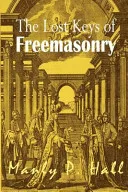
The Lost Keys of Freemasonry
 84
84

The Lost Keys of Freemasonry
Manly P. Hall's "The Lost Keys of Freemasonry" presents a compelling, albeit highly subjective, interpretation of Masonic symbolism. Hall bypasses historical Masonic lodges to focus on their allegorical weight, a choice that is both its strength and its potential limitation. His assertion that the "true secrets" are internal philosophical realizations is particularly striking, especially when he discusses the concept of the "divine spark" residing within each person. However, the work can feel somewhat detached from the actual practice and historical context of Freemasonry as a fraternal organization, focusing almost exclusively on its esoteric potential. While Hall's prose is accessible, the lack of engagement with any specific Masonic Grand Lodge or historical debate of the era (circa 1923) leaves the reader with a purely philosophical, rather than historical or practical, framework. It serves as a potent primer for understanding esoteric philosophy through a Masonic lens, but less so as a guide to the fraternity itself.
📝 Description
84
Manly P. Hall published 'The Lost Keys of Freemasonry' in 1923, not 2014.
Manly P. Hall's "The Lost Keys of Freemasonry" interprets Masonic tenets not as historical facts but as allegorical guides to personal transformation. Hall argues that the true secrets of Freemasonry are philosophical and spiritual principles, accessible through introspection. The book frames Freemasonry as a symbolic system designed to help individuals unlock their inner potential.
This work is for those interested in a philosophical perspective on Freemasonry, moving beyond its organizational aspects. It will appeal to students of esotericism, occultism, and spiritual seekers interested in the symbolic language of older traditions. Readers curious about the metaphysical foundations of Western mystery schools, regardless of their Masonic affiliation, will find Hall's ideas engaging.
Published in 1923, Hall's work emerged during a period of increased interest in occultism and comparative religion. It reflects early 20th-century intellectual currents that saw figures like Aleister Crowley and Annie Besant exploring and reinterpreting ancient traditions. Hall drew on Masonic symbolism, aligning his interpretations with a broader esoteric revival that sought connections between various spiritual systems.
💡 Why Read This Book?
• You will gain a unique perspective on how Masonic symbols, such as the Square and Compasses, can be interpreted as tools for inner psychological and spiritual development, a viewpoint not commonly found in secular interpretations of the symbols. • You will understand Hall's concept of the "divine spark" and how he links it to the alchemical process of self-transformation, offering a distinct metaphysical framework for personal growth beyond standard self-help literature. • You will explore the idea of the "lost keys" as internal states of consciousness, providing a specific esoteric interpretation of unlocking potential that moves beyond external achievement and into subjective experience, as detailed in his analysis of Masonic allegory.
⭐ Reader Reviews
Honest opinions from readers who have explored this book.
❓ Frequently Asked Questions
Is 'The Lost Keys of Freemasonry' a guide to joining the Masonic fraternity?
No, Manly Hall's "The Lost Keys of Freemasonry" is an allegorical and philosophical interpretation of Masonic symbolism. It focuses on the esoteric and spiritual meanings rather than providing practical instructions for membership or detailing the historical structure of Masonic lodges.
What is the main 'secret' Manly Hall claims Freemasonry holds?
Hall proposes that the primary 'secret' of Freemasonry is not a hidden ritual but the realization of the divine potential within oneself, often referred to as the 'divine spark.' He interprets Masonic symbols as keys to unlocking this inner spiritual awareness.
What year was 'The Lost Keys of Freemasonry' originally published?
While the edition provided is from 2014, Manly P. Hall's "The Lost Keys of Freemasonry" was originally published much earlier, with its first known publication appearing around 1923, reflecting the esoteric revival of that period.
Does the book require prior knowledge of Freemasonry?
Prior formal knowledge of Freemasonry is not strictly required, as Hall explains the symbols allegorically. However, a basic familiarity with esoteric concepts or a willingness to engage with symbolic language will enhance the reader's comprehension of his interpretations.
What esoteric tradition does Hall draw from in this book?
Hall synthesizes elements from various esoteric traditions, including Hermeticism, Neoplatonism, and Rosicrucianism, to interpret Masonic symbolism. He views Freemasonry as a modern manifestation of ancient mystery schools and their wisdom teachings.
Can someone who is not a Freemason benefit from reading this book?
Absolutely. Hall presents Freemasonry as a universal symbolic language for spiritual awakening. Non-Masons can find profound insights into self-understanding, consciousness, and the nature of reality through his allegorical readings of Masonic tenets.
🔮 Key Themes & Symbolism
Inner Alchemical Transformation
Hall reframes Masonic rituals not as external actions but as symbolic representations of an internal alchemical process. The "lost keys" are interpreted as states of consciousness one must attain to achieve spiritual enlightenment. He discusses how the aspirant works upon themselves, much like an alchemist refines base metals into gold, transforming the lower self into a higher, illuminated being. This internal alchemy is presented as the core purpose behind the symbolic architecture of the fraternity, aiming for the resurrection of the divine potential within.
The Divine Spark Within
A central concept is the inherent divinity residing within every human being, referred to as the "divine spark." Hall posits that Freemasonry's true teachings are about recognizing and cultivating this spark. The work explores how the aspirant's journey through symbolic degrees mirrors the process of awakening this inner light. It’s a call to self-discovery, urging the reader to look inward for the answers and power that the external world often fails to provide, connecting the individual to the Universal Architect.
Symbolism as Universal Language
Hall treats Masonic symbols – such as the Square, Compasses, and the Blazing Star – as a universal language designed to convey profound metaphysical truths. He argues that these symbols are not arbitrary but are rooted in ancient wisdom traditions and natural laws. The book deciphers these symbols, revealing their deeper psychological and spiritual meanings, suggesting that their power lies in their ability to bypass the rational mind and communicate directly to the intuition, facilitating a higher understanding.
The Lodge as Microcosm
The Masonic lodge itself is presented as a symbolic representation of the cosmos and the human being. Hall interprets the layout and rituals within the lodge as mirroring the macrocosm (universe) and the microcosm (individual). This concept allows him to draw parallels between the seeker's journey within the lodge and the broader quest for understanding one's place in the universe, emphasizing the interconnectedness of all things and the potential for realizing cosmic truths through personal experience.
💬 Memorable Quotes
Direct passages from the work, attributed to the author.
“The secrets of Masonry are not secrets at all.”
— This provocative statement suggests that the true essence of Freemasonry lies not in hidden knowledge or exclusive rituals, but in fundamental truths about human existence and consciousness that are universally accessible, albeit often overlooked.
“The greatest secret of Masonry is the mystery of the human soul.”
— Hall directs the reader's attention inward, positing that the ultimate quest of Freemasonry is the exploration and understanding of one's own consciousness and spiritual identity, rather than external doctrines or historical facts.
“The symbols are keys to unlock the doors of the mind.”
— This highlights Hall's view of Masonic symbolism as a pedagogical tool. The symbols are not mere decorations but are designed to stimulate contemplation and guide the aspirant towards higher states of awareness and deeper self-knowledge.
“The true Mason is the one who masters himself.”
— This interpretation emphasizes self-discipline and personal growth as the paramount goals of Masonic endeavor. It suggests that external degrees and rituals are secondary to the internal work of perfecting one's character and understanding.
💡 Key Ideas
Editorial paraphrase of the work's core concepts — not direct quotes.
Man is a divine spark clothed in a mortal body.
This quote expresses Hall's core belief that human beings possess an inherent, eternal spiritual essence. The purpose of the esoteric path, as he interprets it through Freemasonry, is to awaken and realize this divine nature obscured by physical limitations.
🌙 Esoteric Significance
Tradition
Hall's work is deeply rooted in the Western Esoteric Tradition, particularly drawing from Hermeticism, Neoplatonism, and Rosicrucianism. He interprets Freemasonry as a modern continuation of the ancient mystery schools, acting as a vehicle for transmitting Gnostic and Hermetic principles of self-knowledge and spiritual regeneration. The book departs from purely historical Masonic accounts by emphasizing the symbolic and allegorical dimensions, aligning it with esotericist interpretations that view external forms as conduits for inner spiritual realization.
Symbolism
Key symbols Hall dissects include the Rough and Perfect Ashlars, representing the unrefined and perfected states of the human character, and the Blazing Star, symbolizing the divine spark or the human soul's connection to the celestial. He interprets the Square and Compasses not just as tools for building but as regulators of moral and spiritual conduct – the Square for earthly actions and the Compasses for defining the boundaries of one's inner spiritual life and aspirations.
Modern Relevance
Contemporary esoteric practitioners, particularly those interested in comparative symbolism and the philosophical underpinnings of Western mystery traditions, continue to engage with Hall's interpretations. His work informs modern Rosicrucian studies, Hermetic Qabalah practitioners, and those exploring the psychological dimensions of ritual and symbolism. Thinkers and groups focused on consciousness studies and the integration of ancient wisdom into modern life often cite Hall as a key interpreter of esoteric Masonry's potential for personal evolution.
👥 Who Should Read This Book
• Students of Western Esotericism: Individuals exploring Hermeticism, Rosicrucianism, or Gnosticism will find Hall's allegorical approach to Masonic symbolism a valuable lens for understanding interconnected esoteric concepts. • Seekers of Spiritual Philosophy: Those interested in the philosophical and metaphysical dimensions of life, who may not have a Masonic background but are drawn to symbolic interpretation and the idea of inner transformation, will find resonance. • Comparative Religion Scholars: Researchers examining the evolution and cross-pollination of religious and mystical ideas within Western culture will find Hall's synthesis of Masonic lore with broader esoteric traditions insightful.
📜 Historical Context
Manly P. Hall's "The Lost Keys of Freemasonry" emerged in the early 1920s, a period marked by a fervent resurgence of interest in esoteric philosophies, occultism, and comparative religion in the Western world. This era saw the proliferation of spiritual movements like Theosophy, Anthroposophy, and various Rosicrucian revivals, all seeking to reinterpret ancient wisdom for a modern audience. Hall's work fits squarely within this intellectual milieu, drawing heavily on Hermeticism and Neoplatonism to offer a symbolic reading of Masonic traditions. While figures like Aleister Crowley were exploring their own paths of ceremonial magic, Hall focused on presenting a more philosophical and accessible esoteric interpretation of existing fraternal orders. The book was published around 1923, at a time when Masonic scholarship was diverse, ranging from historical analyses to more mystical interpretations, but Hall's allegorical approach distinguished itself by prioritizing inner spiritual development over historical or ritualistic specifics.
📔 Journal Prompts
The concept of the 'divine spark' within your own being.
Interpreting the Square and Compasses as personal ethical guidelines.
Reflecting on the lodge as a microcosm of your inner world.
Identifying personal 'lost keys' to unlocking potential.
The process of self-perfection mirrored in alchemical symbolism.
🗂️ Glossary
Divine Spark
A concept suggesting that each human possesses an inherent, eternal, and divine essence or soul, often obscured by the material existence. Hall interprets Masonic teachings as aiming to awaken and realize this inner divinity.
Allegory
The use of symbols and symbolic narratives to convey deeper spiritual, moral, or psychological meanings. Hall employs allegory extensively to interpret Masonic rituals and symbols beyond their literal or historical context.
Microcosm
The idea that the human being or a smaller system reflects the structure and principles of the larger universe (macrocosm). Hall applies this to the Masonic lodge and the individual's spiritual journey.
Hermeticism
A philosophical and religious tradition based on writings attributed to Hermes Trismegistus, emphasizing spiritual knowledge, the interconnectedness of all things, and the potential for human deification.
Neoplatonism
A philosophical system derived from Plato, emphasizing the existence of a supreme, transcendent 'One' from which all reality emanates, and the soul's journey back to this ultimate source.
Ashlars
In Freemasonry, the Rough Ashlar (unworked stone) symbolizes the unrefined individual, while the Perfect Ashlar (worked stone) represents the perfected individual, shaped by education and experience according to moral principles.
Universal Architect
A term used in esoteric and Masonic contexts to refer to the supreme creative principle or God, understood in a way that transcends specific religious dogma, emphasizing divine order and creation.