I Think, I Am!
 76
76

I Think, I Am!
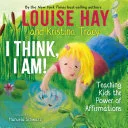
Louise Hay's assertion that "Your thoughts create your life!" is distilled here for an audience as young as possible. Kristina Tracy's adaptation of Hay's core message in "I Think, I Am!" is commendable for its simplicity. The illustrations, while not explicitly detailed here, are crucial to the book's success in conveying abstract concepts to children. A notable strength is its directness; it doesn't shy away from the idea of personal responsibility for one's internal state. However, the inherent challenge lies in fully grasping the depth of Hay's philosophy without the nuances she provided in her adult works. For instance, the book presents affirmations as straightforward tools, whereas Hay often linked them to deeper emotional processing and forgiveness. Ultimately, this adaptation serves as a vital, albeit introductory, spark for cultivating a positive mindset from an early age.
📝 Description
76
First published in 2020, 'I Think, I Am!' adapts Louise Hay's self-empowerment teachings for young readers.
This book introduces children to the idea that their thoughts shape their reality. Louise Hay's core message, adapted by Kristina Tracy, emphasizes the power of internal dialogue. It teaches young minds how to use positive affirmations to influence their experiences and build self-esteem. The book explains that consciously choosing positive statements can help reprogram subconscious beliefs, leading to a more empowered outlook.
It is designed for children but also serves as a guide for parents, educators, and caregivers. The goal is to provide an early understanding of mental and emotional agency. By focusing on positive psychology and self-talk, the book aims to equip children with tools for mindfulness and cognitive reframing. It illustrates the connection between internal thought patterns and external life events.
The teachings in 'I Think, I Am!' originate from Louise Hay's work within the New Thought movement. This philosophical tradition, prominent since the late 19th century, posits that one's thoughts and beliefs directly influence material reality. Hay, active from the 1970s, was a significant proponent of the mind-body connection, advocating for affirmations as a means of healing and personal transformation. Her approach shares common ground with earlier New Thought writers like Florence Scovel Shinn, who also explored the practical application of spiritual principles for achieving desired outcomes.
💡 Why Read This Book?
• Understand the core principle of Louise Hay's philosophy that thoughts shape reality, a concept she championed for decades, enabling a proactive approach to personal experience. • Learn the practical difference between negative self-talk and constructive affirmations, a distinction clearly demonstrated within the book's simple text and illustrations. • Grasp the foundational idea that children possess agency over their thoughts and words, empowering them to influence their own lives from a young age, as taught by Hay.
⭐ Reader Reviews
Honest opinions from readers who have explored this book.
❓ Frequently Asked Questions
What is the main message of "I Think, I Am!"?
The book's central message, echoing Louise Hay's teachings, is that your thoughts create your life. It teaches children that they have control over their thoughts and words, which in turn influences their experiences.
Who is Louise Hay and why is her message important?
Louise Hay was a pioneering self-help author and motivational speaker who taught for over 27 years about the power of positive thinking and affirmations for healing and well-being.
How does "I Think, I Am!" explain the difference between positive and negative thoughts?
The book uses simple text and fun illustrations to demonstrate how negative thoughts can lead to unwanted outcomes, while positive affirmations can be used to change one's mindset and create better experiences.
Is this book suitable for very young children?
Yes, it is specifically designed for children to understand the powerful idea that they control their thoughts and words, making complex psychological concepts accessible to them.
What is the publication history of "I Think, I Am!"?
While Louise Hay taught these principles for decades, "I Think, I Am!" was first published on September 8, 2020, adapted by Kristina Tracy to bring Hay's message to a younger audience.
What is an affirmation according to this book?
An affirmation is presented as a positive statement that children can use to reprogram their minds, shifting away from negative thinking and towards a more empowered outlook on their lives.
🔮 Key Themes & Symbolism
Thought as Creation
The book emphasizes the metaphysical principle that consciousness precedes manifestation. It posits that the internal field of thoughts and beliefs directly constructs the external reality experienced by the individual. This aligns with New Thought tenets, suggesting that by mastering one's thoughts, one gains mastery over their circumstances. The work aims to instill this understanding early, presenting thought not merely as a passive process but as an active force of creation.
Affirmations vs. Negativity
A core distinction is drawn between destructive negative self-talk and constructive positive affirmations. Negative thoughts are depicted as self-limiting beliefs that attract undesirable outcomes, while affirmations are presented as tools for mental reprogramming. By consciously choosing positive statements, individuals, even children, can begin to shift their subconscious programming, fostering resilience and a more optimistic worldview.
Childhood Empowerment
This work specifically targets young minds, democratizing Hay's philosophy for a younger demographic. It introduces the radical idea that children possess inherent power over their mental states and, by extension, their lives. This empowerment is framed not as an abstract concept but as a practical skill, teaching children to recognize and utilize their cognitive abilities for personal well-being and agency.
Mind-Body Connection
While simplified for children, the underlying message connects to the broader concept of the mind-body connection, a central to Hay's work. The book implies that our mental state has tangible effects on our feelings and actions. By cultivating positive thoughts, children are implicitly encouraged towards emotional regulation and a healthier relationship with their internal experiences.
💬 Memorable Quotes
Direct passages from the work, attributed to the author.
“Your thoughts create your life!”
— This is the central thesis of the book, encapsulating Louise Hay's philosophy that our internal mental landscape directly shapes our external reality and experiences.
“Learn the difference between negative thoughts and positive affirmations.”
— This highlights the book's pedagogical approach, aiming to equip young readers with the ability to identify and consciously choose constructive self-talk over detrimental mental patterns.
“Kids will find out they have control over their thoughts and words.”
— This emphasizes the theme of empowerment, teaching children that they are not passive recipients of their circumstances but active agents capable of influencing their lives through their mental and verbal expressions.
“How to make the change from negative thinking to positive thinking.”
— This points to the practical, actionable nature of the book, suggesting it offers guidance and techniques for children to actively shift their mindset towards positivity.
“Simple text demonstrate how to make the change.”
— This interpretation focuses on the book's accessible presentation, indicating that complex ideas about thought control are conveyed through straightforward language suitable for a young audience.
🌙 Esoteric Significance
Tradition
Hay's philosophy is deeply rooted in the Western Esoteric tradition, particularly within the New Thought and Christian Science movements. These traditions emphasize the power of the mind and spirit to influence physical reality, drawing loosely from Hermetic principles of "as above, so below" and the Gnostic idea of inner divine potential. It departs from stricter Kabbalistic or Theosophical frameworks by focusing intensely on direct personal affirmation rather than complex symbolic systems or cosmic hierarchies.
Symbolism
While "I Think, I Am!" simplifies Hay's message, the underlying symbolism relates to the power of the spoken word and the internal 'dialogue' as a form of creation. The 'I Am' construct itself is a powerful affirmation, echoing divine pronouncements in various mystical texts, signifying pure being and creative potential. The contrast between 'thinking' (conscious mind) and 'being' (manifestation) implicitly highlights the bridge Hay believed affirmations could build.
Modern Relevance
Louise Hay's work continues to influence modern self-help, positive psychology, and manifestation coaching. Contemporary figures and schools of thought, such as the Law of Attraction popularized by "The Secret," owe a clear debt to Hay's foundational principles. Her emphasis on affirmations and mental reframing is now integrated into therapeutic approaches like Cognitive Behavioral Therapy (CBT) and mindfulness-based stress reduction (MBSR), demonstrating a continued, albeit sometimes secularized, resonance.
👥 Who Should Read This Book
• Parents and educators seeking to instill foundational concepts of self-esteem and mental agency in children, providing them with tools for emotional regulation from an early age. • Young readers interested in understanding how their thoughts and words impact their experiences, offering a simple entry point into positive psychology and self-empowerment. • Individuals new to Louise Hay's philosophy who want a simplified, child-friendly introduction to her core message about the power of thought.
📜 Historical Context
Louise Hay's teachings, popularized through works like "You Can Heal Your Life" (1984), emerged from the fertile ground of the New Thought movement, which flourished in the late 19th and early 20th centuries. Thinkers like Phineas Quimby and Emma Curtis Hopkins laid the groundwork for concepts of mind-over-matter and spiritual healing. Hay's unique contribution was synthesizing these ideas with practical affirmations and a focus on self-love, particularly resonating in the self-help boom of the late 20th century. While her work was widely embraced, it also faced scrutiny from more traditional psychological and medical communities, who sometimes viewed its emphasis on mental causation as overly simplistic or even dismissive of biological factors. Hay's consistent message, however, found a vast audience, and her influence is evident in contemporary wellness and mindfulness practices. The adaptation "I Think, I Am!" (2020) reflects the ongoing relevance of these ideas, now being introduced to a new generation.
📔 Journal Prompts
Positive affirmations: How can I use them to feel better about myself?
The concept of 'thoughts create your life': What is one experience that this idea helps me understand?
Identifying negative thoughts: What is a common negative thought I have, and how can I rephrase it positively?
My words and my life: How can changing what I say change what happens?
The power of 'I Am': What positive quality do I want to affirm about myself using 'I Am'?
🗂️ Glossary
Affirmation
A positive statement used to challenge and overcome self-sabotaging and negative thoughts. It's a tool for reprogramming the mind towards a desired outcome or belief.
Thoughts
The mental activity of forming ideas, opinions, or beliefs. In this context, thoughts are presented as powerful forces that shape one's reality and experiences.
Negative Thoughts
Mental patterns characterized by criticism, doubt, fear, or self-limitation. The book suggests these can lead to undesirable outcomes if not addressed.
Positive Thinking
A mental attitude focused on optimism, constructive self-talk, and the belief in positive outcomes. It involves consciously choosing favorable interpretations of events.
Control
The ability to influence or direct one's own thoughts, words, and actions. The book emphasizes that children possess this inherent ability regarding their inner world.
Life Creation
The process by which an individual's thoughts, beliefs, and feelings manifest into their external circumstances and experiences.
Self-Talk
The internal dialogue one has with oneself. This can be positive or negative and significantly impacts emotions, beliefs, and actions.