The Language of Vision
 73
73

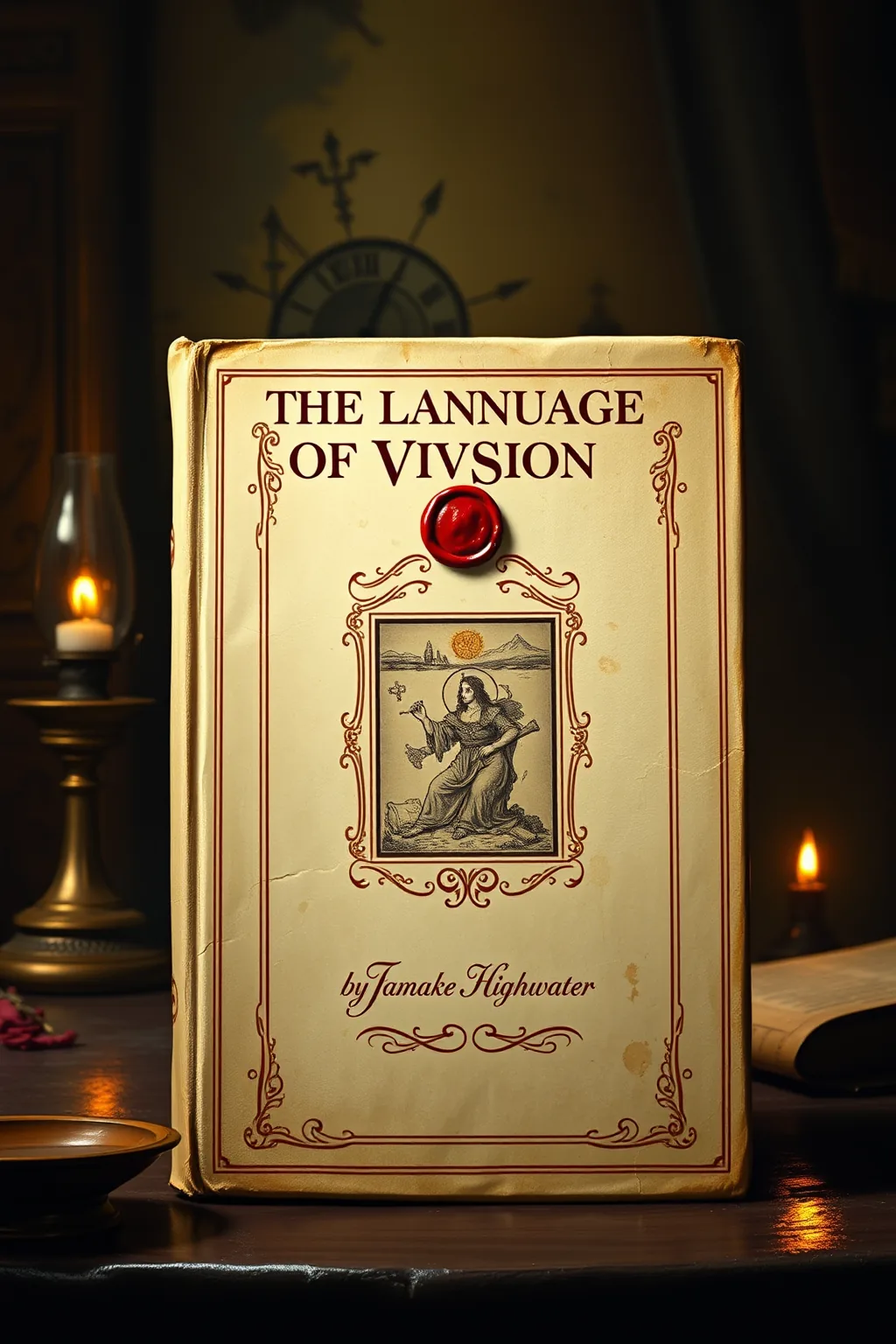
The Language of Vision
Jamake Highwater's *The Language of Vision* attempts to map the territory where perception meets meaning, a vast and often nebulous expanse. His strength lies in drawing connections between seemingly disparate visual traditions, from the petroglyphs of the American Southwest to abstract modern art. The way he links the subjective experience of seeing with the objective forms presented to the eye is compelling, particularly when discussing the concept of the 'primordial image.' However, the breadth of his ambition sometimes leads to generalizations that may not satisfy specialists in every field he touches. A notable passage explores how the circle, a ubiquitous symbol, functions across cultures to represent wholeness and the cyclical nature of existence, a point he elaborates with impressive scope. While the book offers a rich framework for understanding visual symbolism, its sweeping nature means some interpretations feel more suggestive than definitive. Highwater’s exploration of visual symbolism provides a valuable, if occasionally broad, lens through which to view human expression.
📝 Description
73
Jamake Highwater's 1994 book, The Language of Vision, examines how visual forms communicate meaning beyond the literal.
This book investigates the symbolic foundations of human perception and cultural expression. Highwater analyzes how visual elements across various traditions convey meaning that goes beyond simple representation. He traces the origins of symbolic thinking and its appearance in art, ritual, and myth. The central argument is that these visual languages are crucial for understanding consciousness itself. The work is suited for individuals interested in the convergence of art history, anthropology, psychology, and esoteric studies. It will appeal to those seeking to grasp the deeper layers of meaning within visual culture, from prehistoric cave art to contemporary iconography. Specialists in comparative mythology, semiotics, and visual studies will appreciate its interdisciplinary approach.
Published in 1994, The Language of Vision emerged as interest in visual culture and symbolic interpretation grew. Highwater engaged with figures like Carl Jung and Joseph Campbell, but he brought a unique perspective informed by his research into Indigenous American symbolism and art. The book bridges anthropological accounts of visual meaning with psychological theories of the unconscious, particularly Jung's concept of archetypes. It posits a universal grammar of perception rooted in fundamental human psychological structures.
💡 Why Read This Book?
• Gain a framework for understanding how ancient symbols, like the 'primordial image' discussed in Chapter 2, continue to inform contemporary visual culture and personal perception. • Explore Highwater's unique synthesis of Indigenous American art and Western psychological theories, offering a distinct perspective not commonly found in broader semiotics texts. • Learn to analyze visual phenomena not just as aesthetic objects but as carriers of deep, cross-cultural meaning, inspired by the book's examination of symbols from the 1994 publication era.
⭐ Reader Reviews
Honest opinions from readers who have explored this book.
❓ Frequently Asked Questions
What is Jamake Highwater's main argument in The Language of Vision?
Highwater argues that human perception is inherently symbolic and that visual forms across diverse cultures share fundamental patterns reflecting universal psychological structures and archetypes.
When was The Language of Vision first published?
The Language of Vision was first published in 1994.
Which academic fields does The Language of Vision draw upon?
The book synthesizes insights from art history, anthropology, psychology (particularly Jungian), mythology, and esoteric symbolism.
What does Highwater mean by 'primordial image'?
A 'primordial image' is a fundamental, recurring visual motif or symbol that appears across different cultures and historical periods, believed to stem from a shared human unconscious.
Is The Language of Vision considered an esoteric text?
Yes, it is classified as an esoteric text due to its exploration of symbolic meaning, archetypes, and the deeper, non-rational aspects of human consciousness and perception.
What kind of visual examples does Highwater use?
He references a wide array, including prehistoric cave art, Indigenous American iconography, religious symbols, and abstract modern art, to illustrate his theories.
🔮 Key Themes & Symbolism
Archetypal Forms in Vision
Highwater posits that universal 'archetypal forms' are embedded in our visual perception. These are not learned but are innate structures that shape how we interpret the world. The book examines how these forms manifest in various cultural expressions, suggesting a shared psychological blueprint for humanity. This concept challenges the idea that visual understanding is purely culturally determined, proposing instead a deep, innate visual grammar that connects us across time and space. The recurring motif of the circle, for instance, is presented not just as a cultural symbol but as a reflection of a fundamental perceptual and cognitive pattern.
The Semiotics of Indigenous Art
A significant portion of the book is dedicated to analyzing the symbolic language of Indigenous American art and artifacts. Highwater interprets these visual traditions not as primitive or purely decorative but as sophisticated systems of communication conveying complex cosmological and spiritual ideas. He demonstrates how elements like geometric patterns, animal figures, and landscape representations carry layers of meaning. This section is crucial for understanding his argument that these ancient visual systems offer useful insights into the nature of consciousness and symbolic thought, predating and informing Western analytical frameworks.
Perception as Active Construction
Contrary to passive viewing, Highwater frames perception as an active, interpretive process. 'The Language of Vision' explores how the mind actively constructs meaning from visual input, guided by symbolic frameworks and innate predispositions. This perspective suggests that what we 'see' is profoundly shaped by our internal symbolic world. The book encourages readers to reconsider their own act of seeing, recognizing it as a dynamic interplay between external stimuli and internal symbolic structures, a process fundamental to experiencing reality itself.
The Universal Grammar of Symbols
Highwater argues for a universal grammar underlying visual symbolism, suggesting that certain visual elements and their arrangements possess inherent meanings recognizable across diverse cultures. This 'grammar' is believed to be rooted in fundamental human psychological experiences and cognitive processes. By analyzing symbols from different traditions, he aims to reveal this underlying structure, demonstrating how visual language functions as a potent, often subconscious, force in shaping human understanding and cultural continuity. The book seeks to unlock this shared visual lexicon.
💬 Memorable Quotes
Direct passages from the work, attributed to the author.
“Ancient symbols carry the weight of collective human experience.”
— This interpretation emphasizes Highwater's view that symbols are not arbitrary signs but are deeply connected to shared human psychology and history, acting as conduits for ancestral wisdom and understanding.
“The circle represents not only the infinite but also the cyclical nature of existence.”
— This captures a specific instance of Highwater's analysis of a universal symbol, illustrating how a simple form can embody complex philosophical and cosmological concepts across different cultures.
“The patterns we see in art are reflections of the patterns within our own minds.”
— This interpretation underscores Highwater's connection between external visual forms and internal psychological structures, suggesting that art serves as a mirror to the unconscious and the fundamental workings of human thought.
💡 Key Ideas
Editorial paraphrase of the work's core concepts — not direct quotes.
The eye is not a passive receptor of light; it is an active participant in the creation of meaning.
This paraphrased concept highlights Highwater's central thesis that seeing involves interpretation and the imposition of symbolic structures by the viewer, rather than just a direct recording of external reality.
Visual language predates and often surpasses spoken language in conveying primal truths.
This paraphrased idea suggests that visual symbolism operates on a more fundamental level of human cognition, capable of communicating essential, instinctual truths that verbal language may struggle to articulate.
🌙 Esoteric Significance
Tradition
This work draws heavily from Jungian psychology, particularly its exploration of archetypes and the collective unconscious, and aligns with broader currents in esoteric thought that seek universal symbolic languages. It departs from strict adherence to specific traditions like Hermeticism or Kabbalah by focusing on a more universal, cross-cultural visual symbolism rooted in perceptual psychology. Its esoteric nature lies in its investigation of non-rational, intuitive modes of understanding and the idea that visual forms can act as direct conduits to deeper states of consciousness and spiritual truths.
Symbolism
The book frequently discusses symbols like the circle and the spiral. The circle, as explored by Highwater, often represents wholeness, the eternal, and the cyclical nature of existence, appearing in mandalas, cosmological diagrams, and even natural forms. The spiral can symbolize growth, evolution, and the journey inward or outward, found in petroglyphs and representations of cosmic forces. These symbols are presented not merely as decorative elements but as fundamental visual keys that unlock understanding of universal principles and the structure of consciousness.
Modern Relevance
Contemporary thinkers in fields ranging from Jungian psychology and archetypal studies to art therapy and visual studies continue to reference Highwater's work. His approach to understanding visual symbolism as a fundamental aspect of human cognition remains relevant for practices exploring mindfulness, semiotics, and the impact of imagery in media and culture. Modern artists and designers seeking to tap into deeper symbolic resonance also find his analysis valuable for informing their creative processes.
👥 Who Should Read This Book
• Students of comparative mythology and religious studies seeking to understand the universal patterns in visual storytelling and iconography across diverse cultures. • Art historians and critics interested in moving beyond formal analysis to explore the psychological and symbolic depths of visual works, from ancient to modern. • Individuals exploring Jungian psychology or archetypal symbolism who want to see these concepts applied concretely to the analysis of visual art and cultural expressions.
📜 Historical Context
Published in 1994, *The Language of Vision* emerged in an era increasingly focused on visual culture and interdisciplinary studies. Jamake Highwater's work built upon and engaged with the foundational ideas of Carl Jung and Joseph Campbell regarding archetypes and the collective unconscious, but critically, he infused these concepts with extensive knowledge of Indigenous American art and symbolism. This was a significant departure from earlier analyses that often marginalized non-Western visual traditions. The book arrived as semiotics and visual studies were gaining academic traction, offering a unique bridge between anthropological interpretations of symbols and psychological theories. It provided a counterpoint to purely structuralist approaches to art and symbolism, emphasizing instead the subjective and deeply rooted nature of visual meaning. While not facing overt censorship, its broad scope and synthesis of diverse fields meant it occupied a unique, sometimes challenging, position within contemporary academic discourse.
📔 Journal Prompts
The concept of the 'primordial image' and its manifestation in your personal visual landscape.
Reflect on how the 'archetypal form' of the circle appears in your daily life and its symbolic implications.
Analyze a piece of art or a cultural artifact using Highwater's framework of perception as active construction.
Consider the 'universal grammar of symbols' in relation to a specific visual motif you encounter frequently.
Explore the connection between visual symbols from Indigenous American art and their potential resonance with contemporary psychological states.
🗂️ Glossary
Archetypal Form
A fundamental, universal pattern or image that exists in the collective unconscious, shaping human perception and behavior. Highwater uses this to explain recurring visual motifs across cultures.
Collective Unconscious
A concept, popularized by Carl Jung, referring to a shared reservoir of instinctual patterns and memories common to all humanity, often expressed through myths, symbols, and dreams.
Primordial Image
A deeply ingrained, fundamental image or symbol that arises from the collective unconscious and appears repeatedly in human art, mythology, and dreams across different cultures and eras.
Semiotics
The study of signs and symbols and their interpretation. In this context, it refers to the analysis of visual signs and their meanings within cultural frameworks.
Symbolic Cognition
The mental process of understanding and using symbols to represent ideas, objects, or concepts. Highwater argues this is a fundamental aspect of human perception.
Visual Language
The system of communication through visual elements such as images, signs, and symbols. Highwater posits a universal 'grammar' to this language.
Iconography
The study and interpretation of the symbolic meaning of images and their content, particularly within religious or cultural contexts.
🔮 Readers Also Liked
Browse all →








More by Jamake Highwater
All books →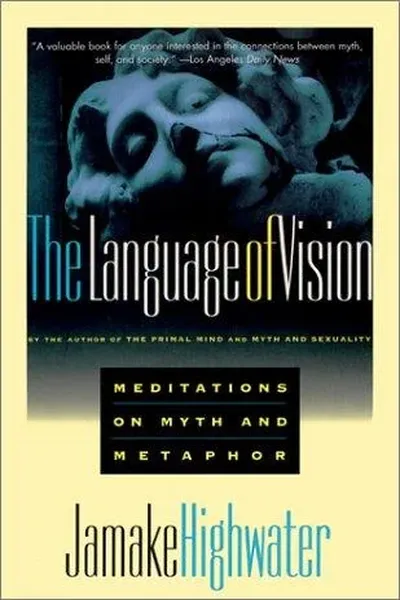
More Free Occult Philosophy Books
View all →