The Kabbalah of the Soul
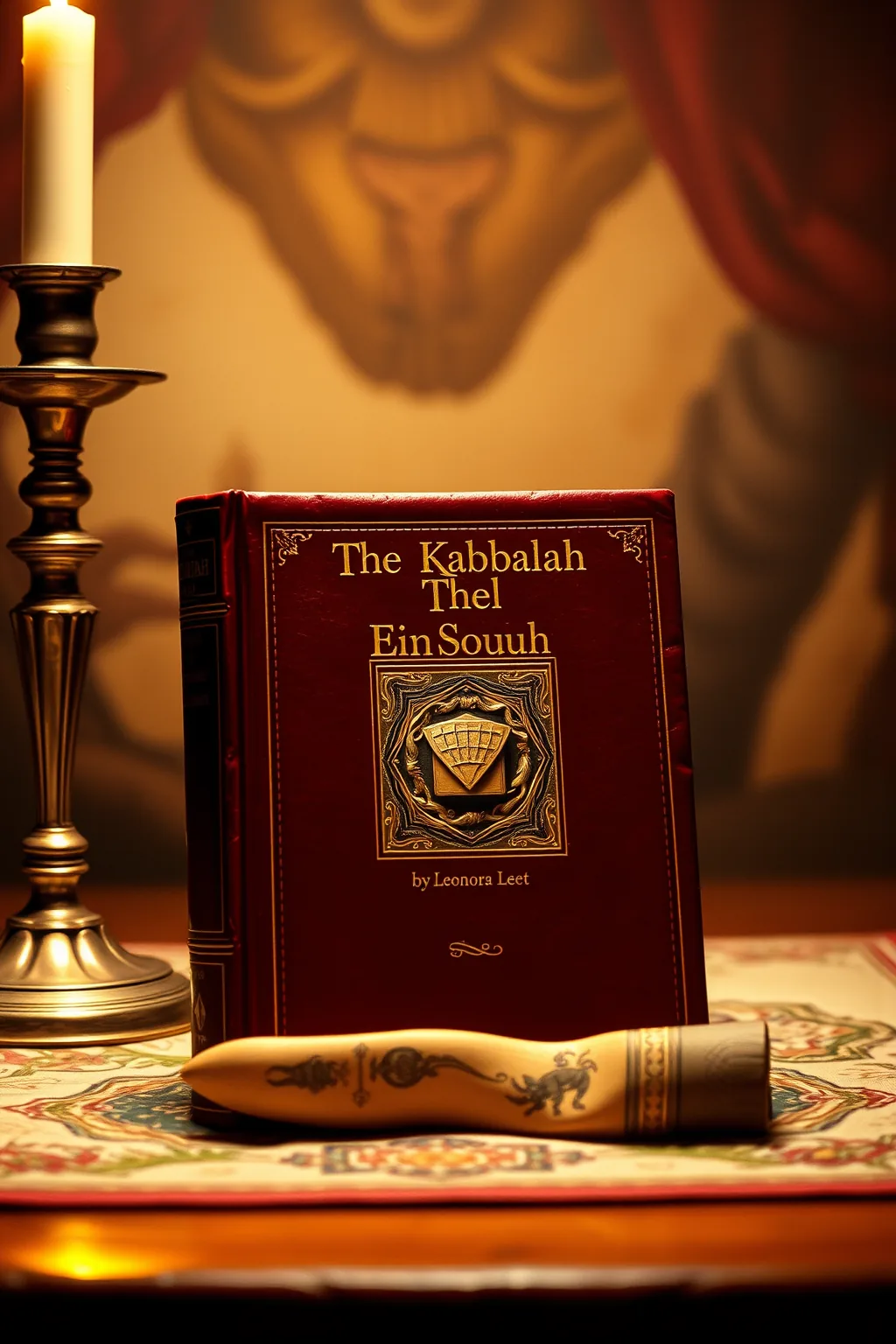
 77
77

The Kabbalah of the Soul
Leonora Leet's "The Kabbalah of the Soul" attempts an ambitious project: to reframe Kabbalistic thought as a dynamic map for consciousness evolution. The author constructs a unique framework, detailing "mechanisms" and "energetic pathways" that suggest a highly systematic approach to spiritual development. Leet's original contribution lies in presenting the soul not as a static essence, but as a developmental process navigating distinct dimensional stages. The work's strength is its intellectual rigor and its novel systematization of esoteric concepts. However, the sheer density of Leet's conceptual edifice can be daunting; the intricate terminology, while internally consistent, requires significant reader commitment. A particularly striking passage discusses the "mechanism of ascent," which posits that conscious engagement with specific internal processes can directly influence one's dimensional state. While comprehensive, the book could benefit from more explicit connections to traditional Kabbalistic texts to anchor its innovative structure. Ultimately, "The Kabbalah of the Soul" offers a compelling, if challenging, intellectual architecture for the contemplative life.
📝 Description
77
Leonora Leet's 2003 book posits the soul as a developmental process capable of traversing higher planes.
Published in 2003, Leonora Leet's "The Kabbalah of the Soul" offers a unique perspective on consciousness through Kabbalistic principles. It moves beyond traditional interpretations to build a model of spiritual ascent, aiming to chart the soul's inner structure and its capacity for evolving awareness. Leet argues that the soul is not fixed but is a dynamic process. Individuals can ascend to higher states of being by employing specific psycho-spiritual methods.
This work is for serious students of esoteric philosophy, especially those interested in Kabbalah, consciousness studies, and comparative mysticism. It suits readers who prefer an intellectual framework for their spiritual pursuits over purely devotional or ritualistic approaches. Those who appreciate detailed conceptual mapping and can engage with complex symbolic systems will find this book a valuable resource for understanding the inner life and its potential for growth.
Emerging in the early 21st century, "The Kabbalah of the Soul" arrived during a resurgence of interest in Western esotericism. It follows the groundwork laid by scholars like Gershom Scholem. Leet's approach creates a new interpretive system, distinct from solely relying on texts like the Zohar or Sefer Yetzirah. The book reflects a broader trend in esoteric literature of the period that sought to unify various mystical traditions and psycho-spiritual theories into cohesive systems for personal transformation.
💡 Why Read This Book?
• Gain a structured understanding of the soul's potential for growth, as detailed by Leet's "mechanism of ascent" concept, allowing for intentional spiritual development beyond abstract notions. • Explore the concept of "energetic pathways" within the soul's architecture, providing a concrete model for how consciousness shifts between states, as outlined in the book's early chapters. • Comprehend the soul's journey through "dimensional stages," offering a unique Kabbalistic framework for personal transformation that moves beyond passive spiritual experience.
⭐ Reader Reviews
Honest opinions from readers who have explored this book.
❓ Frequently Asked Questions
What is the primary focus of Leonora Leet's "The Kabbalah of the Soul"?
The book focuses on constructing a new framework for understanding how the human soul can achieve higher dimensions of consciousness, drawing on Kabbalistic principles and presenting a dynamic model of spiritual ascent.
When was "The Kabbalah of the Soul" first published?
The book was first published on March 25, 2003.
Does the book explain traditional Kabbalistic texts like the Zohar?
While drawing on Kabbalistic principles, "The Kabbalah of the Soul" primarily focuses on Leet's unique interpretive framework for consciousness evolution, rather than providing a textual analysis of traditional works like the Zohar.
Who is Leonora Leet?
Leonora Leet is an author known for her work in esoteric philosophy, particularly her systematic approach to understanding the soul and consciousness through frameworks inspired by Kabbalah.
What kind of reader would benefit most from "The Kabbalah of the Soul"?
Serious students of esoteric philosophy, consciousness studies, and comparative mysticism who seek an intellectual and structured model for spiritual development would find this book particularly valuable.
What is the "mechanism of ascent" as described in the book?
The "mechanism of ascent" is a core concept in Leet's work, describing the psycho-spiritual processes and energetic pathways through which the soul can intentionally evolve and attain higher states of consciousness.
🔮 Key Themes & Symbolism
Soul's Dimensional Ascent
Leet posits that the soul is not static but possesses the capacity to ascend through various "dimensional stages." This ascent is not merely passive experience but an active process driven by specific internal "mechanisms." The book details how understanding these mechanisms, which involve the manipulation of "energetic pathways," allows an individual to consciously navigate their spiritual evolution. This framework offers a systematic approach to expanding consciousness, moving beyond traditional notions of spiritual attainment towards a more architected and deliberate path of development.
Kabbalistic Framework for Consciousness
The work reinterprets Kabbalistic principles to serve as a blueprint for psychological and spiritual transformation. It moves beyond historical or theological interpretations to focus on the soul's internal mechanics. Leet's "Kabbalah of the Soul" establishes a unique systematization, presenting concepts like the "soul's architecture" and "energetic pathways" as functional elements within a larger psycho-spiritual engine. This approach seeks to bridge ancient wisdom with modern understandings of consciousness, offering a practical, albeit complex, methodology for inner work.
The Energetic Pathways of Awareness
Central to Leet's model are the "energetic pathways" that facilitate movement between states of consciousness. These pathways are presented as the conduits through which the soul's ascent is made possible. The book explores how these pathways can be understood, activated, and navigated, forming a crucial component of the "mechanism of ascent." This concept provides a tangible, albeit esoteric, understanding of how internal shifts in awareness are achieved and sustained, linking symbolic Kabbalistic concepts to the functional operations of the psyche.
Systematizing Spiritual Evolution
Leet's primary contribution is the systematic mapping of spiritual evolution. "The Kabbalah of the Soul" presents a detailed architecture of the soul and its journey, emphasizing that this process can be understood and, to some extent, directed. The "mechanism of ascent" serves as the core operational principle, suggesting that specific actions and understandings directly correlate with advancements in consciousness. This approach appeals to those seeking a rigorous, intellectual method for spiritual growth, offering a conceptual map for working through the complexities of inner transformation.
💬 Memorable Quotes
Direct passages from the work, attributed to the author.
“The soul is a process, not a fixed entity, capable of traversing higher dimensions through specific mechanisms.”
— This interpretation highlights Leet's dynamic view of the soul, emphasizing its developmental nature and its inherent potential for evolution beyond static conceptions. It points to the active role of internal processes in spiritual advancement.
“Energetic pathways within the soul facilitate movement between states of awareness.”
— This concept underlines the functional aspect of Leet's model, portraying internal psychic energy as the means by which consciousness shifts and expands, akin to navigating a map.
“Spiritual evolution can be approached as a systematic, intentional process.”
— This captures the essence of Leet's methodological approach, suggesting that personal transformation is not solely a matter of grace or chance, but can be guided by deliberate study and application of specific principles.
“The Kabbalah of the Soul maps the internal journey towards higher consciousness.”
— This concise summary emphasizes the book's function as a guide or cartography for the inner life, using Kabbalistic ideas as the language for mapping the ascent of awareness.
💡 Key Ideas
Editorial paraphrase of the work's core concepts — not direct quotes.
Understanding the soul's architecture is key to engaging the mechanism of ascent.
This paraphrase suggests that a conceptual grasp of the soul's inner structure, as presented by Leet, is a prerequisite for activating the processes that lead to higher states of consciousness.
🌙 Esoteric Significance
Tradition
This work draws heavily from the Kabbalistic tradition, specifically reinterpreting its symbolic language and cosmological structures through a psycho-spiritual lens. Leet departs from strict adherence to historical Kabbalistic texts, instead using Kabbalah as a foundational grammar to construct a unique model of consciousness evolution. It fits within the broader Hermetic and Neoplatonic lineage of mapping spiritual ascent, but its emphasis on internal "mechanisms" and "energetic pathways" offers a distinct, almost scientific, approach to mystical experience within the Kabbalistic framework.
Symbolism
Key symbols and motifs explored include the "soul's architecture," representing the intricate structure of consciousness, and "energetic pathways," which function as conduits for spiritual movement and transformation. The concept of "dimensional stages" serves as a symbolic map of consciousness, indicating progressive levels of awareness attainable through specific practices. These elements, while rooted in Kabbalistic symbolism, are recontextualized by Leet to illustrate a functional, process-oriented model of spiritual development.
Modern Relevance
Leet's systematic approach to consciousness has found resonance among contemporary thinkers in fields bridging psychology, spirituality, and esoteric studies. Modern practitioners interested in consciousness mapping, psycho-spiritual development, and the integration of ancient wisdom with personal growth may draw inspiration from her "mechanism of ascent" model. Her work provides a conceptual toolkit for those seeking to understand the soul's journey not just as a metaphysical concept, but as an actionable, observable process within the human psyche.
👥 Who Should Read This Book
• Students of Western Esotericism seeking structured models of consciousness and spiritual development, particularly those interested in Kabbalistic interpretations beyond traditional textual study. • Contemplative practitioners looking for a conceptual map to understand and potentially guide their inner journey, offering a framework for intentional psycho-spiritual growth. • Researchers in comparative mysticism and consciousness studies interested in novel syntheses of ancient traditions with modern theoretical frameworks for exploring the soul's potential.
📜 Historical Context
The publication of Leonora Leet's "The Kabbalah of the Soul" in 2003 occurred within a fertile period for Western esoteric studies. Following the academic groundwork laid by scholars like Gershom Scholem in the mid-20th century, and the popular dissemination of Kabbalistic ideas by various movements, there was a significant public appetite for accessible yet profound explorations of Jewish mysticism. Leet’s work emerged in this milieu, distinguishing itself by proposing a novel theoretical architecture for consciousness rather than a direct exegesis of seminal texts like the Zohar or Bahir. It reflects a broader trend in esoteric literature of the era, which often sought to synthesize ancient wisdom traditions with contemporary psychological theories and models of consciousness. While figures like Philip Berg were making Kabbalah widely accessible, Leet’s approach was more conceptually driven, offering a distinct intellectual framework for those interested in the soul's potential for dimensional ascent, setting it apart from purely devotional or interpretive Kabbalistic schools.
📔 Journal Prompts
The soul's architecture: How might your current understanding of your inner self align with Leet's conceptual framework?
Reflect on the "mechanism of ascent" as a process you might consciously engage with.
Consider the "energetic pathways" within your own awareness: where do they seem to lead?
Map your own journey through "dimensional stages" of consciousness.
What specific internal processes might facilitate your personal spiritual evolution?
🗂️ Glossary
Mechanism of Ascent
A core concept in Leet's work, referring to the specific psycho-spiritual processes and internal operations through which the soul can intentionally evolve and attain higher states of consciousness.
Soul's Architecture
Leet's term for the intricate, multi-layered structure of the human soul, understood as a framework that enables and influences consciousness and spiritual development.
Dimensional Stages
Refer to distinct levels or planes of consciousness that the soul can traverse or attain during its evolutionary journey, as mapped by Leet's Kabbalistic model.
Energetic Pathways
The conduits or channels within the soul's architecture through which consciousness moves, awareness shifts, and spiritual ascent is facilitated according to Leet's theory.
Kabbalah of the Soul
The specific interpretive framework developed by Leonora Leet, which applies Kabbalistic principles to understand and map the evolution of human consciousness and the soul's journey.
Psycho-Spiritual Processes
Internal operations involving both the mind (psyche) and the spirit (soul) that are essential for spiritual growth and the attainment of higher consciousness, as detailed in Leet's work.
Consciousness Evolution
The process by which an individual's awareness expands and develops through various stages, a central theme explored through Leet's unique Kabbalistic model.