The inner structure of tai chi
 71
71

The inner structure of tai chi
Mantak Chia and Juan Li's "The Inner Structure of Tai Chi" attempts to map the energetic architecture of the art, a noble pursuit for those seeking more than just choreographed movements. The strength lies in its detailed breakdown of internal pathways, particularly the discussion of the microcosmic orbit and its relation to physical postures. However, the text sometimes struggles to translate these complex energetic diagrams into universally accessible somatic experiences, occasionally feeling more like a theoretical blueprint than a lived practice manual. The section detailing the 'Three Powers' (Heaven, Earth, Human) and their energetic interplay within the body is particularly illustrative of the book's ambitious scope. While valuable for dedicated students, newcomers might find the dense theoretical framework challenging without direct guidance. It serves as a potent reference for the serious practitioner aiming to understand the esoteric engine of Tai Chi.
📝 Description
71
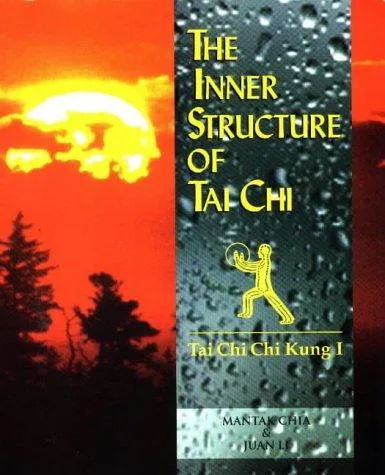
Mantak Chia and Juan Li's 1996 book examines the internal mechanics of Tai Chi Chuan.
The Inner Structure of Tai Chi, published in 1996, dissects the energetic pathways, somatic awareness, and mental focus necessary for authentic Tai Chi cultivation. The authors present Tai Chi not just as a physical exercise, but as a sophisticated system for internal energy development and spiritual refinement, drawing upon Taoist principles. This work goes beyond superficial movements to detail the internal mechanics and energetic principles that underlie the practice. It is intended for dedicated practitioners of Tai Chi who wish to deepen their understanding of its energetic dimensions.
This book is suitable for martial artists, Qigong practitioners, and anyone interested in Taoist internal alchemy and meditation. Students of esoteric traditions exploring somatic practices for spiritual growth will also find value. It assumes a basic familiarity with martial arts or internal energy work, making it a good resource for those ready to move beyond introductory concepts. The authors' detailed approach offers a bridge between the physical practice and the deeper energetic and spiritual aims of Taoism.
Published in the mid-1990s, this book emerged during a time of growing global interest in traditional Chinese internal arts. While many texts focused on external forms, Chia and Li emphasized the internal energetic structures and philosophical underpinnings rooted in Taoism. This work aligns with a broader trend of Western engagement with Qigong and Tai Chi, offering a more detailed and esoteric perspective than commonly found. It connected the physical practice of Tai Chi with its deeper spiritual and energetic aims, reflecting a rising interest in these specific aspects within esoteric traditions.
💡 Why Read This Book?
• Gain a concrete understanding of Qi circulation through specific meridian pathways as described in the text, moving beyond generic energy concepts. • Learn about the practical application of Yin and Yang principles in Tai Chi movements, directly referencing the 1996 publication to understand its historical positioning. • Explore the esoteric Taoist concept of the Three Treasures (Jing, Qi, Shen) and how their cultivation is integrated into Tai Chi practice, as presented by Mantak Chia and Juan Li.
⭐ Reader Reviews
Honest opinions from readers who have explored this book.
❓ Frequently Asked Questions
What is the primary focus of 'The Inner Structure of Tai Chi'?
The book focuses on the internal energetic structures and Taoist principles that underpin Tai Chi practice, detailing Qi circulation, the microcosmic orbit, and the cultivation of Jing, Qi, and Shen for spiritual development, as originally published in 1996.
Who are Mantak Chia and Juan Li?
Mantak Chia is a prolific author and teacher of Taoist arts, known for his work on Qigong and Universal Healing Tao. Juan Li is his co-author, contributing to works that explore Taoist cosmology and practice, including this 1996 publication.
Does this book explain the external martial applications of Tai Chi?
While it acknowledges the martial roots, the primary emphasis of 'The Inner Structure of Tai Chi' is on the internal energetic and spiritual aspects, rather than detailed explanations of fighting techniques.
Is 'The Inner Structure of Tai Chi' suitable for beginners?
The book is more suited for intermediate to advanced practitioners who have some familiarity with Tai Chi or Qigong. Beginners may find the detailed energetic concepts challenging without prior foundational knowledge.
What esoteric traditions does this book draw from?
The work is deeply rooted in Taoist philosophy and practices, including concepts like Qi, Yin and Yang, and the Three Treasures, as explored through the lens of Tai Chi cultivation.
When was 'The Inner Structure of Tai Chi' first published?
The book was first published in 1996, positioning it within the growing interest in internal martial arts and esoteric Eastern philosophies in the Western world during that period.
🔮 Key Themes & Symbolism
Energetic Anatomy of Tai Chi
This work meticulously details the energetic pathways within the body that are activated and cultivated through Tai Chi practice. It moves beyond simple anatomical descriptions to map the flow of Qi through meridians and energy centers. Concepts like the microcosmic orbit, crucial in Taoist internal alchemy, are explained in relation to specific movements and meditative states, providing practitioners with a blueprint for internal energetic development that aligns with traditional Taoist cosmology.
Taoist Cultivation of Jing, Qi, and Shen
The book elaborates on the Taoist Three Treasures: Jing (essence), Qi (vital energy), and Shen (spirit). It presents Tai Chi not merely as a physical discipline but as a profound method for refining these fundamental aspects of being. Readers learn how specific postures and internal focus can help transform coarse Jing into Qi, and Qi into Shen, leading to enhanced vitality, mental clarity, and spiritual awareness. This integration is key to the esoteric aims of advanced Tai Chi practice.
Somatic Awareness and Mind-Body Integration
Central to the inner structure of Tai Chi is the cultivation of profound somatic awareness. The text guides practitioners to feel and direct internal energy, fostering a deep connection between mind, breath, and body. This heightened awareness allows for the subtle adjustments necessary to embody the principles of softness, yielding, and continuous flow, transforming the physical practice into a moving meditation and a powerful tool for self-transformation.
Yin and Yang Dynamics in Practice
The principles of Yin and Yang are not treated as static opposites but as dynamic, interdependent forces that govern all energetic processes within Tai Chi. The book illustrates how the interplay of these forces manifests in movement, breath, and internal states. Understanding this dynamic balance is essential for achieving the harmonious and efficient energetic function that characterizes authentic Tai Chi, allowing practitioners to harness opposing forces within themselves.
💬 Memorable Quotes
Direct passages from the work, attributed to the author.
“The microcosmic orbit is the root of all internal arts.”
— This statement highlights the foundational importance of circulating Qi through the Governing and Conception vessels in Taoist practice. It suggests that mastery of this energetic pathway is essential for unlocking deeper levels of internal development within Tai Chi and other related disciplines.
“Tai Chi cultivates Jing, transforms it into Qi, and refines Qi into Shen.”
— This concisely explains the alchemical process central to advanced Taoist practice. It frames Tai Chi as a method for spiritual evolution, moving from physical essence (Jing) to vital energy (Qi), and finally to spiritual awareness (Shen).
“The body is a microcosm of the universe.”
— This echoes a fundamental Hermetic and Taoist principle, suggesting that understanding the energetic and structural principles within the human body provides a direct pathway to understanding the greater cosmos. Tai Chi becomes a tool for this exploration.
“True power comes from emptiness and stillness within.”
— This paradoxical statement points to the esoteric nature of Tai Chi, where outward yielding and internal stillness generate profound strength and control. It contrasts with brute force, emphasizing energetic efficiency and spiritual rootedness.
“Movement arises from intention, guided by Qi.”
— This highlights the mind-body-spirit connection central to Tai Chi. It asserts that conscious intent, fueled by cultivated vital energy (Qi), is the true initiator of movement, rather than mere muscular action.
🌙 Esoteric Significance
Tradition
This work is firmly rooted in the Taoist tradition, specifically drawing from the internal alchemy and Qigong lineages. It interprets the physical practice of Tai Chi through the lens of cultivating Jing, Qi, and Shen, the core components of Taoist spiritual development. While Tai Chi itself has martial origins, Chia and Li emphasize its capacity as a vehicle for achieving longevity, wisdom, and spiritual enlightenment, aligning with the aims of high-level Taoist practice.
Symbolism
Key symbols include the Yin-Yang, representing the dynamic balance of opposing forces essential for energetic harmony and movement. The 'microcosmic orbit' is a crucial symbolic map depicting the circulation of Qi through specific energetic channels, central to internal alchemy. The concept of the 'Three Treasures' (Jing, Qi, Shen) functions symbolically as the fundamental energies of existence that Tai Chi aims to refine and elevate.
Modern Relevance
Contemporary practitioners of Qigong, nei gong, and advanced Tai Chi forms often reference Chia's works for their systematic approach to internal energetics. Modern somatic therapists and mind-body researchers exploring energy cultivation and consciousness are also finding value in these detailed descriptions of Qi flow and energetic anatomy. The book's enduring appeal lies in its detailed mapping of internal pathways, relevant to anyone exploring embodied consciousness and subtle energy systems.
👥 Who Should Read This Book
• Dedicated Tai Chi practitioners seeking to understand the energetic and spiritual dimensions beyond physical form, referencing the 1996 publication for historical context. • Students of Taoist alchemy and Qigong interested in the practical application of concepts like Jing, Qi, Shen, and the microcosmic orbit. • Esoteric scholars and comparative religion enthusiasts exploring somatic practices as pathways to consciousness and spiritual development, engaging with the book's detailed theoretical framework.
📜 Historical Context
Published in 1996, 'The Inner Structure of Tai Chi' arrived at a time when Western interest in Chinese internal arts was burgeoning, yet often focused on the physical forms or basic health benefits. Mantak Chia, already an established figure through his Universal Healing Tao system, co-authored this work with Juan Li to offer a deeper, more esoteric perspective. This period saw a contrast between popularizers presenting simplified versions of Qigong and Tai Chi and scholars or dedicated practitioners seeking the underlying philosophical and energetic frameworks. Chia and Li's book served as a bridge, detailing concepts like the microcosmic orbit and the Three Treasures, which were less commonly discussed in mainstream martial arts literature of the era. Its emphasis on energetic cultivation and Taoist alchemy aligned with a growing niche interest in comparative religion and esoteric philosophies, differentiating it from purely physical or martial-focused texts.
📔 Journal Prompts
The energetic pathways of the microcosmic orbit as described by Chia and Li.
Reflecting on the transformation of Jing into Qi through Tai Chi movements.
How the principle of Yin and Yang informs your physical and energetic practice.
The role of Shen cultivation in your understanding of Tai Chi's purpose.
Connecting the body's energetic structure to the universal principles discussed.
🗂️ Glossary
Qi (Chi)
Vital energy or life force that animates all living beings and the universe. In Tai Chi, its circulation and cultivation are paramount.
Jing
Essence; the fundamental generative and reproductive energy of the body. It is considered the coarsest of the Three Treasures and can be refined into Qi.
Shen
Spirit or consciousness; the most refined of the Three Treasures. Cultivating Shen leads to clarity, peace, and spiritual awareness.
Microcosmic Orbit
The circulation of Qi along the Conception Vessel (Ren Mai) in the front and the Governing Vessel (Du Mai) in the back of the body, a key practice in Taoist internal alchemy.
Yin and Yang
The fundamental principles of duality and complementary opposites that govern the universe and are expressed through dynamic balance and interaction.
Meridians
Specific pathways or channels through which Qi flows within the body, as described in Traditional Chinese Medicine and Taoist energetic practices.
Three Treasures
The fundamental energetic components of life in Taoism: Jing (essence), Qi (vital energy), and Shen (spirit/consciousness).
🔮 Readers Also Liked
Browse all →









More Free Occult Philosophy Books
View all →