The great derangement
 76
76

The great derangement
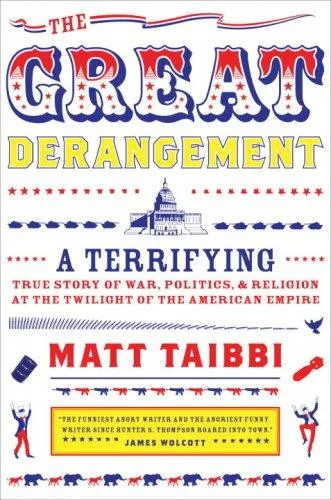
Taibbi's 2008 critique, 'The Great Derangement,' remains a sharp dissection of how political narratives detach from tangible reality. He masterfully illustrates the mechanisms by which media and political elites construct realities that serve their own interests, often at the expense of factual accuracy. The strength of the book lies in its unsparing identification of the ideological feedback loops that sustain this disconnect, particularly evident in its analysis of how certain media outlets (like Fox News and its counterparts) create insulated realities for their viewers. However, the book's focus on the American political landscape, while its core strength, can feel somewhat insular, occasionally overlooking broader global or historical parallels that might have further enriched its argument. A particularly striking passage details the media's response to the 2008 financial crisis, highlighting how the dominant narrative often glossed over the systemic failures at play. It’s a vital, if at times frustratingly familiar, examination of manufactured consensus.
📝 Description
76
Matt Taibbi's 2008 book argued that American political discourse had detached from reality.
Published in 2008, The Great Derangement by Matt Taibbi analyzes how American politics and media narratives grew disconnected from observable facts. Taibbi contends that an ideological bubble allowed certain stories to gain currency regardless of their correspondence to actual conditions faced by people. He focuses on how media echo chambers and partisan groupthink contribute to this detachment.
The book is for readers who sense a gap between mainstream political stories and their own experiences. It will interest those questioning media framing and how consensus reality can become distorted. Anyone studying political science, media, or the psychology of belief systems will find its arguments pertinent. The work addresses the "derangement" as a separation from facts and the "narrative economy," where stories spread due to ideological fit rather than truth. Taibbi discusses how political figures and media create and sustain these detached narratives for specific aims or to reinforce beliefs.
While "The Great Derangement" is primarily a work of political commentary, its focus on how collective belief systems detach from empirical reality aligns with certain esoteric traditions that examine the construction of consensus reality. These traditions often investigate how societal narratives are formed and maintained, sometimes to the detriment of individual perception or objective truth. Taibbi's critique of the "narrative economy" and the psychological mechanisms like confirmation bias can be seen as a secular examination of how shared illusions take hold and resist factual correction, a theme echoed in discussions of mass delusion or manufactured consent within esoteric thought.
💡 Why Read This Book?
• Understand the 'narrative economy' as described by Taibbi, learning how political stories are constructed and disseminated irrespective of factual basis, a concept explored extensively in the book's analysis of media. • Grasp the specific mechanisms of ideological "derangement" that Taibbi identifies, providing concrete examples of how political discourse became detached from observable reality leading up to 2008. • Gain critical tools to analyze contemporary media and political messaging, recognizing the patterns of manufactured consensus that the book argues have persisted and evolved since its initial publication.
⭐ Reader Reviews
Honest opinions from readers who have explored this book.
❓ Frequently Asked Questions
What is Matt Taibbi's central argument in The Great Derangement?
Taibbi's core argument is that American political and media discourse has become profoundly detached from reality, creating a 'derangement' where narratives are prioritized over facts, often serving ideological or political agendas.
When was The Great Derangement first published?
The book was first published in 2008, a year marked by significant global financial upheaval and political shifts in the United States.
What role does media play in Taibbi's analysis?
Taibbi posits that media outlets are crucial in constructing and perpetuating these detached narratives, acting as echo chambers that reinforce existing beliefs and insulate audiences from contrary evidence.
Does the book offer solutions to this 'derangement'?
While primarily diagnostic, the book implicitly calls for a return to factual reporting and critical thinking, encouraging readers to question dominant narratives and seek verifiable information.
Is The Great Derangement still relevant today?
Yes, the book's examination of media manipulation, ideological bubbles, and the disconnect between political discourse and reality remains highly relevant in the current information landscape.
What does Taibbi mean by 'narrative economy'?
The 'narrative economy' refers to a system where stories and claims gain value and traction not based on their truthfulness, but on their alignment with specific political or ideological frameworks.
🔮 Key Themes & Symbolism
The Derangement of Reality
Taibbi's central thesis revolves around a systemic 'derangement' within American political discourse, a profound and pervasive separation from observable facts. This isn't merely disagreement; it's a fundamental inability or unwillingness to engage with reality as it is, particularly evident in media coverage and political rhetoric. The work explores how this detachment is actively cultivated, creating insulated realities for different ideological factions, making genuine dialogue or consensus increasingly impossible. The 2008 context, with its financial crisis, serves as a prime example of how dominant narratives can obscure underlying systemic issues.
The Narrative Economy
This theme examines how political and media landscapes operate as a 'narrative economy,' where the currency is not truth but ideological resonance. Stories, claims, and interpretations are valued and propagated based on their ability to reinforce existing beliefs within specific groups. Taibbi illustrates how this system rewards the creation of compelling, often factually dubious, narratives that cater to pre-existing biases, effectively creating an information ecosystem where reality is secondary to narrative coherence. This concept is crucial for understanding how political consensus can be manufactured.
Media as an Insulator
The book critically assesses the role of media in fostering and maintaining this 'derangement.' Taibbi argues that many media outlets function not as conduits for objective information but as 'insulators,' creating echo chambers that shield audiences from dissenting viewpoints or inconvenient facts. This section examines how partisan media cultivates specific realities for their audiences, reinforcing ideological boundaries and contributing to the polarization that prevents a shared understanding of events and issues. The 2008 financial crisis coverage is a key example of this insulating function.
The Psychology of Belief
Underpinning the societal 'derangement' is an exploration of the psychological mechanisms that allow individuals to accept narratives detached from reality. Taibbi touches upon concepts like confirmation bias and motivated reasoning, where people actively seek out and interpret information that confirms their existing beliefs, while dismissing or ignoring evidence to the contrary. This theme highlights how deeply ingrained cognitive biases can make populations susceptible to manufactured narratives, especially when those narratives align with their group identity or worldview.
💬 Memorable Quotes
Direct passages from the work, attributed to the author.
“We live in a world where the most powerful people are often the least tethered to reality.”
— This statement captures the essence of the book's critique: that those in positions of authority, particularly in politics and media, frequently operate within self-created bubbles, detached from the actual consequences of their decisions or the lived experiences of the populace.
“The news is no longer about reporting what happened, but about telling people what they want to hear.”
— This highlights Taibbi's view of the modern media landscape as an industry driven by audience affirmation rather than factual accuracy. It suggests a shift from objective reporting to a form of narrative catering that reinforces pre-existing biases.
“The great derangement is the separation of the political class from the consequences of their actions.”
— This interpretation points to a core problem identified by Taibbi: a disconnect between the decision-makers and the real-world impacts of those decisions. The political elite, insulated by their narratives, are often shielded from the fallout experienced by ordinary citizens.
“The media created a narrative that the public then lived inside.”
— This points to the powerful, almost architectural, role Taibbi assigns to media in constructing the reality that people inhabit. It implies that media doesn't just report on the world but actively shapes our perception of it.
💡 Key Ideas
Editorial paraphrase of the work's core concepts — not direct quotes.
Facts are no longer the basis for our political arguments; they are weapons to be deployed.
This paraphrase suggests that in the 'deranged' political sphere, factual information is not used for understanding or consensus-building, but rather manipulated and weaponized to serve partisan agendas and win arguments.
🌙 Esoteric Significance
Tradition
While 'The Great Derangement' is not an esoteric text in the traditional sense, its examination of how collective belief systems can become detached from empirical reality aligns with Gnostic critiques of the material world and illusory perceptions. The concept of a 'derangement' can be seen as a secular parallel to Gnostic ideas of ignorance (agnosis) and the veil of Maya, where a false reality is imposed or perceived. Taibbi's work, through a political lens, dissects how societal 'ignorance' is manufactured and maintained, preventing individuals from apprehending a more fundamental 'truth' of their circumstances.
Symbolism
The book's symbolism is largely secular and political, but the 'derangement' itself functions as a potent metaphor. It symbolizes a collective delusion, a societal descent into unreality akin to a spiritual or mental illness. The 'narrative economy' can be viewed as a modern, secularized form of occult manipulation, where symbols (political slogans, media soundbites) are used not for enlightenment but for control and misdirection, creating an illusion of understanding or progress that masks underlying decay or exploitation.
Modern Relevance
Taibbi's analysis of manufactured consent and ideological insulation remains highly relevant in contemporary discussions surrounding disinformation, political polarization, and the impact of social media algorithms. Thinkers and practitioners in fields ranging from digital sociology to critical media studies draw upon his framework to understand how 'fake news' and propaganda operate. The concept of the 'narrative economy' is particularly resonant for those analyzing the attention economy and the weaponization of information in online spaces, echoing concerns found in certain strands of modern occult thought focused on psychic warfare and memetic manipulation.
👥 Who Should Read This Book
• Critical thinkers and students of political science seeking to understand the mechanisms of ideological manipulation and media bias in contemporary discourse. • Readers who feel alienated by mainstream political narratives and wish to comprehend how such disconnects from reality are fostered and maintained. • Journalists, commentators, and media analysts looking for a sharp, historical critique of how political storytelling can overshadow factual reporting, particularly concerning the 2008 period.
📜 Historical Context
The Great Derangement, published in 2008, emerged during a period of profound societal and political upheaval in the United States. The early 21st century was characterized by the increasing fragmentation of media due to the rise of the internet and cable news, fostering what Taibbi terms 'echo chambers.' This was also the era following the 9/11 attacks and the subsequent wars in Afghanistan and Iraq, events often framed by a dominant, unquestioned narrative that the book implicitly critiques. The global financial crisis of 2008, which serves as a backdrop and a key example within the text, further eroded public trust in established institutions and their explanations. Key contemporaries like Noam Chomsky, who also critiqued media manipulation and propaganda, were part of a broader intellectual current questioning the neutrality of information dissemination. While not a widely debated academic text at its release, its reception among readers and independent media circles highlighted a growing public weariness with what was perceived as biased or detached reporting, particularly from major news outlets.
📔 Journal Prompts
The 'narrative economy' as a system of symbolic exchange.
Reflections on the media's role as an 'insulator' of reality.
The personal experience of political 'derangement' in one's own life.
Analyzing a specific instance of 'facts as weapons' in recent discourse.
The psychological comfort of adhering to a dominant narrative.
🗂️ Glossary
Derangement
In Taibbi's context, a profound and widespread detachment from observable facts and reality within political and media discourse, leading to the prioritization of ideological narratives over truth.
Narrative Economy
A system where political and media narratives gain value and traction not based on their factual accuracy, but on their ability to resonate with and reinforce the beliefs of specific ideological groups.
Insulator (Media)
A term used to describe media outlets that create echo chambers, shielding audiences from dissenting viewpoints or inconvenient facts, thereby reinforcing existing beliefs and insulating them from external reality.
Ideological Bubble
A self-contained environment, often created by media and social interactions, where individuals are primarily exposed to information and opinions that confirm their pre-existing beliefs, leading to a distorted perception of reality.
Manufactured Consensus
A situation where a particular viewpoint or belief is presented as widely accepted or factual, often through media manipulation or political messaging, even if it lacks genuine widespread support or factual basis.
Confirmation Bias
The psychological tendency to search for, interpret, favor, and recall information in a way that confirms or supports one's prior beliefs or values.
Motivated Reasoning
A cognitive bias where people tend to process information in a way that leads them to the conclusions they want to reach, often by selectively evaluating evidence to support a desired outcome.
🔮 Readers Also Liked
Browse all →








More by Matt Taibbi
All books →
More Free Occult Philosophy Books
View all →