The golden goblet
 82
82

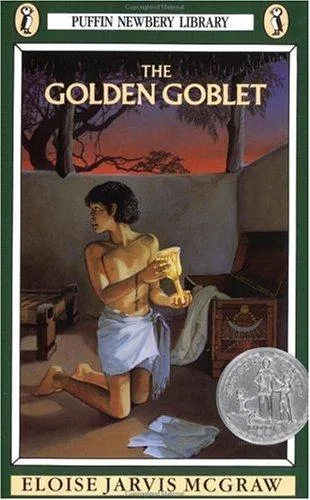
The golden goblet
Eloise Jarvis McGraw and Charles Carroll's 'The Golden Goblet' presents a narrative that, while aiming for profound spiritual allegory, occasionally falters in its execution. The central metaphor of the goblet as a vessel for transformation is a potent one, and the book succeeds when it allows this symbol to breathe through the story's unfolding. A particular strength lies in the evocative descriptions of the protagonist's internal landscape, which feel genuinely rendered. However, the pacing sometimes drags, particularly in the middle sections where the allegorical weight feels less like a guiding force and more like an imposed structure. The dialogue, at times, leans towards the didactic, spelling out the symbolic meaning rather than allowing it to emerge organically from the characters' experiences. Despite these limitations, the work offers a unique literary approach to exploring the challenges of spiritual growth, making it a noteworthy, if imperfect, addition to the genre.
📝 Description
82
Published in 2017, 'The Golden Goblet' uses allegory to explore transformation.
Eloise Jarvis McGraw and Charles Carroll's 'The Golden Goblet' is a narrative that uses allegory to examine spiritual transformation. The book guides readers through symbolic encounters, prompting reflection on inner change. Its structure invites contemplation of personal development through literary metaphor.
The text appeals to those interested in allegorical storytelling and the symbolic representation of spiritual journeys. It is suited for readers who value literature that functions on multiple levels, providing both a story and a framework for introspection. Those seeking to understand archetypal paths within a literary framework will find this work particularly useful.
The narrative centers on initiation, the shadow self, and the search for inner illumination. It uses symbols, like the goblet itself, to signify a desired state of being or understanding. The depicted journey frequently involves facing internal challenges and interacting with archetypal figures representing aspects of the human psyche. The work suggests that true attainment comes from internal alchemy.
This book belongs to a tradition of esoteric and allegorical literature with roots in Western esoteric thought. Though published recently, its thematic concerns recall earlier works that sought to convey spiritual truths through symbolic narratives. Its 2017 release aligns with contemporary interest in Jungian archetypes and depth psychology, often examined through literary means.
💡 Why Read This Book?
• Gain insight into the symbolic representation of inner transformation, learning how allegorical elements like the 'golden goblet' can signify stages of spiritual development, as explored in the narrative. • Understand the challenges of confronting one's shadow self through the depiction of archetypal figures and internal struggles presented in the book's journey. • Appreciate a literary exploration of initiation rites, drawing parallels between the protagonist's quest and historical or mythical accounts of spiritual awakening.
⭐ Reader Reviews
Honest opinions from readers who have explored this book.
❓ Frequently Asked Questions
What is the primary symbolic meaning of the golden goblet in the book?
The 'golden goblet' primarily symbolizes a state of spiritual attainment, inner illumination, or the alchemical transformation of the self, representing the ultimate goal of the protagonist's quest.
Who are the main authors of 'The Golden Goblet'?
'The Golden Goblet' is attributed to Eloise Jarvis McGraw and Charles Carroll, with its first publication noted in 2017.
What kind of literary style does 'The Golden Goblet' employ?
The book utilizes an allegorical literary style, presenting a narrative that carries deeper symbolic and spiritual meanings beyond its surface story.
Does the book offer practical advice for spiritual growth?
While not a how-to guide, 'The Golden Goblet' offers insights into the psychological and symbolic aspects of spiritual growth through its narrative allegory, encouraging contemplation rather than direct instruction.
What themes are explored in 'The Golden Goblet'?
Key themes include personal transformation, the journey of initiation, confronting the shadow self, and the pursuit of inner enlightenment, all conveyed through symbolic narrative.
When was 'The Golden Goblet' first published?
'The Golden Goblet' was first published in 2017.
🔮 Key Themes & Symbolism
The Alchemical Journey
The narrative structure of 'The Golden Goblet' mirrors the alchemical process, depicting a profound internal transformation. The journey is not merely physical but a descent into the psyche, akin to the 'nigredo' or blackening stage, leading towards purification and integration. The pursuit of the titular goblet represents the 'opus magnum,' the Great Work of spiritual realization. This theme is central to understanding the protagonist's trials and the symbolic meaning of each encounter, reflecting the meticulous stages required for true transmutation of the self.
Symbolism of the Goblet
The golden goblet serves as the primary symbol within the work, representing a state of perfected consciousness, spiritual enlightenment, or the attainment of esoteric knowledge. Its 'golden' quality suggests purity, value, and divine essence. The quest for this object is a metaphor for the soul's yearning for wholeness and connection to the divine. The book explores how the perception and understanding of the goblet evolve throughout the protagonist's journey, highlighting that its true meaning is often found not in possession, but in the transformative process of seeking.
Confronting the Shadow
A significant aspect of the journey in 'The Golden Goblet' involves the confrontation with the shadow self, personified through various symbolic characters and challenging circumstances. These encounters are crucial for self-awareness and spiritual integration, reflecting Jungian concepts of individuation. The protagonist must acknowledge and integrate these darker aspects of the psyche to progress. The narrative suggests that true spiritual advancement is impossible without facing and understanding these hidden dimensions of the self.
Archetypal Narrative Structure
The book employs an archetypal narrative structure, drawing on universal patterns of the hero's journey and initiation rites. Characters and events often represent fundamental aspects of the human experience and the collective unconscious. This archetypal framework allows the story to resonate on a deep psychological level, exploring themes of birth, death, rebirth, and the quest for meaning. The predictable yet profound arc of the hero's journey provides a stable form for exploring complex esoteric concepts.
💬 Memorable Quotes
Direct passages from the work, attributed to the author.
“The path to the light is often paved with shadows.”
— This highlights the paradoxical nature of spiritual growth, suggesting that confronting and integrating one's darker aspects (the shadow) is essential for achieving higher consciousness or spiritual illumination.
“Each trial reshaped the seeker, not the sought.”
— This suggests that the transformative power lies in the experience of the quest itself. The challenges faced by the protagonist alter their inner being, which is the core of the spiritual journey, rather than changing the ultimate object of desire.
“The goblet's gleam was a reflection of the seeker's own emerging light.”
— This interpretation frames the 'golden goblet' not as an external prize, but as a manifestation of the seeker's inner development. The more the seeker transforms, the more the symbolic goal appears attainable or real.
“To hold the vessel, one must first become the vessel.”
— This potent idea suggests that achieving a state of spiritual attainment requires becoming fundamentally aligned with that state. One must embody the qualities of the 'golden goblet' before one can truly possess or understand it.
💡 Key Ideas
Editorial paraphrase of the work's core concepts — not direct quotes.
The true gold is not found in the earth, but within.
This paraphrased concept emphasizes the internal nature of spiritual wealth and transformation. It points to self-discovery and inner alchemy as the source of ultimate value, rather than external possessions or achievements.
🌙 Esoteric Significance
Tradition
The work aligns with the Western Esoteric tradition, particularly drawing from Hermeticism and Jungian psychology. It reflects the Hermetic principle of 'As Above, So Below,' by demonstrating how internal psychological states mirror external symbolic journeys. Its emphasis on transformation and the pursuit of inner illumination connects it to alchemical traditions, where the Great Work signifies the perfection of the soul. The narrative structure itself follows archetypal patterns found in initiation myths across various esoteric lineages.
Symbolism
The titular 'golden goblet' is a potent symbol of the Philosopher's Stone or the Elixir of Life, representing perfected consciousness and spiritual attainment. Other symbols likely include archetypal figures representing aspects of the psyche (e.g., the wise elder, the shadow), and landscapes that denote stages of the soul's journey. The color gold itself signifies purity, divine light, and ultimate realization, central to alchemical symbolism. These symbols function as keys to unlock deeper layers of meaning within the narrative.
Modern Relevance
In contemporary times, 'The Golden Goblet' speaks to practitioners of transpersonal psychology, Jungian analysts, and spiritual seekers engaging with archetypal symbolism. Its allegorical approach provides a relatable framework for understanding complex psychological concepts like individuation and the integration of the shadow. Thinkers exploring the intersection of literature and spirituality, as well as those involved in modern neopagan or Hermetic practices, can find valuable reflections on the perennial quest for meaning and self-realization within its pages.
👥 Who Should Read This Book
• Aspiring practitioners of Western Esotericism: Those beginning their journey into Hermeticism, alchemy, or symbolic interpretation will find a narrative that allegorically represents core concepts. • Readers interested in Jungian Psychology: Individuals fascinated by archetypes, the shadow self, and the process of individuation will appreciate the psychological depth presented through the story. • Literary enthusiasts of allegorical fiction: Those who enjoy stories that operate on multiple levels, offering both a compelling narrative and profound symbolic meaning, will find this work engaging.
📜 Historical Context
Published in 2017, 'The Golden Goblet' entered a literary landscape with a renewed interest in Jungian psychology, archetypal narratives, and esoteric themes. While its publication date is contemporary, its narrative approach draws from a long tradition of allegorical works, such as those by C.S. Lewis or Hermann Hesse, which used fiction to explore spiritual and philosophical ideas. The early 21st century saw a rise in popular interest in comparative mythology and spiritual seeking, often fueled by online communities and accessible philosophical texts. This period was also marked by a significant engagement with depth psychology, making works that explored the unconscious and symbolic life particularly relevant. Unlike the more overt Gnostic or Hermetic texts that were gaining scholarly attention, 'The Golden Goblet' presented these concepts through a modern fictional lens, seeking to make them accessible to a broader audience who might not engage directly with primary esoteric sources.
📔 Journal Prompts
The seeker's initial perception of the golden goblet.
The nature of the obstacles encountered on the path.
The symbolic meaning of the 'shadow' figures.
Moments of internal transformation during trials.
The final understanding of the goblet's true significance.
🗂️ Glossary
Allegory
A literary work with a hidden meaning, typically a moral or political one. Characters and events represent abstract ideas or principles, allowing for symbolic interpretation.
Archetype
In Jungian psychology, a universal, inherited pattern of thought or imagery derived from the experience of the species and present in the individual's unconscious. Examples include the hero, the shadow, and the wise old man.
Initiation
A ritual or ceremony marking a person's passage from one stage of life or status to another, often involving symbolic death and rebirth, and the imparting of secret knowledge.
Shadow Self
In Jungian psychology, the unconscious or repressed aspects of the personality, often considered negative or undesirable, which the conscious ego does not identify in itself.
Inner Alchemy
A symbolic process within esoteric traditions, particularly alchemy, that focuses on the transformation of the human psyche and spirit rather than physical substances.
Transmutation
In alchemy, the process of changing one element or substance into another. Esoterically, it refers to the transformation of the base qualities of the human personality into higher, spiritual attributes.
Individuation
The psychological process of integrating the conscious and unconscious aspects of the self to become a whole, unique individual. Central to Carl Jung's theory of personality development.
🔮 Readers Also Liked
Browse all →








More by Eloise Jarvis McGraw, Charles Carroll
All books →
More Free Occult Philosophy Books
View all →