The Freemasons Quarterly Magazine Vol II London 1854

 83
83

The Freemasons Quarterly Magazine Vol II London 1854


By Alaric Kestrel (Metaphysical Studies Reviewer) — 'The Freemasons Quarterly Magazine, Vol. II' offers an invaluable glimpse into the intellectual and spiritual landscape of 19th-century Freemasonry. This volume pulsates with the esoteric undercurrents of the era, presenting complex symbolism and philosophical inquiries with scholarly rigor. Its strength lies in its preservation of original Masonic thought, providing direct access to the debates and teachings that defined the fraternity's esoteric dimension. Essential for historians of secret societies, occult scholars, and any practitioner seeking to deepen their understanding of Masonic allegory and its perennial wisdom. A truly illuminating read for the dedicated student of hidden traditions.
📝 Description
83
London, 1854, saw the publication of 'The Freemasons Quarterly Magazine, Vol. II', a collection of Masonic writings.
This second volume of The Freemasons Quarterly Magazine, published in London in 1854, contains a selection of essays and writings from the mid-Victorian era of Freemasonry. It includes discussions on ancient rites and the symbolic language used by operative stonemasons. The articles also address the philosophical and spiritual underpinnings of various Masonic degrees.
The content is presented as learned discourse, aiming to reveal deeper aspects of the fraternity. The intended audience includes scholars, practitioners, and philosophers interested in Masonic symbolism and its connection to human consciousness and self-discovery. The volume reflects a specific moment in the history of Masonic thought, focusing on the pursuit of truth and fraternal bonds.
Published in 1854, this volume reflects a period when Masonic societies were a significant conduit for esoteric thought in Britain. Beyond its fraternal aspects, Freemasonry at this time often incorporated symbolic systems drawing from ancient mysteries, Hermeticism, and Kabbalistic traditions. The essays within this collection likely engage with these currents, interpreting Masonic rituals and degrees through a lens of spiritual philosophy and the quest for hidden knowledge, aligning with broader esoteric interests of the 19th century.
💡 Why Read This Book?
Uncover the esoteric heart of 19th-century Freemasonry. This volume is essential for seekers of hidden knowledge, offering profound insights into Masonic symbolism, ritual, and philosophy. Ideal for scholars and practitioners who wish to connect with the foundational esoteric traditions that continue to influence mystical thought today. Explore the allegorical landscapes and ancient wisdom preserved within these pages.
⭐ Reader Reviews
Honest opinions from readers who have explored this book.
❓ Frequently Asked Questions
What is the primary focus of this magazine volume?
The primary focus is on the philosophical, symbolic, and historical aspects of Freemasonry in the mid-19th century, offering insights into its esoteric traditions and teachings.
Is this volume suitable for beginners in Freemasonry?
While rich in detail, it is geared towards those with some existing interest or foundational knowledge, offering deeper explorations rather than introductory overviews.
What kind of topics are discussed within its pages?
Expect discussions on Masonic history, allegorical interpretations of rituals, the symbolism of architecture and operative masonry, and philosophical reflections on fraternity and self-improvement.
Does this magazine reveal specific Masonic secrets?
It delves into the symbolic and philosophical meanings behind Masonic teachings, offering profound interpretations rather than exposing classified secrets or private rituals.
What is the historical significance of this particular volume?
Published in 1854, it captures a pivotal moment in Masonic intellectual history, reflecting the era's engagement with classical philosophy, ancient mysteries, and the burgeoning interest in esotericism.
🔮 Key Themes & Symbolism
The Architecture of Wisdom: Symbolism in Masonic Practice
This volume meticulously dissects the profound symbolism woven into the fabric of Freemasonry, drawing parallels between the operative stonemasons of antiquity and the speculative brethren of the 19th century. It explores how architectural elements, tools, and geometric principles serve as allegorical keys to unlocking higher truths and understanding the divine blueprint of the universe. Readers will encounter detailed interpretations of symbols, revealing their deeper spiritual and philosophical implications, inviting contemplation on order, creation, and the construction of the self.
Perennial Philosophy and Masonic Degrees
Examine the philosophical underpinnings that informed the development and interpretation of Masonic degrees during this era. The magazine presents essays that connect Masonic tenets to ancient mystery schools, Hermeticism, and Neoplatonism, highlighting the perennial wisdom traditions that have influenced esoteric thought for millennia. It examines how each degree serves as a step on a journey of spiritual enlightenment, fostering moral rectitude and the pursuit of knowledge through allegory and ritual.
The Fraternity of Light: Brotherhood and Esoteric Pursuit
Central to this volume is the concept of fraternity as a vehicle for spiritual growth and the collective pursuit of esoteric knowledge. The articles explore the ideals of brotherhood, charity, and mutual upliftment within the Masonic context, framing it as a 'Fraternity of Light' dedicated to clear the minds and souls of its members. This theme underscores the importance of shared endeavor in the quest for truth, self-mastery, and the betterment of humanity.
💬 Memorable Quotes
Direct passages from the work, attributed to the author.
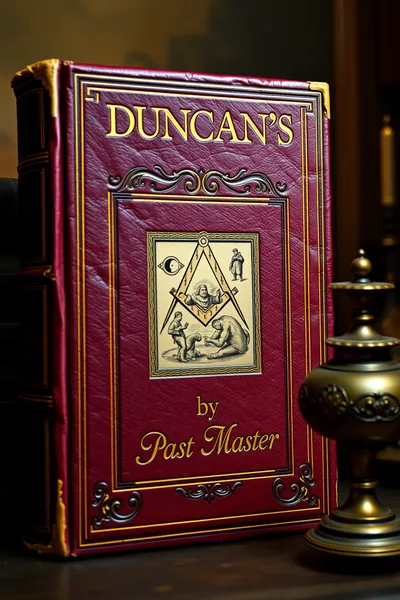
“The Square and Compasses, not mere tools, but allegories of moral governance.”
— Highlights the symbolic depth of Masonic implements, suggesting they represent ethical principles and the discipline required for spiritual development.
“Ancient Rites echo in modern Masonry, bearing timeless truths.”
— Connects contemporary Masonic practices to older esoteric traditions, implying a continuity of wisdom and spiritual knowledge across ages.
“Brotherhood is the crucible wherein individual character is refined.”
— Emphasizes the transformative power of fraternal association, suggesting that community interaction fosters personal growth and moral refinement.
“Seek understanding beyond the veil of the mundane.”
— An exhortation to look past superficial appearances and examine the deeper, metaphysical realities that lie at the heart of esoteric inquiry.
💡 Key Ideas
Editorial paraphrase of the work's core concepts — not direct quotes.
Within the Temple of the Soul, true Light is sought.
This quote captures the Masonic journey as an internal quest for spiritual enlightenment and self-discovery, emphasizing introspection over external dogma.
🌙 Esoteric Significance
Tradition
This volume is deeply rooted in the Western Esoteric Tradition, particularly within the framework of Hermeticism, Kabbalah, and Neoplatonism, as filtered through the lens of 18th and 19th-century Freemasonry. It represents a crystallization of Masonic philosophy that sought to integrate ancient wisdom with contemporary spiritual yearnings, positioning the fraternity as a vehicle for personal transformation and the attainment of 'Light' or gnosis.
Symbolism
The core esoteric significance lies in its detailed explication of Masonic symbolism. Beyond literal interpretation, the magazine studies the allegorical meanings of tools (square, compasses), architectural elements (temple, pillars), geometric shapes, and numerology. These symbols are presented not as mere decorative elements, but as potent keys designed to unlock higher understanding of the cosmos, human nature, and the divine.
Modern Relevance
In the modern era, this volume remains a vital resource for understanding the historical evolution of esoteric thought and its persistent influence. It offers contemporary seekers and scholars direct access to the intellectual currents that shaped many modern occult and spiritual practices. Its emphasis on symbolism, self-discipline, and the pursuit of hidden knowledge continues to resonate with those exploring personal growth and the deeper mysteries of existence.
👥 Who Should Read This Book
This volume is an indispensable resource for a diverse audience. **Scholars of secret societies and religious history** will find exceptional primary source material for their research. **Practitioners of esoteric traditions**, particularly Freemasons, will gain clear insights into the philosophical underpinnings of their craft and the historical context of its symbolism. **Seekers of hidden knowledge and spiritual seekers** interested in the perennial wisdom traditions will discover a body of allegorical interpretation and philosophical inquiry. **Historians of the Victorian era** will appreciate its window into the intellectual and cultural field of the time.
📜 Historical Context
Published in 1854, 'The Freemasons Quarterly Magazine, Vol. II' emerges from the heart of Victorian England, a period characterized by intense intellectual curiosity, a burgeoning interest in antiquarianism, and a widespread fascination with the occult and esoteric. The mid-19th century saw Freemasonry firmly established as a respected, albeit often mysterious, institution. This era was a fertile ground for philosophical discourse, with thinkers grappling with the implications of scientific discovery alongside enduring spiritual traditions. The magazine reflects this milieu, presenting Masonic thought not merely as a social ritual but as a profound system of moral and spiritual philosophy, deeply influenced by Hermeticism, Kabbalah, and the legacy of ancient mystery schools. It stands as a proof of Freemasonry's role in preserving and transmitting esoteric knowledge during a time of significant societal change.
📔 Journal Prompts
Reflect on a Masonic symbol that appeals to you and explore its potential deeper meanings.
How does the concept of 'fraternity' as presented here align with or challenge your understanding of community?
Consider the idea of 'Light' as a metaphor for knowledge or spiritual awakening. What does this pursuit entail for you?
If architecture is a metaphor for the soul's construction, what 'building blocks' are essential for your inner temple?
How might the principles of moral governance, symbolized by the square and compasses, be applied to your daily life?
🗂️ Glossary
Gnosis
A Greek term signifying knowledge, often referring to spiritual or mystical knowledge attained through direct experience or intuition, distinct from empirical or doctrinal knowledge.
Hermeticism
A religious, philosophical, and esoteric tradition based primarily upon writings attributed to Hermes Trismegistus. It emphasizes the interconnectedness of all things and the potential for human spiritual ascent.
Kabbalah
A system of Jewish mysticism that explores the divine nature and the creation of the universe through symbolic interpretation of scripture and the use of diagrams like the Tree of Life.
Neoplatonism
A philosophical system founded by Plotinus, based on the teachings of Plato, emphasizing the existence of a supreme, transcendent 'One' from which all reality emanates.
Speculative Masonry
The form of Freemasonry that emerged in the 17th and 18th centuries, focusing on moral and philosophical teachings rather than the operative craft of stonemasonry.
This book appears in 2 collections
🔮 Readers Also Liked
Browse all →








From the “Secret Societies” Collection
View all →





More Free Freemasonry & Secret Societies Books
View all →