The Forge and the Crucible
 71
71

The Forge and the Crucible
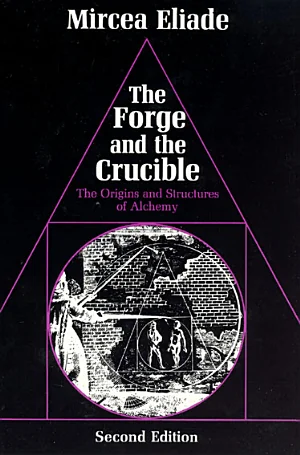
Mircea Eliade’s "The Forge and the Crucible" is a rigorous examination of alchemy’s spiritual and anthropological origins. Rather than focusing on laboratory procedures, Eliade delves into the archaic consciousness that perceived transformation of matter as a sacred act. He compellingly argues that the blacksmith's forge and the potter's crucible were not merely workshops but primordial sites of cosmic regeneration. One significant strength is Eliade’s ability to connect disparate cultural practices—from ancient metallurgy to early Chinese alchemy—under a unified theory of material-spiritual metamorphosis. A notable limitation, however, is the density of the prose, which can make the intricate arguments challenging for the casual reader. The passage discussing the blacksmith as a shamanic figure, initiating a transformation mirroring divine creation, is particularly illuminating. Eliade’s work remains a foundational text for understanding alchemy’s deeper currents.
📝 Description
71
Mircea Eliade's 1978 book traces alchemy not just to metallurgy, but to humanity's impulse to transform matter and self.
Mircea Eliade's "The Forge and the Crucible," first published in 1978, examines the origins of alchemy. Eliade argues that early human discoveries, like the control of fire and the manipulation of materials such as ore and clay, fostered a spiritual awareness. This awareness, he posits, formed the basis for alchemical thought and practice, connecting terrestrial changes with cosmic order. The book is of interest to scholars of comparative religion, the history of science, and esoteric traditions. It appeals to readers curious about alchemy's philosophical roots, its links to early human consciousness, and the symbolic language of ancient cultures. Those who wish to grasp the spiritual dimensions of material manipulation, separate from modern scientific views, will find this work valuable.
Eliade addresses the 'sacredness' of matter and the transformative power found in the artisan's craft, particularly that of the blacksmith and potter. He shows how these early professions carried religious meaning, acting as miniature representations of cosmic creation. The book considers the earth as a living entity, capable of birth and change, a perspective central to many archaic cosmologies. This view of matter and transformation is fundamental to understanding the alchemical impulse.
This work situates alchemy within a broader framework of archaic religious and magical thinking, moving beyond purely chemical interpretations. Eliade connects alchemical aspirations to the deep human need for transformation, both material and spiritual, drawing parallels with shamanic practices and other religious phenomena he studied. The book highlights how early artisans, like blacksmiths and potters, engaged with matter in ways that were imbued with sacred meaning, reflecting a worldview where the terrestrial mirrored the celestial. It examines the symbolic language and spiritual significance attached to the manipulation of raw materials, a core aspect of many esoteric traditions.
💡 Why Read This Book?
• Gain insight into the pre-scientific worldview that viewed matter as inherently alive and transformable, a concept explored through Eliade's analysis of early metallurgy and pottery. • Understand the spiritual significance of early crafts, particularly the blacksmith’s forge, which Eliade presents as a site of cosmic creation and renewal. • Appreciate the historical linkage between archaic religious consciousness and the emergence of alchemical thought, as detailed in Eliade's exploration of global traditions.
⭐ Reader Reviews
Honest opinions from readers who have explored this book.
❓ Frequently Asked Questions
When was Mircea Eliade's "The Forge and the Crucible" first published?
Mircea Eliade's "The Forge and the Crucible" was first published in 1978, offering a comprehensive look at the spiritual origins of alchemy.
What is the main argument of "The Forge and the Crucible"?
The book argues that alchemy's origins lie in the spiritual and religious experiences of early humans who discovered the transformative power of manipulating matter, seeing these acts as mirroring cosmic creation.
Does the book focus on chemical processes?
No, "The Forge and the Crucible" primarily focuses on the anthropological and religious roots of alchemy, exploring the consciousness and ritual surrounding material transformation rather than specific chemical techniques.
What historical traditions does Eliade examine in relation to alchemy?
Eliade examines traditions including early metallurgy, pottery, shamanism, and specifically discusses Chinese alchemy, illustrating the global reach of these transformative concepts.
Who was Mircea Eliade?
Mircea Eliade (1907-1986) was a Romanian historian of religions, a philosopher, and a professor of the history of religions at the University of Chicago, known for his influential works on mythology, shamanism, and esoteric traditions.
What is the significance of the title "The Forge and the Crucible"?
The title refers to the blacksmith's forge and the alchemist's crucible, symbolizing the ancient sites where material transformation was perceived as a sacred, spiritual, and cosmic act.
🔮 Key Themes & Symbolism
Sacredness of Matter
Eliade posits that archaic consciousness viewed matter not as inert, but as imbued with life and potential for transformation. The discovery of fire and its application in forging metals or shaping clay were seen as participating in a sacred drama of creation and regeneration. This perspective elevates the act of material manipulation beyond mere utility, linking it directly to the divine or cosmic order, a fundamental concept explored throughout the text.
The Artisan as Shaman
The book examines the role of early artisans, particularly blacksmiths, as figures possessing sacred knowledge. Their ability to transform raw ore into finished metal was perceived as a shamanic act, a microcosm of the universe's creation and renewal. This connection between craft, ritual, and spiritual power is central to understanding the genesis of alchemical practices and their symbolic language.
Material Transformation and Spiritual Evolution
Eliade argues that the human impulse to change matter—to forge, to refine, to transmute—is intrinsically linked to a desire for spiritual evolution. The physical processes observed in the forge and crucible were seen as symbolic maps for inner transformation. This duality, where the work on external substances reflects and catalyzes internal change, is a core tenet of esoteric traditions Eliade analyzes.
Archaic Cosmologies
The work explores the cosmologies of ancient societies, where the earth was often personified as a living entity capable of gestation and birth. Alchemical processes were understood within this framework, as humans learned to participate in or accelerate these natural cycles of creation and rebirth. This understanding of the cosmos as a dynamic, living system underpins the spiritual approach to material manipulation.
💬 Memorable Quotes
Direct passages from the work, attributed to the author.
“The discovery of the power to change matter from one state to another brought about a profound change in spiritual behaviour.”
— This statement expresses Eliade's central thesis: that the technological act of material transformation fundamentally altered humanity's perception of itself and its place in the cosmos, initiating a new spiritual awareness.
“The blacksmith's forge was a sacred place, a cosmic hearth.”
— This highlights the religious significance attributed to early crafts. The forge was not merely a workshop but a symbolic site where the principles of creation and regeneration, mirroring divine activity, were enacted.
“Alchemy is a spiritual discipline whose goal is the transformation of man, not merely the transmutation of metals.”
— This interpretation emphasizes the ethical and spiritual dimension of alchemy as explored by Eliade, suggesting that the pursuit of material perfection was a vehicle for achieving personal and spiritual perfection.
“The alchemist sought to liberate the spirit hidden within matter.”
— This points to the symbolic understanding of matter in alchemy. It was not seen as dead substance but as containing a vital essence or spirit that could be purified and elevated through the alchemical process.
“The earth is pregnant, and the alchemist helps it give birth.”
— This reflects the ancient belief in the earth as a living, generative entity. The alchemist's work was thus seen as a collaboration with cosmic forces, accelerating or facilitating natural processes of creation.
🌙 Esoteric Significance
Tradition
Eliade's work sits within the broad tradition of comparative religion and the history of consciousness, but it significantly illuminates the Hermetic and alchemical lineages. He departs from purely textual or symbolic analyses by rooting alchemical impulses in universal human experiences of transformation and creation, as observed in archaic cultures. His approach bridges anthropological observation with esoteric interpretation, viewing alchemy as a manifestation of humanity's primordial quest for spiritual perfection through material manipulation.
Symbolism
Key symbols in "The Forge and the Crucible" include the blacksmith's forge and the potter's crucible. The forge represents the primal fire of creation, the site where raw, chaotic matter (ore) is subjected to intense heat and shaped into ordered form, mirroring cosmic creation. The crucible symbolizes purification and refinement, the vessel where the essential spirit within matter is liberated and elevated, a process directly analogous to the alchemist's own spiritual purification.
Modern Relevance
Contemporary scholars and practitioners in fields ranging from the psychology of consciousness (e.g., Jungian analysis) to comparative mythology and modern Hermeticism continue to draw upon Eliade's foundational work. His emphasis on the spiritual and existential dimensions of material transformation speaks to those seeking to understand the deeper psychological and symbolic meanings behind alchemical pursuits, connecting ancient practices to modern quests for self-discovery and meaning.
👥 Who Should Read This Book
• Students of comparative religion and anthropology: To grasp how material practices in ancient societies were intertwined with profound spiritual beliefs and cosmologies. • Scholars of Hermeticism and Alchemy: To understand the deep roots of alchemical thought in archaic human consciousness and ritual, moving beyond later philosophical interpretations. • Readers interested in the history of technology and spirituality: To explore how early technological discoveries, like metalworking, fostered a worldview where material change was synonymous with cosmic and spiritual regeneration.
📜 Historical Context
Published in 1978, "The Forge and the Crucible" emerged from a fertile academic landscape where Mircea Eliade was already a towering figure in the history of religions. The mid-20th century saw increasing scholarly engagement with esoteric traditions, moving beyond dismissal to serious analysis. Contemporaries like Frances Yates were exploring Hermeticism's influence on Western thought, while others were investigating Gnosticism and early scientific practices. Eliade’s work distinguished itself by grounding alchemy not in philosophical schools like Neoplatonism, but in the deeply ingrained religious consciousness of archaic societies, particularly the transformative rituals associated with metallurgy and pottery. His approach offered a counterpoint to purely materialist or chemical interpretations, emphasizing the spiritual and cosmological dimensions. The book contributed significantly to a more nuanced understanding of alchemy's place in human intellectual and spiritual history.
📔 Journal Prompts
The blacksmith's forge as a symbolic site of creation.
Reflect on the concept of the earth as a pregnant entity in archaic cosmologies.
The alchemist's quest for liberating the spirit within matter.
Consider the link between early material manipulation and spiritual evolution.
Analyze the shamanic role attributed to early artisans.
🗂️ Glossary
Alchemy
An ancient tradition involving the purported transformation of base metals into noble metals (like gold) and the discovery of a universal elixir. Esoterically, it represents a spiritual discipline aimed at the purification and perfection of the soul.
Crucible
A vessel used for melting or heating substances to very high temperatures. In alchemy, it symbolizes a place of purification and transformation where the essence of matter is refined.
Forge
A hearth or furnace where metal is heated and hammered into shape. Eliade highlights the forge as a primordial site of creation, where raw matter is transformed through fire and human will.
Archaic Consciousness
A term referring to the mindset of early human societies, characterized by a strong connection to nature, a belief in the sacredness of matter, and a worldview where myth and ritual were central to understanding existence.
Material Transformation
The process of changing the physical state or form of substances. In the context of Eliade's work, this is seen not just as a technical act but as a profound spiritual and cosmological event.
Cosmic Creation
The act of bringing the universe into existence, as described in religious myths. Eliade connects early alchemical practices to this concept, viewing them as microcosmic reenactments of divine creative power.
Spiritual Discipline
A practice or set of practices undertaken with the aim of spiritual growth, purification, or enlightenment. Eliade interprets alchemy as fundamentally a spiritual discipline, regardless of its material outcomes.
This book appears in 1 collection
🔮 Readers Also Liked
Browse all →









From the “Alchemy” Collection
View all →








More Free Occult Philosophy Books
View all →