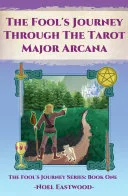
The Fool's Journey through the Tarot Major Arcana
 74
74

The Fool's Journey through the Tarot Major Arcana
Noel Eastwood's "The Fool's Journey through the Tarot Major Arcana" presents the 22 Major Arcana as a singular, cohesive narrative, a perspective that moves beyond the typical fragmented approach to Tarot study. The book's strength lies in its consistent focus on the Fool as the experiencing consciousness, threading a developmental arc through cards that are often treated in isolation. Eastwood's interpretation of The Hierophant as a necessary societal or dogmatic structure that the Fool must eventually move beyond offers a concrete, actionable insight into overcoming limiting beliefs. However, the text occasionally leans heavily on established archetypal psychology without significantly expanding upon it, leaving some readers desiring more unique interpretations. A notable limitation is the 3rd Edition's 2018 revision, which, while extensive, doesn't fundamentally alter the core structure or introduce entirely novel conceptual frameworks. Ultimately, Eastwood provides a well-structured, accessible guide for those seeking to understand the Major Arcana as a unified journey of personal evolution.
📝 Description
74
Noel Eastwood's 2017 book maps the Major Arcana as a single developmental path.
Noel Eastwood's "The Fool's Journey through the Tarot Major Arcana" presents the 22 Major Arcana cards as a unified narrative of personal development. First published in 2017 and revised in 2018, the book centers the Fool figure as the consciousness moving through the archetypal stages, from the initial potential of the Fool card to the completion represented by the World card. Eastwood details each card's role in this progression, viewing the sequence as a coherent set of lessons and transformative experiences rather than independent divinatory symbols.
This work is aimed at Tarot practitioners seeking a deeper engagement with the symbolism and psychological dimensions of the Major Arcana. It moves beyond basic interpretations to address those committed to self-discovery and spiritual growth. The author's focus on the Fool's experiential path offers a framework for integrating Tarot wisdom into daily life, encouraging a more conscious approach to life's challenges and opportunities.
Eastwood's work aligns with esoteric traditions that interpret spiritual or personal growth as a structured sequence of stages. It draws parallels to allegorical narratives that convey life lessons through quests. By framing the Major Arcana as a singular journey, the book connects to a lineage of thought that sees the path of consciousness as a series of unfolding experiences, similar to how philosophical or spiritual initiations are often depicted.
💡 Why Read This Book?
• Gain a unified understanding of the Major Arcana as a single developmental narrative, moving beyond isolated card meanings, as presented in Eastwood's 2017 framework. • Grasp the concept of the Fool as the central experiencing consciousness, learning how each card represents a stage in psychological and spiritual growth. • Explore the symbolic progression from The Fool to The World, understanding how each archetypal challenge contributes to a coherent path of self-discovery.
⭐ Reader Reviews
Honest opinions from readers who have explored this book.
❓ Frequently Asked Questions
What is the primary focus of Noel Eastwood's 'The Fool's Journey through the Tarot Major Arcana'?
The book centers on interpreting the 22 Major Arcana cards as a singular, sequential journey of the Fool, representing stages of human consciousness and personal development.
When was the first edition of 'The Fool's Journey through the Tarot Major Arcana' published?
The initial publication date for Noel Eastwood's book was February 20, 2017.
Who is the intended audience for this book?
It's designed for Tarot practitioners and individuals committed to personal growth and exploring archetypal psychology who seek a deeper, narrative understanding of the Major Arcana.
How does this book relate to other allegorical stories?
Its narrative approach mirrors works like 'The Alchemist' and 'Jonathan Livingston Seagull,' using a journey structure to convey profound life lessons through symbolic representation.
What is the significance of the Fool in Eastwood's interpretation?
The Fool is presented as the core consciousness undergoing the entire journey, symbolizing the initial innocence and potential that navigates through all the subsequent archetypal experiences.
Is 'The Fool's Journey through the Tarot Major Arcana' suitable for beginners?
While accessible, the book moves beyond basic explanations, making it most beneficial for those with some familiarity with Tarot or a dedicated interest in personal growth narratives.
🔮 Key Themes & Symbolism
The Archetypal Fool
The book frames the Fool not just as the first card, but as the essential, innocent consciousness starting the entire spectrum of the Major Arcana. This perspective allows Eastwood to present the 22 cards as a unified narrative of development. The Fool embodies pure potential and the courage to step into the unknown, initiating a journey that mirrors the unfolding of the human psyche. Eastwood emphasizes this card's significance as the starting point for all subsequent archetypal encounters, highlighting its role in embracing new beginnings and the inherent risks that accompany them.
Developmental Arc of the Major Arcana
Central to Eastwood's work is the concept that the Major Arcana forms a coherent developmental sequence, charting a path from spiritual infancy to mature integration. Each card is examined as a distinct stage or challenge within this unfolding journey. This includes confronting societal structures (The Hierophant), facing personal limitations (The Devil), experiencing upheaval (The Tower), and ultimately achieving wholeness (The World). The book argues that understanding this sequential nature provides a powerful map for personal growth and self-awareness.
Symbolic Language of Tarot
The text engages deeply with the rich symbolic language inherent in the Major Arcana. Eastwood interprets the visual and conceptual elements of each card as components of a larger allegorical story. This approach encourages readers to move beyond simple divinatory meanings and to see the Tarot as a profound system of wisdom. By focusing on the narrative flow, the book illuminates how the symbols collectively speak to universal human experiences, psychological processes, and spiritual quests, offering a framework for decoding this ancient system.
Personal Growth and Transformation
Ultimately, 'The Fool's Journey' positions the Tarot's Major Arcana as a potent tool for personal transformation. The archetypal encounters described in the cards are presented as opportunities for learning, introspection, and evolution. By following the Fool's path, readers are encouraged to identify parallels in their own lives, confront their own 'shadows,' and embrace the lessons offered by each stage of the journey. The book aims to empower readers to utilize this symbolic map for greater self-understanding and conscious living.
💬 Memorable Quotes
Direct passages from the work, attributed to the author.
“The Fool is not just the beginning, but the seed of every card that follows.”
— This highlights the book's core thesis: that the potential and essence of all Major Arcana archetypes are present in the initial innocence and openness of The Fool.
“The journey is the message; the sequence reveals the structure of the soul's evolution.”
— This interpretation underscores the book's focus on the narrative progression of the Major Arcana, suggesting that the order and interaction of the cards hold the key to understanding personal transformation.
“Confronting the Devil is not about succumbing, but about recognizing the chains we forge ourselves.”
— This captures the book's psychological approach, interpreting challenging cards like The Devil not as external forces, but as reflections of internal limitations and self-imposed restrictions.
“The World card signifies integration, the completion of a cycle that prepares for a new Fool's emergence.”
— This interpretation points to the cyclical nature of the Tarot journey, where achieving wholeness (The World) is not an end but a preparation for a renewed beginning, echoing the Fool's initial leap.
💡 Key Ideas
Editorial paraphrase of the work's core concepts — not direct quotes.
Each card represents a necessary step, a lesson learned on the path from innocence to wisdom.
This paraphrased concept emphasizes the developmental and educational aspect of the Major Arcana, viewing each card as a crucial component of a larger learning process.
🌙 Esoteric Significance
Tradition
The work aligns with modern psychological interpretations of Tarot, heavily influenced by the Jungian school of thought, which views the cards as archetypal symbols of the human psyche. It departs from purely mystical or predictive traditions by emphasizing the Major Arcana as a map of consciousness development. While acknowledging the esoteric lineage of the Tarot, Eastwood focuses on its application to personal growth and self-understanding, framing the journey as an inner process rather than an external magical or prophetic one.
Symbolism
Key symbols explored include The Fool, representing pure potential and the initiation into the unknown; The World, symbolizing completion, integration, and wholeness; and The Tower, signifying sudden upheaval and the necessary destruction of false structures. Eastwood interprets these not just as individual signs, but as integral parts of a cohesive narrative, showing how the Fool's journey through challenges like the Devil or The Hanged Man leads towards ultimate integration and self-realization.
Modern Relevance
Eastwood's approach continues to influence contemporary Tarot readers and practitioners focused on psychological and self-developmental applications. It speaks to modern archetypal psychology, mindfulness practices, and narrative therapy, where symbolic journeys are used to understand and process life experiences. Thinkers and communities exploring symbolic systems for personal growth and therapeutic insight often draw upon interpretations like Eastwood's, which emphasize the Tarot's potential as a tool for introspection and self-discovery in the 21st century.
👥 Who Should Read This Book
• Tarot practitioners seeking to deepen their understanding of the Major Arcana beyond individual card meanings, aiming for a cohesive narrative interpretation. • Individuals committed to personal growth and self-discovery who appreciate allegorical storytelling and archetypal psychology as frameworks for understanding life's challenges. • Students of comparative mythology and symbolism interested in how ancient systems like the Tarot can be applied to modern psychological and spiritual development.
📜 Historical Context
Published initially in 2017, Noel Eastwood's "The Fool's Journey through the Tarot Major Arcana" emerged in a period marked by a resurgence of interest in esoteric studies and Jungian psychology. This era saw numerous authors exploring archetypal symbolism, often drawing from Carl Jung's theories of the collective unconscious and archetypes. Eastwood’s work fits within this trend, offering a narrative interpretation of the Tarot that parallels the allegorical spiritual quests found in contemporary popular literature like Paulo Coelho's "The Alchemist" (published 1988). While not directly engaging with academic Tarot scholarship of the time, which might have focused on historical origins or critical analysis, Eastwood’s book targeted a readership seeking personal growth through symbolic systems. Its reception was largely within circles dedicated to Tarot practice and self-help, contributing to the ongoing popularization of Tarot as a tool for psychological insight, distinct from purely divinatory applications.
📔 Journal Prompts
The Fool's initial leap: What unknown territory are you currently being called to explore?
Reflect on the lesson represented by The Tower in your life's journey.
How does the concept of The Hierophant's structure manifest in your current beliefs or environment?
Consider the symbolic meaning of The World card in relation to a completed cycle in your life.
The Fool's journey through the Major Arcana: What archetypal challenge are you currently facing?
🗂️ Glossary
Major Arcana
The set of 22 trump cards in a traditional Tarot deck, representing significant life events, spiritual lessons, and archetypal forces.
Archetype
A universal, inherited pattern of thought or image derived from the collective unconscious, as described by Carl Jung, often represented by figures or symbols in myths and dreams.
The Fool
The first card of the Major Arcana, typically numbered 0, symbolizing new beginnings, innocence, spontaneity, and the potential for the unknown journey.
The World
The final card of the Major Arcana, typically numbered 21, representing completion, integration, fulfillment, and the successful culmination of a cycle.
Symbolic Narrative
A story or sequence interpreted through symbols, where the characters, events, and settings represent deeper psychological or spiritual concepts.
Psychological Development
The process of growth and change in mental, emotional, and behavioral patterns throughout a person's life, often explored through archetypal frameworks.
Allegory
A story, poem, or picture that can be interpreted to reveal a hidden meaning, typically a moral or political one, using symbolic representation.