The Essence of Magic

 80
80

The Essence of Magic
Mary K. Greer’s The Essence of Magic offers a refreshingly grounded perspective on a subject often shrouded in hyperbole. Rather than relying on sensationalism, Greer dissects magical practice with the precision of a scholar and the understanding of a seasoned practitioner. Her examination of the imaginal realm as a locus of power, particularly in the context of ritual efficacy, is a standout achievement. The book's strength lies in its intellectual rigor, providing a framework for understanding magic that can be applied to diverse traditions. However, for readers seeking a purely practical grimoire, the emphasis on theory and historical context might prove less immediately gratifying. Greer’s subtle yet firm assertion that effective magic requires both inner alignment and a coherent symbolic language is a vital takeaway, distinguishing this work from more superficial treatments of the occult. It stands as a valuable contribution to serious magical studies.
📝 Description
80
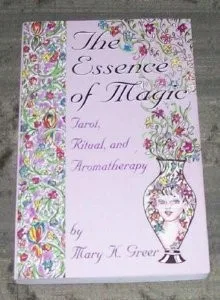
Mary K. Greer's 1993 book examines magic as a system of belief, intention, and interaction with subtle energies.
The Essence of Magic analyzes magical practice not as superstition, but as a complex system. Greer, a respected practitioner and scholar, details how belief, intention, and engagement with subtle energies form the core of magical work. The book investigates the psychological, symbolic, and ritualistic elements that are common across many different magical traditions.
Greer structures the text to guide readers through both the theoretical underpinnings and the practical aspects of magic. She presents a detailed perspective on what makes magical work effective. This work is for serious students of esoteric philosophy and practical magic who want a deeper grasp of its mechanics, moving beyond introductory ideas toward a more scholarly, yet still accessible, discussion.
Published in 1993, The Essence of Magic arrived during a period of renewed interest in esoteric subjects. Greer's synthesis of magical theory and history offered a rigorous approach that distinguished itself from purely experiential or dogmatic methods common at the time. The book connected magical practice to contemporary psychological theories and anthropological studies of ritual, placing it within broader intellectual currents.
💡 Why Read This Book?
• Gain a structured understanding of magical principles, learning how concepts like the imaginal realm function as central to ritual efficacy, as discussed in Greer's exploration of symbolic landscapes. • Develop a critical framework for evaluating different magical traditions by examining the historical evolution of magical thought, a key component of the book's 1993 publication context. • Acquire a nuanced appreciation for the role of focused intention and symbolic language in manifesting change, concepts central to Greer's analytical approach to magic.
⭐ Reader Reviews
Honest opinions from readers who have explored this book.
❓ Frequently Asked Questions
What is the primary focus of Mary K. Greer's The Essence of Magic?
The Essence of Magic primarily focuses on the foundational principles and diverse practices of magic, exploring its theoretical underpinnings, psychological aspects, and historical evolution beyond simplistic definitions.
When was The Essence of Magic first published?
The Essence of Magic was first published in 1993, positioning it within a period of renewed interest in esoteric studies and occult philosophy.
Who is Mary K. Greer, the author of The Essence of Magic?
Mary K. Greer is a recognized scholar and practitioner in the fields of esoteric studies and magical traditions, known for her insightful and well-researched contributions.
Does the book offer practical magical exercises?
While The Essence of Magic provides a strong theoretical and conceptual framework for understanding magic, its primary emphasis is on exploring the principles and context rather than offering a compendium of specific exercises.
What makes this book different from other books on magic published around the same time?
Published in 1993, Greer's work distinguishes itself by offering a rigorous, scholarly yet accessible synthesis, engaging with contemporary psychological and anthropological theories, setting it apart from more purely experiential or dogmatic texts.
Can The Essence of Magic be considered an academic text?
Yes, The Essence of Magic blends scholarly research with practical understanding, making it valuable for both academic study of esoteric traditions and for serious practitioners seeking theoretical depth.
🔮 Key Themes & Symbolism
The Imaginal Realm
Greer posits the imaginal realm as a crucial dimension for magical work, not merely as fantasy but as a potent landscape where intention takes form. This concept underscores the idea that what is visualized and felt with conviction can influence the material world. The book explores how archetypal imagery and focused visualization within this realm contribute to the efficacy of ritual and spellcraft, providing a psychological and symbolic anchor for magical operations.
Symbolic Language and Efficacy
A core theme is the power of symbolic language as the operating system of magic. Greer examines how symbols, sigils, and archetypes function as keys to unlocking and directing energies. The book looks at how a coherent symbolic framework allows practitioners to communicate with subtle forces and effect change, emphasizing that the effectiveness of magic is deeply tied to the practitioner's understanding and skillful use of these symbolic systems.
The Interplay of Theory and Practice
The Essence of Magic meticulously bridges the gap between theoretical understanding and practical application. Greer argues that effective magic requires a solid grounding in its principles, historical context, and psychological dynamics, rather than solely relying on rote actions. This theme highlights the necessity for practitioners to develop both intellectual comprehension and intuitive skill, integrating personal experience with established esoteric knowledge.
Historical Evolution of Magic
The work traces the lineage and development of magical thought across different eras and cultures. By situating magic within its historical context, Greer illuminates how its forms and interpretations have evolved, influenced by philosophical shifts, religious doctrines, and societal changes. This perspective provides readers with a richer appreciation for the enduring nature of magical impulses and their varied expressions throughout human history.
💬 Memorable Quotes
Direct passages from the work, attributed to the author.
“Magic is not about controlling the universe, but about consciously participating in its processes.”
— This statement reframes magic from an act of dominance to one of collaboration. It suggests that effective magical practice involves aligning oneself with natural forces and energies rather than attempting to overpower them, emphasizing a relationship of conscious engagement.
“The imaginal is the crucible where intention is forged into potential reality.”
— This highlights the critical role of visualization and inner experience in magical work. It proposes that the field of imagination serves as the primary space where desires are shaped and empowered, preparing them for manifestation in the physical world.
“Understanding the symbolic language of a tradition is paramount to its effective use.”
— This emphasizes the intellectual component of magic. It asserts that a deep comprehension of the symbols, myths, and archetypes inherent in any magical system is essential for a practitioner to wield its power responsibly and effectively.
“Ritual provides the structure and container for focused magical energy.”
— This interpretation points to the function of ritual in magic. It explains that organized ceremonial or ritualistic actions serve to concentrate and direct the practitioner's will and energy towards a specific outcome, providing form to intent.
“Magic is a method of changing consciousness to effect change in the world.”
— This conceptualizes magic as an internal technology. It posits that the primary mechanism of magic involves altering one's own state of awareness, perspective, and energetic signature, which then ripples outward to influence external circumstances.
🌙 Esoteric Significance
Tradition
The Essence of Magic fits within the broad lineage of Western Esotericism, particularly drawing from Hermeticism and Jungian psychology. It engages with the historical development of magical thought, acknowledging traditions like Kabbalah and ceremonial magic while synthesizing them with modern understandings of consciousness. Greer's work departs from purely dogmatic or ritualistic interpretations by emphasizing the psychological and symbolic dimensions, offering a more integrated view of magic as a path of personal and spiritual development.
Symbolism
Key symbols explored include the archetypal imagery found in the imaginal realm, representing universal patterns of human experience and potent forces. The concept of the 'crucible' serves as a metaphor for the transformative process inherent in magic, where raw intention is refined into manifest reality. Additionally, the book implicitly discusses symbolic systems like sigils and hieroglyphs as languages through which consciousness interacts with subtle energies.
Modern Relevance
Contemporary thinkers and practitioners in fields such as modern witchcraft, Jungian psychology applied to spirituality, and depth occultism frequently cite Greer's work. Her emphasis on the imaginal and symbolic, combined with a rigorous approach, appeals to those seeking to understand magic beyond mere superstition. Schools focusing on psychological approaches to magic and ritual, as well as individuals exploring the intersection of consciousness studies and esoteric practice, continue to draw upon the foundational concepts presented in The Essence of Magic.
👥 Who Should Read This Book
• Aspiring practitioners of ceremonial magic and witchcraft seeking a robust theoretical foundation to complement practical training. • Students of comparative religion and esoteric history interested in understanding the psychological and symbolic underpinnings of magical traditions throughout history. • Psychologists and therapists exploring the archetypal and symbolic dimensions of human consciousness and the potential applications of ritual and imaginal work.
📜 Historical Context
Published in 1993, Mary K. Greer's The Essence of Magic emerged during a significant period for esoteric studies. The late 20th century witnessed a burgeoning interest in occultism, paganism, and alternative spiritualities, fueled partly by the counter-cultural movements of the 1960s and the subsequent New Age phenomenon. Greer's work distinguished itself by offering a more scholarly and systematic approach, moving beyond the often-simplistic or purely experiential narratives prevalent at the time. It engaged with contemporary academic discourse in psychology and anthropology, drawing connections between magical practices and theories of consciousness and ritual. While figures like Aleister Crowley and Dion Fortune had previously laid groundwork in Western esotericism, Greer's 1993 publication provided a synthesized perspective that resonated with a generation seeking deeper theoretical frameworks. The reception was generally positive among practitioners and scholars of the occult, appreciating its balanced approach to historical context, psychological underpinnings, and practical implications.
📔 Journal Prompts
The imaginal realm as a crucible for intention.
Reflecting on the symbolic language of a chosen magical practice.
Identifying personal archetypes influencing current beliefs.
The relationship between consciousness alteration and external manifestation.
Historical context of magical practices relevant to personal work.
🗂️ Glossary
Imaginal Realm
A conceptual space where thoughts, symbols, and emotions take on tangible form and potency, acting as a bridge between consciousness and the material world in magical practice.
Symbolic Language
The system of signs, images, and archetypes used in magic to communicate with subtle energies, the subconscious, and the external world to effect change.
Archetype
Universal, archaic patterns and images that derive from the collective unconscious and are the psychic counterpart of instinctual behavior.
Intention
The focused will and clear purpose behind a magical act, considered a primary driving force for manifestation.
Ritual
A structured sequence of symbolic actions and words designed to create a sacred space, focus consciousness, and direct energy towards a specific magical outcome.
Efficacy
The ability of a magical practice or spell to produce the intended result or effect.
Consciousness
The state or quality of awareness, or of being aware of an external object or something within oneself; explored in magic for its potential to influence reality.
🔮 Readers Also Liked
Browse all →









More by Mary K. Greer
All books →




More Free Magic & Ritual Books
View all →