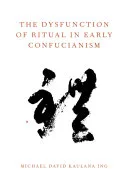
The Dysfunction of Ritual in Early Confucianism
 82
82

The Dysfunction of Ritual in Early Confucianism
Michael Ing’s monograph on the *Liji* offers a necessary corrective to scholarship that privileges the *Analects* when discussing early Confucianism. The book’s signal strength lies in its focused attention on a text often overlooked, revealing the intricate ways early adherents confronted ritual efficacy. Ing’s detailed parsing of the *Liji* demonstrates how these thinkers processed moments when prescribed ceremonies failed to achieve their aims, such as ensuring social order or fostering personal virtue. One particularly illuminating section discusses the concept of *li* (ritual propriety) not merely as fixed performance but as a dynamic practice susceptible to critique and adaptation when its intended outcomes were not met. A potential limitation for some readers might be the dense philological engagement, which occasionally overshadows broader philosophical implications. Nevertheless, for scholars of early Chinese thought, this work provides an indispensable, rigorously argued account of a critical, yet understudied, canonical text.
📝 Description
82
Michael David Kaulana Ing's 2022 book reassesses the *Liji*'s role in early Confucianism.
Published in 2022, Michael David Kaulana Ing's "The Dysfunction of Ritual in Early Confucianism" offers a detailed study of the *Liji*, a significant text in the Confucian tradition. This monograph is the first in English to focus specifically on the *Liji*, a collection attributed to Confucius's immediate disciples. Ing's work goes beyond mere textual analysis to examine how ritual practices were understood and sometimes found wanting in early Confucian thought.
The book places the *Liji* within the turbulent intellectual climate of ancient China. While the *Analects* is often seen as the primary source, the *Liji* was integrated into the Confucian canon centuries earlier. Ing's research illuminates how early Confucians used ritual to build social and cosmic order, particularly when faced with challenges to ritual effectiveness. The central argument concerns how these thinkers grappled with instances where carefully planned rituals failed to produce their desired outcomes, prompting a reevaluation of ritual form, function, and their impact on social cohesion and individual development.
This book engages with the esoteric dimensions of early Chinese thought by examining the operational theories behind ritual practices. In many traditions, ritual is not simply symbolic but is believed to possess efficacy, capable of shaping reality. Ing's study scrutinizes the early Confucian discourse on this very efficacy, particularly when the expected results of ritual action did not materialize. It explores how these thinkers attempted to reconcile the theory of ritual power with observed outcomes, a concern that resonates with esoteric traditions seeking to understand the mechanics of sacred actions and their relationship to cosmic or social order.
💡 Why Read This Book?
• Gain insight into the *Liji*, a key text incorporated into the Five Classics centuries before the *Analects*, to understand early Confucian ritual dynamics. • Learn how early Confucians addressed the "dysfunction of ritual"—situations where ceremonies failed to achieve intended aims, revealing their practical philosophical responses. • Discover the intellectual context of early China, exploring how ritual efficacy was debated and re-evaluated during a formative period of Confucian thought.
⭐ Reader Reviews
Honest opinions from readers who have explored this book.
❓ Frequently Asked Questions
What is the *Liji* and why is it important in Confucianism?
The *Liji* (Book of Rites) is a foundational text in Confucianism, presented as the writings of Confucius' immediate disciples. It was included in the Five Classics canon centuries before the *Analects*, offering crucial insights into early Confucian ritual theory and practice.
What does Michael Ing mean by the 'dysfunction of ritual'?
Ing uses this term to describe situations explored in the *Liji* where established rituals failed to produce their intended social or personal outcomes, prompting early Confucians to reconsider the relationship between ritual form and its efficacy.
When was "The Dysfunction of Ritual in Early Confucianism" first published?
The book was first published on November 15, 2012. It represents a significant scholarly contribution to the study of early Confucian texts.
Is this book suitable for beginners in Confucian studies?
While comprehensive, the book's detailed textual analysis might be more accessible to those with some background in classical Chinese or East Asian philosophy. Advanced students and scholars will find it particularly rewarding.
How does this book differ from studies focusing on the *Analects*?
This monograph specifically centers on the *Liji*, offering a distinct perspective that predates and complements the more commonly studied *Analects*. It highlights the practical concerns and theoretical responses to ritual within a different segment of the early Confucian canon.
What historical period does the book primarily cover?
The book focuses on early Confucianism, examining the intellectual currents and ritual practices that emerged in ancient China during the formative centuries of Confucian thought, particularly as reflected in the *Liji*.
🔮 Key Themes & Symbolism
Ritual Efficacy and Failure
The work confronts the core problem of ritual malfunction within early Confucianism, as documented in the *Liji*. Ing explores how thinkers grappled with ceremonies that did not produce their intended social, political, or spiritual outcomes. This theme moves beyond a simple description of rituals to analyze the intellectual mechanisms developed to cope with, critique, and potentially revise ritual practice when it proved ineffective, highlighting a pragmatic and adaptive dimension to Confucian thought.
The Canonization of the Liji
A crucial aspect is the book's focus on the *Liji* as a text predating the widespread canonical status of the *Analects*. Ing situates the *Liji* within the Five Classics, emphasizing its historical importance in shaping early Confucianism. The analysis reveals how this text, attributed to Confucius' disciples, functioned as a primary source for understanding and enacting *li* (propriety), and how its contents reflect the concerns of its compilers in establishing a coherent ethical and social framework.
Interpreting Confucian Practice
Ing's monograph offers a nuanced interpretation of how early Confucians understood and applied ritual. It suggests that the text implicitly acknowledges moments of ritual inadequacy, prompting reflection on the gap between ideal performance and actual results. This provides a lens through which to view Confucianism not as a static doctrine but as a developing tradition constantly negotiating the complexities of human social existence through the framework of ritual propriety.
Beyond the Analects
By concentrating on the *Liji*, the book provides an essential counterpoint to scholarship that disproportionately emphasizes the *Analects*. It demonstrates that a deeper understanding of early Confucianism requires engaging with a broader range of foundational texts. Ing highlights how the concerns and approaches found in the *Liji* offer a distinct, yet complementary, perspective on the ethical and ritualistic field of ancient China.
💬 Memorable Quotes
Direct passages from the work, attributed to the author.
“The Liji details situations where rituals failed to achieve their aims.”
— This concisely captures the central thesis: the book isn't just about performing rites, but about the intellectual crisis and response when those rites didn't work as intended by early Confucian thinkers.
“Early Confucians coped with ritual dysfunction.”
— This highlights the active, problem-solving approach Ing attributes to early Confucian scholars, suggesting they developed strategies to manage and understand the shortcomings of their own ritual systems.
“The Liji was part of the Five Classics canon before the Analects.”
— This historical fact underscores the *Liji*'s foundational importance and suggests that early Confucian thought developed key ideas about ritual and social order through this text.
“Ritual failure prompted re-evaluation of practice.”
— This interpretation points to the dynamic nature of early Confucianism, where perceived failures in ritual led to intellectual adaptation and refinement of practice, rather than rigid adherence.
“The monograph is the first in English dedicated to the Liji.”
— This emphasizes the scholarly gap the book fills, positioning it as a crucial resource for English-speaking academics and students seeking specialized knowledge on this particular Confucian text.
🌙 Esoteric Significance
Tradition
While ostensibly a work of historical and philosophical scholarship, "The Dysfunction of Ritual in Early Confucianism" touches upon esoteric themes through its examination of ritual efficacy. In many esoteric traditions, ritual is not merely symbolic but a potent force intended to effect specific transformations in the practitioner or the cosmos. Ing's analysis of early Confucianism's struggle with ritual failure offers a comparative perspective, highlighting how even pragmatic, socio-ethical systems grapple with the 'energetic' or 'causal' dimensions of formalized practice, a concern shared by Hermetic, Kabbalistic, and Theosophical studies.
Symbolism
The central symbol explored is *li* (ritual propriety) itself. Within the context of the *Liji*, *li* functions as a symbolic system designed to align human actions with cosmic order and social harmony. When this system "dysfunctions," it suggests a breakdown in the symbolic bridge between the human and the transcendent or the individual and the collective. Another implicit symbol is the ideal sage-ruler, whose perfect adherence to ritual ensures societal well-being; the text's focus on ritual failure implicitly critiques or questions the attainability of such perfect symbolic embodiment.
Modern Relevance
Contemporary esoteric practitioners, particularly those engaged with ritual magic, ceremonial magic, or even aspects of applied psychology that utilize ritualistic frameworks, can draw parallels from Ing's work. The book's exploration of how a tradition confronts and adapts to the perceived ineffectiveness of its core practices offers valuable lessons. It speaks to modern esotericists seeking to refine their own rituals, understand the psychological underpinnings of ritual success and failure, and maintain the relevance of ancient practices in a changing world, echoing concerns found in modern occult revivals.
👥 Who Should Read This Book
• Scholars of East Asian Religions and Philosophy: Gain a deeper understanding of the *Liji* and its role in the early Confucian canon, moving beyond the *Analects*. • Students of Comparative Ritual Studies: Analyze how an ancient, non-Western tradition intellectually processed the challenges and limitations of ritual practice. • Researchers interested in the History of Texts: Explore the formation and significance of the Five Classics in ancient China, specifically the *Liji*'s place within it.
📜 Historical Context
Michael Ing's "The Dysfunction of Ritual in Early Confucianism" emerges from a scholarly landscape increasingly interested in the foundational texts of Chinese thought beyond the universally recognized *Analects*. The period of the *Liji*'s compilation and eventual canonization, spanning centuries before the Common Era and solidifying in the Han Dynasty (206 BCE – 220 CE), was a dynamic era for philosophical development. Competing schools like Mohism and Legalism offered alternative visions of social order, often critiquing the perceived extravagance or ineffectiveness of Confucian ritual. Ing's work directly engages with the intellectual currents of this formative period, examining how early Confucians, represented by the *Liji*, grappled with the practical application and occasional failure of their elaborate system of rites (*li*). The book matters by providing a focused English-language analysis of a text that, while part of the Five Classics, has historically received less scholarly attention than the *Analects*, offering a vital perspective on the evolution of Confucian ethics and social theory.
📔 Journal Prompts
The *Liji*'s treatment of ritual dysfunction.
Early Confucian responses to failed ceremonies.
The concept of *li* beyond mere performance.
Historical context of the Five Classics' canonization.
Ritual adaptation in ancient China.
🗂️ Glossary
Liji
The "Book of Rites," a foundational text in the Confucian canon, traditionally presented as the collected teachings of Confucius' disciples. It is one of the Five Classics.
Confucian Canon
The collection of texts considered authoritative in Confucianism, primarily the Five Classics (including the *Liji*) and the Four Books, which shaped East Asian ethical and political thought.
Five Classics
The foundational texts of Confucianism, traditionally consisting of the *Book of Changes*, *Book of Documents*, *Book of Poetry*, *Book of Rites* (*Liji*), and the *Spring and Autumn Annals*.
Analects
A collection of sayings and ideas attributed to the Chinese philosopher Confucius and his contemporaries, traditionally believed to have been compiled by Confucius' followers. It is a core Confucian text.
Ritual Efficacy
The perceived ability of a ritual or ceremony to produce its intended outcome, whether social, political, spiritual, or personal. The book explores challenges to this efficacy.
Li (禮)
A complex Chinese concept encompassing rites, rituals, propriety, etiquette, and good manners. It is central to Confucian ethics and social order.
Monograph
A detailed, scholarly written work on a specific subject, usually published as a book. This book is the first English monograph on the *Liji*.