Shiva
 82
82

Shiva
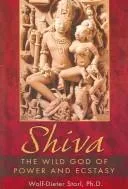
Storl’s examination of Shiva moves beyond the sensationalized "destroyer" trope, a common pitfall in Western discourse about Hindu deities. He meticulously details the deity’s manifold roles, from ascetic yogi to cosmic dancer, grounding his analysis in rich mythological narratives and iconographic traditions. The strength lies in Storl’s ability to synthesize complex theological ideas into a coherent, accessible whole. A particular passage detailing the significance of the Ganga flowing from Shiva’s matted locks, symbolizing the taming of overwhelming divine power, offers a potent example of the book’s insightful approach. Its primary limitation, however, is a tendency at times to lean into esoteric interpretations without always providing sufficient scholarly counterpoint, which might leave some readers wanting more critical distance. Nonetheless, "Shiva" serves as a solid introduction to a profoundly significant divine figure.
📝 Description
82
Wolf-Dieter Storl's "Shiva" examines a Hindu deity beyond simple destruction in 2002.
Wolf-Dieter Storl's book "Shiva" details the Hindu god, presenting him as more than just destruction. Storl shows Shiva as an archetype that includes creation, dissolution, asceticism, and ecstatic dance. The book follows Shiva's images, stories, and philosophical importance in different Indian traditions. It discusses his place in the Trimurti with Brahma and Vishnu, and his worship as Mahadeva, the Great God.
This text is for those seriously studying comparative religion, mythology, and Eastern philosophies. It suits readers who want a deep understanding of Hindu gods without shallow views. People interested in the ideas behind asceticism, cosmic cycles, and divine power in deistic or pantheistic views will find much here. It is for readers ready for serious thought about old traditions.
Storl's work enters Western study of Hinduism, a field that grew from the late 19th century. It connects to traditions influenced by figures like Helena Blavatsky and later Indologists. The book places Shiva within the history of Vedic and Puranic Hinduism, acknowledging its long textual and ritual development. It offers a view that balances Shiva's destructive aspects with his creative and ascetic roles, a perspective that gained ground in academic and esoteric thought from the mid-20th century.
💡 Why Read This Book?
• Gain a nuanced understanding of Shiva beyond common Western stereotypes, particularly through Storl's analysis of the Lingam symbolism as presented in the text. • Grasp the concept of the Trimurti, specifically Shiva's role as destroyer and regenerator, as detailed in the early chapters concerning cosmic cycles. • Appreciate the intricate iconography of Shiva, such as the meaning behind the crescent moon adorning his forehead, offering a visual key to his diverse attributes.
⭐ Reader Reviews
Honest opinions from readers who have explored this book.
❓ Frequently Asked Questions
What is the original publication year of Wolf-Dieter Storl's "Shiva"?
Wolf-Dieter Storl's "Shiva" was first published in 2004. This edition provides a comprehensive overview of the deity's significance within Hindu traditions.
What are the main aspects of Shiva discussed in the book?
The book covers Shiva's roles as destroyer and creator, his asceticism, his iconography (like the trident and serpent), and his philosophical significance as Mahadeva.
Is "Shiva" by Storl suitable for beginners in Hinduism?
While accessible, the book is best suited for those with some prior interest in mythology or religion, offering depth rather than a simple overview.
What is the significance of the Trishul (trident) in relation to Shiva?
The Trishul, a key symbol discussed in Storl's work, represents Shiva's power over creation, preservation, and destruction, as well as his mastery over the three gunas: sattva, rajas, and tamas.
Does Storl's book cover Shiva's role in the Trimurti?
Yes, the book explicitly addresses Shiva's place within the Hindu Trimurti, alongside Brahma and Vishnu, detailing his specific function in the cosmic order.
What philosophical concepts are explored concerning Shiva?
The book delves into concepts like moksha (liberation), Shiva's embodiment of asceticism, and his representation as the ultimate yogi and spiritual teacher.
🔮 Key Themes & Symbolism
The Destroyer and Creator Paradox
Storl meticulously unpacks the dual nature of Shiva, who embodies both destruction and creation. This isn't mere annihilation but a necessary cosmic process of dissolution that paves the way for renewal. The book illustrates this through myths where Shiva's destructive dance (Tandava) is intrinsically linked to the cyclical nature of existence, a core tenet in Hindu cosmology. He is the force that unbinds, allowing for new forms to emerge, making him indispensable in the grand cosmic play.
Asceticism and Divine Power
A significant theme is Shiva's portrayal as the ultimate ascetic yogi, detached from worldly desires yet profoundly connected to the universe. Storl examines the symbolism of Shiva's ash-smeared body, his matted locks, and his solitary meditation in the Himalayas. This asceticism is not a negation of power but its highest expression – control over the senses and the ego, leading to spiritual enlightenment and cosmic awareness. This aspect highlights the path of renunciation as a means to supreme understanding.
Iconography and Symbolism
The book offers a rich exegesis of Shiva's iconic imagery. Each element, from the crescent moon in his hair representing cyclical time, to the serpent (Naga) around his neck symbolizing control over primal energies, and the third eye signifying transcendental vision, is interpreted. The Trishul (trident) embodies his tripartite power over creation, preservation, and destruction. Storl explains how these visual cues are not mere decorations but profound theological statements about Shiva's nature and cosmic function.
Shiva as Mahadeva
Beyond his specific roles, "Shiva" explores his overarching title, Mahadeva, the Great God. This signifies his supreme status in many Hindu traditions, often transcending the limitations of other deities. Storl discusses Shiva's worship as the abstract Lingam, a potent symbol of generative cosmic energy. This section emphasizes Shiva's role as the ultimate reality, the source from which all existence emanates and to which it returns, representing the divine in its most absolute form.
💬 Memorable Quotes
Direct passages from the work, attributed to the author.
“Shiva’s destruction is not an end but a transformation.”
— This concise statement captures a core tenet of Hindu philosophy as presented in the book: that destruction is a necessary precursor to creation, a cyclical process vital for cosmic renewal and evolution.
“The ascetic’s path is one of profound self-mastery.”
— This highlights Shiva’s role as the supreme yogi, illustrating that true power lies not in external force but in the internal discipline and detachment from worldly attachments.
“The Lingam represents the unmanifest potential of the cosmos.”
— This interpretation points to the abstract yet potent symbolism of the Lingam, emphasizing its representation of Shiva's formless, primordial energy that underlies all manifest reality.
“Through his Tandava, Shiva orchestrates cosmic dissolution and rebirth.”
— This describes Shiva's cosmic dance, linking the act of destruction directly to the ongoing cycle of the universe, underscoring his active role in maintaining cosmic order through apparent chaos.
“His third eye sees beyond the illusion of the material world.”
— This refers to the symbolic meaning of Shiva's third eye, representing his ability to perceive ultimate reality and truth, transcending ordinary sensory perception and illusion.
🌙 Esoteric Significance
Tradition
Storl's work situates Shiva within the vast umbrella of Hindu dharma, specifically engaging with Shaivism, one of its major traditions. While not strictly Hermetic or Gnostic, it shares with these traditions an interest in divine archetypes, cosmic cycles, and paths to liberation or gnosis. The focus on Shiva as the ultimate yogi and his transcendental nature aligns with esoteric pursuits that seek direct experience of the divine, often through ascetic practices and meditation, mirroring yogic traditions that have influenced Western esotericism since the 19th century.
Symbolism
Key symbols explored include the Trishul (trident), representing the three gunas (Sattva, Rajas, Tamas) and the forces of creation, preservation, and destruction. The crescent moon signifies control over time and the mind's fluctuations. The serpent (Naga) coiled around his neck symbolizes the taming of primal, chaotic energies and Kundalini power. The Lingam, often abstract, represents the unmanifest, generative cosmic force from which all existence arises, a potent symbol of Shiva's creative and primordial nature.
Modern Relevance
Contemporary interest in mindfulness, yoga, and non-dual philosophies finds echoes in Storl's depiction of Shiva as the archetypal yogi and master of consciousness. Thinkers and practitioners exploring transpersonal psychology, comparative mythology (like Joseph Campbell's work), and integral spirituality often draw on the complex archetypes found in Hinduism. Shiva's embodiment of paradox—destruction leading to creation, asceticism yielding power—continues to inform modern explorations of balance, transformation, and the deeper layers of human consciousness.
👥 Who Should Read This Book
• Students of comparative mythology and religion seeking a detailed examination of a central Hindu deity. • Individuals interested in Eastern philosophies and the concept of cosmic cycles, particularly the role of dissolution and renewal. • Practitioners of yoga and meditation looking to understand the archetypal significance of Shiva as the supreme yogi and guru.
📜 Historical Context
Wolf-Dieter Storl's "Shiva," first published in 2004, emerges within a rich tradition of Western engagement with Indian religions. This engagement intensified significantly after the mid-20th century, moving beyond colonial-era Orientalism towards more nuanced scholarly and spiritual interpretations. Storl's work can be seen in dialogue with Indologists like Wendy Doniger, whose own scholarship on Hindu mythology, particularly her 1988 "The Implied Spider," offered complex psychological and anthropological readings of Indian texts. While figures like Swami Vivekananda had introduced Vedanta to the West much earlier, and Theosophy in the late 19th century had popularized concepts of Eastern deities, Storl's book belongs to a later wave that sought to integrate mythological study with comparative religion and potentially esoteric understanding. It implicitly addresses earlier, often simplistic Western portrayals of Shiva as solely a "destroyer," offering a more holistic view that acknowledges his creative and regenerative aspects, aligning with a growing appreciation for the cyclical and paradoxical nature of existence in Western intellectual currents.
📔 Journal Prompts
The symbolism of Shiva's third eye and its connection to inner vision.
Shiva's role as the great ascetic and its implications for detachment.
Reflecting on the destructive aspect of Shiva as a force for transformation.
The meaning of the Tandava dance in relation to cosmic order.
Interpreting the significance of the Trishul in personal practice.
🗂️ Glossary
Trimurti
The Hindu concept of the trinity of supreme divinity comprising Brahma the creator, Vishnu the preserver, and Shiva the destroyer, representing the cosmic functions of creation, maintenance, and destruction.
Mahadeva
A Sanskrit title meaning "Great God," often used as an epithet for Shiva, signifying his supreme status within Hindu traditions.
Tandava
The vigorous dance of Shiva, often associated with his destructive aspect, but also seen as a cosmic dance that creates, sustains, and destroys the universe.
Trishul
The divine trident weapon wielded by Shiva, symbolizing his power over the three aspects of existence (creation, preservation, destruction) and the three qualities (gunas).
Lingam
An abstract or aniconic representation of Shiva, worshipped as a symbol of generative power and the unmanifest cosmic energy.
Moksha
Liberation or release from the cycle of death and rebirth (samsara), a primary goal in many Indian religions, often associated with spiritual enlightenment.
Yogi
A practitioner of yoga, one who strives for spiritual realization, often through disciplined physical, mental, and spiritual practices. Shiva is considered the Adiyogi, the first and greatest yogi.
🔮 Readers Also Liked
Browse all →







More by Wolf-Dieter Storl
All books →
More Free Occult Philosophy Books
View all →