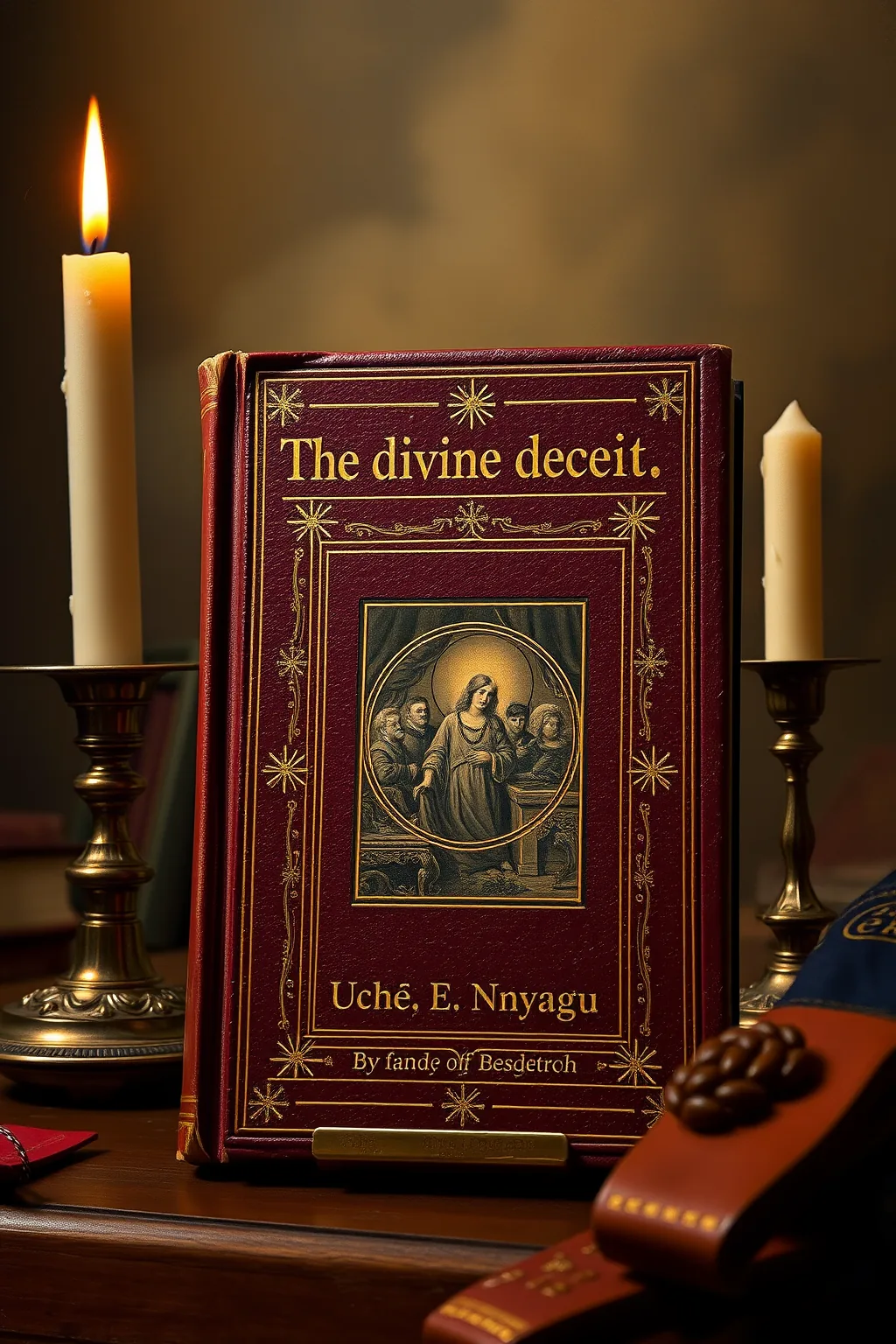
The divine deceit
 71
71

The divine deceit



Alaric Kestrel, Metaphysical Studies Reviewer: Uche E. Nnyagu's 'The Divine Deceit' offers a rare and illuminating perspective on the often-unspoken nexus of faith and finance within Christian communities. Eschewing superficial analyses, Nnyagu excavates the esoteric principles governing wealth accumulation and its theological implications. The book's strength lies in its ability to dissect complex economic doctrines through a mystical lens, revealing hidden patterns and symbolic meanings. It is an essential read for those seeking to understand the material dimensions of spiritual practice and the subtle 'deceits' that can arise when the sacred intersects with commerce. Highly recommended for theologians, students of comparative religion, and discerning spiritual seekers.
📝 Description
71
Uche E. Nnyagu's 2023 book, 'The Divine Deceit,' examines the economic underpinnings of Christian sects.
Uche E. Nnyagu's 'The Divine Deceit' investigates the intersection of spirituality and material wealth within Christian communities. The book examines how faith and finance intertwine, particularly within the structure of various Christian sects. Nnyagu looks at the often hidden economic forces that influence congregational wealth and the philosophical questions that arise when materialism appears within sacred settings.
The work encourages a thoughtful consideration of how spiritual concepts align with earthly possessions. It invites readers to reconsider the outward signs of divine favor and their material manifestations. This book is for those interested in spiritual depth, the economics of religion, and individuals wrestling with the practical aspects of their faith. It presents complex symbolism and aims to challenge common ideas about wealth and devotion.
This work engages with esoteric traditions that seek hidden meanings behind observable phenomena, particularly in religious contexts. It aligns with traditions that analyze the symbolic language of scripture and practice to understand deeper, often material, currents influencing spiritual life. The book questions the surface appearance of divine influence, suggesting that material conditions and economic structures play a significant, often veiled, role in spiritual experience and communal life. It echoes a vein of thought that looks beyond dogma to uncover practical, sometimes hidden, mechanisms at play within religious systems.
💡 Why Read This Book?
Uncover the hidden economic currents that shape spiritual journeys. 'The Divine Deceit' offers a unique, esoteric perspective on how faith and finance intertwine within Christian sects. Ideal for seekers yearning for deeper understanding, scholars examining religious economics, and practitioners navigating the material aspects of their spiritual lives. Read this to challenge assumptions and illuminate the subtle connections between earthly wealth and divine purpose.
⭐ Reader Reviews
Honest opinions from readers who have explored this book.
❓ Frequently Asked Questions
What is the central thesis of 'The Divine Deceit'?
The book's central thesis posits that the economic aspects of Christian sects can, paradoxically, both obscure and reveal divine truths, exploring the subtle 'deceits' that arise from the intersection of faith and material wealth.
Who is the intended audience for this book?
The intended audience includes scholars of religion and economics, theologians, spiritual seekers, church leaders, and anyone interested in the esoteric and philosophical dimensions of faith and prosperity within Christian traditions.
Does the book offer practical advice for church finance?
While it delves into economic aspects, the primary focus is on esoteric and philosophical interpretations rather than prescriptive financial management. It encourages a deeper, more conscious understanding of financial dynamics within spiritual contexts.
What kind of 'deceit' does the title refer to?
The 'deceit' refers to the subtle ways in which material wealth and economic structures within religious organizations can mislead individuals from their true spiritual path, or conversely, how economic principles can be understood as divine laws.
Is this book critical of Christianity?
The book offers a critical yet constructive examination, aiming to illuminate complex issues rather than condemn. It seeks to foster deeper understanding and spiritual discernment regarding the material dimensions of faith.
🔮 Key Themes & Symbolism
The Esoteric Economy of Faith
This theme examines the unseen energetic and symbolic currents that govern the accumulation and stewardship of wealth within religious communities. It moves beyond conventional financial analysis to explore how spiritual principles, when misapplied or misunderstood, can create a 'divine deceit' – a material prosperity that distracts from true spiritual growth. Nnyagu uncovers the hidden allegories and numerological significance often embedded within financial practices, inviting readers to perceive the sacred in the secular area of economics.
Symbolism of Materialism in Sacred Spaces
Explore the profound symbolism inherent in the material trappings of religious institutions. Nnyagu examines how wealth, architecture, and financial transactions within churches can act as potent symbols, either reflecting divine abundance or obscuring it through worldly distractions. This theme dissects the psychological and spiritual impact of materialism on congregational life, questioning whether outward displays of wealth align with inner spiritual truth or create a deceptive facade.
Christianity's Economic Metaphysics
This theme unearths the underlying metaphysical beliefs that shape the economic doctrines and practices of Christian sects. Nnyagu investigates how specific theological interpretations of wealth, poverty, and divine providence influence financial decisions and the pursuit of prosperity. It explores the often-unacknowledged philosophical frameworks that dictate how resources are viewed and managed, revealing the subtle 'deceits' that can arise from a materialistic interpretation of divine blessings.
💬 Memorable Quotes
Direct passages from the work, attributed to the author.
“The temple's gold can blind the seeker to the divine light.”
— This speaks to the 'divine deceit,' suggesting that outward material splendor in religious institutions can distract individuals from recognizing and experiencing true spiritual presence.
“Prosperity is a spiritual state, not merely a financial one.”
— This emphasizes the book's perspective that true abundance originates from an inner spiritual condition, rather than being solely dependent on external material wealth.
“The greatest deceit is believing the illusion is reality.”
— This profound statement challenges readers to question their perceptions of wealth and success, urging them to discern between superficial appearances and deeper spiritual truths.
💡 Key Ideas
Editorial paraphrase of the work's core concepts — not direct quotes.
True wealth is not measured in coin, but in consciousness.
This quote highlights the book's core esoteric message: that genuine spiritual richness transcends material possessions, focusing instead on inner awareness and spiritual enlightenment.
Economic laws are but earthly traces of cosmic order.
This quote posits a metaphysical connection between worldly financial principles and universal spiritual laws, implying that understanding one can illuminate the other.
🌙 Esoteric Significance
Tradition
This work draws heavily from esoteric Christian traditions, including Gnosticism, Hermeticism, and mystical interpretations of biblical texts. It seeks to reveal hidden meanings and symbolic correspondences within religious finance, aligning with the Hermetic principle of 'as above, so below' by linking cosmic order to earthly economic structures. The book’s approach echoes alchemical processes, transforming mundane financial concerns into spiritual insights.
Symbolism
Key symbols include the 'temple' representing the spiritual body or institution, 'gold' as a symbol of worldly wealth or divine illumination, and 'deceit' as the illusionary veil cast by materialism. The book interprets financial transactions and church structures as symbolic narratives of spiritual journeys, revealing how earthly resources can either manifest divine principles or obscure them.
Modern Relevance
In an age where economic discourse often dominates societal conversations, 'The Divine Deceit' offers a vital esoteric counterpoint. It provides a framework for individuals and communities to critically examine their relationship with wealth, challenging materialistic assumptions within spiritual contexts. The book's insights are crucial for fostering authentic spiritual growth and discernment, helping readers read through the often-complex interplay of faith and finance in contemporary life.
👥 Who Should Read This Book
This useful work is essential for spiritual seekers yearning to understand the material dimensions of their faith, offering a fresh perspective beyond conventional dogma. Scholars of religion, comparative theology, and religious economics will find a rich source of critical analysis and esoteric interpretation. Practitioners seeking to align their material lives with their spiritual path will gain useful insights into the symbolic and energetic forces at play. Beginners to esoteric thought will find an accessible yet deep exploration, while advanced practitioners will appreciate the nuanced dissection of spiritual and economic interplay.
📜 Historical Context
Published in an era increasingly grappling with the intersection of faith and commerce, 'The Divine Deceit' emerges as a timely and incisive commentary. The early 21st century has witnessed a surge in discussions surrounding prosperity theology, the financial health of religious organizations, and the ethical implications of wealth accumulation within spiritual communities. Nnyagu's work taps into this contemporary dialogue, but crucially, it grounds its analysis in older, esoteric traditions that have long contemplated the spiritual significance of material resources. The book speaks to historical debates within Christianity regarding asceticism versus worldly engagement, and the theological interpretations of wealth, drawing parallels to ancient Gnostic thought and medieval mystical traditions that often viewed material possessions with suspicion or as symbolic representations of spiritual states.
📔 Journal Prompts
Reflect on the 'divine deceit' in your own financial life. Where might illusion be obscuring truth?
How does the symbolism of wealth within your community of faith resonate with the concepts presented?
In what ways can economic practices be seen as expressions of spiritual principles, both positive and negative?
Consider a personal experience where material gain led to spiritual distraction. What lessons were learned?
How can one cultivate 'true wealth' as defined by consciousness, rather than solely material accumulation?
🗂️ Glossary
Esoteric
Relating to or accessible only by a select group of initiated people; intended for or likely to be understood by only a small number of people with a specialized knowledge or interest.
Gnosticism
A complex and diverse set of religious movements that flourished in the 1st and 2nd centuries CE, emphasizing salvation through knowledge (gnosis) and often viewing the material world as a flawed creation of a lesser deity.
Hermeticism
A religious, philosophical, and esoteric tradition based primarily upon writings attributed to Hermes Trismegistus. It teaches that the universe is a divine manifestation and that humans can achieve immortality through understanding the divine principles governing existence.
Prosperity Theology
A religious belief that Christian faith brings blessings of material wealth and success. It is often interpreted as a form of divine reward for devoutness and financial contributions to religious organizations.
Metaphysics
The branch of philosophy that deals with the first principles of things, including abstract concepts such as being, knowing, substance, cause, identity, time, and space.
This book appears in 3 collections
🔮 Readers Also Liked
Browse all →






From the “Tarot” Collection
View all →








More Free Divination & Tarot Books
View all →