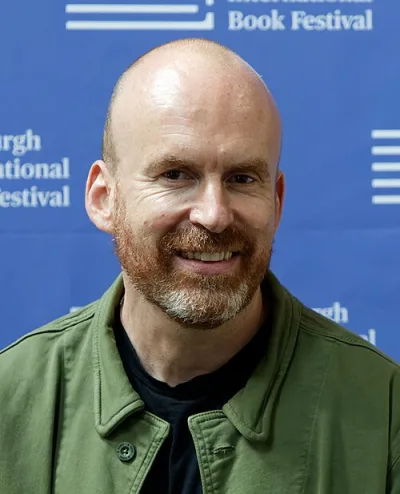
Matt Haig is an English author known for fiction and non-fiction, often exploring speculative themes and personal mental health journeys.
Matt Haig, born in 1975, is an English author and journalist who writes for both children and adults across fiction and non-fiction genres. His work frequently delves into speculative fiction, often with dark or quirky themes, and draws inspiration from his personal experiences with mental health challenges. He has achieved significant commercial success, with titles like "Reasons to Stay Alive" becoming bestsellers and his children's novel "A Boy Called Christmas" being adapted for film. Haig's writing often reimagines classic narratives and explores profound themes of life, death, and existence.
His literary career includes novels that retell classic stories with unique twists, such as "The Last Family in England" based on Shakespeare's Henry IV and "The Dead Fathers Club" inspired by Hamlet. His non-fiction work, particularly "Reasons to Stay Alive," has resonated widely, addressing themes of depression and anxiety. Haig's more recent novels, like "The Midnight Library," continue to explore existential questions and the impact of choices, earning critical acclaim and adaptations. He is also a recipient of the Nestlé Children's Book Prize and has been nominated for various other awards.
Literary Themes and Inspirations
Matt Haig's literary output often features speculative or fantastical elements, frequently interwoven with explorations of human psychology and existential concerns. His novels have been noted for their dark and unconventional takes on familiar themes, including family life. Several of his works draw direct inspiration from classical literature, such as "The Last Family in England," which reimagines Shakespeare's "Henry IV, Part 1" with canine protagonists, and "The Dead Fathers Club," a retelling of "Hamlet." This approach suggests a deep engagement with narrative structures and archetypes, reinterpreting them through a contemporary and often unsettling lens. His writing also frequently touches upon themes of mortality, the afterlife, and the nature of reality, particularly in works like "The Humans" and "How to Stop Time," which feature characters grappling with extraordinary circumstances and extended lifespans.
Personal Experience and Mental Health
A significant aspect of Matt Haig's writing, particularly his non-fiction, is informed by his personal struggles with mental health. He has openly discussed experiencing a severe mental breakdown at the age of 24, and continues to manage anxiety. Diagnosed with ADHD and autism, these experiences have profoundly shaped his perspective and narrative voice. His bestselling non-fiction book, "Reasons to Stay Alive," directly addresses these challenges, offering a candid account that has deeply connected with readers. This authentic portrayal of mental health struggles, often framed within a broader philosophical context of finding meaning and resilience, is a recurring motif. Haig has described books as his faith and libraries as his church, highlighting the therapeutic and spiritual significance he finds in literature, which often mirrors the themes of hope and endurance present in his work.
Narrative Style and Genre Exploration
Haig navigates a diverse range of genres, from adult and children's fiction to non-fiction, often within the speculative fiction umbrella. His novels are characterized by a blend of the imaginative and the introspective. Works like "Shadow Forest" and "A Boy Called Christmas" demonstrate his ability to craft compelling narratives for younger audiences, often incorporating elements of fantasy and adventure, while still touching on complex emotional themes. For adult readers, "The Radleys" explores the concept of vampires in a unique, grounded manner, and "The Humans" offers a philosophical science fiction perspective. His more recent novel, "The Midnight Library," which explores alternate realities and life choices, achieved significant international success and was adapted for radio, showcasing his skill in creating conceptually rich narratives that resonate widely and can be translated across different media.
Key Ideas
- Exploration of mental health challenges, including anxiety and depression, through personal narrative.
- Use of speculative fiction to examine existential questions about life, death, and choices.
- Reimagining of classic literary works with contemporary and often dark twists.
- The profound personal and spiritual significance of books and libraries.
Books by
7 free public domain books · Read online or download