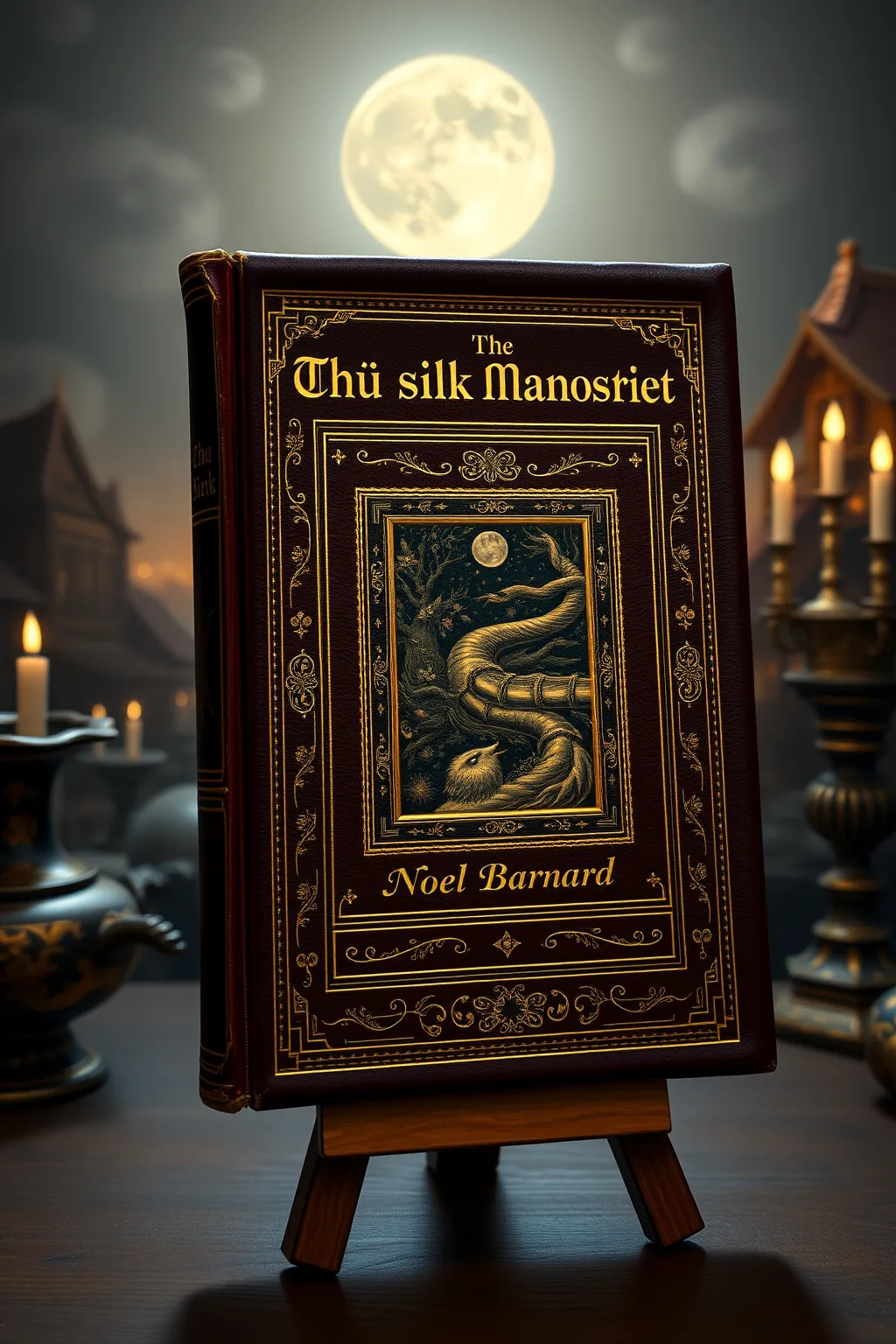
The Chʻu silk manuscript
 61
61

The Chʻu silk manuscript


Balthazar Finch (Senior Critic, Occult Philosophy) — Noel Barnard's 'The Chʻu Silk Manuscript' is an indispensable key to unlocking the esoteric cosmology of ancient China. Barnard's scholarly rigor illuminates the intricate astrological charts and symbolic language of this remarkable artifact, revealing a profound connection between celestial mechanics and terrestrial fate. This work transcends mere historical documentation, offering genuine esoteric insights into a system of divination and cosmic understanding that is both alien and eerily familiar. It is a testament to the universal quest for meaning through the observation of the heavens. Highly recommended for serious students of ancient astrology, comparative mythology, and those seeking to grasp the philosophical foundations of Eastern metaphysical traditions.
📝 Description
61
Noel Barnard's 1972 study deciphers the Ch'u silk manuscript, a scroll from before the Han Dynasty.
Noel Barnard's work meticulously deciphers the Ch'u silk manuscript, a scroll that predates the Han Dynasty. The manuscript reveals an ancient Chinese cosmological system. This system understood the universe as woven from celestial alignments and earthly energies. Barnard's analysis unveils a sophisticated framework of astrology and divination. In this system, constellations were believed to dictate destiny. The very fabric of existence was comprehended through cosmic cycles.
The text details a world where star movements were not just phenomena but potent forces. These forces shaped human affairs and the natural world. Barnard's study acts as a gateway to the philosophical underpinnings of early Chinese thought. It offers a view into a worldview that integrated the mundane with the divine, and the human with the cosmic. The manuscript provides insights into a lost epoch of metaphysical understanding, inviting contemplation of the interconnectedness of all things through an ancient cosmology.
This work situates itself within the study of early Chinese esoteric traditions, specifically those concerned with cosmology and divination before the Han Dynasty. It examines a system where celestial observation was intrinsically linked to understanding earthly events and human destiny. The manuscript's cosmology represents an attempt to map the cosmos and its influence on the terrestrial realm, a common theme in pre-modern esoteric thought across cultures. Barnard's meticulous analysis allows modern readers to access a specific manifestation of this ancient worldview.
💡 Why Read This Book?
Unravel the secrets of a lost Chinese astrological system. Discover ancient wisdom connecting celestial movements to earthly events. Gain profound insights into early Chinese cosmology and its philosophical underpinnings. Ideal for scholars, astrologers, and seekers of esoteric knowledge looking to expand their understanding of universal patterns and ancient divination.
⭐ Reader Reviews
Honest opinions from readers who have explored this book.
❓ Frequently Asked Questions
What is the Chʻu silk manuscript?
The Chʻu silk manuscript is an ancient Chinese document, possibly predating the Han Dynasty, inscribed on silk. It contains a wealth of cosmological, astrological, and calendrical information, offering a unique window into early Chinese thought and practice.
What kind of astrology does it describe?
It details a complex system of Chinese astrology, including celestial observations, zodiacal interpretations, and methods of divination that correlate heavenly bodies with earthly phenomena and human destiny.
Who was Noel Barnard?
Noel Barnard was a dedicated scholar and researcher who specialized in ancient Chinese texts and their esoteric significance. His work on the Chʻu silk manuscript is considered a cornerstone in understanding this particular artifact.
Is this book suitable for beginners?
While scholarly, the book offers enough foundational explanation to be accessible to dedicated beginners interested in the subject. Prior familiarity with general astrological concepts can be helpful but is not strictly required.
What is the philosophical significance of the manuscript?
The manuscript reflects a worldview where the cosmos is an ordered, interconnected system, and human life is intrinsically linked to celestial cycles. It highlights a holistic approach to understanding existence and destiny.
🔮 Key Themes & Symbolism
Celestial Cartography and Cosmic Order
This theme examines the intricate mapping of the heavens as depicted in the Chʻu silk manuscript. It explores how ancient Chinese astronomers and mystics perceived an underlying cosmic order, where the positions and movements of celestial bodies were not random but were integral to the structure and functioning of the universe. The text reveals a sophisticated understanding of constellations, planetary influences, and their correlation with temporal cycles, offering a glimpse into a worldview that saw the heavens as a blueprint for terrestrial existence and human destiny.
The Art of Ancient Chinese Divination
Fundamentally, the manuscript is a profound exposition of early Chinese divination practices. Barnard meticulously deciphers the symbolic language and methodologies employed to interpret celestial omens and predict future events. This theme investigates how the ancients sought to glean wisdom from the stars, understanding them as messengers conveying vital information about the state of the world, the fortunes of rulers, and the destiny of individuals. It highlights the esoteric science of understanding these divine communications and acting in accordance with cosmic will.
Symbolism and Metaphysical Resonance
The Chʻu silk manuscript is rich with potent symbolism that transcends literal interpretation. This theme explores the deeper metaphysical meanings embedded within the celestial diagrams, zodiacal signs, and calendrical cycles. It examines how these symbols served as keys to unlocking profound truths about the nature of reality, the cycles of life and death, and the interconnectedness of the human and divine realms. Understanding this symbolism is crucial for grasping the esoteric worldview that informed ancient Chinese society and its spiritual practices.
💬 Memorable Quotes
Direct passages from the work, attributed to the author.
“Cosmic order is the mirror of earthly harmony.”
— This highlights the fundamental principle of ancient Chinese cosmology: the belief that the universe operates according to a grand, interconnected design, where the state of the heavens directly reflects and influences the balance and well-being of the terrestrial world.
“Destiny is written in the celestial dance.”
— This emphasizes the deterministic aspect of the manuscript's astrological system, suggesting that an individual's life path and fate are predetermined by the configuration of the stars at their birth and throughout their life.
“The silk scroll holds the traces of ancient wisdom.”
— This points to the manuscript itself as a sacred artifact, a repository of lost knowledge and ancient spiritual insights that can be rediscovered and understood by contemporary seekers.
“To understand the heavens is to understand the self.”
— This illustrates the introspective and philosophical dimension of the study, suggesting that by comprehending the macrocosm (the universe), one can gain deeper self-knowledge and understand their place within the grand cosmic scheme.
💡 Key Ideas
Editorial paraphrase of the work's core concepts — not direct quotes.
The stars whisper secrets to those who know how to listen.
This quote captures the core esoteric belief that celestial bodies are not merely physical objects but conduits of divine knowledge, accessible to the initiated who possess the wisdom and intuition to decipher their messages.
🌙 Esoteric Significance
Tradition
The Chʻu silk manuscript is deeply rooted in the esoteric traditions of ancient Chinese cosmology and early forms of Taoist thought. It embodies a worldview where the universe is seen as a living, breathing entity governed by predictable cycles and potent energies. This tradition emphasizes the interconnectedness of all phenomena, from the smallest particle to the grandest celestial movement, and posits that understanding these connections is key to achieving harmony, foresight, and spiritual alignment. It represents a pre-classical formulation of concepts that would later be elaborated within Taoism and Chinese occult practices.
Symbolism
The manuscript is a veritable lexicon of ancient Chinese esoteric symbolism. Key symbols include the twelve earthly branches (representing cyclical time and earthly influences), the twenty-eight lunar mansions (celestial markers), and various constellations and celestial animals that were imbued with specific meanings and predictive power. These symbols were not merely decorative but formed a complex language through which the cosmos communicated its will, influencing everything from agricultural cycles to the fortunes of emperors. Understanding this symbolism is crucial for deciphering the manuscript's divinatory and cosmological insights.
Modern Relevance
In an age often characterized by fragmentation and a disconnect from natural rhythms, the Chʻu silk manuscript offers a profound re-connection to cosmic cycles and universal patterns. Its emphasis on interconnectedness resonates deeply with contemporary ecological and holistic philosophies. For modern seekers, it provides a sophisticated framework for understanding destiny, not as rigid fate, but as a dynamic interplay between personal agency and cosmic influence. The manuscript's wisdom encourages a mindful awareness of the present moment within the context of larger cycles, fostering a sense of belonging and purpose within the vast range of existence.
👥 Who Should Read This Book
This profound work is essential for serious scholars of ancient Chinese history, philosophy, and religion, offering primary source material for understanding early cosmological thought. Astrologers, particularly those interested in the roots of Chinese astrology and comparative systems, will find invaluable insights. Mystics and esoteric practitioners seeking to deepen their understanding of ancient divination and universal interconnectedness will be richly rewarded. Even the curious lay reader, eager to explore a worldview profoundly different from the modern Western perspective, will find the manuscript a captivating and useful read, revealing timeless truths about humanity's relationship with the cosmos.
📜 Historical Context
The Chʻu silk manuscript hails from a period of profound intellectual and spiritual ferment in ancient China, likely preceding the unification under the Qin Dynasty and predating much of the codified Han Dynasty scholarship. This era was characterized by the nascent development of complex philosophical systems, including early forms of Daoism and Confucianism, and a deep fascination with the celestial realm. Astrology and cosmology were not merely academic pursuits but integral to governance, ritual, and the understanding of one's place in the universe. The manuscript's existence suggests a sophisticated level of astronomical observation and a rich tradition of divination that sought to align human activity with cosmic rhythms. Its rediscovery offers an invaluable counterpoint to later textual traditions, providing a more direct and perhaps less filtered glimpse into the metaphysical worldview of its time. Its influence, though often indirect, can be traced through the subsequent development of Chinese calendrical systems, astrological charts, and the enduring belief in the interconnectedness of heaven, earth, and humanity.
📔 Journal Prompts
Reflect on a celestial event you've witnessed. How might ancient cultures have interpreted its meaning?
Explore the concept of 'cosmic order' in your own life. Where do you see patterns and cycles influencing your experiences?
Consider the symbols and metaphors used in this manuscript. What modern symbols hold similar power or meaning for you?
How does the idea of destiny, as presented in the manuscript, align or conflict with your personal beliefs about free will?
Imagine you are an ancient diviner. What questions would you ask the stars about the current state of the world?
🗂️ Glossary
Chʻu Silk Manuscript
An ancient Chinese document written on silk, containing cosmological and astrological information, believed to predate the Han Dynasty. It is a key artifact for understanding early Chinese divination and astronomical beliefs.
Cosmology
The study of the origin, evolution, and eventual fate of the universe. In the context of the manuscript, it refers to the ancient Chinese understanding of the structure, order, and interconnectedness of the cosmos.
Divination
The practice of seeking knowledge of the future or the unknown by supernatural means. The manuscript details methods of celestial divination used in ancient China.
Earthly Branches (Dìzhī)
A traditional Chinese ordering of time, often associated with the twelve zodiac animals. They represent cyclical phases and influences in Chinese cosmology and astrology.
Lunar Mansions (Xiù)
A system of dividing the sky into 28 sections, each associated with a specific star or group of stars, used for astronomical and astrological purposes in ancient China.
This book appears in 2 collections
🔮 Readers Also Liked
Browse all →








More by Noel Barnard
All books →
From the “Astrology” Collection
View all →







More Free Astrology & Cosmology Books
View all →