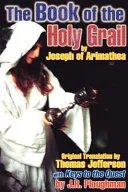
The Book of the Holy Grail
 82
82

The Book of the Holy Grail
The Book of the Holy Grail, as attributed to Joseph of Arimathea, presents itself not as a legend but as a suppressed historical document. Its assertion of being the "Bible of Gnostic Christianity" is bold, and its purported connection to Thomas Jefferson's translation adds a layer of historical intrigue. The work's strength lies in its audacious challenge to orthodox Christian accounts, particularly in its depiction of Jesus' mission and death. However, the text's provenance and the veracity of its claims require significant critical engagement. A notable aspect is its discussion of the crucifixion, which diverges sharply from the New Testament, suggesting a different purpose and outcome for Jesus' suffering. While the text offers a compelling alternative narrative, its integration of diverse traditions—from Gnosticism to Freemasonry and Mormonism—can feel encyclopedic rather than organically synthesized. Sophia Crane finds this book to be a provocative, albeit controversial, source for those examining the fringes of religious history.
📝 Description
82
Joseph of Arimathea's Book of the Holy Grail claims to be the original source for Grail legends.
This text presents a reinterpretation of early Christian history, attributed to Joseph of Arimathea. It proposes itself as the true origin of the Grail legends and offers an alternative gospel narrative. The book challenges accepted accounts of Jesus' life, teachings, and death, suggesting a mission that differs from the canonical Gospels.
It is intended for researchers interested in suppressed histories and alternative religious narratives. The work will particularly interest those studying the origins of Gnostic Christianity, the foundational texts of Freemasonry, and the historical underpinnings of Latter-day Saint beliefs. Readers who wish to examine the traditional Christian narrative will find ample material for comparison.
First published in October 1999, The Book of the Holy Grail reflects a late 20th-century interest in esoteric traditions and historical revisionism. Its assertions place it in dialogue with centuries of Gnostic and alternative Christian scholarship, aiming to present a primary source for traditions often dismissed as myth or heresy. The initial translation is attributed to Thomas Jefferson.
The Book of the Holy Grail enters the discourse on alternative Christian traditions, which has a long history stretching from early Gnosticism to modern esoteric societies. It seeks to provide a primary source for spiritual lineages that proponents believe were suppressed or marginalized by orthodox Christianity. The text connects early Gnostic ideas with later movements like Freemasonry and even aspects of Mormon theology, suggesting a continuous thread of hidden spiritual knowledge.
💡 Why Read This Book?
• Gain insight into an alternative Christology that disputes the traditional Gospels, offering a unique perspective on Jesus' mission and teachings as presented in this text. • Explore the foundational narratives claimed to influence secret societies like Freemasonry and religious movements such as the Mormon Church, drawing connections between esoteric traditions. • Examine a text purported to be the "Bible of Gnostic Christianity," providing original source material for understanding early heterodox Christian beliefs and practices.
⭐ Reader Reviews
Honest opinions from readers who have explored this book.
❓ Frequently Asked Questions
What is the claimed origin of The Book of the Holy Grail?
The book is attributed to Joseph of Arimathea and claims to be the original source text for Gnostic Christianity, predating and challenging the canonical Gospels.
Who is credited with the first English translation?
The work states that its first English translation was completed by Thomas Jefferson, the third President of the United States.
What historical traditions does this book claim to influence?
It asserts influence on the legends of the Holy Grail, the practices of Freemasonry, and the foundational beliefs of the Mormon Church.
How does this text differ from the traditional Gospels?
It disputes the accepted accounts of Jesus' mission, his teachings, and the circumstances of his death, presenting an alternative theological framework.
What is the Gnostic perspective presented in the book?
The book is presented as the 'Bible of Gnostic Christianity,' implying it contains Gnostic interpretations of Jesus' life and teachings, focusing on spiritual knowledge and liberation.
When was this specific edition first published?
The first known publication date for this version is October 1999.
🔮 Key Themes & Symbolism
Alternative Christology
The text presents a radical departure from orthodox Christology, positing a Jesus whose earthly mission and teachings were fundamentally different from those recorded in the New Testament. It challenges the nature of his suffering and death, suggesting a more complex spiritual purpose. This redefinition aligns with Gnostic ideas of a divine being whose earthly manifestation was not fully understood by the material world, offering insights into a suppressed spiritual lineage.
Gnostic Christianity's Core Texts
Positioned as the 'Bible of Gnostic Christianity,' this work is presented as a primary source for a spiritual tradition that emphasizes direct knowledge (gnosis) and liberation from material constraints. It offers an alternative narrative to the dominant Pauline and Petrine interpretations of Jesus' life, focusing on esoteric wisdom and a hidden spiritual reality accessible through understanding. Its inclusion of suppressed gospels and teachings highlights the diversity of early Christian thought.
Foundations of Secret Societies
The book claims to be foundational to traditions like Freemasonry, suggesting that its teachings were transmitted through esoteric channels over centuries. It explores concepts and symbols that allegedly underpin Masonic rituals and philosophies, linking them to an ancient, unbroken chain of spiritual knowledge originating from Jesus himself. This connection implies a hidden history of Western esotericism.
The Grail Legend's Origin
This text is presented as the original source material for the Holy Grail legends, moving beyond Arthurian romance to a more profound spiritual artifact or concept. It suggests that the Grail's significance lies not merely in its physical form but in the spiritual quest it represents, a quest for divine knowledge and enlightenment as taught by Jesus and preserved through a select lineage.
💬 Memorable Quotes
Direct passages from the work, attributed to the author.
“Its text contains the most attacked and suppressed alternative gospel of the life of Jesus.”
— This statement emphasizes the book's contentious nature and its role as a repository for heterodox Christian narratives that have historically faced opposition and censorship from established religious authorities.
“The Bible of Gnostic Christianity.”
— This declaration positions the book as a central, authoritative text for Gnostic believers, implying it contains the core doctrines and revelations of that spiritual path, distinct from canonical scripture.
“The book disputes accounts in the traditionally accepted gospels regarding what Jesus' mission on Earth really was.”
— This highlights the work's direct challenge to New Testament narratives, suggesting a reevaluation of Jesus' purpose and the fundamental message he intended to convey to humanity.
“The original source for the legends of the Holy Grail, Freemasonry, even of the Mormon Church.”
— This asserts a far-reaching historical and cultural influence, claiming the book is the urtext for disparate spiritual and fraternal traditions, linking them through a hidden stream of esoteric knowledge.
“First translated into English by our country's third president.”
— This claims a significant historical provenance for the English version, linking it to a prominent figure in American history and suggesting an early engagement with such esoteric texts among intellectual elites.
🌙 Esoteric Significance
Tradition
This work is deeply rooted in Gnostic Christianity, presenting itself as a core scripture of that tradition. It departs from mainstream Christianity by emphasizing a dualistic worldview, the pursuit of spiritual knowledge (gnosis) for liberation, and an alternative understanding of Jesus' divine and human nature. It aligns with Gnostic tenets that view the material world as flawed and the divine spark within humans as needing to be awakened.
Symbolism
Central symbols likely include the Holy Grail itself, representing not just a physical relic but the vessel of divine knowledge or spiritual attainment. The figure of Joseph of Arimathea serves as a custodian of this hidden wisdom. Other potential symbols could relate to the duality of light and darkness, spirit and matter, and the esoteric interpretations of Jesus' passion and resurrection, all common motifs in Gnostic literature.
Modern Relevance
Contemporary thinkers and practitioners in esoteric Christianity, Gnosticism revival movements, and alternative historical research draw upon texts like this. It informs discussions on suppressed spiritual lineages, the historical Jesus outside canonical accounts, and the philosophical underpinnings of Western esotericism, including its alleged connections to groups like Freemasonry.
👥 Who Should Read This Book
• Students of comparative religion and early Christian heterodoxies will find a primary source for examining Gnostic claims and alternative gospel narratives. • Researchers into esoteric traditions and secret societies can explore the book's alleged foundational influence on Freemasonry and Grail lore. • Skeptical readers interested in challenging dominant historical and religious accounts will find substantial material for critical analysis and debate.
📜 Historical Context
Published in October 1999, The Book of the Holy Grail emerges from a late 20th-century surge of interest in esoteric traditions and historical revisionism. Its claims place it in dialogue with centuries of Gnostic scholarship and alternative Christian studies, seeking to provide a primary source for traditions often relegated to myth or heresy. The attribution of its first English translation to Thomas Jefferson, America's third president, situates it within a lineage of intellectual engagement with esoteric texts, potentially aligning it with Enlightenment-era philosophical explorations. This era also saw the continued proliferation of New Age thought and a growing audience for suppressed or hidden histories, a fertile ground for texts challenging mainstream religious narratives. The work’s reception was likely within niche esoteric circles, rather than mainstream academic or religious discourse, due to its radical claims and unverified provenance.
📔 Journal Prompts
The claimed suppressed nature of Jesus' true mission.
Joseph of Arimathea's role as a keeper of esoteric knowledge.
The interpretation of the Holy Grail as a symbol of gnosis.
Connections drawn between Gnosticism and Freemasonry.
The implications of an alternative crucifixion narrative.
🗂️ Glossary
Gnostic Christianity
A diverse set of religious movements in the early Christian era that emphasized salvation through secret knowledge (gnosis). Gnostics often viewed the material world as created by a lesser deity and sought liberation of the divine spark within humans.
Joseph of Arimathea
A figure mentioned in the Gospels as a wealthy disciple who provided Jesus' tomb. In esoteric traditions, he is often depicted as a guardian of sacred relics or secret teachings, including those related to the Holy Grail.
Holy Grail
In legend, a mystical object associated with Jesus Christ, often depicted as the cup used at the Last Supper or the vessel that caught his blood. Esoterically, it symbolizes spiritual enlightenment, divine knowledge, or the quest for ultimate truth.
Freemasonry
A fraternal organization that traces its origins to the late medieval period. It uses allegorical rituals and symbols based on stonemasonry to impart moral and philosophical lessons, often incorporating esoteric and mystical themes.
Mormon Church (Latter-day Saints)
The common name for The Church of Jesus Christ of Latter-day Saints, a religious movement founded in the 19th century. Its theology includes unique scriptures and doctrines that some esoteric traditions claim share roots with or parallels to ancient Gnostic teachings.
Alternative Gospel
A term referring to texts that present accounts of Jesus' life and teachings which differ significantly from those found in the canonical New Testament Gospels (Matthew, Mark, Luke, John).
Gnosis
Greek for 'knowledge.' In Gnosticism, it refers to a special, intuitive, and often mystical knowledge of divine mysteries that leads to spiritual liberation and salvation.