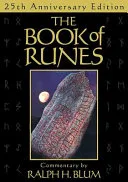
The Book of Runes, 25th Anniversary Edition
 79
79

The Book of Runes, 25th Anniversary Edition
Ralph Blum’s 25th Anniversary edition of The Book of Runes offers a compelling, if sometimes overly simplified, gateway into the ancient Germanic divination system. Its enduring success, surpassing 900,000 copies sold, speaks to its potent blend of historical lore and accessible, practical application. Blum excels at translating the stark symbolism of the Elder Futhark into relatable guidance for modern dilemmas. The section on the rune Kenaz, for instance, effectively captures its dual nature of illumination and creative fire, offering a tangible point of reflection. However, the work occasionally leans towards a generalized New Age interpretation, which may not satisfy scholars seeking rigorous historical analysis of runic magic. The interpretations, while insightful, sometimes lack the historical nuance found in more specialized runic texts. Nevertheless, for those seeking an intuitive oracle that bridges the gap between ancient myth and present-day concerns, Blum’s book remains a remarkably effective tool.
📝 Description
79
Published in 1983, Ralph Blum's The Book of Runes offers a modern interpretation of the Elder Futhark.
This edition of The Book of Runes, reissued for its 25th anniversary, presents a contemporary approach to the Elder Futhark, the ancient Germanic alphabet. Ralph Blum interprets these symbols not just as historical artifacts but as a living oracle for guidance today. The book details the meanings of the 24 runes, connecting their history to practical uses in making decisions and personal reflection.
It is intended for those seeking a working divinatory tool with historical roots. The work appeals to interests in Germanic paganism, Norse mythology, or anyone needing a structured way to understand life's difficulties. Readers who value clear explanations of ancient traditions will find this book useful, especially if they are drawn to divination systems outside of Tarot.
The book focuses on interpreting the 24 runes of the Elder Futhark. Each rune is given its name, historical connections, and a modern, intuitive meaning. Blum presents the runes as a method for self-examination and practical choices, moving past simple prediction. Casting the runes, by drawing them from a pouch, is described as a conversation with the subconscious and the influences on one's life.
Ralph Blum's work appeared in the early 1980s, a time of growing interest in esoteric traditions and pre-Christian European beliefs, influenced by figures like Mircea Eliade and the New Age movement. While not an academic text, it drew on historical runic inscriptions dating from the 2nd century CE. The book made runology accessible to a broad audience, contrasting with more abstract or scholarly studies. It positioned the runes as a tool for personal growth and understanding, distinct from purely historical or archaeological concerns.
💡 Why Read This Book?
• Gain a practical method for self-inquiry using the 24 runes of the Elder Futhark, as explained in Blum's interpretive framework, offering a unique perspective on personal decision-making. • Understand the historical roots of runic divination, acknowledging its origins in Germanic traditions predating the 11th century, providing context beyond mere symbolism. • Develop an intuitive connection with ancient symbols through specific rune meanings like Thurisaz (Thorn) and its representation of protective force, fostering a deeper personal resonance with the oracle.
⭐ Reader Reviews
Honest opinions from readers who have explored this book.
❓ Frequently Asked Questions
What is the origin of the runes presented in The Book of Runes?
The runes in Ralph Blum's book are based on the Elder Futhark, the oldest form of the runic alphabet used by Germanic peoples. Inscriptions using this alphabet date back to at least the 2nd century CE.
How does Ralph Blum suggest using the runes for decision-making?
Blum presents the runes as a contemporary oracle. The book guides readers on how to cast them (often by drawing from a pouch) and interpret the results as a means of gaining perspective and making practical choices in daily life.
What makes the 25th Anniversary Edition different from the original publication?
The 25th Anniversary Edition marks a significant milestone since the book's initial release in 1983. While the core content remains, anniversary editions often include updated introductions, forewords, or minor revisions to reflect on the work's legacy and continued relevance.
Is The Book of Runes an academic text on runology?
No, while informed by historical understanding, The Book of Runes is primarily an interpretive guide for using the runes as an oracle. It focuses on practical application and intuitive understanding rather than strict academic scholarship.
How many copies of The Book of Runes have been sold?
The book has achieved significant popularity, with over 900,000 copies sold since its original publication in 1983, establishing it as a modern classic in the field of divination.
What is the significance of the rune 'Gebo' as described by Blum?
Gebo, often translated as 'Gift,' symbolizes partnership, exchange, and generosity. In Blum's interpretation, it highlights the balance in relationships and the importance of mutual giving and receiving, whether in personal or professional contexts.
🔮 Key Themes & Symbolism
Runic Oracle System
The book reframes the Elder Futhark, an ancient Germanic script, as a living oracle for contemporary use. Blum details each of the 24 runes, assigning them meanings that extend beyond historical linguistic use to encompass psychological archetypes and guidance for practical life. The casting method, often involving drawing runes from a pouch, facilitates a connection between the user's subconscious and the symbolic language of the runes, offering insights into challenges and potential paths forward.
Practical Divination
A central theme is the application of runic wisdom to everyday decision-making. Unlike purely academic studies, Blum's work emphasizes how the runes can serve as a tool for gaining clarity on specific situations. The interpretations provided for each rune, such as the concept of 'protection' associated with Thurisaz or 'partnership' with Gebo, are geared towards offering actionable perspectives rather than abstract philosophical pronouncements.
Connection to Germanic Tradition
The book draws upon the historical context of the Elder Futhark, which was used by Germanic peoples for inscriptions and possibly divination from around the 2nd century CE. While modernizing the interpretations, Blum grounds the system in this ancient lineage. This connection allows readers to engage with a pre-Christian European symbolic system, exploring themes of fate, wisdom, and the natural world as understood by historical cultures.
Self-Inquiry and Insight
The Book of Runes promotes introspection and self-understanding through the symbolic language of the runes. By engaging with the meanings of runes like Ansuz (divine inspiration) or Hagalaz (disruption), readers are encouraged to explore their inner landscape. The process of casting and interpreting the runes is presented as a dialogue with oneself, fostering personal growth and a deeper awareness of one's own patterns and potential.
💬 Memorable Quotes
Direct passages from the work, attributed to the author.
“The runes are a part of the ancient past and, perhaps, a part of your future.”
— This statement expresses the book's core premise: bridging historical wisdom with present-day relevance. It suggests the runes possess an enduring quality that can offer guidance and foresight across different eras.
“Runes are a remarkable aid in practical decision making.”
— This highlights the utilitarian aspect of the book's approach to runes. It positions them not just as symbolic objects but as functional tools for navigating life's choices and complexities.
“The work explores the 24 runes of the Elder Futhark.”
— This is a straightforward declaration of the book's subject matter, indicating its focus on the specific runic alphabet and its components as detailed by the author.
“Based on a tradition over one thousand years old.”
— This phrase emphasizes the deep historical roots of the runic system being presented. It lends authority and antiquity to the practices and interpretations offered within the text.
“The Runes are seen by many as a contemporary Oracle.”
— This positions the runes within the broader context of divinatory systems, suggesting their adaptability and continued perceived utility for seeking guidance in modern times.
🌙 Esoteric Significance
Tradition
The Book of Runes engages with the Germanic pagan tradition, specifically through its focus on the Elder Futhark. While not strictly adhering to any single esoteric lineage like Hermeticism or Kabbalah, it draws from the historical and mythological context of Norse and Germanic cultures. Blum's approach modernizes these ancient symbols, imbuing them with psychological depth and presenting them as a system for personal insight, aligning with broader trends in 20th-century esoteric thought that sought to connect ancient practices with modern psychological understanding.
Symbolism
Central to the book's symbolism are the 24 runes of the Elder Futhark. For instance, the rune 'Thurisaz' (Thorn) is interpreted not just as a physical barrier but as a force of protection and potential disruption, representing raw, untamed power. 'Gebo' (Gift) symbolizes exchange, partnership, and balance, emphasizing the reciprocity inherent in relationships and cosmic forces. 'Ansuz,' often associated with the god Odin, represents wisdom, inspiration, and divine communication, connecting the user to higher knowledge and creative expression.
Modern Relevance
Blum's work continues to influence contemporary practitioners of divination and those interested in Germanic spirituality. Modern Norse pagan revivalists and practitioners of modern witchcraft often reference or draw inspiration from his accessible interpretations. The book's emphasis on runes as a tool for psychological insight and practical decision-making speaks to current trends in self-help and mindfulness, making it a touchstone for individuals seeking personal guidance through ancient symbolic systems.
👥 Who Should Read This Book
• Individuals exploring divination systems beyond Tarot, seeking a tool rooted in ancient Germanic traditions and focused on practical guidance. • Students of comparative mythology and esoteric history, interested in how ancient scripts like the Elder Futhark have been reinterpreted for modern spiritual practices. • Seekers of personal insight and decision-making support, who appreciate a structured yet intuitive approach to understanding life's challenges through symbolic language.
📜 Historical Context
Published in 1983, Ralph Blum's The Book of Runes arrived during a resurgence of interest in Western esoteric traditions and neo-paganism. The era saw figures like F. R. J. Knight popularizing Norse mythology and scholars like Stephen Flowers exploring runic practices academically. Blum’s work, however, prioritized accessibility and practical divination over scholarly rigor, diverging from the more academic approaches to runology. It offered a distinctly modern, psychologically-inflected interpretation of the Elder Futhark, which had been in use since at least the 2nd century CE. While not engaging directly with contemporaries like the more academically inclined Klaus Düwel, Blum's book tapped into a popular desire for accessible oracular systems, becoming a bestseller and influencing a generation's perception of runes as a divination tool, contrasting with the more structured systems like Tarot that also saw significant growth during this period.
📔 Journal Prompts
Reflect on the meaning of the rune Kenaz as illumination and creative fire.
Consider the concept of 'partnership' symbolized by the rune Gebo in your relationships.
Explore the protective and disruptive aspects of Thurisaz in your current situation.
Meditate on the significance of Ansuz for receiving wisdom or inspiration.
How does the idea of 'disruption' represented by Hagalaz apply to your path forward?
🗂️ Glossary
Elder Futhark
The oldest form of the runic alphabet, comprising 24 symbols. It was used by Germanic tribes from approximately the 2nd to 8th centuries CE for inscriptions on stone, metal, and wood.
Rune Casting
The practice of using runes for divination or guidance. Typically involves drawing one or more runes from a set (often kept in a pouch) and interpreting their meanings in relation to a question or situation.
Oracle
A system, person, or place believed to mediate divine will or provide wise counsel. In this context, the runes are presented as an oracle for practical decision-making.
Divination
The practice of seeking knowledge of the future or the unknown by supernatural means. The Book of Runes presents runecasting as a form of divination for insight.
Elder Futhark Runes (Examples)
Specific symbols within the Elder Futhark, each with a name and attributed meaning, such as Fehu (wealth), Uruz (strength), and Ansuz (wisdom).
Esoteric
Intended for or likely to be understood by only a small number of people with specialized knowledge or interest. The Book of Runes falls into this category for its focus on ancient symbolic systems.
Norse Mythology
The body of myths and legends of the North Germanic peoples, stemming from Norse paganism and continuing today by descendants. The runes are intrinsically linked to this cultural heritage.