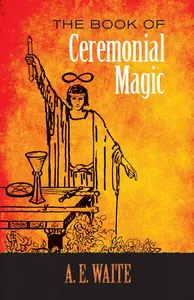
The Book of Ceremonial Magic

 80
80

The Book of Ceremonial Magic
Arthur Edward Waite's "The Book of Ceremonial Magic" presents a formidable survey of its subject, offering a detailed exploration of the literature and practices that defined Western ceremonial magic. Its strength lies in Waite's encyclopedic knowledge and his attempt to systematically catalogue and analyze the historical trajectory of occult texts from the medieval period onwards. The inclusion of original symbols and seals is a significant asset for visual reference. However, Waite's critical stance, while providing a valuable counterpoint to uncritical acceptance, can sometimes verge on dismissiveness, potentially alienating readers seeking a more sympathetic historical account of magical belief systems. A particularly illuminating section details the evolution and significance of the Lesser Key of Solomon, demonstrating the book's capacity for in-depth analysis. Despite its sometimes austere tone, the work remains an indispensable reference for understanding the intellectual history of Western magic.
Verdict: A foundational, if occasionally biased, scholarly compendium of magical lore and literature.
📝 Description
80
Arthur Edward Waite's 1911 book dissects Western ceremonial magic's history and practice.
Published in 1911, Arthur Edward Waite's "The Book of Ceremonial Magic" is a detailed study of Western ceremonial magic. It is divided into two main parts. The first section, "The Literature of Ceremonial Magic," reviews many grimoires and occult texts. It traces their origins and impact on magical practices over time, focusing on the core texts that shaped these traditions.
The second part of the book examines the practical aspects of ceremonial magic. Waite discusses various rituals, the tools used, and the entities invoked. He approaches these subjects with a critical and scholarly perspective, aiming to provide a clear account of the subject matter rather than endorsing it uncritically. The work is aimed at those interested in the historical development of Western esotericism.
This book emerged from the late Victorian and Edwardian fascination with spiritualism and the occult. Waite, a figure with a complicated history concerning groups like the Hermetic Order of the Golden Dawn, sought to organize and explain the complex world of magical literature and practice. His work engages with the esoteric currents of his time, attempting to provide a structured understanding of magical traditions and their historical roots.
💡 Why Read This Book?
• Gain a structured understanding of the historical evolution of magical texts and rituals, particularly through Waite's examination of grimoires like the "Clavicula Salomonis" (Lesser Key of Solomon). • Appreciate the critical scholarly perspective Waite brings to occult traditions, offering a balanced view by analyzing the historical context and potential origins of magical practices. • Study the original iconography and symbolic representations integral to ceremonial magic, as the book reproduces the author's collection of seals and drawings essential for visual study.
⭐ Reader Reviews
Honest opinions from readers who have explored this book.
❓ Frequently Asked Questions
What is the primary focus of Arthur Edward Waite's "The Book of Ceremonial Magic"?
The book primarily focuses on the historical literature and practices of Western ceremonial magic. It categorizes and analyzes various grimoires and occult texts, examining their origins and influence on magical traditions from the medieval period onward.
When was "The Book of Ceremonial Magic" first published?
Arthur Edward Waite's "The Book of Ceremonial Magic" was first published in 1911, during a period of significant interest in spiritualism and esoteric studies.
Does the book include original illustrations or symbols?
Yes, this edition contains the author's original icons, symbols, seals, and drawings, which are crucial for understanding the visual and symbolic language of ceremonial magic.
Is "The Book of Ceremonial Magic" suitable for beginners in occult studies?
While comprehensive, the book's scholarly tone and detailed historical analysis may be more suited for intermediate or advanced students of esotericism. Beginners might find it dense, but it offers an unparalleled historical foundation.
What distinguishes Waite's approach in this book?
Waite's approach is characterized by meticulous research and a critical, often skeptical, examination of the magical claims found in historical texts. He aims to provide historical context and demystify occult lore.
Does the book discuss practical magical rituals?
Yes, it discusses the theoretical and historical aspects of practical magical rituals as described in various grimoires and occult traditions, providing context rather than step-by-step instructions for modern practice.
🔮 Key Themes & Symbolism
Grimoire Literature Analysis
Waite meticulously dissects the corpus of Western grimoires, treating them not merely as spellbooks but as historical documents reflecting specific cultural and intellectual moments. He examines their structure, purported origins, and the esoteric systems they represent, from the "Clavicula Salomonis" to the "The Key of Solomon the King." His analysis aims to contextualize these texts within broader occult traditions and historical scholarship, offering insights into their creation and dissemination across centuries.
Historical Development of Magic
The work traces the lineage and evolution of ceremonial magic, distinguishing between various streams of esoteric thought and practice that emerged over time. Waite explores how rituals and beliefs were transmitted, adapted, and sometimes corrupted through different historical periods. He critically evaluates the authenticity and historical reality of the magical operations described, providing a scholarly perspective on the development of Western occultism from its ancient roots through the medieval and Renaissance periods.
Symbolism and Iconography
A significant component of "The Book of Ceremonial Magic" is its engagement with the symbolic language of magic. Waite reproduces numerous seals, sigils, and diagrams found in historical magical texts, analyzing their purported functions and meanings. These visual elements are presented as integral to the understanding and practice of ceremonial magic, offering a window into the complex symbolic systems employed by practitioners and the esoteric traditions they represent.
Critical Esoteric Scholarship
Waite's work is notable for its critical, rather than purely devotional, approach to occultism. While deeply knowledgeable, he often questions the literal interpretations or historical accuracy of magical claims, seeking rational or psychological explanations where possible. This critical lens provides a valuable counterpoint to more uncritical occult literature, situating the study of magic within a framework of historical and intellectual inquiry.
💬 Memorable Quotes
Direct passages from the work, attributed to the author.
“The literature of ceremonial magic is a vast and ancient collection.”
— This statement highlights Waite's central project: to bring order and scholarly attention to the sprawling and often obscure body of texts that constitute Western magical traditions, emphasizing their historical depth.
“The symbols and figures are the alphabet of the magical language.”
— Waite posits that the visual elements—seals, sigils, and diagrams—are not mere decoration but fundamental components of magical communication and operation, requiring careful study for comprehension.
“Many texts were transmitted through clandestine channels.”
— This reflects the hidden nature of occult knowledge dissemination, suggesting that the study of magical literature involves uncovering secret histories and tracing the underground currents of esoteric thought.
“Waite often questions the historical veracity of magical accounts.”
— This captures Waite's critical stance; he approaches occult claims with scholarly skepticism, aiming to provide historical context and demystification rather than uncritical acceptance of magical lore.
“The first part of the book examines the literature itself.”
— This points to the structural organization of Waite's major work, emphasizing his detailed focus on the textual basis of ceremonial magic before examining its practical applications or broader implications.
🌙 Esoteric Significance
Tradition
This work primarily engages with the Western Esoteric Tradition, particularly focusing on Hermeticism, Kabbalah, and Renaissance magic as manifested through grimoires. Waite attempts to provide a historical and critical framework for these traditions, distinguishing between genuine esoteric lore and later popularizations or misinterpretations. He situates ceremonial magic as a distinct lineage within this broader Western tradition, emphasizing its ritualistic and symbolic dimensions.
Symbolism
Key symbols explored include the pentagram and hexagram, fundamental to ceremonial magic for invocation and protection, and the various seals and sigils of spirits and intelligences found in grimoires like the "Lemegeton." Waite analyzes these not just as magical tools but as expressions of complex theological and cosmological systems, representing the forces and entities believed to govern the universe and human destiny.
Modern Relevance
Contemporary practitioners of Western esoteric traditions, particularly those interested in historical ritual reconstruction or comparative magical studies, continue to reference Waite's work. Scholars of religion and occultism also utilize it as a primary source for understanding the intellectual history of magic. Modern magical orders and independent researchers draw upon its detailed cataloging of texts and symbols to inform their own studies and practices.
👥 Who Should Read This Book
• Students of Western Esotericism: Those seeking to understand the historical development and textual foundations of magical practices, particularly from the medieval to the early modern period. • Researchers of Occult History: Individuals interested in cataloging and critically analyzing the evolution of grimoires, occult societies, and esoteric belief systems in Europe. • Comparative Religion Scholars: Academics studying the intersection of religion, folklore, and magical traditions, offering a detailed look at a specific subset of religious and para-religious expression.
📜 Historical Context
Published in 1911, "The Book of Ceremonial Magic" emerged during a fervent period of occult revival in Britain, characterized by movements like the Hermetic Order of the Golden Dawn and the widespread interest in spiritualism. Arthur Edward Waite, himself a significant figure in esoteric circles, navigated this landscape with a scholarly yet often critical perspective. The book's detailed examination of grimoires and magical traditions can be seen as a response to, and a systematization of, the burgeoning occult literature of the era, differentiating itself from more sensationalist or purely practical manuals. Its publication coincided with the work of contemporaries like Aleister Crowley, though Waite's approach was markedly distinct, often emphasizing historical context and critical analysis over direct magical practice. The book engaged with the intellectual currents of the time, which sought to understand or rationalize the supernatural, and it was received as a significant, albeit sometimes contentious, contribution to the study of Western esotericism.
📔 Journal Prompts
The Literature of Ceremonial Magic as a historical archive.
Waite's critical stance on the efficacy of magical operations.
The role of specific seals and symbols in ritualistic traditions.
Comparison of Waite's analysis with contemporary occult practices.
The influence of grimoires on the broader European intellectual landscape.
🗂️ Glossary
Grimoire
A textbook of magic, typically containing instructions on how to create magical tools, cast spells, and invoke or command supernatural entities. Grimoires form a central focus of Waite's historical analysis.
Ceremonial Magic
A branch of magic that emphasizes ritual, elaborate ceremonies, and the use of specific tools, incantations, and symbolic actions to achieve magical effects or communicate with spiritual beings.
Sigil
A symbol or sign, often a stylized representation of a name or concept, used in magical rituals for invocation or to represent a specific entity or power.
Lesser Key of Solomon (Lemegeton)
A famous grimoire compiled in the mid-17th century, detailing the hierarchy of demons and methods for their conjuration. Waite provides a critical examination of its various parts.
Invocation
The act of calling upon a deity, spirit, or other supernatural power, often with the intention of receiving guidance, power, or assistance.
Esotericism
Teachings or practices that are esoteric, meaning intended for or understood by only a small number of people with a specialized knowledge or interest, often relating to spiritual or mystical traditions.
Theurgy
A system of ritual magic or spiritual practice aimed at achieving union with the divine or evoking divine presence; often contrasted with goetia (lesser magic).