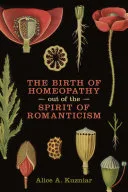
The Birth of Homeopathy out of the Spirit of Romanticism
 78
78

The Birth of Homeopathy out of the Spirit of Romanticism
Alice Ann Kuzniar’s "The Birth of Homeopathy out of the Spirit of Romanticism" offers a compelling argument for understanding homeopathy not as an isolated medical anomaly, but as a direct product of its intellectual environment. Kuzniar skillfully positions Samuel Hahnemann within the currents of German Romanticism, demonstrating how concepts like vitalism and a deep reverence for nature permeated his therapeutic system. The work’s strength lies in its meticulous dissection of these philosophical connections, moving beyond a simple historical timeline to reveal the conceptual architecture of homeopathy. A potential limitation for some readers might be the dense academic prose, which, while precise, occasionally obscures the immediate accessibility of the historical narrative. The exploration of how Romantic ideals of individual experience influenced the understanding of disease symptoms is particularly illuminating, providing a fresh perspective on a practice often viewed through a purely scientific or pseudoscientific lens. This is a vital contribution for anyone seeking to comprehend the deep cultural roots of alternative medical practices.
📝 Description
78
Alice Ann Kuzniar's 2023 book traces homeopathy's birth from German Romanticism.
This volume examines how homeopathy developed within the intellectual and cultural climate of German Romanticism. It moves beyond a simple historical account to show the conceptual environment that fostered Samuel Hahnemann's "like cures like" principle. The author contrasts this with the established medical practices of the late 18th and early 19th centuries. The work investigates how Romantic ideals concerning nature, vitalism, and individual experience shaped early homeopathic theory.
The late 18th century in Germany saw intense intellectual change. The Enlightenment's focus on reason was challenged by the emerging Romantic movement, which emphasized intuition, emotion, and the organic. Samuel Hahnemann, a physician trained in conventional medicine, formulated homeopathy in 1796. His idea, that substances causing symptoms in healthy people could cure similar symptoms in the sick, ran counter to the dominant medical approaches of the time. This period also saw advancements in chemistry and pharmacology, which both informed and contrasted with Hahnemann's theories. The analysis centers on the concept of "vital force" (Lebenskraft), a key idea in Romantic philosophy and early homeopathic theory.
This study situates homeopathy not merely as a medical system, but as a product of a specific philosophical and spiritual current. German Romanticism, with its emphasis on vital energies, the organic unity of nature, and subjective experience, provided fertile ground for Hahnemann's ideas. The concept of the "vital force" (Lebenskraft) is central, reflecting a Romantic worldview that saw life as an animating principle distinct from purely materialist explanations. This perspective aligns with broader esoteric traditions that explore the subtle energies and interconnectedness of existence, viewing health and disease through a lens that transcends conventional mechanistic understandings of the body.
💡 Why Read This Book?
• Gain insight into the philosophical origins of homeopathy by understanding its connection to the vitalistic and nature-focused ideals of German Romanticism, a perspective unique to this text. • Learn about Samuel Hahnemann's intellectual development and how his "like cures like" principle (similia similibus curentur) emerged from the specific cultural and philosophical shifts of the late 18th century. • Discover how the Romantic emphasis on individual experience and organic processes, as detailed in the book, provided a framework for understanding disease symptoms and remedies beyond purely mechanistic explanations.
⭐ Reader Reviews
Honest opinions from readers who have explored this book.
❓ Frequently Asked Questions
When was homeopathy officially founded by Samuel Hahnemann?
Homeopathy was founded in 1796 by the German physician Samuel Hahnemann, who proposed the principle of "like cures like".
What is the core principle of homeopathy discussed in the book?
The core principle is "like cures like" (similia similibus curentur), which posits that a substance that causes symptoms in a healthy person can be used to treat similar symptoms in a sick person.
What intellectual movement heavily influenced the birth of homeopathy?
The book argues that homeopathy was significantly influenced by the intellectual and cultural currents of German Romanticism, which emphasized nature, vitalism, and individual experience.
Who is the author of 'The Birth of Homeopathy out of the Spirit of Romanticism'?
The author is Alice Ann Kuzniar. The book was first published on April 24, 2017.
How does the book contrast homeopathy with conventional medicine of its time?
It contrasts homeopathy's "like cures like" approach with the conventional treatments of the late 18th and early 19th centuries, which often involved prescribing drugs with opposite effects or employing heroic interventions.
What does the book suggest about Hahnemann's role in medical history?
The book suggests that Samuel Hahnemann was a product of his time, deeply influenced by Romantic thought, rather than solely an iconoclast breaking from all tradition.
🔮 Key Themes & Symbolism
Vitalism and the Life Force
The work examines "vitalism" (Lebenskraft) as a central concept in both Romantic philosophy and early homeopathy. This metaphysical notion of a unique life force governing living organisms offered an alternative to purely mechanistic or materialistic explanations of health and disease. Hahnemann's system, by focusing on the body's inherent capacity to heal and respond to subtle energetic influences, aligns with this Romantic reverence for an animating principle inherent in nature and the individual.
Romanticism's Influence on Medical Theory
This book argues that the Romantic movement's emphasis on intuition, subjective experience, organic growth, and the interconnectedness of nature provided fertile ground for homeopathy. The Romantic fascination with correspondences, hidden sympathies, and the individual's unique relationship with the natural world directly informed Hahnemann’s development of the "like cures like" principle, positioning it as a natural, holistic approach rather than a purely scientific intervention.
Nature as Healer
A core theme is the Romantic idealization of nature as a source of truth and healing. Homeopathy, in its use of diluted natural substances, embodies this principle. The book explores how this alignment with nature resonated with Romantic sensibilities, offering a counterpoint to the increasingly industrialized and artificial modes of living and medicine that were beginning to emerge in the late 18th century.
The Individual and Subjective Experience
Romanticism placed a high value on individual experience and subjective perception. This is reflected in homeopathy's detailed observation and treatment of unique symptom pictures in each patient. The book connects this focus on the individual's internal state and observable manifestations to the Romantic valorization of subjective reality, suggesting that Hahnemann’s method was deeply attuned to the Romantic worldview.
💬 Memorable Quotes
Direct passages from the work, attributed to the author.
“Hahnemann was a product of his time rather than an iconoclast”
— This interpretation suggests that Samuel Hahnemann's groundbreaking ideas in homeopathy were not a radical departure from all previous thought but were deeply rooted in and shaped by the prevailing intellectual currents of the German Romantic era.
“Homeopathy was founded in 1796 by the German physician Samuel Hahnemann”
— This statement anchors the origin of homeopathy to a specific person, place, and year, marking it as a distinct historical development that emerged from a particular scientific and cultural context.
“Proposed that 'like cures like'”
— This expresses the central therapeutic principle of homeopathy, suggesting a method where substances inducing symptoms in the healthy can be used to treat similar symptoms in the ill.
“Counter to the conventional treatment of prescribing drugs that have the opposite effect to symptoms”
— This highlights the radical departure of homeopathy from contemporary medical practices, which often relied on treatments designed to counteract or suppress existing symptoms, rather than mirror them.
“Critically examines the alternative medical practice of homeopathy within the Romantic culture in which it arose”
— This describes the book's core methodology: a critical analysis of homeopathy not in isolation, but as an integral expression of the philosophical and cultural field of German Romanticism.
🌙 Esoteric Significance
Tradition
Homeopathy, as examined in this book, aligns with certain esoteric traditions that emphasize vitalism and subtle energies rather than purely materialistic explanations. Its focus on the 'vital force' and the energetic signature of substances connects it to lineages that explore correspondences between the microcosm (human) and macrocosm (universe), reminiscent of Hermetic and Neoplatonic thought, though it departs from their specific cosmological frameworks.
Symbolism
The principle of 'like cures like' (similia similibus curentur) itself functions symbolically, suggesting a universe governed by sympathetic resonance rather than simple causality. The dilution and potentization process, while presented as scientific, can be viewed esoterically as a method of refining and amplifying the essential energetic 'spirit' or 'essence' of a substance, moving beyond its material form.
Modern Relevance
Contemporary alternative and complementary medicine practices, particularly those focusing on energetic healing, subtle energies, and holistic well-being, draw inspiration from homeopathic principles. Thinkers and practitioners in fields like naturopathy, energy medicine, and certain branches of mind-body medicine find resonance with homeopathy's emphasis on the body's innate healing capacity and the interconnectedness of physical, mental, and emotional states.
👥 Who Should Read This Book
• Students of medical history and the history of science, seeking to understand the intellectual currents that shaped early modern medical practices, particularly the transition from Enlightenment to Romantic thought. • Practitioners and enthusiasts of homeopathy, who wish to explore the philosophical and cultural origins of their discipline beyond mere technical application. • Scholars of German Romanticism, interested in how philosophical and artistic movements can manifest in scientific and medical theories, offering a unique case study.
📜 Historical Context
The late 18th and early 19th centuries in Germany were a crucible of intellectual change. The Enlightenment's emphasis on reason and empirical observation was being challenged by the subjective, intuitive, and nature-centric ideals of Romanticism. Samuel Hahnemann formulated his homeopathic principles in 1796, a period when physicians like those adhering to humoral pathology or employing harsh treatments like bloodletting were common. Hahnemann's "like cures like" principle stood in stark contrast. While mainstream medicine focused on direct opposition to disease, homeopathy sought energetic resonance. This era also saw the rise of Naturphilosophie, a Romantic school of thought that sought unifying principles in nature, which likely influenced Hahnemann's holistic approach. The reception was mixed; while some embraced it, conventional medical authorities often viewed it with skepticism, leading to its development as an alternative system.
📔 Journal Prompts
The concept of 'vitalism' (Lebenskraft) as a driving force.
Hahnemann's principle of 'like cures like' (similia similibus curentur).
The Romantic idealization of nature as a source of healing.
The role of individual experience in symptom observation.
Homeopathy's departure from conventional 18th-century medical treatments.
🗂️ Glossary
Homeopathy
An alternative medicine system founded by Samuel Hahnemann based on the principle that "like cures like" – using highly diluted substances that cause symptoms similar to the illness being treated.
Similia Similibus Curentur
Latin for "like cures like," the fundamental principle of homeopathy, stating that a substance capable of producing symptoms in a healthy person can cure similar symptoms in a sick person.
Vitalism
A philosophical concept, prevalent in Romanticism, that living organisms are fundamentally different from non-living entities because they contain some non-physical element or are governed by different principles than inanimate things.
German Romanticism
An intellectual and artistic movement in late 18th and early 19th century Germany, characterized by an emphasis on emotion, individualism, nature, and the imagination, often in reaction to the Enlightenment's rationalism.
Naturphilosophie
A branch of German Romanticism that sought to understand nature through holistic and spiritual principles, emphasizing organic unity and interconnectedness, often contrasting with mechanistic scientific views.
Lebenskraft
German term for "life force" or "vital force," a key concept in vitalism and early homeopathic theory, representing an animating principle distinct from mere physical matter.
Humoral Pathology
An ancient medical theory, dominant for centuries, that health depended on the balance of four bodily fluids (humors): blood, phlegm, yellow bile, and black bile. Treatments often aimed to restore this balance.