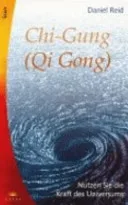
Chi-Gung ( Qi Gong).
 72
72

Chi-Gung ( Qi Gong).
Daniel Reid's *Chi-Gung (Qi Gong)* approaches the subject with a refreshing lack of New Age hyperbole. Instead of vague pronouncements, Reid grounds the practice in physiological understanding and historical context, a strength that sets it apart from many contemporary guides. He meticulously details the mechanics of various exercises, emphasizing the importance of precise posture and breath control. While the book excels in its methodical breakdown of techniques, some readers might find its sheer detail a bit overwhelming initially. The section on the 'Three Treasures' (Jing, Qi, Shen) is particularly illuminating, offering a clear conceptual map for practitioners. Reid's accessible yet rigorous prose makes complex ideas understandable without sacrificing depth. It is an authoritative manual for serious students of internal cultivation.
📝 Description
72
Daniel Reid's *Chi-Gung (Qi Gong)*, published in March 2001, examines this ancient Chinese energetic art.
Daniel Reid's 2001 book, *Chi-Gung (Qi Gong)*, moves past simple introductions to detail the principles and practices of cultivating vital energy, or Qi. The author breaks down the postures, breathing methods, and meditative exercises central to Qi Gong. These are presented not just as physical activities but as ways to improve self-cultivation and health. The text is suitable for beginners curious about Qi Gong and for experienced practitioners wanting to deepen their understanding. It will appeal to those interested in how physical health, mental focus, and spiritual growth connect.
Reid places Qi Gong within its historical context, tracing its origins through thousands of years of Chinese philosophy and medicine. He notes how these practices evolved from ancient Taoist and Buddhist roots to their current global forms. By comparing Qi Gong's development with other Chinese arts and philosophies, Reid helps readers understand its lasting appeal and its place in Chinese culture and healthcare.
This work situates Qi Gong within the broad spectrum of Taoist and Buddhist energetic practices. It connects the physical and mental disciplines of Qi Gong to a wider cosmological understanding common in traditional Chinese spirituality, where the cultivation of internal energy is seen as key to health, longevity, and spiritual attainment. Reid connects these practices to concepts like the meridians and the dantian, which are central to many Chinese internal arts and medical theories.
💡 Why Read This Book?
• Gain a structured understanding of Qi, the vital energy central to Chinese medicine and Taoist practices, as explained by Reid's breakdown of its nature and circulation. • Learn precise postural and breathing mechanics, referencing the detailed instructions for specific exercises that form the core of traditional Qi Gong. • Understand the energetic anatomy of Qi Gong by exploring the concept of meridians and dantian, as presented in the book's focus on internal energy cultivation.
⭐ Reader Reviews
Honest opinions from readers who have explored this book.
❓ Frequently Asked Questions
When was Daniel Reid's Chi-Gung (Qi Gong) first published?
Daniel Reid's *Chi-Gung (Qi Gong)* was first published in March 2001, making it a relatively modern yet comprehensive guide to this ancient practice.
What is the primary focus of Daniel Reid's Chi-Gung book?
The book focuses on the practical applications and underlying principles of cultivating vital energy (Qi) through postures, breathing, and meditation, aiming for health and self-cultivation.
Does the book cover the historical origins of Qi Gong?
Yes, the work situates Qi Gong within its historical lineage, tracing its development from ancient Chinese traditions and acknowledging its evolution over time.
What are some key concepts explored in the book regarding Qi?
Key concepts include the nature and flow of Qi, methods for gathering and storing it (especially in the dantian), and its connection to the body's meridian system.
Is this book suitable for beginners in Qi Gong?
The book is suitable for both beginners and experienced practitioners, offering detailed explanations that cater to a desire for deep understanding and practical application.
What differentiates Reid's approach to Qi Gong?
Reid's approach is characterized by its grounded, methodical explanation, avoiding excessive mysticism and focusing on physiological understanding and historical context.
🔮 Key Themes & Symbolism
Cultivating Vital Energy (Qi)
At the core of Reid's *Chi-Gung (Qi Gong)* is the concept of Qi, the fundamental life force. The book meticulously details how this energy can be consciously cultivated, directed, and enhanced through specific practices. It moves beyond abstract notions to provide actionable techniques for gathering Qi from the environment and one's own body, emphasizing its role in maintaining health, vitality, and mental clarity. The text explores how imbalances or blockages in Qi flow are often the root of illness, positing Qi Gong as a direct method for restoring energetic equilibrium.
The Body's Energetic Framework
Reid's work illuminates the intricate energetic framework of the human body, particularly the meridian system and the dantian. The book explains how Qi circulates through these pathways, influencing organ function and overall well-being. Understanding the dantian as a central energy reservoir is crucial, and Reid provides detailed instruction on its activation and utilization. This focus on the body's internal energetic architecture offers practitioners a map for their internal work, enabling them to perceive and influence subtle energy flows.
Mind-Body Integration
A significant theme is the profound integration of mind and body achieved through Qi Gong. Reid emphasizes that these practices are not purely physical; they require focused intention and mental presence. The book details how the coordinated movement, breath, and awareness work synergistically to calm the mind, reduce stress, and foster a state of deep relaxation. This holistic approach highlights Qi Gong's capacity to harmonize psychological states with physical health, leading to a more balanced and resilient self.
Taoist Foundations and Health
The book anchors Qi Gong firmly within its Taoist philosophical roots, explaining how the principles of balance, flow, and naturalness underpin the practice. Reid connects these ancient Taoist concepts to modern understandings of health and longevity, presenting Qi Gong as a practical application of Taoist wisdom for contemporary life. The emphasis is on harmonizing with the natural rhythms of the universe and the body, leading to sustained well-being and a deeper connection to one's innate vitality.
💬 Memorable Quotes
Direct passages from the work, attributed to the author.
“Qi is the fundamental animating force of all existence.”
— This statement captures the central premise of Qi Gong, positing that Qi is not merely a metaphor but the essential energetic substance underlying all life and phenomena, according to traditional Chinese thought.
“The dantian is the primary center for storing and generating Qi.”
— This highlights the importance of the lower abdomen as the core energy hub in Qi Gong, underscoring the practice's focus on cultivating and managing vital force in this specific anatomical area.
“Breath is the bridge between the body and Qi.”
— This emphasizes the crucial role of respiration in Qi Gong, illustrating how conscious breathing techniques serve as the direct mechanism for interacting with, absorbing, and circulating vital energy.
“Meridians are the pathways through which Qi flows.”
— This defines the energetic channels in the body, explaining that Qi Gong aims to ensure the unimpeded and harmonious movement of energy through these specific anatomical conduits.
“Conscious intention directs the flow of Qi.”
— This underscores the mental component of Qi Gong, indicating that focused awareness and will are essential for guiding and manipulating the subtle energy for therapeutic or developmental purposes.
🌙 Esoteric Significance
Tradition
This work is deeply rooted in the Taoist tradition, specifically the practices associated with internal alchemy and longevity arts. While not strictly an alchemical text, it expounds upon the fundamental principles of cultivating and refining Qi, which are foundational to Taoist esoteric practices. Reid's approach aligns with the Taoist emphasis on working with natural energies, harmonizing with the body's intrinsic systems, and achieving balance for health and spiritual development, departing from more ritualistic or external forms of esoteric practice.
Symbolism
The concept of Qi itself is the primary symbol, representing the vital, dynamic force animating all existence. The dantian, often depicted as a point or sphere in the lower abdomen, symbolizes the energetic core or crucible where Qi is cultivated and transformed. The meridian system functions as a symbolic map of energetic circulation, illustrating the interconnectedness of the body's energetic landscape, mirroring the flow of rivers or the network of a nervous system, but on an energetic level.
Modern Relevance
In contemporary wellness and somatic practices, Reid's work remains relevant for its clear articulation of Qi cultivation techniques. Modern somatic therapists, movement educators, and bioenergetic practitioners often draw upon the principles of breath control and subtle energy awareness detailed in his book. It serves as a foundational text for those exploring the intersection of traditional Chinese energetic arts and contemporary approaches to mind-body integration, stress reduction, and holistic health.
👥 Who Should Read This Book
• Individuals interested in the Taoist foundations of energy cultivation: Those seeking to understand the philosophical underpinnings and practical methods of Taoist practices for health and longevity will find detailed explanations. • Practitioners looking for technical depth: Students of Qi Gong or related arts who wish to refine their understanding of posture, breath, and internal energy dynamics will benefit from the book's systematic approach. • Health enthusiasts seeking complementary practices: People interested in natural methods for enhancing vitality, reducing stress, and improving overall well-being through mind-body exercises will discover actionable techniques.
📜 Historical Context
Published in March 2001, Daniel Reid's *Chi-Gung (Qi Gong)* emerged during a period of increasing global interest in traditional Chinese medicine and mind-body practices. This era saw Qi Gong moving from its more esoteric and localized roots into wider public consciousness, often disseminated through figures like Mantak Chia, who also published extensively on Taoist practices around this time. Reid's work sought to provide a more systematic and grounded explanation, differentiating itself from purely spiritual or generalized health claims. It arrived in a landscape where Western scientific inquiry was beginning to examine the physiological effects of practices like Qigong, though often with skepticism or a focus on measurable outcomes rather than subtle energetic principles. The book's detailed approach offered a counterpoint to more simplified or commercialized versions of the practice, grounding it in historical Taoist traditions and a nuanced understanding of its health benefits.
📔 Journal Prompts
The cultivation of Qi, as described by Reid, and its impact on physical vitality.
The role of breath in bridging the physical body and vital energy.
The Dantien as a central energy reservoir and its significance.
Energetic pathways (meridians) and the concept of Qi flow.
Mind-body integration through conscious movement and intention.
🗂️ Glossary
Qi (Chi)
The fundamental vital life force or energy that animates all living beings and phenomena in the universe, according to traditional Chinese philosophy and medicine.
Dantian
Literally 'elixir field,' referring to specific energy centers in the body, most notably in the lower abdomen, considered the primary locus for storing, cultivating, and transforming Qi.
Meridians
A network of subtle energy channels or pathways throughout the body through which Qi is believed to flow, connecting organs and tissues.
Jing
Often translated as 'essence,' considered a fundamental substance and vital energy related to physical form, heredity, and reproduction; one of the 'Three Treasures'.
Shen
Often translated as 'spirit' or 'mind,' representing consciousness, awareness, and vitality; one of the 'Three Treasures,' closely associated with the heart.
Postures
Specific physical stances and movements in Qi Gong designed to facilitate the flow of Qi, align the body, and cultivate internal energy.
Breathing Techniques
Conscious methods of respiration employed in Qi Gong to regulate Qi, calm the mind, and enhance energy circulation and vitality.