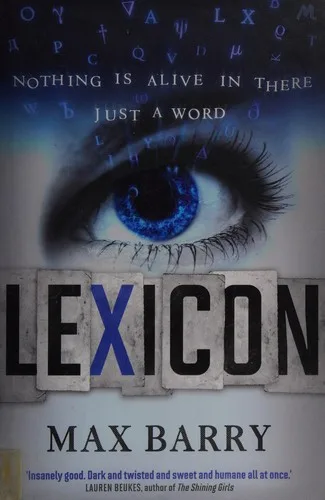
Lexicon
 79
79

Lexicon
Max Barry's *Lexicon* presents an intriguing premise: that certain words, when properly deployed, can warp reality. The initial chapters excel at building this world, introducing the concept of "Poetry" and its shadowy custodians with a compelling sense of mystery. Barry’s ability to craft a narrative where language is literal power is a distinct strength. However, the novel falters somewhat in its latter half, where the intricate mechanics of its world-building become overly convoluted, occasionally sacrificing narrative momentum for elaborate explanations. A particular point of interest is the "Institute" versus "Organization" conflict, which, while central, becomes dense. Barry's exploration of how belief shapes perception is the work's most potent element. Ultimately, *Lexicon* offers a clever, if occasionally tangled, examination of linguistic control.
📝 Description
79
Max Barry's 2013 novel *Lexicon* imagines words possessing direct, reality-bending power.
The novel centers on the clandestine world of the "Poetry," a collection of specific words that compel action and alter perception. Protagonist Wil discovers this hidden reality after being initiated into a secret organization. He finds himself caught between rival factions, the "Poets" and the "Poisoners," each seeking to control the dissemination and application of these potent linguistic tools.
*Lexicon* questions the very nature of belief and influence. It posits that language is not just a tool for communication but a force capable of shaping reality itself. The narrative examines how ideas are branded and spread, and how manufactured consensus can become a powerful, almost magical, force. The story unfolds as a thriller, but its core explores the philosophical implications of language's ultimate power.
While not directly tied to a specific occult movement, *Lexicon* resonates with historical concepts of the power of the Word. Its premise echoes traditions like Kabbalah, where divine creation is understood through utterance, and Gnosticism, which often emphasized secret knowledge and transformative linguistic practices. The novel’s focus on specially empowered words and their control by an organization suggests a fictionalized engagement with ideas about hidden linguistic structures that can influence consciousness, a theme found in various esoteric schools that explore the relationship between language, mind, and the cosmos.
💡 Why Read This Book?
• Understand the power of "Poetry" as presented in Barry's 2013 novel, learning how specific linguistic formulations can manipulate perception and belief, a concept explored through "The Organization." • Experience the tension between "The Organization" and "The Institute," gaining insight into fictionalized power struggles over control of language and its effects. • Grasp the meta-narrative of how words are "Branded" to exert influence, offering a unique perspective on the construction of authority and belief systems.
⭐ Reader Reviews
Honest opinions from readers who have explored this book.
❓ Frequently Asked Questions
What is the core concept of "Poetry" in Max Barry's Lexicon?
"Poetry" in *Lexicon* refers to specific words or phrases that, when uttered or understood correctly, possess the power to alter perception and influence reality. This concept is central to the narrative's exploration of linguistic control.
Who are the main factions in Lexicon?
The primary factions are "The Organization," which seeks to control and weaponize "Poetry," and "The Institute," its rival that operates with different methods and goals regarding the use of these powerful words.
What year was Max Barry's Lexicon first published?
Max Barry's *Lexicon* was first published in 2013, positioning it within contemporary speculative fiction that examines the nature of language and belief.
How does Lexicon explore the concept of "Branding"?
*Lexicon* explores "Branding" as the process by which "Poetry" is disseminated and given authority, effectively conditioning people to believe in and react to these linguistic tools.
Is Lexicon a science fiction novel or something else?
*Lexicon* is best described as speculative fiction with strong meta-narrative and philosophical elements. It uses a science-fiction-like premise to explore the power of language and belief systems.
What is the primary conflict in Max Barry's Lexicon?
The primary conflict revolves around the control and deployment of "Poetry" – words with inherent power. This struggle often pits "The Organization" against "The Institute."
🔮 Key Themes & Symbolism
The Power of Language
The central thesis of *Lexicon* is that language is not merely communicative but can be an active force shaping reality. Barry posits "Poetry" as specific words imbued with inherent power, capable of directly influencing minds and events. This concept moves beyond simple rhetoric, suggesting a tangible, almost magical efficacy in certain utterances. The novel explores how this power is discovered, controlled, and weaponized by clandestine groups, raising questions about the foundations of belief and perception.
Control and Manipulation
The narrative examines the mechanisms of control exerted through language. "The Organization" and "The Institute" represent opposing forces vying for dominion over "Poetry." Their methods, particularly "Branding," illustrate how authority and belief are manufactured and disseminated. This theme examines the societal implications of having a select few who can wield linguistic power to shape collective consciousness, drawing parallels to real-world propaganda and influence campaigns, albeit in a highly fictionalized context.
Reality as Construct
*Lexicon* challenges the reader's perception of objective reality by proposing that it can be fundamentally altered through linguistic means. The "Poetry" acts as a key to unlocking or imposing specific versions of reality. This meta-narrative aspect prompts reflection on how much of our own perceived reality is shaped by the language we use and are exposed to. The book suggests that consensus reality is fragile and susceptible to manipulation by those who master the art of "Branding."
Secrecy and Esoteric Knowledge
The existence and use of "Poetry" are treated as closely guarded secrets, known only to a select few within "The Organization" and "The Institute." This esoteric knowledge elevates the practitioners to a position of immense power. The novel frames the understanding and deployment of these words as a form of hidden wisdom, akin to secret traditions where specific knowledge grants unique abilities. The struggle for control over this knowledge forms the backbone of the plot.
💬 Memorable Quotes
Direct passages from the work, attributed to the author.
“Words have power. Real power. The power to make people do things.”
— This statement expresses the core premise of *Lexicon*, highlighting the literal, actionable force attributed to specific linguistic formulations within the narrative's world.
“The Organization wanted control. The Institute wanted something else.”
— This captures the central conflict between the two main factions, emphasizing their opposing motivations regarding the use and dissemination of "Poetry."
“If you know the right words, you can change the world.”
— This interpretation reflects the underlying philosophy of *Lexicon*, suggesting that mastery of specific language can unlock profound influence over reality and societal structures.
“Belief is the engine. The words are just the fuel.”
— This interpretation emphasizes the crucial role of collective belief in enabling the power of "Poetry" within the novel's framework, suggesting that words derive their potency from the minds that accept them.
💡 Key Ideas
Editorial paraphrase of the work's core concepts — not direct quotes.
They branded the words. Made people believe.
This paraphrased concept refers to the process of "Branding" in the novel, where ideas and "Poetry" are disseminated to create a shared, manipulated belief system.
🌙 Esoteric Significance
Tradition
While *Lexicon* is contemporary speculative fiction, its exploration of "Poetry" as words with inherent power touches upon traditions that venerate the creative force of language. This includes Gnostic cosmology, where the Logos (Word) is a primordial creative principle, and Kabbalistic thought, which emphasizes the profound mystical significance and power of Hebrew letters as fundamental building blocks of creation. Barry's novel fictionalizes these ancient concepts, translating them into a modern context of clandestine organizations and psychological manipulation, moving away from purely spiritual interpretations towards a more utilitarian and control-oriented application.
Symbolism
The primary symbol is "Poetry" itself, representing not just linguistic expression but potent, reality-altering forces. "Branding" serves as a symbol for the systematic dissemination and validation of these powerful words, akin to the creation of sigils or sacred mantras in other traditions, designed to evoke specific responses. "The Organization" and "The Institute" symbolize the dualistic forces of control and subversion, representing the hidden hands that shape collective understanding and the very fabric of perceived reality through the strategic deployment of language.
Modern Relevance
Contemporary thinkers and practitioners in fields like memetics, semiotics, and even certain branches of modern occultism concerned with symbolic power might draw parallels to Barry's concepts. The novel's examination of how beliefs are manufactured and disseminated through language is highly relevant to discussions on propaganda, social engineering, and the impact of digital media. Its fictional framework provides a lens through which to analyze the underlying mechanisms of influence that operate in our own information-saturated world, making its themes applicable to understanding contemporary communication dynamics.
👥 Who Should Read This Book
• Readers interested in meta-fiction and philosophical thrillers who enjoy narratives that question the nature of reality and consciousness. • Students of linguistics, semiotics, or psychology of persuasion seeking fictional explorations of how language can be weaponized and influence belief systems. • Fans of speculative fiction that moves beyond traditional sci-fi tropes to explore abstract concepts with a narrative drive.
📜 Historical Context
Max Barry's *Lexicon*, released in 2013, arrived in an era increasingly aware of the impact of information control and digital discourse. While not directly aligned with any single esoteric school, its premise of words possessing literal power echoes ancient Gnostic ideas of the Logos or the Kabbalistic concept of the creative power of Hebrew letters. The novel emerged in the wake of postmodernism's deconstruction of language but offered a more direct, action-oriented engagement with linguistic manipulation. Barry’s work can be seen as a fictional exploration of themes related to modern neurolinguistics and the psychology of persuasion, touching upon how language shapes perception. Unlike the more philosophical inquiries of thinkers like Noam Chomsky concerning language's innate structures, Barry posits a more direct, almost magical, causality for specific words, creating a unique fictional universe that resonated with contemporary anxieties about narrative control and manufactured realities.
📔 Journal Prompts
The concept of "Poetry" as literal power.
The mechanics of "Branding" in shaping belief.
The motivations of "The Organization" versus "The Institute."
The fragility of perceived reality.
Identifying instances of linguistic influence in everyday life.
🗂️ Glossary
Poetry
In *Lexicon*, "Poetry" refers to specific words or phrases that possess inherent power to influence perception, emotion, and action, effectively altering reality for those exposed to them.
Branding
The process by which "Poetry" is disseminated and legitimized, conditioning individuals to accept and react to these powerful words, thereby embedding their influence within society.
The Organization
A clandestine group in *Lexicon* that seeks to control and weaponize "Poetry" for its own purposes, representing a force of manipulative power.
The Institute
A rival group to "The Organization," whose methods and ultimate goals regarding "Poetry" differ, creating a central conflict within the narrative.
Lexicon
The title itself refers to a vocabulary or dictionary, but in the context of the book, it signifies a collection of words possessing extraordinary, reality-bending power.
Word Assassins
Individuals trained and employed by "The Organization" to deploy "Poetry" strategically, acting as agents of linguistic manipulation and control.
True Names
A concept related to "Poetry," suggesting that certain fundamental words hold primal power, akin to the idea of naming something giving one power over it.
🔮 Readers Also Liked
Browse all →








More by Max Barry
All books →
More Free Occult Philosophy Books
View all →