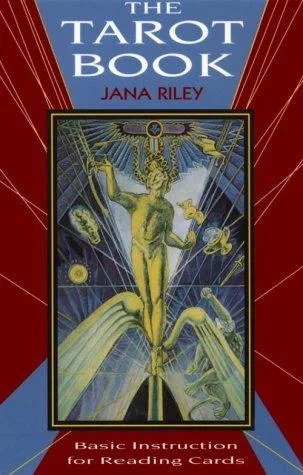
Tarot of Jane Austen Tarot Book
 62
62

Tarot of Jane Austen Tarot Book



Celeste Moreau (Divination & Symbolism Reviewer) — Diane Wilkes's 'Tarot of Jane Austen Tarot Book' is a scholarly yet accessible exploration of the Tarot's esoteric potential, brilliantly contextualized within the social tapestry of Jane Austen's era. Wilkes demonstrates a keen understanding of both Tarot symbolism and Austen's nuanced portrayal of human experience, forging a powerful synthesis that reveals hidden layers of meaning. The book offers profound insights into archetypal energies and their manifestation in everyday life, making it an invaluable resource for practitioners seeking to deepen their readings. Ideal for those who appreciate intellectual rigor alongside spiritual exploration, this work enriches the understanding of divination as a tool for self-awareness and understanding.
📝 Description
62
Diane Wilkes's 2003 book connects the Tarot to the social and emotional world of Jane Austen.
Diane Wilkes's 'Tarot of Jane Austen Tarot Book' examines the relationship between the Tarot and the social dynamics of the Regency era as depicted in Jane Austen's novels. Published in 2003, the book argues that the archetypal language of the Tarot holds significant resonance with the subtle dramas of courtship, character, and destiny found in Austen's fiction. Wilkes deciphers how each Tarot card can illuminate hidden truths about human nature, societal expectations, and the unseen influences that affect individual lives.
The text aims to show how the Tarot provides a framework for understanding the complexities of Austen's characters and their relationships. It suggests that by applying Tarot symbolism to Austen's narratives, readers can gain deeper insights into themes of love, fortune, and the human spirit. The book is written for those interested in both literary analysis and esoteric inquiry, offering a way to perceive mystical elements within a historical and literary context.
This book fits within a tradition of applying esoteric systems to literary works or historical periods. It follows in the vein of scholars who seek to find symbolic correspondences between established spiritual or divinatory tools and cultural expressions. By linking the Tarot's archetypes to the specific social codes and emotional undercurrents of Jane Austen's novels, Wilkes places the book within the esoteric practice of finding deeper meaning and universal patterns in human experience, bridging the gap between literary study and spiritual interpretation.
💡 Why Read This Book?
Uncover the veiled wisdom of the Regency era through the lens of Tarot. 'Tarot of Jane Austen' offers a unique fusion of literary appreciation and esoteric insight, revealing timeless truths about human nature and destiny. Ideal for Tarot practitioners, Austen enthusiasts, and seekers of hidden knowledge, this book illuminates the profound connection between archetypal symbols and the subtle dramas of life.
⭐ Reader Reviews
Honest opinions from readers who have explored this book.
❓ Frequently Asked Questions
What makes the Tarot of Jane Austen unique?
It masterfully merges the archetypal language of Tarot with the social and emotional landscape of Jane Austen's novels, offering a unique perspective on divination and human experience.
Is this book suitable for beginners in Tarot?
Yes, while sophisticated, it provides clear explanations of Tarot symbolism through the accessible framework of Austen's world, making it engaging for both new and experienced practitioners.
Does it require prior knowledge of Jane Austen's works?
While a familiarity with Austen's novels enhances the experience, the book's explanations of Tarot and its connection to universal human themes make it comprehensible and enriching even without extensive literary background.
What kind of readings can I perform with this approach?
This approach is excellent for exploring themes of relationships, social dynamics, personal growth, decision-making, and understanding the subtle influences at play in one's life, mirroring the complexities found in Austen's narratives.
How does this book connect to esoteric traditions?
It taps into the Hermetic tradition and Jungian archetypes, interpreting Tarot symbolism as a universal language of the psyche and spirit, applicable to personal and spiritual development.
🔮 Key Themes & Symbolism
Archetypes of the Regency Courtship
This theme studies how the archetypal energies of the Tarot manifest within the intricate dance of courtship, marriage, and social maneuvering characteristic of the Regency era. Wilkes explores how figures like the Knight, the Queen, and the Lovers card can illuminate the motivations, desires, and potential outcomes of romantic pursuits, revealing the underlying psychological and spiritual currents that shaped these societal rituals. It's about understanding the universal human dramas played out against the specific backdrop of Austen's world.
The Unseen Currents of Fate and Free Will
Wilkes examines the perennial philosophical debate between fate and free will as depicted through the Tarot's symbolism within Austen's narratives. The cards are presented not as deterministic pronouncements, but as reflections of inherent potentials, karmic patterns, and the choices individuals make in response to their circumstances. This theme encourages readers to contemplate the interplay between destiny and personal agency, highlighting how awareness of these 'unseen currents' can empower individuals to navigate their life paths with greater intention and understanding.
Symbolism of Social Status and Inner Worth
This section explores how the Tarot's imagery can be interpreted to reflect the tension between outward social standing and intrinsic inner worth, a central theme in Austen's novels. Cards representing wealth, power, and societal roles are contrasted with those signifying wisdom, compassion, and personal integrity. The analysis encourages a deeper understanding of how true value is perceived and cultivated, prompting reflection on the societal pressures that often mask or overshadow genuine character and spiritual development.
💬 Memorable Quotes
Direct passages from the work, attributed to the author.
“Every suitor carries a suit of cards, some gilded with expectation, others marked by hidden flaws.”
— This highlights the deceptive nature of first impressions, suggesting that individuals, like Tarot cards, possess both visible qualities and concealed aspects that influence their true character and intentions.
“The Wheel of Fortune turns not just for monarchs, but for every lady awaiting a proposal.”
— This underscores the universality of fate and destiny, implying that the forces of change and fortune affect everyone, regardless of social standing, and are integral to personal life events like marriage.
“Wisdom is a card drawn not from a deck, but from the quiet contemplation of life's enduring lessons.”
— This emphasizes that true wisdom is not passively received but actively cultivated through experience and thoughtful reflection on life's ongoing journey and its inherent teachings.
“The Empress's bounty is in the soil of understanding, not just the silks of status.”
— This contrasts superficial wealth and social position with the deeper, more meaningful abundance that comes from inner growth, empathy, and a profound grasp of life's essentials.
💡 Key Ideas
Editorial paraphrase of the work's core concepts — not direct quotes.
The ballrooms may sparkle, but the true fortunes are read in the heart's silent whispers.
This quote emphasizes that external appearances and social gatherings are superficial; the real truths and destinies are revealed through introspection and understanding one's inner emotional landscape.
🌙 Esoteric Significance
Tradition
This work draws heavily from the Hermetic tradition, which emphasizes the interconnectedness of the macrocosm and microcosm, and the belief that 'as above, so below.' It also speaks to Jungian archetypal psychology, interpreting Tarot cards as universal symbols of the human psyche and its journey towards individuation. The book positions Tarot not as fortune-telling, but as a profound tool for self-understanding, spiritual growth, and accessing subconscious wisdom, aligning with the esoteric quest for inner transformation.
Symbolism
The Tarot of Jane Austen interprets the traditional 78 cards through the lens of Austen's characters, settings, and social dynamics. For example, the Emperor might represent the patriarchal structures of the time, while the High Priestess could embody hidden intuition or suppressed knowledge. Each card's imagery is re-contextualized to reveal symbolic layers related to social etiquette, emotional intelligence, romantic entanglements, and the quest for authentic selfhood within a restrictive society.
Modern Relevance
In a world often characterized by superficial connections and relentless external pressures, the Tarot of Jane Austen offers a timeless framework for understanding human relationships, personal values, and the pursuit of genuine happiness. Its emphasis on character, emotional depth, and navigating societal expectations remains profoundly relevant. By applying ancient symbolic language to familiar literary narratives, the book provides a unique and accessible pathway for modern seekers to explore their own inner landscapes and make conscious choices that align with their true selves.
👥 Who Should Read This Book
This book is a treasure for several distinct groups. Tarot practitioners, from the seasoned adept to the curious novice, will find a fresh and insightful perspective on card interpretation, enriching their readings with a unique contextual layer. Literary scholars and enthusiasts of Jane Austen will discover a novel way to engage with her beloved works, uncovering deeper symbolic meanings and thematic resonances. Seekers of esoteric knowledge will appreciate the bridge built between historical context and timeless spiritual wisdom, offering a path to self-discovery. Finally, anyone interested in the intersection of culture, psychology, and divination will find this a compelling and clear read.
📜 Historical Context
The Regency era (roughly 1811-1820), though brief, was a period of significant social and cultural transformation in Britain, marked by elegance, intellectual ferment, and underlying societal tensions. It was an age of refinement, where manners, social standing, and marriage were paramount concerns, particularly for women of the gentry. Jane Austen's novels perfectly capture this milieu, dissecting the intricacies of social interactions, the economic realities of marriage, and the quiet struggles for personal fulfillment within strict societal confines. Simultaneously, this era witnessed a burgeoning interest in esoteric philosophies, spiritualism, and divination, as individuals sought meaning beyond the material and the conventional. The perceived rationalism of the Enlightenment was being subtly challenged by a Romantic fascination with the mystical and the subconscious, creating a fertile ground for exploring hidden knowledge and the symbolic language of tools like the Tarot.
📔 Journal Prompts
Reflect on a character in Austen's novels whose journey mirrors the archetypal narrative of a specific Tarot card. How does this connection deepen your understanding of both?
Consider a current social dynamic in your life. Which Tarot card, interpreted through the 'Tarot of Jane Austen' lens, best represents the underlying forces at play?
How does the concept of 'hidden knowledge' or 'veiled intentions' manifest in your own relationships or social interactions, akin to the subtle dramas in Austen's world?
If you were to draw a card to represent your own 'inner worth' versus perceived 'social status,' which card would emerge and why, drawing parallels to Austen's characters?
Explore a personal decision you are facing. How might the interplay of 'fate' and 'free will,' as illuminated by a chosen Tarot card, inform your path forward?
🗂️ Glossary
Archetype
In Jungian psychology and esoteric traditions, an archetype is a universal, archaic pattern or image that derives from the collective unconscious and is inherited. These fundamental symbols represent fundamental human experiences and motivations.
Esoteric
Relating to or intended only for a small number of people with a specialized knowledge or interest. Esoteric knowledge often pertains to spiritual, mystical, or occult subjects understood through intuition and inner experience rather than empirical observation.
Regency Era
The period in British history from roughly 1811 to 1820, characterized by a distinct style in architecture, literature, fashion, and social customs, often associated with elegance, refinement, and the novels of Jane Austen.
Hermeticism
A religious, philosophical, and esoteric tradition based on writings attributed to Hermes Trismegistus. It emphasizes hidden knowledge, spiritual enlightenment, and the principle of 'As above, so below,' suggesting a correspondence between the spiritual and material realms.
Divination
The practice of seeking knowledge of the future or the unknown by supernatural means. Tarot is a form of divination that uses a deck of cards, each with symbolic imagery, to gain insight into questions posed by the querent.
This book appears in 3 collections
🔮 Readers Also Liked
Browse all →
From the “Tarot” Collection
View all →

More Free Divination & Tarot Books
View all →