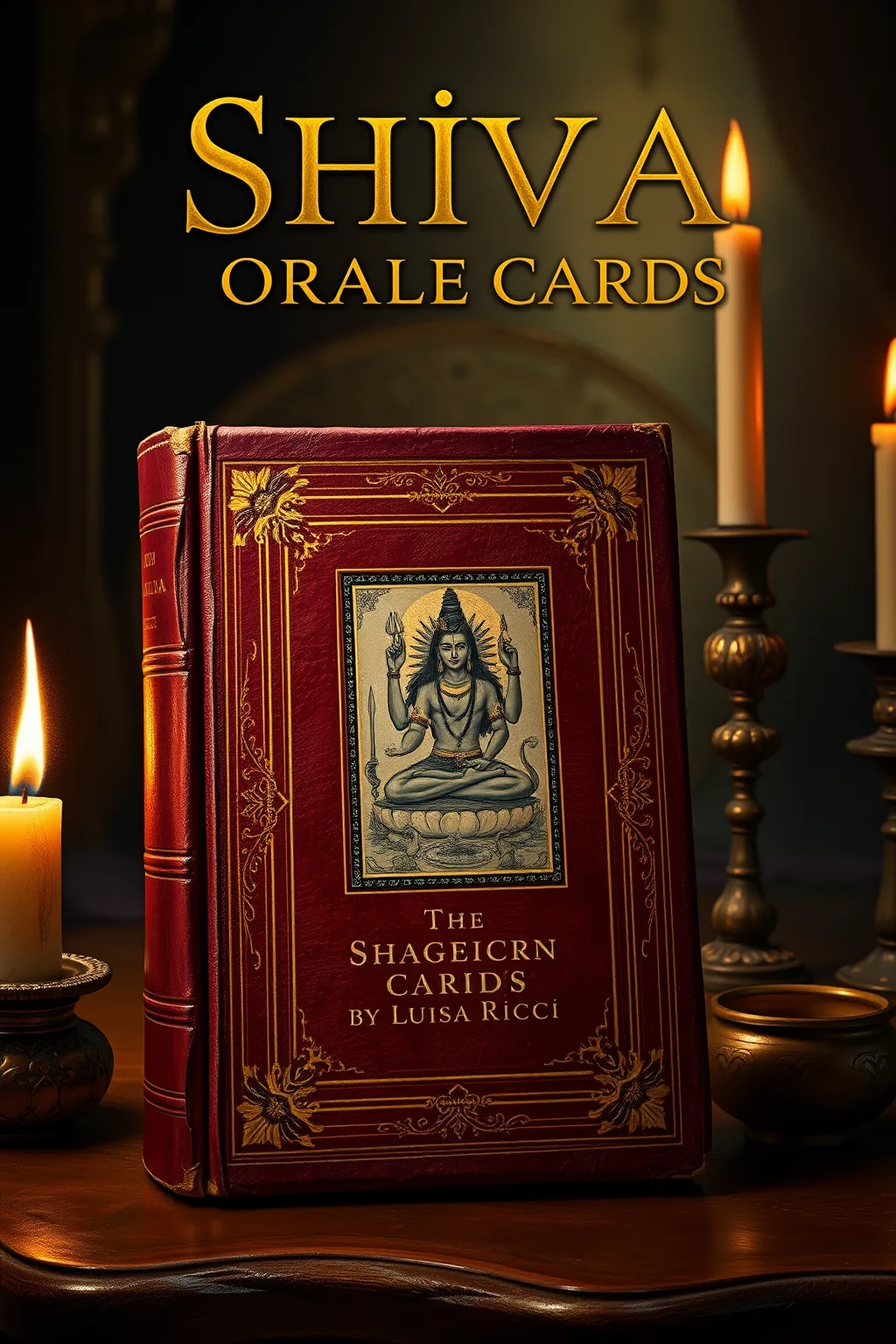
Shiva Oracle Cards
 61
61

Shiva Oracle Cards



Luisa Ricci's Shiva Oracle Cards are a masterclass in esoteric art and spiritual pedagogy. Alaric Kestrel, Metaphysical Studies Reviewer, notes that this deck offers more than simple prognostication; it is a profound conduit to the transformative power of Shiva. The artwork is deeply symbolic, rich with yogic and philosophical nuances that resonate with practitioners seeking deeper insight. Ricci expertly captures the paradox of destruction and creation inherent in Shiva's archetype, providing users with guidance that encourages introspection and spiritual growth. This deck is an essential acquisition for serious students of esoteric wisdom and anyone drawn to the potent energies of the divine masculine.
📝 Description
61
Luisa Ricci's Shiva Oracle Cards connects users to Shiva's energies for spiritual evolution.
This deck by Luisa Ricci functions as more than a simple divination tool. It aims to connect the user with the primordial energies associated with Lord Shiva, understood as the Destroyer and Transformer. The imagery on the cards is designed to reflect Shaivite philosophy and yogic traditions. These elements are intended to reveal hidden truths and support a path of spiritual growth. Each card acts as a visual aid, a kind of mantra, meant to stimulate intuition and help overcome illusion. The deck encourages self-realization.
The cards are suited for individuals seeking a deeper engagement with existence beyond surface-level predictions. They offer a method for introspection and personal change. Ricci intends for the cards to facilitate a connection with the divine masculine principle. The overall experience encourages embracing change and recognizing inner potential. It is an invitation to align with cosmic cycles.
Within esoteric traditions, the figure of Shiva holds a significant place, particularly in Shaivism, one of the major traditions of Hinduism. Shiva is often depicted as the supreme being, responsible for creation, preservation, and destruction. His role as the Transformer is central to many spiritual practices focused on breaking down old structures to allow for new growth. This deck draws on that symbolism, applying it to personal spiritual development. The use of visual mantras and the emphasis on intuition align with practices common in Tantra and Yoga, which seek direct experience of consciousness.
💡 Why Read This Book?
Dive into the transformative power of Shiva. This deck offers not just answers, but profound insights into cosmic cycles, personal transformation, and the nature of reality. Ideal for seekers yearning for deeper spiritual connection, practitioners looking to deepen their divination practice with potent symbolism, and scholars interested in the rich esoteric traditions of Shaivism. Unlock hidden potentials and embrace the dance of creation and destruction within your own being.
⭐ Reader Reviews
Honest opinions from readers who have explored this book.
❓ Frequently Asked Questions
What is the primary purpose of the Shiva Oracle Cards?
The Shiva Oracle Cards are designed to facilitate spiritual insight, self-transformation, and a deeper connection with the divine principle of Shiva. They serve as a tool for introspection, guidance, and understanding the cosmic energies of creation and destruction.
Who is Lord Shiva in esoteric traditions?
Lord Shiva is revered as the Destroyer and Transformer within the Hindu Trimurti. Esoterically, he represents the dissolution of ego, the cyclical nature of existence, cosmic consciousness, and the ultimate liberation (moksha).
How do these cards differ from traditional Tarot decks?
While Tarot uses a structured archetypal system, Shiva Oracle Cards focus specifically on the manifold aspects and symbolism of Lord Shiva, offering a more concentrated exploration of masculine divine energy, yogic philosophy, and transformative destruction/creation cycles.
Is prior knowledge of Hinduism or Shiva necessary to use this deck?
No, prior knowledge is not strictly necessary. The deck's accompanying guide provides context, and the imagery is designed to evoke intuition. However, a willingness to explore and learn will undoubtedly enrich the experience.
Can these cards be used for simple fortune-telling?
While they can offer insights into potential outcomes, their true power lies in facilitating deeper self-reflection and understanding the underlying energetic shifts. They are more about guiding transformation than predicting specific events.
🔮 Key Themes & Symbolism
The Dance of Destruction and Creation
At the core of Shiva's archetype lies the paradoxical concept of destruction as a precursor to creation. This theme explores how the dissolution of the old, whether it be limiting beliefs, stagnant situations, or egoic attachments, is essential for the emergence of the new. The cards illuminate the cosmic cycles of renewal, urging practitioners to embrace change as a sacred and necessary force for growth and evolution. Understanding this duality allows for a more profound acceptance of life's inherent flux, fostering resilience and the courage to let go.
Yogic Consciousness and Inner Stillness
Shiva is often depicted as the Adi Yogi, the primordial guru. This theme examines the yogic path of self-mastery and the attainment of inner stillness. The cards serve as reminders of practices that lead to expanded consciousness, such as meditation, breathwork, and detachment. They emphasize the importance of cultivating a calm and observant mind, free from the disturbances of worldly desires and anxieties. Through this inner quietude, one can access deeper wisdom, tap into universal energy, and realize their true divine nature.
The Power of the Divine Masculine
This theme explores the potent, transformative, and often misunderstood aspects of the divine masculine principle as embodied by Shiva. It is not merely about aggression or dominance, but about focused energy, clarity of purpose, spiritual authority, and the capacity to transcend illusion. The cards invite practitioners to integrate these powerful qualities, fostering courage, decisiveness, and a grounded connection to spiritual truths. It is about aligning with the cosmic order and embodying righteous action with profound wisdom.
💬 Memorable Quotes
Direct passages from the work, attributed to the author.
“Embrace the fire of transformation, for it purifies the soul.”
— This highlights Shiva's role as the Destroyer, framing destruction not as an end, but as a cleansing process essential for spiritual refinement and rebirth.
“Where there is dissolution, there is also germination.”
— A profound statement on the cyclical nature of life, emphasizing that endings are always the beginning of something new, a fundamental principle of Shiva's cosmic dance.
“True strength lies in surrender to the cosmic flow.”
— This encourages a relinquishing of ego-driven control, advocating for alignment with universal energies and the wisdom of fate for true empowerment.
💡 Key Ideas
Editorial paraphrase of the work's core concepts — not direct quotes.
The greatest illusion is the illusion of separation.
This quote speaks to the core of Shiva's non-dualistic philosophy, emphasizing that our sense of individuality is a veil that obscures the interconnectedness of all existence.
Stillness is the gateway to infinite possibility.
This quote underscores the yogic path, suggesting that by quieting the mind, one can access vast reservoirs of creativity, intuition, and cosmic understanding.
🌙 Esoteric Significance
Tradition
The Shiva Oracle Cards are deeply embedded within the esoteric traditions of Shaivism, a major branch of Hinduism. This includes its philosophical schools (like Kashmir Shaivism), yogic lineages, and Tantric practices. Esoterically, Shiva represents the ultimate consciousness, the dissolution of illusion, and the power of transformation necessary for spiritual liberation (moksha). The deck taps into the strong symbolism and practices developed over millennia to connect with this divine principle.
Symbolism
Key symbols include the Trishula (trident, representing creation, preservation, and destruction), the crescent moon (consciousness, cyclical time), the third eye (wisdom, intuition, transcendence of the mundane), the snake coiled around his neck (kundalini energy, mastery over primal forces), and the tiger skin (conquest of ego and desire). The cosmic dance (Tandava) symbolizes the eternal rhythm of the universe. These symbols are potent visual keys to understanding Shiva's complex nature and his role in spiritual evolution.
Modern Relevance
In a world often characterized by chaos, uncertainty, and rapid change, the Shiva Oracle Cards offer profound relevance. Shiva's archetype of transformation speaks directly to our need to adapt, let go of what no longer serves us, and embrace new beginnings. His association with yogic discipline and inner stillness provides a potent antidote to modern stress and distraction, guiding individuals toward greater self-awareness and resilience. The deck empowers seekers to navigate personal and collective challenges with wisdom and courage.
👥 Who Should Read This Book
This deck is a treasure for the dedicated spiritual seeker eager to delve beyond superficial divination into the profound mysteries of consciousness and transformation. It is ideally suited for practitioners of yoga and meditation who wish to deepen their understanding of Shiva's role in spiritual evolution. Scholars of comparative religion and esoteric traditions will find it a valuable resource for exploring Shaivite symbolism and philosophy. Beginners curious about potent divine archetypes and those seeking guidance in navigating life's inevitable changes will also find immense benefit from the transformative insights offered by these cards.
📜 Historical Context
The imagery and philosophy behind the Shiva Oracle Cards are deeply rooted in the ancient traditions of Hinduism, particularly the Shaivite branch, which reveres Lord Shiva as the supreme being. Shaivism's roots stretch back thousands of years, with its philosophical underpinnings evolving through the Vedic period, the Upanishads, and the Puranic era. The concept of Shiva as the Destroyer and Transformer, alongside his roles as the Adi Yogi (primordial ascetic and teacher) and the cosmic dancer (Nataraja), has been a central tenet for millennia. The development of Tantric practices and yogic philosophies further enriched the understanding of Shiva's complex nature. This deck draws upon centuries of devotional literature, artistic representations, and yogic teachings, bridging the gap between ancient esoteric knowledge and modern spiritual seekers. It reflects a continuous lineage of mystical inquiry into the nature of consciousness, reality, and the divine.
📔 Journal Prompts
Reflect on a recent situation where something had to be 'destroyed' or let go of for growth to occur. What did you learn from this process?
How does the imagery of Shiva's third eye resonate with your own intuition? What messages might it be trying to convey to you now?
Consider the concept of 'stillness' in your life. Where do you find it, and what insights arise when you cultivate it?
Shiva represents both destruction and creation. Identify an area in your life where you feel a need for creative renewal, and what needs to be dissolved to make space for it.
Meditate on the power of the Trishula. How can you balance the forces of creation, preservation, and transformation in your personal journey?
🗂️ Glossary
Shiva
One of the principal deities of Hinduism, revered as the Destroyer and Transformer within the Trimurti, and often seen as the supreme being in Shaivism. He embodies cosmic consciousness, asceticism, and the cyclical nature of existence.
Trishula
The trident weapon of Lord Shiva, symbolizing the three gunas (Sattva, Rajas, Tamas), the three states of consciousness (waking, dreaming, deep sleep), or the powers of creation, preservation, and destruction.
Adi Yogi
The 'first yogi' or primordial ascetic and teacher, a title given to Lord Shiva, signifying his role as the origin of yoga and spiritual wisdom.
Kundalini
A primordial cosmic energy believed to be coiled at the base of the spine, which when awakened through spiritual practice, rises through the chakras to achieve higher states of consciousness and spiritual realization.
Moksha
Liberation or release from the cycle of birth, death, and rebirth (samsara) in Hindu philosophy; the ultimate spiritual goal.
This book appears in 1 collection
🔮 Readers Also Liked
Browse all →









From the “Divination” Collection
View all →









More Free Divination & Tarot Books
View all →





![Abandonment to Divine Providence [Annotated]](/img/thumb/abandonment-to-divine-providence-annotated-jean-pierre-de-caussade.webp)