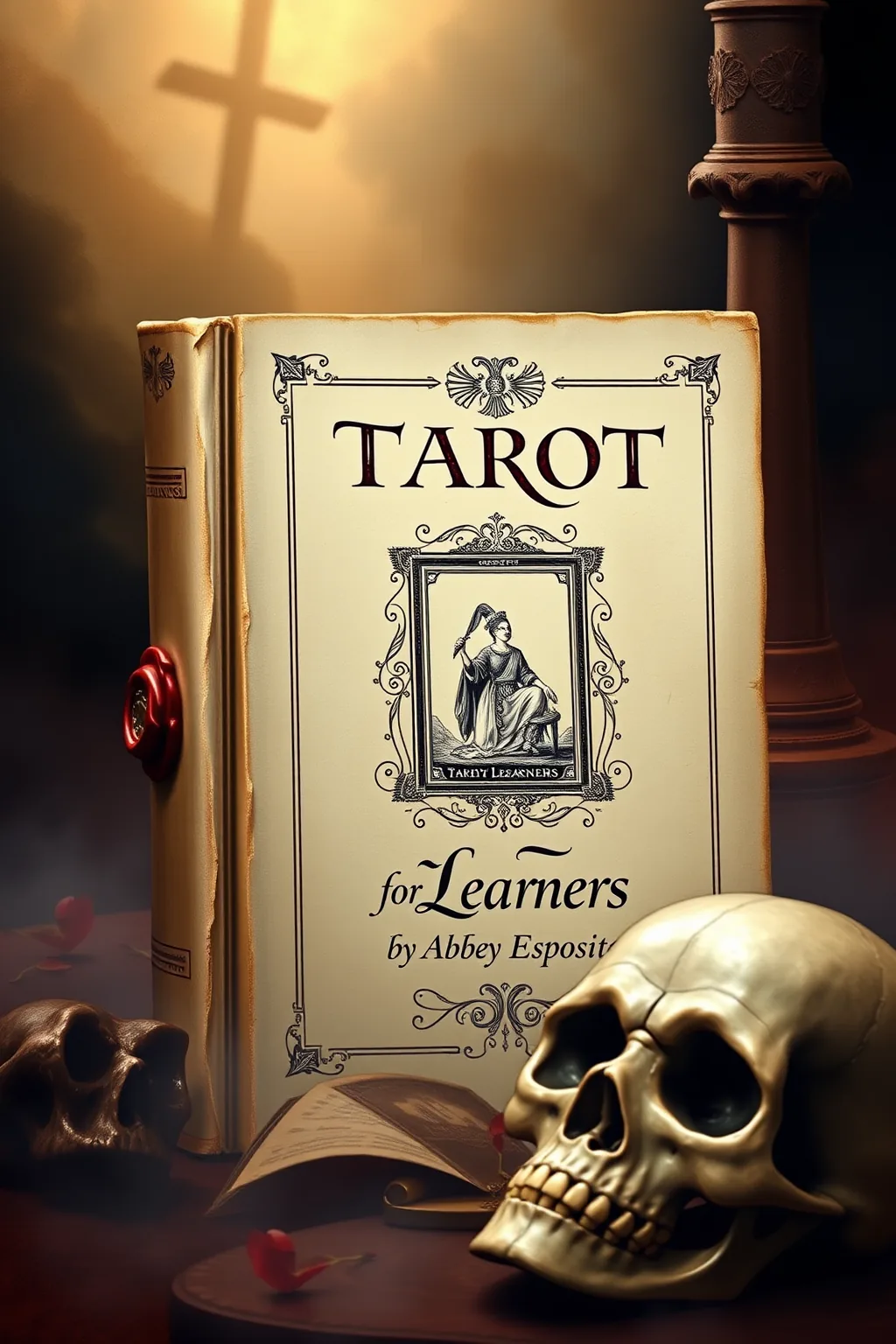
Tarot For Learners
 84
84

Tarot For Learners
Abbey Esposito’s Tarot For Learners offers a commendably direct path into the often-intimidating world of Tarot. The author avoids sensationalism, focusing instead on the practical mechanics of understanding the cards. Esposito’s explanation of the Minor Arcana, particularly how the pips relate to their suit’s core meaning, is a clear strength, providing a crucial building block often glossed over in more esoteric texts. However, the work occasionally feels overly didactic; while clarity is paramount for beginners, a touch more exploration of the inherent ambiguities within certain card combinations would have enriched the text. The passage detailing the Three of Swords, for instance, is accurate but could benefit from further nuance regarding its potential interpretations beyond simple heartbreak. For a foundational text, it succeeds, but seasoned practitioners may find it a starting point rather than an exhaustive resource. It is a functional primer for the uninitiated.
📝 Description
84
Abbey Esposito's 2020 book, Tarot For Learners, explains the 78 Tarot cards.
Tarot For Learners offers a clear guide to the 78 cards of the Tarot, moving past simple fortune-telling to examine their deeper symbolic meanings. The book separates the Major and Minor Arcana, giving readers practical ways to interpret the cards and use them for personal insight. Esposito presents the Tarot as a symbolic language, one that can reflect a person's inner world and outside situations.
This volume is written for people new to studying Tarot who want a straightforward introduction. It is for anyone interested in divination, self awareness, and the history of card reading. Those who wish to understand card meanings, layout patterns, and how to read cards ethically will find this book useful. Esposito’s work connects to a long history of esoteric thought, offering a contemporary and easy to approach entry point for new students.
Esposito's 2020 publication joins a modern resurgence of Tarot interest, particularly online. This revival connects to a tradition stretching back to the 19th century occult revival, where figures like Eliphas Lévi linked Tarot to Kabbalistic ideas. The 1909 Rider-Waite-Smith deck, which established many common visual interpretations, also forms part of this lineage. Tarot For Learners offers a modern, accessible way into this historical stream of esoteric study.
💡 Why Read This Book?
• Gain a structured understanding of the 78 Tarot cards, from the Major Arcana's archetypal journey to the Minor Arcana's elemental symbolism, as detailed in the book's core card explanations. • Learn practical interpretation techniques and spread layouts, as presented in the sections on reading methodologies, enabling you to apply Tarot knowledge immediately. • Grasp the historical context of Tarot, referencing the influential 1909 Rider-Waite-Smith deck, to appreciate how contemporary interpretations build upon established esoteric traditions.
⭐ Reader Reviews
Honest opinions from readers who have explored this book.
❓ Frequently Asked Questions
What is the core philosophy behind Tarot For Learners?
The book's core philosophy views Tarot as a symbolic language and a tool for self-reflection, emphasizing archetypal meanings and practical interpretation over purely predictive outcomes.
How does Tarot For Learners explain the difference between Major and Minor Arcana?
It distinguishes the Major Arcana as representing significant life lessons and spiritual journeys, while the Minor Arcana depict everyday events and circumstances, categorized by suits like Wands, Cups, Swords, and Pentacles.
Is this book suitable for someone with absolutely no prior Tarot knowledge?
Yes, Tarot For Learners is specifically designed for beginners, providing a step-by-step guide to understanding card meanings, spreads, and basic reading techniques.
Does the book discuss specific Tarot spreads?
Yes, the book introduces various common Tarot spreads, explaining their structure and how to use them to gain insight into different types of questions.
When was Tarot For Learners first published?
Tarot For Learners by Abbey Esposito was first published on January 22, 2020.
What is the significance of the four suits in the Minor Arcana?
The four suits—Wands, Cups, Swords, and Pentacles—represent distinct elemental energies and aspects of human experience: fire (creativity/action), water (emotions/relationships), air (intellect/conflict), and earth (material world/stability).
🔮 Key Themes & Symbolism
Archetypal Journey
The book frames the Major Arcana as a narrative of the Fool's progression, illustrating universal stages of human development and spiritual awakening. Each card represents a significant life lesson or initiatory experience, moving from innocence to enlightenment. This archetypal approach provides a symbolic map for understanding one's own life path and the inherent challenges and triumphs encountered along the way.
Elemental Symbolism
Central to the Minor Arcana are the four elements: Wands (Fire), Cups (Water), Swords (Air), and Pentacles (Earth). The book meticulously details how each element influences the numerical cards, linking Wands to passion and creativity, Cups to emotions and relationships, Swords to intellect and conflict, and Pentacles to the material world and practical matters. Understanding these elemental correspondences is presented as key to deciphering card meanings.
Divinatory Interpretation
Tarot For Learners equips readers with foundational techniques for divinatory readings. It moves beyond memorizing single card meanings, advocating for a synthesis of card symbolism within the context of a spread and question. The emphasis is on developing intuition guided by structured knowledge, enabling readers to interpret the symbolic language of the cards for guidance and self-awareness.
The Fool's Path
The concept of 'The Fool's Journey' is a recurring motif, representing the uninitiated soul starting a path of discovery. The book uses this narrative arc, spanning the 22 Major Arcana cards, to illustrate the process of learning, growth, and transformation. It highlights the courage required for new beginnings and the wisdom gained through experience, mirroring the structure of many esoteric initiatory systems.
💬 Memorable Quotes
Direct passages from the work, attributed to the author.
“The Minor Arcana show us the everyday unfolding of life.”
— This statement underscores the book's pragmatic approach to Tarot, differentiating the cyclical, mundane events depicted in the numbered cards from the grander, archetypal themes of the Major Arcana.
“Each card is a conversation between the self and the universe.”
— This concept positions Tarot readings not as passive fortune-telling, but as an active dialogue where the cards serve as a medium for receiving universal wisdom and inner truths.
“The Ace of Cups represents new emotional beginnings.”
— This is a specific example of how the book breaks down card meanings, linking the 'Ace' (potential) with the 'Cup' suit (emotions) to signify the start of something new in the field of feelings or relationships.
“Understanding the suits is fundamental to reading the pips.”
— This highlights a core teaching principle of the book: that the elemental associations of Wands, Cups, Swords, and Pentacles are the bedrock upon which the specific meanings of cards Two through Ten are built.
“The Tarot is a mirror, not a crystal ball.”
— This metaphorical distinction emphasizes the book's focus on self-reflection and psychological insight, suggesting that the Tarot reflects the querent's inner world and present circumstances rather than dictating an unchangeable future.
🌙 Esoteric Significance
Tradition
Tarot For Learners aligns with the Western Esoteric tradition, specifically its modern, psychologically-oriented branch. While not explicitly tied to a single lineage like Hermeticism or Kabbalah, it draws heavily on the symbolic language popularized during the occult revival, particularly through decks like the Rider-Waite-Smith (1909). The work interprets Tarot cards as archetypal symbols, reflecting universal human experiences and inner psychological states, a common theme in contemporary esoteric thought.
Symbolism
Key symbols include the Fool, representing new beginnings and the innocent seeker, and the four suits: Wands (Fire - spirit, action), Cups (Water - emotion, intuition), Swords (Air - intellect, challenge), and Pentacles (Earth - material world, manifestation). The book interprets these not just as divinatory tools but as representations of fundamental energies and aspects of consciousness that individuals engage with throughout their lives.
Modern Relevance
The work finds resonance with contemporary practices in mindfulness, self-help, and personal development. Its clear, accessible approach makes it relevant to digital communities focused on Tarot journaling, intuitive development, and therapeutic applications of symbolic systems. Thinkers and practitioners exploring archetypal psychology and the use of symbolic language for self-discovery often find foundational value in texts like Esposito's.
👥 Who Should Read This Book
• Novice Tarot enthusiasts seeking a structured and clear introduction to the 78 cards and basic interpretation methods. • Individuals interested in using Tarot for self-reflection and personal growth, looking for a practical guide beyond predictive fortune-telling. • Students of esoteric symbolism who want to understand the foundational archetypes and elemental associations within the Tarot system.
📜 Historical Context
Published in 2020, Abbey Esposito's Tarot For Learners arrives during a period of intense public interest in divination and esoteric practices, amplified by digital platforms. This resurgence reflects the late 19th and early 20th centuries, particularly the occult revival where figures like Arthur Edward Waite collaborated on the iconic 1909 Rider-Waite-Smith deck, a primary influence on modern Tarot imagery. Esposito’s work enters a field populated by diverse interpretations, from the psychological depth explored by Carl Jung’s theories on archetypes (though not directly cited by Esposito) to more traditional divinatory systems. The book's accessible approach stands in contrast to more complex, historically dense works by contemporary authors focusing on Hermeticism or Kabbalistic Tarot, positioning itself as a welcoming entry point for novices.
📔 Journal Prompts
The Fool's initial leap: what new beginning does this card represent for you?
Reflect on the emotional landscape depicted by the Three of Cups.
Consider the intellectual challenges presented by the Three of Swords.
What material manifestation is suggested by the Three of Pentacles?
How does the concept of the Fool's Journey mirror your own life path?
🗂️ Glossary
Major Arcana
The 22 trump cards of the Tarot deck, representing significant life lessons, spiritual journeys, and archetypal forces. They often signify major turning points or profound influences in a reading.
Minor Arcana
The 56 numbered cards of the Tarot deck, divided into four suits (Wands, Cups, Swords, Pentacles). They typically represent everyday events, circumstances, challenges, and opportunities.
Wands
The suit associated with the element of Fire. It represents passion, creativity, inspiration, energy, action, and spiritual endeavors.
Cups
The suit associated with the element of Water. It governs emotions, relationships, intuition, love, creativity, and the subconscious.
Swords
The suit associated with the element of Air. It relates to the intellect, thoughts, communication, conflict, truth, and challenges.
Pentacles
The suit associated with the element of Earth. It signifies the material world, finances, work, health, stability, and practical matters.
Spread
A specific arrangement of Tarot cards laid out for interpretation. Different spreads are designed to address various types of questions or areas of focus.