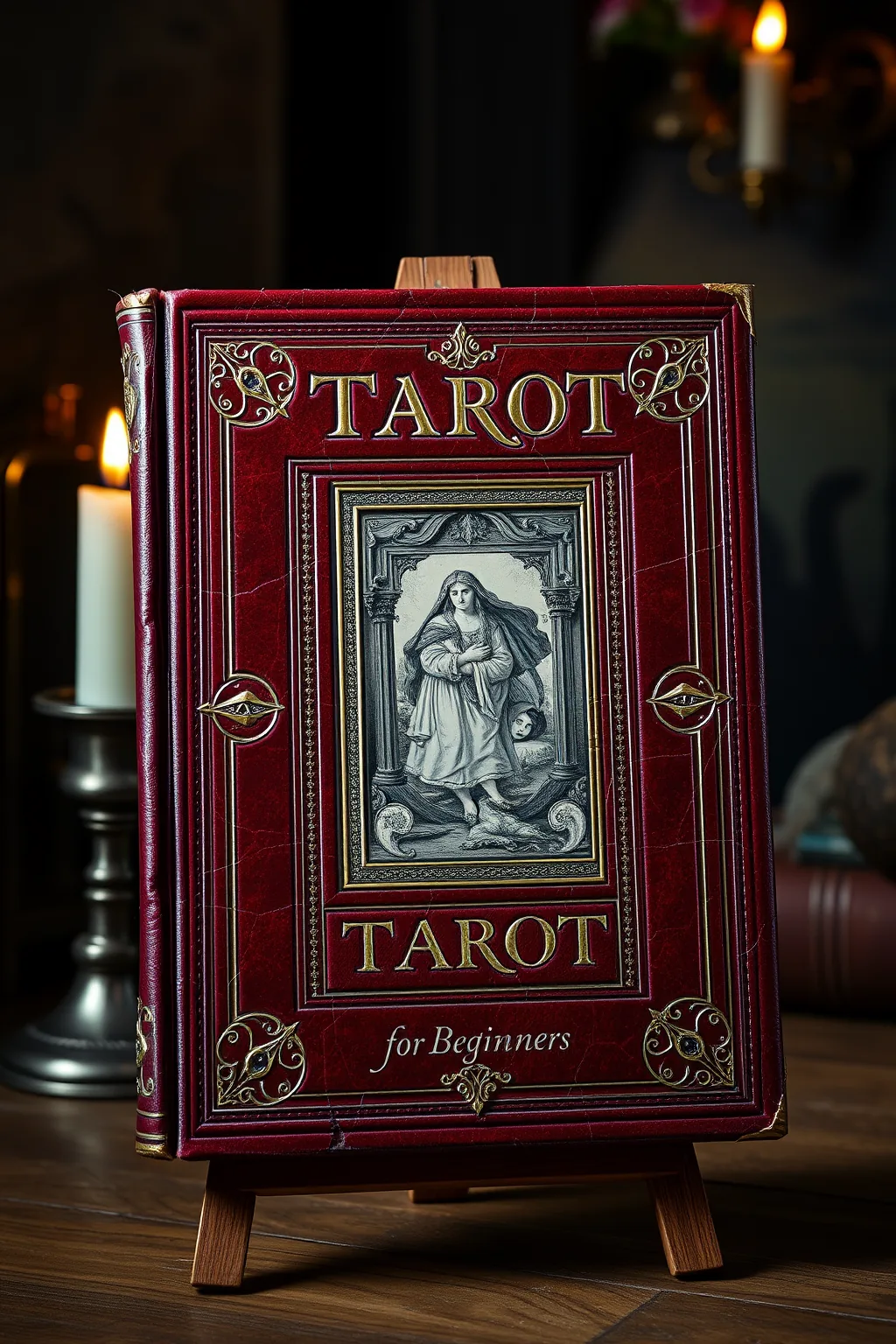
TAROT FOR BEGINNERS
 84
84

TAROT FOR BEGINNERS
The Astrology And Numerology Academy's "Tarot for Beginners" succeeds in its stated aim of making Tarot accessible to the uninitiated. Its strength lies in its unpretentious approach, avoiding arcane jargon and presenting the 78 cards with clarity. The section on the Minor Arcana suits, for instance, effectively links each element to core human experiences like creativity, emotion, intellect, and material concerns. However, the book occasionally suffers from a lack of depth, particularly in its treatment of the more complex archetypes within the Major Arcana. While it introduces the Fool's Journey, a more nuanced exploration of figures like The Hierophant or The High Priestess, beyond their surface meanings, would have been welcome. The advice to "develop your psychic power" feels somewhat generic, lacking concrete exercises. Despite this, it serves as a competent, if not exhaustive, primer for those taking their first steps into cartomancy.
📝 Description
84
Published in 2020, "Tarot for Beginners" by the Astrology And Numerology Academy simplifies the 78-card deck.
This book serves as a practical manual for individuals new to Tarot card reading. It aims to demystify the 78-card deck, offering essential knowledge for anyone starting with cartomancy. The guide is designed for immediate application, allowing readers to interpret cards regardless of the specific deck they use. It is particularly suited for those who feel drawn to Tarot's symbolic language but have no previous experience. The text supports the development of intuition and the understanding of subconscious messages, assisting readers in gaining clarity on life situations through card divination. It is also a resource for those interested in personal growth, psychological exploration, or a spiritual practice that fosters a connection to inner wisdom.
The core of the book introduces the fundamental structure of the Tarot deck, detailing the Major and Minor Arcana. It explains the meaning of each suit—Wands, Cups, Swords, and Pentacles—and the function of the court cards. The book also discusses the concept of the Fool's Journey, a narrative arc through the Major Arcana that illustrates archetypal life stages. This approach provides a structured way to understand the progression and meaning within the cards.
While Tarot cards originated in 15th-century Italy, their use for divination became prominent in the late 18th century. This 2020 publication reflects a modern approach, emphasizing psychological insight and personal empowerment. This differs from earlier occultist interpretations common in the late 19th century, aligning instead with contemporary trends that see Tarot integrated into wellness and self-help practices.
💡 Why Read This Book?
• Gain immediate practical skills for reading any Tarot deck, a benefit directly supported by the book's explicit instruction on interpreting card meanings and spreads. • Understand the fundamental structure of the Tarot, specifically the distinction between the Major and Minor Arcana, as detailed in its introductory chapters. • Develop a personal connection to Tarot symbolism, moving beyond rote memorization to intuitive understanding, a process encouraged through its guidance on card interpretation.
⭐ Reader Reviews
Honest opinions from readers who have explored this book.
❓ Frequently Asked Questions
What is the historical origin of Tarot cards?
Tarot cards originated in 15th-century Italy, initially used for games like Tarocchini. Their use for divination became prominent in the late 18th century, notably influenced by Antoine Court de Gébelin.
How many cards are in a standard Tarot deck?
A standard Tarot deck consists of 78 cards, divided into the 22 Major Arcana and the 56 Minor Arcana cards.
What is the difference between the Major and Minor Arcana?
The Major Arcana represent significant life lessons and archetypal themes, while the Minor Arcana deal with daily events and practical matters, divided into four suits.
Can I use this book with any Tarot deck?
Yes, the book is designed for use with any Tarot card deck, focusing on the universal meanings of the cards rather than specific artwork.
When was 'Tarot for Beginners' first published?
'Tarot for Beginners' was first published on December 4, 2020, by the Astrology And Numerology Academy.
What does the Fool's Journey refer to in Tarot?
The Fool's Journey is an interpretation of the Major Arcana as a narrative, charting the archetypal progression of the Fool from innocence to enlightenment.
🔮 Key Themes & Symbolism
The Fool's Journey Archetype
This book frames the Major Arcana as a narrative path, often referred to as the Fool's Journey. It posits that the 22 Major Arcana cards represent stages of human experience and spiritual development, beginning with The Fool (card 0) and culminating with The World (card XXI). This archetypal progression serves as a powerful metaphor for personal growth, illustrating the soul's quest for wisdom and fulfillment throughout life's challenges and triumphs.
Symbolism of the Four Suits
The Minor Arcana are divided into four suits: Wands, Cups, Swords, and Pentacles. The book explains that each suit corresponds to a different element and aspect of human life. Wands represent creativity and inspiration (Fire), Cups relate to emotions and relationships (Water), Swords deal with intellect and conflict (Air), and Pentacles are associated with the material world and practical matters (Earth). Understanding these elemental correspondences is key to interpreting the Minor Arcana.
Intuitive Card Interpretation
Beyond memorizing meanings, the book encourages readers to develop their intuition when reading Tarot cards. It suggests that the images, symbols, and even the colors on the cards can evoke personal responses and insights. By connecting with the cards on a personal level, practitioners can uncover deeper subconscious messages and gain a more nuanced understanding of their situations, moving beyond rigid definitions.
Practical Reading Techniques
The volume provides foundational techniques for conducting Tarot readings. This includes basic spread layouts, such as the three-card spread (past, present, future) and more elaborate layouts for specific questions. The emphasis is on practical application, enabling beginners to start performing readings for themselves and others with confidence, integrating the learned card meanings into coherent interpretations.
💬 Memorable Quotes
Direct passages from the work, attributed to the author.
“The Tarot experience can indeed be empowering, bringing clarity to confusing situations.”
— This statement highlights the practical benefit of Tarot, positioning it not merely as a mystical tool but as a source of guidance and understanding for everyday life's ambiguities.
“Ideal for use with any Tarot card deck.”
— This emphasizes the book's universal applicability, assuring readers that the foundational knowledge provided is transferable across different artistic styles and interpretations of the Tarot imagery.
“A clear, concise guide designed to get you reading the cards right away.”
— This directly addresses the beginner's desire for immediate results, promising an accessible and efficient learning process that bypasses complex theory for practical skill acquisition.
“Tap into the power and wisdom of the cards.”
— This evocative phrase suggests that the Tarot deck holds inherent knowledge and energy that can be accessed and utilized by the practitioner for guidance and insight.
💡 Key Ideas
Editorial paraphrase of the work's core concepts — not direct quotes.
Harness your psychic power and develop a deeper connection to your higher self and subconscious.
This quote frames Tarot reading as a method for self-discovery and spiritual connection, suggesting that the practice can unlock latent abilities and facilitate communication with one's inner wisdom.
🌙 Esoteric Significance
Tradition
This work fits within the broad Hermetic and Neoplatonic traditions that view the cosmos as imbued with symbolic meaning accessible through various divinatory arts. While not deeply rooted in specific Kabbalistic or Alchemical texts, it draws upon the general Hermetic principle of correspondence ('As Above, So Below'), using the Tarot as a microcosm reflecting universal patterns of existence and human psychology. It departs from stricter, historically dense esoteric lineages by prioritizing immediate practical application and personal interpretation over rigorous adherence to ancient doctrines.
Symbolism
Central to the book's symbolism are the archetypes of the Major Arcana, such as The Fool representing beginnings and innocence, and The World symbolizing completion and integration. The four suits of the Minor Arcana—Wands (Fire), Cups (Water), Swords (Air), and Pentacles (Earth)—are also crucial, representing elemental forces and their influence on human endeavors. These symbols are presented as keys to understanding both external circumstances and internal states, facilitating a dialogue between the conscious mind and the subconscious.
Modern Relevance
Contemporary practitioners influenced by Jungian psychology and the self-help movement often engage with Tarot in ways similar to this book's approach. Thinkers and communities focused on mindfulness, intuition development, and narrative therapy find value in the archetypal framework provided by the Major Arcana. The book's accessible format appeals to modern online learning trends, influencing new generations of readers exploring personal growth and spiritual practices outside traditional religious structures.
👥 Who Should Read This Book
• Aspiring Tarot practitioners seeking a clear, foundational understanding of the 78-card system without esoteric overload. • Individuals interested in self-reflection and personal development who want to use a symbolic tool for insight. • Those exploring comparative spirituality and divination methods who wish to learn a popular and widely accessible system like Tarot.
📜 Historical Context
Published in 2020, "Tarot for Beginners" emerges from a modern resurgence of interest in divination and esoteric practices, amplified by digital platforms and a growing wellness culture. While Tarot's roots lie in 15th-century Italian playing cards, its occult significance was popularized in the late 19th and early 20th centuries by figures associated with the Hermetic Order of the Golden Dawn, such as Aleister Crowley and A.E. Waite. These occultists imbued the cards with complex Kabbalistic and astrological symbolism, a stark contrast to the more psychological and self-help oriented interpretations common today. Unlike the highly specialized esoteric texts of the Golden Dawn era, this book prioritizes accessibility. Its reception reflects the mainstreaming of Tarot, moving away from secretive societies and toward individualistic spiritual exploration, a trend not significantly met with censorship but rather widespread commercial adoption.
📔 Journal Prompts
Reflect on the symbolism of The Fool (Card 0) and its potential representation of your current life path.
Consider the elemental associations of the Wands suit and how they manifest in your creative endeavors.
Analyze the emotional themes suggested by the Cups suit in relation to your interpersonal relationships.
Explore the intellectual and conflict-oriented nature of the Swords suit and its impact on your decision-making.
Meditate on the material and grounded energy of the Pentacles suit and its connection to your practical life.
🗂️ Glossary
Major Arcana
The set of 22 trump cards in a Tarot deck, representing significant life lessons, archetypal figures, and spiritual themes. Often viewed as the 'major' events or influences in a reading.
Minor Arcana
The 56 cards in a Tarot deck, divided into four suits (Wands, Cups, Swords, Pentacles). They typically represent daily events, challenges, and practical matters.
Suit
One of the four divisions of the Minor Arcana (Wands, Cups, Swords, Pentacles), each associated with an element and a specific area of life.
Cartomancy
The practice of divining the future or gaining insight through the use of playing cards or Tarot cards.
Intuition
The ability to understand something immediately, without the need for conscious reasoning; often described as a 'gut feeling' or inner knowing.
Archetype
A universal, symbolic pattern or character that recurs in myths, literature, and dreams, representing fundamental human experiences or concepts.
Divination
The practice of seeking knowledge of the future or the unknown by supernatural means.