Tarot
 80
80

Tarot
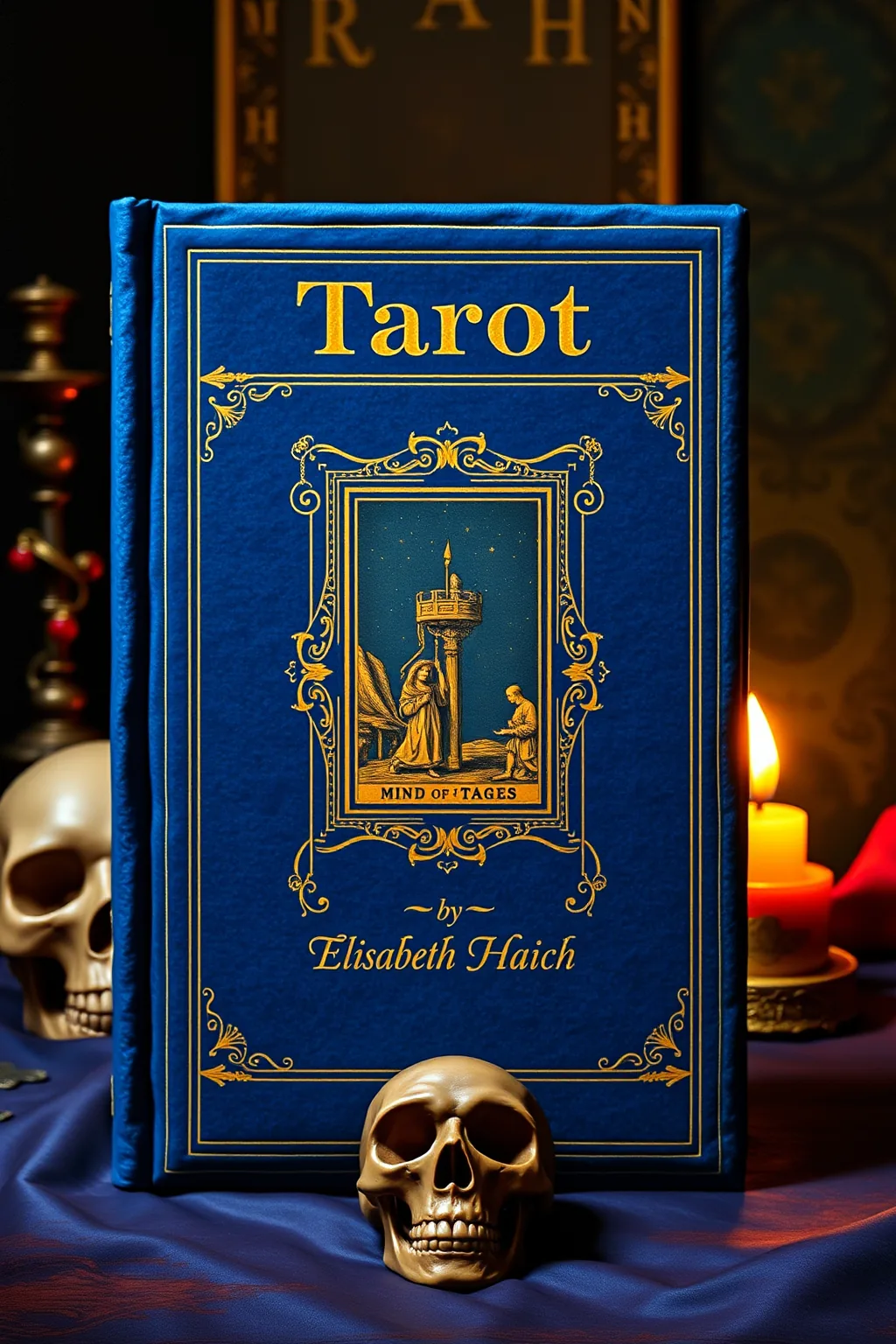
Elisabeth Haich's "Tarot" offers a dense, philosophically-oriented reading of the cards, eschewing common divinatory practices for a deeper exploration of archetypal psychology and spiritual progression. The book's strength lies in its systematic approach, presenting the Tarot as a coherent map of consciousness, particularly in its detailed analysis of the Major Arcana as stages of initiation. Haich's interpretation of The Fool's journey, for instance, provides a compelling framework for understanding personal growth. However, the work can feel quite abstract, and readers seeking practical, immediate applications for divination might find it less accessible. The sheer weight of philosophical concepts, while rewarding for the dedicated student, may prove challenging for newcomers. The original publication date of 1985 places it within a specific intellectual current, one that sought to integrate esoteric traditions with psychological theory. Ultimately, "Tarot" stands as a significant contribution for those interested in the Tarot's philosophical underpinnings and its role as a symbolic language of the psyche.
📝 Description
80
Elisabeth Haich's 1985 book interprets the Tarot not as a divinatory tool, but as a symbolic language of human consciousness.
Elisabeth Haich's "Tarot" examines the seventy-eight cards as a symbolic language for human consciousness and spiritual development. Published in 1985, the book presents the Tarot as a system of archetypes that reflect the soul's journey, rather than simply a tool for fortune telling. Haich uses the cards to understand inner landscapes, psychological patterns, and the unfolding of destiny. She aims to unlock the wisdom within the pictorial narratives of the Major and Minor Arcana.
This text suits students of esoteric philosophy and comparative mythology who want to move beyond surface interpretations of the Tarot. It appeals to those interested in the psychological and spiritual aspects of ancient symbolism, not just predictive outcomes. Readers familiar with Jungian psychology, alchemy, or Gnosticism will find common ground with Haich's analytical framework. The book offers considerable value to individuals who appreciate detailed symbolic analysis and a methodical approach to occult subjects.
Haich's "Tarot" emerged in the mid-1980s, a time of renewed interest in occult literature informed by psychological and comparative religious studies. Unlike many contemporary Tarot books focused on practical divination, Haich's work provided a philosophical and allegorical interpretation. It contributed to a discourse seeking to understand Tarot's roots in ancient wisdom traditions and universal mythologies, beyond simple cartomancy.
Emerging in the mid-1980s, a period of resurgence for occult literature influenced by psychological and comparative religious studies, Haich's "Tarot" joined a discourse informed by figures like Joseph Campbell and proponents of Jungian archetypes. While many contemporary Tarot guides focused on practical divination, Haich's approach offered a more philosophical and allegorical reading. The book contributed to a broader understanding of Tarot's roots in ancient wisdom traditions and universal mythologies, moving beyond mere cartomancy.
💡 Why Read This Book?
• Gain a structured understanding of the Tarot's Major Arcana as a symbolic map of spiritual evolution, moving beyond simple card meanings as presented in the original 1985 publication. • Explore the Tarot as a psychological and philosophical system, drawing parallels to Jungian archetypes and ancient wisdom traditions, offering a unique perspective not found in purely divinatory guides. • Grasp the interconnectedness of the seventy-eight cards, viewing the Minor Arcana as detailing the practical lessons of the soul's journey, as meticulously detailed in Haich's analytical framework.
⭐ Reader Reviews
Honest opinions from readers who have explored this book.
❓ Frequently Asked Questions
When was Elisabeth Haich's "Tarot" first published?
Elisabeth Haich's "Tarot" was first published in 1985, placing it within a mid-1980s wave of esoteric literature that blended psychological theory with ancient symbolism.
Does this book focus on Tarot for fortune-telling?
No, Haich's "Tarot" primarily focuses on the cards as a symbolic language for understanding consciousness, spiritual development, and archetypal psychology, rather than as a tool for direct divination.
What is the core concept presented in Haich's "Tarot"?
The core concept is the Tarot as a 'Book of Thoth,' representing the universe and humanity's spiritual journey, with the Major Arcana symbolizing stages of soul evolution.
Who would benefit most from reading this book?
Students of esoteric philosophy, comparative mythology, and Jungian psychology seeking a deep, philosophical interpretation of Tarot symbolism will benefit most.
How does Haich's "Tarot" relate to other esoteric traditions?
The book aligns with traditions that view Tarot as a system of universal archetypes and spiritual allegory, drawing parallels to Gnosticism and Hermeticism.
What distinguishes this book from other Tarot guides?
Its distinction lies in its emphasis on Tarot as a map of consciousness and spiritual initiation, offering a philosophical framework rather than a simple how-to for divination, reflecting its 1985 publication context.
🔮 Key Themes & Symbolism
The Tarot as a Map of Consciousness
Haich posits the Tarot deck as an intricate symbolic representation of the human psyche and its journey toward spiritual realization. The twenty-two Major Arcana are meticulously detailed as stages of initiation, charting a course through archetypal experiences that mirror the soul's progression from mundane awareness to higher consciousness. This perspective frames the Tarot not as a tool for predicting external events, but as an internal compass, guiding the practitioner through the labyrinth of their own inner world and spiritual development, reflecting a psychological interpretation prominent around its 1985 publication.
Archetypal Psychology and Symbolism
Drawing implicitly from psychological currents of its time, Haich interprets Tarot imagery through the lens of universal archetypes. Figures and scenes within the deck are presented as manifestations of fundamental psychic patterns and cosmic principles. The work looks at how these symbols, common across mythologies and spiritual traditions, serve as a language for the unconscious. Understanding these archetypes, such as The High Priestess or The Hermit, is crucial for deciphering the deeper psychological and spiritual messages embedded within the cards, moving beyond superficial readings.
The Minor Arcana as Experiential Stages
While the Major Arcana represent the grand spiritual journey, Haich views the Minor Arcana (Wands, Cups, Swords, Pentacles) as delineating the practical challenges, lessons, and experiences encountered on that path. Each suit and its numbered cards are explored for their connection to elemental forces and specific psychological domains. This segmentation allows for a granular understanding of how the everyday realities and trials of life contribute to the overarching process of spiritual growth, providing a comprehensive view of the seventy-eight-card system.
Spiritual Initiation and Evolution
Central to Haich's thesis is the notion of the Tarot as a curriculum for spiritual initiation. The progression through the Major Arcana, from The Fool's innocent leap to The World's completion, is presented as a symbolic death and rebirth cycle. This evolutionary framework suggests that engaging with the Tarot's symbolism can facilitate personal transformation and a deeper understanding of one's divine potential. The book aims to equip readers with the conceptual tools to recognize these stages within their own lives.
💬 Memorable Quotes
Direct passages from the work, attributed to the author.
“The Tarot is the Book of Thoth, the book of the universe.”
— This statement captures Haich's view of the Tarot as a comprehensive symbolic system mirroring all aspects of existence, from the cosmic to the personal, positioning it as a foundational text for esoteric understanding.
“The twenty-two Major Arcana represent the stages of the evolution of the human soul.”
— This highlights the book's core thesis: the Major Arcana are not isolated symbols but form a progressive sequence detailing the soul's journey through trials, lessons, and ultimate spiritual attainment.
“The Minor Arcana show the practical application of the great laws represented by the Major Arcana.”
— This emphasizes the functional relationship between the two parts of the deck, illustrating how the daily experiences and challenges (Minor Arcana) manifest the deeper spiritual principles (Major Arcana).
“Each card is a symbol of a divine idea.”
— This interpretation underscores the sacred nature of Tarot imagery, suggesting that each card holds a profound, fundamental truth or concept from the divine realm, accessible through contemplation.
“The journey of the Fool is the journey of every man.”
— This powerful interpretation connects the archetypal journey of The Fool to the universal human experience, implying that the Tarot's symbolic narrative is deeply relevant to individual life paths and personal growth.
🌙 Esoteric Significance
Tradition
Haich's work aligns with the Hermetic and Gnostic traditions, viewing the Tarot as a symbolic representation of the cosmos and the soul's journey towards divine knowledge. It departs from purely Kabbalistic interpretations by focusing more directly on psychological archetypes and spiritual initiation stages. The book positions the Tarot as a universal key to understanding existence, echoing the Hermetic principle of 'as above, so below,' and suggesting an inner gnosis attainable through symbolic contemplation.
Symbolism
Key symbols explored include The Fool, representing the primordial consciousness starting its journey, and The World, symbolizing completion and integration. Haich likely interprets the suits (Wands, Cups, Swords, Pentacles) as representing fundamental forces or aspects of human experience – spirit, emotion, intellect, and matter – providing a framework for understanding the interplay of these elements in both the outer world and inner life.
Modern Relevance
Contemporary practitioners of depth psychology and archetypal studies continue to draw upon Haich's systematic approach to Tarot symbolism. Her interpretation appeals to modern esotericists who view the cards as a sophisticated tool for self-exploration and spiritual development, moving beyond fortune-telling. The book's philosophical underpinnings provide a solid foundation for understanding the psychological dynamics that many contemporary Tarot readers explore in their practice.
👥 Who Should Read This Book
• Students of esoteric philosophy seeking a structured, symbolic interpretation of the Tarot as a map of consciousness. • Individuals interested in Jungian psychology and archetypal symbolism, looking to connect ancient systems with modern psychological concepts. • Esoteric scholars and practitioners who wish to understand the Tarot beyond its divinatory applications, focusing on its philosophical and spiritual dimensions.
📜 Historical Context
Elisabeth Haich's "Tarot," first published in 1985, emerged during a fertile period for esoteric studies, influenced by the burgeoning interest in Jungian psychology and comparative mythology. This era saw a shift in occult scholarship, moving beyond purely divinatory applications to explore the symbolic and psychological depths of ancient traditions. Haich's work contributed to this by presenting the Tarot not as a tool for predicting future events, but as a profound allegorical map of consciousness and spiritual evolution. It arrived after foundational texts by figures like A.E. Waite and Paul Foster Case had already established a significant body of Tarot scholarship. Unlike more popular, practical guides prevalent at the time, Haich's approach offered a rigorous, philosophical interpretation that resonated with those seeking deeper esoteric meaning and symbolic analysis, situating it within a lineage of Hermetic and Gnostic thought.
📔 Journal Prompts
The Fool's journey as a metaphor for personal initiation.
Archetypal representations within the Tarot's Major Arcana.
The symbolic meaning of elemental forces in the Minor Arcana.
Connecting the Tarot's stages of evolution to personal life experiences.
The Tarot as a 'Book of Thoth' and its universal significance.
🗂️ Glossary
Major Arcana
The twenty-two trump cards of the Tarot deck, typically representing significant life lessons, spiritual stages, and archetypal forces in Elisabeth Haich's interpretation.
Minor Arcana
The fifty-six cards of the Tarot deck divided into four suits (Wands, Cups, Swords, Pentacles), representing everyday events, challenges, and practical experiences.
Archetype
A universal, inherited pattern of thought or imagery derived from the collective unconscious, such as those represented by figures in the Tarot.
Spiritual Evolution
The process of growth and development of the soul or consciousness towards higher states of awareness and understanding, as symbolized by the Tarot's progression.
Book of Thoth
An esoteric reference to the Tarot, attributing its wisdom to the Egyptian god Thoth, god of writing, magic, and wisdom, signifying its ancient and profound nature.
Initiation
A process of entering into a new stage of spiritual understanding or membership within a tradition, often symbolized by the journey through the Major Arcana.
Symbolic Language
A system of communication using symbols to represent abstract ideas, concepts, or spiritual truths, as employed by the Tarot.
🔮 Readers Also Liked
Browse all →







More by Elisabeth Haich
All books →



More Free Divination & Tarot Books
View all →