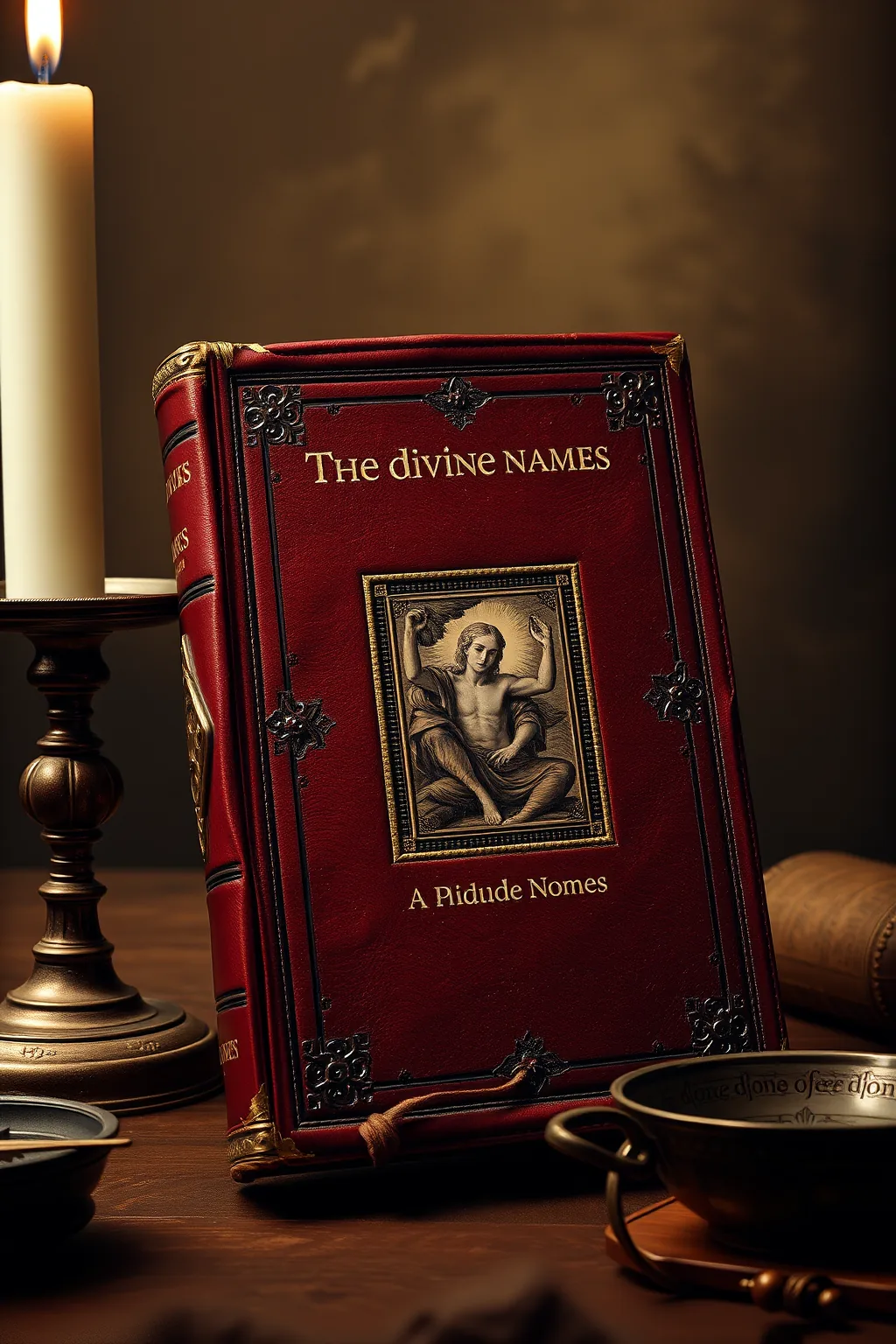
The divine names
 62
62

The divine names



By Balthazar Finch (Senior Critic, Occult Philosophy) — A cornerstone of Western esotericism, Pseudo-Dionysius' 'The Divine Names' remains an unparalleled exploration of God's knowableness and unknowableness. This text offers a profound unpacking of divine appellations, revealing layers of mystical insight often lost in mundane discourse. Its strength lies in its masterful synthesis of Neoplatonic philosophy and Christian theology, creating a powerful language for the ineffable. Scholars of medieval thought and practitioners of contemplative prayer will find immense value in its systematic yet poetic approach to divine ontology. An essential read for any serious student of sacred cosmology and mystical theology.
📝 Description
62
Pseudo-Dionysius the Areopagite wrote 'The Divine Names' around the late 5th century.
This text examines God's attributes through a structured approach to divine nomenclature. Pseudo-Dionysius argues that naming God, even with seemingly contradictory terms like 'good' or 'life,' reveals aspects of the divine reality. He systematically analyzes these names, moving from positive affirmations of God to negative apophatic theology, which describes God by what God is not. The work aims to lead the reader toward a contemplative understanding of the divine essence, moving beyond intellectual grasp to a form of knowing through unknowing. It is a cornerstone for understanding Neoplatonic influences on Christian mysticism.
The book systematically categorizes divine appellations, distinguishing between names that affirm divine perfections and those that deny them. Pseudo-Dionysius uses a method that moves from the created order back to its divine source. He asserts that all good things ultimately derive from the divine goodness, which is the source of being. The text is structured to guide the reader's ascent, using the names of God as steps toward direct experience of the divine.
Pseudo-Dionysius's writings are central to Christian Neoplatonism, a tradition that synthesized Platonic philosophy with Christian doctrine. This school of thought sought to reconcile Greek philosophical concepts, particularly those of Plotinus, with biblical revelation. The Areopagite's work, including 'The Divine Names,' became a primary conduit for transmitting Neoplatonic ideas about hierarchy, emanation, and the ascent of the soul to later Christian mystics in both the East and West. His systematic approach to theology and mysticism profoundly shaped medieval thought.
💡 Why Read This Book?
Uncover the profound, hidden meanings behind the appellations of the Divine. 'The Divine Names' offers a unique contemplative path to understanding God's multifaceted nature, transcending ordinary language. Ideal for spiritual seekers, philosophy enthusiasts, and scholars of ancient mysticism who wish to explore the deep roots of Western esoteric thought and engage with a text that has shaped millennia of spiritual inquiry.
⭐ Reader Reviews
Honest opinions from readers who have explored this book.
❓ Frequently Asked Questions
What is the primary focus of 'The Divine Names'?
The book's primary focus is exploring the divine attributes and names of God, revealing how these appellations, while seemingly simple, contain profound mystical and philosophical truths about the ineffable nature of the Divine.
Who was Pseudo-Dionysius the Areopagite?
Pseudo-Dionysius the Areopagite was a 5th or 6th-century theologian and philosopher whose writings profoundly influenced Christian, Islamic, and Jewish mysticism. The 'Pseudo' indicates that the author adopted the name of Dionysius the Areopagite, a figure mentioned in the Acts of the Apostles.
What philosophical tradition heavily influences this work?
The work is deeply influenced by Neoplatonism, particularly the concept of the One and the emanations from it, which Pseudo-Dionysius integrates with Christian theological doctrines.
Is this book suitable for beginners in mysticism?
While intellectually rich, 'The Divine Names' can be challenging. Beginners may benefit from guided readings or commentaries to fully grasp its complex philosophical and theological concepts, but the rewards are immense for dedicated readers.
How does this text relate to Christian theology?
It offers a unique, mystical interpretation of Christian theology, moving beyond literal dogma to explore the symbolic and apophatic dimensions of God, emphasizing God's transcendence and immanence through divine names.
🔮 Key Themes & Symbolism
The Ineffability and Knowableness of God
This central theme grapples with the paradox of God's absolute transcendence and unknowability, contrasted with the ways in which God can be known through divine revelation and symbolic appellations. Pseudo-Dionysius argues that while God's essence remains beyond human comprehension, His operations and attributes, revealed through sacred names, offer a path to understanding and union. This exploration bridges the gap between the finite human mind and the infinite Divine, suggesting that true knowledge comes through both intellectual ascent and mystical apprehension.
Divine Names as Symbolic Vehicles
The text posits that divine names are not mere labels but potent symbols that act as conduits to divine reality. Each name, whether positive (e.g., Good, Being) or negative (e.g., Beyond Being), reveals a particular facet of God's nature and action in the cosmos. Pseudo-Dionysius meticulously analyzes these names, demonstrating how they serve as a ladder for the soul to ascend from the material world to the contemplation of the Divine. This theme highlights the power of language and symbolism in spiritual practice and theological discourse.
Apophatic and Kataphatic Theology
Pseudo-Dionysius masterfully employs both apophatic (negative) and kataphatic (positive) theological approaches. Kataphatic theology affirms what can be said about God, using positive attributes, while apophatic theology emphasizes what cannot be said, stressing God's transcendence beyond all conceptualization. The book demonstrates how these two methods are not contradictory but complementary, guiding the seeker towards a more complete, albeit still imperfect, understanding of the Divine by acknowledging both the limits of human language and the reality of divine revelation.
💬 Memorable Quotes
Direct passages from the work, attributed to the author.
“God is beyond all affirmation and negation.”
— This core tenet highlights God's absolute transcendence, suggesting that human language, whether affirming or denying, ultimately falls short of capturing the Divine essence.
“The Good is the source of all beings.”
— This statement emphasizes the primordial nature of the Good as the ultimate origin and sustainer of all existence, a fundamental concept in Neoplatonic thought.
“We must ascend to the unknowable darkness.”
— This evocative phrase points to the apophatic path of mysticism, where true divine knowledge is found not in intellectual clarity but in the surrender to divine mystery and the void.
“Names are given to God not as He is in Himself, but as He relates to us.”
— This insightful observation clarifies that divine names are anthropomorphic projections or descriptions of God's actions, rather than direct apprehensions of His uncreated essence.
💡 Key Ideas
Editorial paraphrase of the work's core concepts — not direct quotes.
The processions of the Divine are many, but the Godhead is One.
This quote illustrates the concept of divine multiplicity in manifestation while maintaining the absolute unity and singularity of God's essence.
🌙 Esoteric Significance
Tradition
This work is a central to Christian Neoplatonism and Western Esotericism. It bridges the gap between philosophical speculation and mystical experience, providing a sophisticated framework for understanding the Divine within a mystical and contemplative context. Its influence extends to Kabbalah, Sufism, and Hermeticism, demonstrating a shared lineage of symbolic and metaphysical inquiry across diverse spiritual paths.
Symbolism
The text is rich in symbolism, interpreting divine names as keys to unlocking spiritual truths. Concepts like 'Light,' 'Darkness,' 'Being,' and 'Good' are explored not just as theological terms but as potent symbols representing different modes of divine manifestation and transcendence. The hierarchical structure of reality, from the sensible to the intelligible and beyond, is also a key symbolic framework employed to guide the soul's ascent.
Modern Relevance
In an age often characterized by secularism and fragmented knowledge, 'The Divine Names' offers a timeless antidote. Its exploration of transcendence, the limitations of language, and the pursuit of ultimate reality resonates deeply with contemporary seekers. The text encourages a profound, contemplative engagement with existence, providing tools for inner exploration and a deeper understanding of the sacred in both personal and cosmic dimensions.
👥 Who Should Read This Book
This profound work is essential for scholars of theology, philosophy, and medieval history. Spiritual seekers yearning for a deeper, more contemplative understanding of the Divine will find immense value. Mystics and practitioners of prayer seeking to enrich their inner life will discover invaluable insights. While its depth requires dedication, beginners open to rigorous intellectual and spiritual exploration will be richly rewarded by its profound wisdom and transformative potential.
📜 Historical Context
Written sometime between the late 5th and early 6th centuries CE, 'The Divine Names' emerged from the fertile intellectual soil of late antiquity, a period marked by the flourishing of Neoplatonic philosophy and the consolidation of early Christian thought. Pseudo-Dionysius, adopting the persona of a disciple of Saint Paul, synthesized these powerful currents. His work became a central text for medieval Christian mystics, theologians, and philosophers across Western and Eastern traditions. It profoundly shaped the understanding of divine attributes, cosmology, and the contemplative life, influencing figures like Thomas Aquinas, John Scotus Eriugena, and later mystics, cementing its status as a foundational text in Western esoteric and theological history.
📔 Journal Prompts
Reflect on the concept of God as 'unknowable' and 'beyond being.' How does this challenge or affirm your personal understanding of the Divine?
Choose one divine name discussed by Pseudo-Dionysius (e.g., Good, Light, Love). How does this name resonate with your lived experience or spiritual aspirations?
Consider the relationship between positive (kataphatic) and negative (apophatic) descriptions of God. How can both approaches contribute to a more complete spiritual understanding?
Pseudo-Dionysius uses names to reveal God's actions. Identify an action of God (or the Divine) in your life and describe it using symbolic language.
How does the idea of ascending through divine names relate to your own journey of spiritual growth or intellectual inquiry?
🗂️ Glossary
Apophatic Theology
A theological approach that describes God by what He is not, emphasizing His transcendence beyond human concepts and language. It asserts that God's essence is unknowable and ineffable.
Kataphatic Theology
A theological approach that describes God using positive affirmations and attributes (e.g., God is Love, God is Good). It affirms what can be said about God based on divine revelation and creation.
Neoplatonism
A philosophical system originating in the 3rd century CE, heavily influenced by Plato. It posits a hierarchical reality emanating from a supreme, transcendent principle (The One) and emphasizes mystical union with the Divine.
Theurgy
A practice involving rituals and invocations aimed at achieving union with the Divine or divine forces, often seen as a way to bridge the gap between the human and the divine realms.
Divine Names
The various appellations and titles used to refer to God, which Pseudo-Dionysius analyzes as symbolic vehicles revealing aspects of God's nature, operations, and relationship with creation.
This book appears in 3 collections
🔮 Readers Also Liked
Browse all →







More by Pseudo-Dionysius the Areopagite
All books →



From the “Tarot” Collection
View all →







More Free Divination & Tarot Books
View all →



![Henry Cornelius Agrippa's Fourth Book of Occult Philosophy, and Geomancy. Magical Elements of Peter de Abano. Astronomical Geomancy [by Gerardus Cremonensis]. the Nature of Spirits [by Gorg Pictorius]. and Arbatel of Magic](/img/thumb/henry-cornelius-agrippa-s-fourth-book-of-occult-philosophy-and-geomancy-magical-elements-of-peter-de-abano-astronomical-geomancy-by-gerardus-cremonensis-the-nature-of-spirits-by-gorg-pictorius-and-arb.webp)