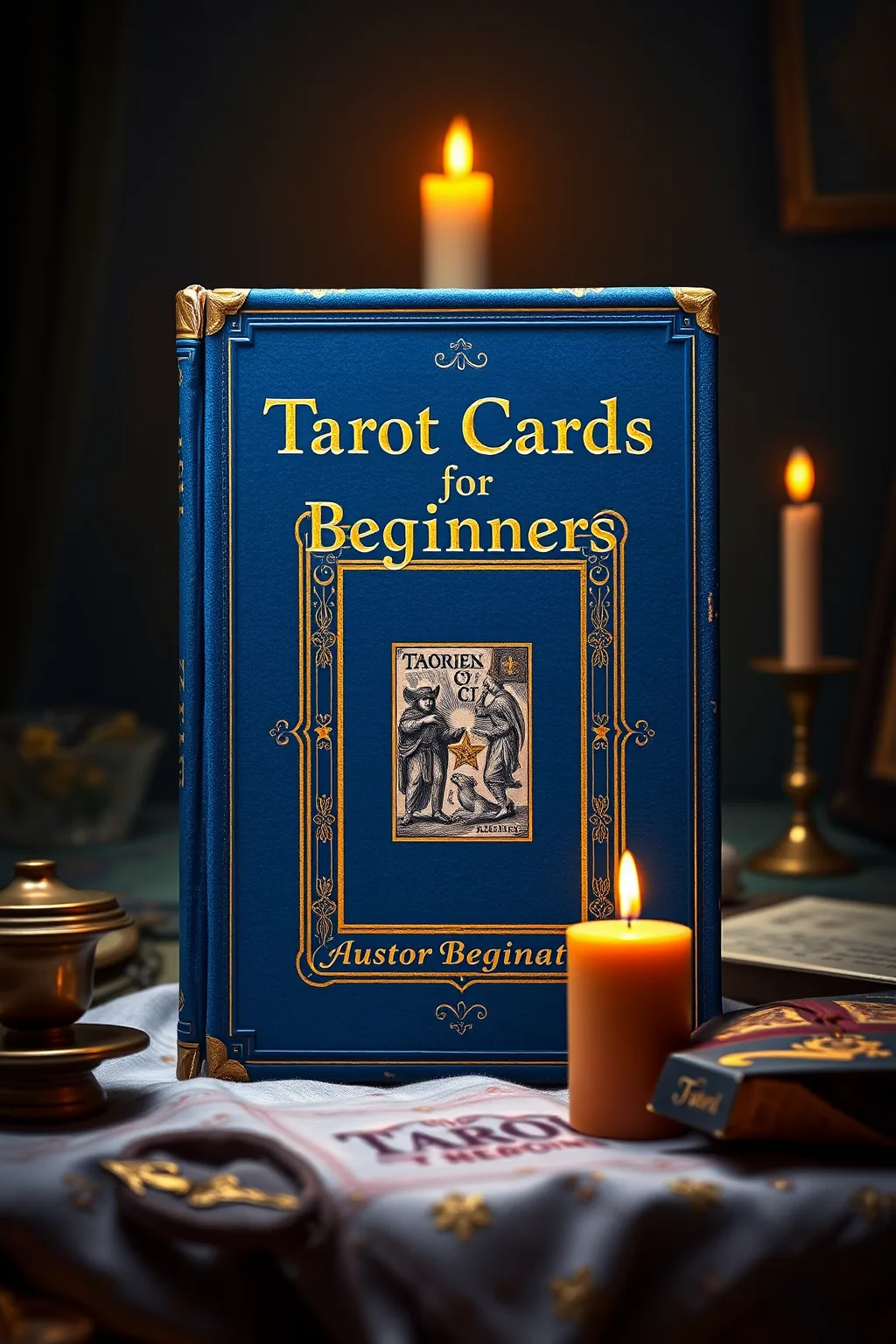
Tarot Cards For Beginners
 81
81

Tarot Cards For Beginners
Austin D. Kaplan’s "Tarot Cards for Beginners" attempts to distill the vast world of tarot into a digestible format. Its strength lies in its clear, unpretentious language, which successfully lowers the barrier to entry for novices. The straightforward explanations of card meanings, particularly the distinction between upright and reversed interpretations, are helpful. However, the book sometimes feels overly simplified, bordering on generic. While it mentions the 15th-century Italian origins, it doesn't deeply explore the subsequent esoteric transformations of the cards, a nuance critical for a richer understanding. The chapter on constructing readings, though basic, provides a usable framework. For someone completely new, this book offers a functional starting point, but those seeking deeper historical or philosophical context might need to look further.
📝 Description
81
Austin D. Kaplan's "Tarot Cards for Beginners" simplifies the Major and Minor Arcana for new readers.
This book introduces the practice of tarot reading, breaking down the core components of a tarot deck. Kaplan explains the symbolism and potential meanings of each card in the Major and Minor Arcana. The author presents tarot not solely as a predictive system, but as a tool for self-reflection and personal insight. It is written for individuals new to tarot, especially those who find the subject intimidating or seek a clear starting point. The volume offers a practical, step-by-step guide for learning card meanings and basic spread interpretations.
Kaplan frames the tarot as a mirror to the psyche. The book emphasizes interpreting cards within a narrative structure, connecting them to personal development and decision-making. Key concepts covered include upright and reversed card meanings, the significance of the four suits—Wands, Cups, Swords, and Pentacles—and the archetypal journeys depicted in the Major Arcana.
The tarot deck originated in 15th-century Italy, initially as a card game. Over centuries, its application expanded into divination and esoteric study, notably within occult circles in the 18th and 19th centuries. Kaplan's book follows this tradition, offering a contemporary perspective on an age-old practice. It positions tarot as a method for understanding oneself and the world, drawing on its historical evolution from a game to a tool for introspection.
💡 Why Read This Book?
• Learn fundamental tarot card meanings, such as the symbolism of the Swords suit and its association with intellect and conflict, directly from Kaplan's clear definitions. • Understand the historical trajectory of tarot, recognizing its 15th-century Italian origins as a game, a key fact presented to contextualize its evolution. • Gain practical skills for interpreting basic tarot spreads, enabling you to begin personal readings with confidence, a core takeaway from the book's instructional approach.
⭐ Reader Reviews
Honest opinions from readers who have explored this book.
❓ Frequently Asked Questions
When was Tarot Cards for Beginners first published?
Tarot Cards for Beginners by Austin D. Kaplan was first published on August 16, 2019. This makes it a relatively contemporary guide to learning the tarot.
What are the main parts of a tarot deck discussed in the book?
The book breaks down the tarot deck into its two primary components: the Major Arcana, representing significant life events and spiritual lessons, and the Minor Arcana, which details everyday experiences and challenges.
Does the book explain how to do tarot readings?
Yes, Tarot Cards for Beginners provides guidance on how to perform tarot readings, including explanations of various card positions within a spread and how to interpret their collective meanings.
Is this book suitable for someone with no prior tarot knowledge?
Absolutely. The book is specifically written for beginners, using clear language and step-by-step instructions to make learning tarot accessible and unintimidating.
What historical period is mentioned regarding the tarot's origins?
The book references the tarot deck's appearance in the parlors of wealthy Italian families in the late 1400s, situating its earliest known origins in Renaissance Italy.
What are the four suits in a tarot deck according to Kaplan?
Kaplan's guide covers the four suits of the Minor Arcana: Wands, Cups, Swords, and Pentacles, explaining the general themes and energies associated with each.
🔮 Key Themes & Symbolism
Card Interpretation Basics
The core of this work focuses on explaining the interpretation of individual tarot cards. It provides straightforward definitions for the 78 cards, differentiating between the symbolic weight of the Major Arcana and the narrative flow of the Minor Arcana. Emphasis is placed on understanding both upright and reversed meanings, encouraging readers to see each card not as a fixed prediction, but as a facet of psychological or situational analysis within a reading.
Historical Roots of Tarot
Kaplan situates the tarot within its historical context, noting its emergence in late 15th-century Italy as a game among aristocratic circles. This grounding acknowledges the deck's evolution from a recreational tool to its later adoption within esoteric traditions. Understanding this origin helps frame the tarot's enduring mystique and its transition into a practice of self-discovery and divination.
Tarot as a Tool for Self-Discovery
Beyond mere fortune-telling, the book champions tarot as a reflective practice. It presents the cards as archetypal symbols that can illuminate subconscious patterns, personal challenges, and potential pathways forward. The emphasis is on using the tarot deck as a mirror to the self, fostering introspection and aiding in decision-making processes through guided contemplation of card imagery and symbolism.
The Structure of the Deck
A foundational theme is the organization of the tarot deck. Kaplan details the division into the 22 Major Arcana, each representing a significant stage or lesson, and the 56 Minor Arcana cards. The Minor Arcana are further explained through their four suits—Wands, Cups, Swords, and Pentacles—and their numbered progression, providing a structural map for beginners to work through the entire deck.
💬 Memorable Quotes
Direct passages from the work, attributed to the author.
“The tarot deck mysteriously appeared in the parlors and sitting rooms of wealthy Italian families in the late 1400s.”
— This statement anchors the tarot's origin in a specific historical and cultural context—Renaissance Italy—moving beyond vague notions of ancient mysticism and grounding its history in tangible beginnings as a game.
“Tarot Guide For Beginners makes this powerful tool easy to learn how to use.”
— This highlights the book's primary objective: to simplify the complex system of tarot for newcomers, suggesting a pedagogical approach focused on clarity and accessibility rather than esoteric jargon.
“inspiring immediate appeal as a charming, whimsical game of self-discovery, lyrical ideas, and philosophical musings.”
— This interpretation suggests that from its inception, the tarot possessed a dual nature: a playful diversion and a vehicle for deeper contemplation, hinting at its potential for both lighthearted enjoyment and profound introspection.
“Today, the tarot deck is just as mysterious as when it first became popular.”
— This observation acknowledges the enduring enigmatic quality of the tarot, suggesting that despite its long history and modern accessibility, it retains an element of the unknown that continues to intrigue practitioners.
💡 Key Ideas
Editorial paraphrase of the work's core concepts — not direct quotes.
clear, concise definitions and ways to incorporate the tarot into you
This paraphrased concept emphasizes the book's practical utility, promising readers not just knowledge of card meanings but actionable methods for applying tarot insights to their own lives.
🌙 Esoteric Significance
Tradition
While this work focuses on beginners, it implicitly engages with the Western Esoteric tradition, particularly the divinatory and psychological applications of the tarot that gained prominence from the 18th century onward. It departs from earlier, more purely cartomantic or Kabbalistic interpretations by emphasizing a modern, self-help oriented approach, making the esoteric accessible without requiring deep familiarity with Hermeticism or Theosophy.
Symbolism
The book introduces fundamental symbols like the four suits (Wands, Cups, Swords, Pentacles), linking them to elemental energies and aspects of human experience. It also touches upon the archetypal journey of the Major Arcana, such as The Fool or The Magician, framing them as representations of spiritual growth and the unfolding of potential within the individual psyche.
Modern Relevance
In contemporary practice, works like Kaplan's are crucial for onboarding new generations into tarot. They serve as a gateway, often leading practitioners to explore deeper traditions later. Modern mindfulness and therapeutic approaches to self-reflection frequently draw parallels with tarot's symbolic language, making this book relevant to secular spiritual seekers as well as nascent occultists.
👥 Who Should Read This Book
• Absolute beginners curious about tarot card meanings and basic interpretation techniques, seeking a no-nonsense guide. • Individuals interested in self-reflection and personal growth who want to explore a symbolic system for introspection. • Aspiring readers looking for a foundational understanding of the Major and Minor Arcana before exploring more complex esoteric texts.
📜 Historical Context
Austin D. Kaplan's "Tarot Cards for Beginners" enters a field with deep historical roots, tracing back to the 15th century in Italy where decks like the Visconti-Sforza were used for games among the aristocracy. While not a scholarly treatise, the book acknowledges this origin, contrasting it with the later occult applications that flourished particularly in the late 18th and 19th centuries, influenced by figures like Antoine Court de Gébelin who linked tarot to Egyptian mysteries. Kaplan's work sidesteps the more complex esoteric lineages explored by contemporaries of earlier occult revivals, such as Eliphas Lévi or later the Hermetic Order of the Golden Dawn, focusing instead on a modern, accessible approach. The book's publication in 2019 places it in an era where tarot has seen a significant resurgence in popular culture, often detached from its more intricate historical occult interpretations, a trend this book clearly caters to.
📔 Journal Prompts
Reflect on the symbolism of The Fool's journey as presented in the Major Arcana.
Consider the elemental associations of the Cups suit and their relevance to your emotional life.
How might the concept of upright versus reversed card meanings alter your interpretation of a situation?
Analyze a recent challenge through the lens of the Swords suit's themes.
Explore the practical application of tarot spreads discussed in the book for daily decision-making.
🗂️ Glossary
Major Arcana
The 22 trump cards of the tarot deck, representing significant life lessons, spiritual milestones, and archetypal forces that influence a person's journey.
Minor Arcana
The 56 cards divided into four suits (Wands, Cups, Swords, Pentacles), which typically represent the mundane events, challenges, and experiences of daily life.
Suit of Wands
Associated with the element of Fire, this suit generally relates to creativity, inspiration, passion, ambition, and action.
Suit of Cups
Linked to the element of Water, the Cups suit typically governs emotions, relationships, intuition, love, and subconscious matters.
Suit of Swords
Connected to the element of Air, the Swords suit often deals with intellect, thoughts, communication, conflict, and truth.
Suit of Pentacles
Representing the element of Earth, this suit commonly pertains to the material world, finances, work, health, and practical matters.
Spread
A specific arrangement of tarot cards laid out in a pattern, designed to address a particular question or area of inquiry, with each position holding a defined meaning.