Tarot
 73
73

Tarot
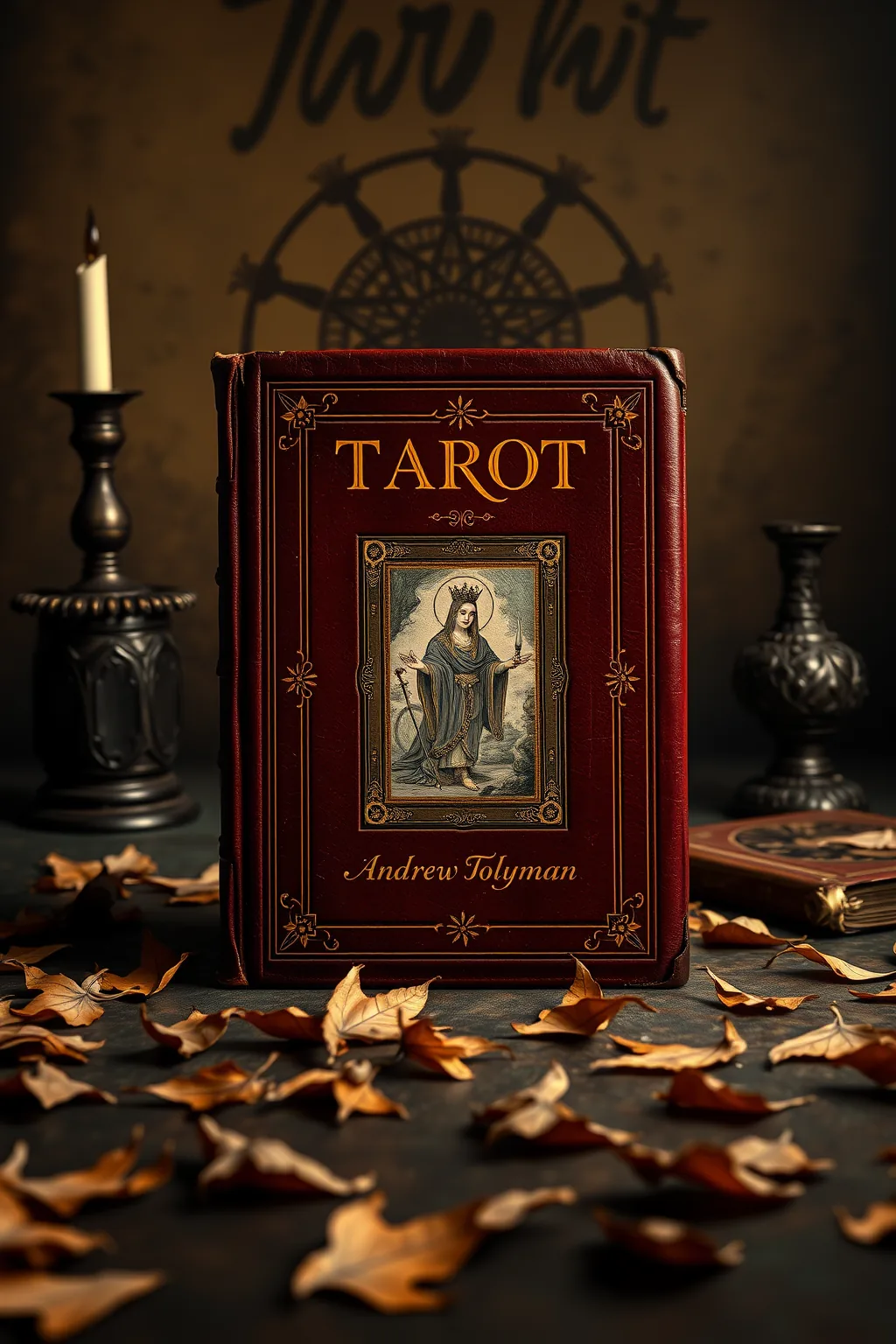
Andrew Tolyman’s "Tarot" offers a welcome antidote to the often-superficial treatments of the cards, grounding its exploration in the deck’s tangible history. The strength of this work lies in its meticulous tracing of the Tarot’s journey from a 15th-century Italian game to a complex divinatory system, particularly its engagement with the late 18th-century occultists who first codified its esoteric significance. Tolyman correctly emphasizes that the deck’s evolution is not merely an aesthetic change but a fundamental shift in its perceived function and symbolic weight. A minor limitation, however, is the book's tendency to present the historical development as a linear progression, occasionally downplaying the more fragmented and contested nature of early Tarot scholarship. The passage detailing Antoine Court de Gébelin's controversial linkage of the Tarot to ancient Egypt, while informative, could benefit from further contextualization regarding the speculative nature of such associations in his era. Overall, Tolyman provides a solid, fact-based overview for those seeking to understand the Tarot’s roots beyond modern New Age interpretations.
📝 Description
73
Andrew Tolman's "Tarot" traces the card deck's shift from a 15th-century game to a divinatory system.
Andrew Tolman's "Tarot" examines the evolution of the familiar card deck from its 15th-century European origins as a game into a tool for divination. The book follows this transformation, looking past simple interpretations to the deeper symbolic language that has grown around the cards over centuries. It shows how the Tarot went from a pastime to a system of esoteric knowledge, a change often missed in popular tellings.
The work breaks down the Tarot's structure, concentrating on the Major and Minor Arcana. Tolman explains the archetypal figures of the Major Arcana, like The Fool and The Magician, and their role in a larger symbolic story. The Minor Arcana, often seen as ordinary, are shown as important channels for understanding daily life and personal growth, with each suit and number carrying specific energies.
"Tarot" places the cards within their history, noting their appearance in Italy in the mid-1400s. It highlights key periods and movements, such as the late 18th-century occult revival and Antoine Court de Gébelin's idea of a link between Tarot and ancient Egyptian wisdom. This part stresses how outside philosophical and mystical ideas shaped the Tarot's esoteric meaning. The book also looks at practical ways to use the Tarot for self-reflection and spiritual growth, not just fortune-telling.
This book situates the Tarot within the Western esoteric tradition, particularly its connection to occultism and spiritualism that emerged in the late 18th century. It details how figures like Antoine Court de Gébelin first linked the cards to ancient Egyptian mysteries, a concept that became central to later esoteric interpretations. Tolman shows how these historical connections influenced the Tarot's transformation from a game into a system for divination and self-knowledge, reflecting broader trends in hermeticism and mystical thought.
💡 Why Read This Book?
• Gain a concrete understanding of the Tarot's documented emergence in 15th-century Italy, differentiating historical fact from later esoteric embellishments. • Learn about the pivotal role of Antoine Court de Gébelin in the late 18th century, who first linked the Tarot to ancient Egyptian mysteries, shaping its occult trajectory. • Discover how the Major and Minor Arcana function as distinct yet interconnected symbolic systems, offering a framework for interpreting both external events and internal states.
⭐ Reader Reviews
Honest opinions from readers who have explored this book.
❓ Frequently Asked Questions
When did Tarot cards first appear historically?
Tarot cards first appeared in Europe around the mid-15th century, specifically documented in northern Italy. They originated as a card game similar to bridge, long before their development into a divinatory tool.
Who was Antoine Court de Gébelin and why is he important to Tarot history?
Antoine Court de Gébelin was an 18th-century clergyman and scholar. He is significant for his writings in 'Le Monde Primitif' (published 1781), where he controversially proposed that the Tarot's imagery was derived from ancient Egyptian traditions, thus initiating its association with occultism.
What is the difference between the Major and Minor Arcana?
The Major Arcana consist of 22 trump cards depicting archetypal figures and concepts (e.g., The Fool, The Magician), representing significant life lessons and spiritual journeys. The Minor Arcana comprise 56 cards divided into four suits, mirroring everyday events and situations.
How did Tarot evolve from a game to a divinatory tool?
The transition occurred gradually. While originating as a game in the 1400s, esoteric interpretations began to emerge significantly in the late 18th century with figures like Court de Gébelin. By the 19th century, occult groups further developed and disseminated these divinatory systems.
Does "Tarot" by Andrew Tolyman focus on modern Tarot decks?
No, Tolyman's "Tarot" primarily focuses on the historical and symbolic evolution of the Tarot, tracing its roots and the development of its esoteric meanings from its origins rather than detailing specific modern decks.
Are there specific Tarot spreads discussed in the book?
While the book emphasizes the symbolic language and historical context, it also touches upon the principles of reading the cards. Specific spread methodologies are explored as extensions of understanding the interconnectedness of the symbols.
🔮 Key Themes & Symbolism
Cartomantic Origins
This work meticulously traces the Tarot's lineage back to its documented appearance in 15th-century Italy, challenging the notion of an ancient, unbroken mystical tradition. It highlights the initial function of these cards as a game, distinct from their later divinatory applications. By examining early decks like the Visconti-Sforza, Tolyman anchors the Tarot's esoteric journey in concrete historical fact, showing how its symbolic depth emerged organically rather than being divinely revealed from antiquity.
The Occult Revival's Influence
A significant portion of the analysis is dedicated to the late 18th and 19th centuries, a period of intense occult revival in Europe. Tolyman focuses on key figures such as Antoine Court de Gébelin and Eliphas Lévi, who were instrumental in reinterpreting the Tarot through Hermetic, Kabbalistic, and Egyptian lenses. This section details how these esotericists imbued the cards with complex symbolic meanings, transforming them into a vehicle for mystical philosophy and divination, thereby shaping the modern understanding of the Tarot.
Archetypes of the Major Arcana
The book provides an in-depth examination of the 22 Major Arcana cards, treating them as archetypal representations of universal human experiences and spiritual stages. Figures like The Fool, The Hierophant, and The World are explored not just as symbols but as potent forces within the human psyche and the cosmos. Tolyman elucidates the narrative progression of the Major Arcana, presenting it as a symbolic journey of initiation and self-discovery.
Symbolism of the Minor Arcana
Contrary to views that dismiss the Minor Arcana as mundane, Tolyman argues for their a central role in the Tarot's divinatory and symbolic system. The work details how the four suits (Wands, Cups, Swords, Pentacles) and their numbered cards correspond to elements, human activities, and psychological states. Understanding the intricate relationships between the pip cards and court cards is presented as essential for a comprehensive Tarot reading and for mapping the nuances of daily life.
💬 Memorable Quotes
Direct passages from the work, attributed to the author.
“The Tarot's transformation from a parlor game to a mystical text occurred over centuries.”
— This statement captures the book's central thesis: that the Tarot's esoteric significance is a product of historical development and evolving interpretations, not an ancient, static revelation.
“Court de Gébelin's theories linked the Tarot to Egyptian mysteries in the late 1700s.”
— This highlights a specific, influential moment where the Tarot began its serious association with occultism, moving it away from its gaming origins towards mystical symbolism.
“Each suit of the Minor Arcana reflects distinct domains of human experience.”
— This interpretation emphasizes the practical application of the Tarot, suggesting that the numbered cards offer detailed insights into various aspects of life, not just grand archetypal themes.
“The Fool's journey represents a symbolic path of initiation.”
— This points to the narrative structure within the Major Arcana, framing the sequence of cards as a metaphorical progression through stages of spiritual growth and learning.
“Understanding the Tarot requires both historical knowledge and intuitive interpretation.”
— This suggests a balanced approach to Tarot study, acknowledging that while factual grounding is important, the personal and symbolic resonance of the cards is equally vital for meaningful readings.
🌙 Esoteric Significance
Tradition
This work primarily engages with the Western Esoteric Tradition, specifically its Hermetic and Kabbalistic branches, which gained significant traction in the late 18th and 19th centuries. Tolyman traces how the Tarot, initially a secular game, was adopted and reinterpreted by occultists seeking a symbolic language to express complex philosophical and mystical concepts. It fits within this lineage by detailing the process through which the cards became a divinatory and meditative tool, aligning with the esoteric goal of uncovering hidden correspondences within the universe and the human soul.
Symbolism
Central to the esoteric significance explored is the symbolism of the Major Arcana, such as The Magician (representing will and manifestation) and The High Priestess (embodying intuition and hidden knowledge). The work also highlights the elemental correspondences within the Minor Arcana: Wands (Fire, action), Cups (Water, emotion), Swords (Air, intellect), and Pentacles (Earth, material world). These symbols are not merely decorative but form a coherent system for understanding cosmic forces and their interplay within human experience.
Modern Relevance
Tolyman's analysis provides crucial context for contemporary practitioners and scholars of Western Esotericism. Modern Tarot communities, psychological Tarot readers influenced by Jungian archetypes, and those exploring Hermetic correspondences often draw implicitly or explicitly on the historical interpretations detailed in this book. Thinkers exploring syncretic spiritual paths and those investigating the intersection of art, psychology, and mysticism find the historical trajectory of the Tarot, as presented here, to be foundational for understanding its enduring appeal and diverse applications today.
👥 Who Should Read This Book
• Students of Western Esotericism seeking a historically grounded understanding of the Tarot's development beyond popular mythologies. • Occult practitioners interested in tracing the lineage of divinatory practices and symbolic systems from the 15th century onwards. • Comparative religion scholars examining the evolution of symbolic languages and their integration into mystical traditions.
📜 Historical Context
Andrew Tolyman's "Tarot" emerges within a scholarly landscape increasingly interested in the material culture of esoteric practices. Published in 2020, it benefits from decades of critical examination into the Tarot’s complex provenance, moving beyond earlier, more romanticized accounts. The work specifically engages with the late 18th-century occult revival, an important era where figures like Antoine Court de Gébelin first posited ancient Egyptian connections, and later the 19th-century work of Eliphas Lévi, who further codified its esoteric symbolism within Hermeticism. Tolyman situates these developments against the backdrop of a burgeoning interest in mysticism and secret societies. While not facing direct censorship, the Tarot's occult associations have historically been met with skepticism by mainstream academia, a reception that scholars like Tolyman aim to contextualize through rigorous historical analysis, contrasting it with the more empirical approaches prevalent in contemporary intellectual currents.
📔 Journal Prompts
The evolution of the Tarot from game to divination system.
Antoine Court de Gébelin's theories on ancient Egyptian connections.
The symbolic representation of The Fool's journey.
Interpreting the elemental correspondences of the Minor Arcana suits.
The role of the Major Arcana archetypes in personal development.
🗂️ Glossary
Major Arcana
The set of 22 trump cards in a Tarot deck, representing significant life events, archetypal figures, and spiritual lessons.
Minor Arcana
The 56 cards of a Tarot deck, divided into four suits (Wands, Cups, Swords, Pentacles), which typically represent everyday occurrences and situations.
Antoine Court de Gébelin
An 18th-century French clergyman and scholar known for his controversial theories linking the Tarot to ancient Egyptian wisdom in his work 'Le Monde Primitif'.
Hermeticism
A philosophical tradition based on the writings attributed to Hermes Trismegistus, emphasizing divine wisdom, correspondences, and the pursuit of spiritual knowledge.
Kabbalah
A system of Jewish mysticism that explores the divine nature and creation through symbolic interpretation, often represented by the Tree of Life.
Divination
The practice of seeking knowledge of the future or the unknown by supernatural means, for which Tarot cards became a prominent tool.
Archetype
A universal, symbolic pattern or image that recurs in the collective unconscious, often represented by figures in the Major Arcana.