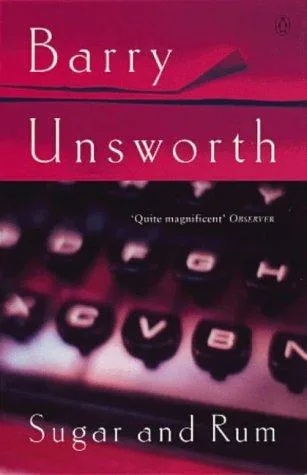
Sugar and Rum
 62
62

Sugar and Rum



Ophelia Vance, Mystical Literature Reviewer: Barry Unsworth masterfully crafts a narrative steeped in psychological depth and subtle esotericism. 'Sugar and Rum' is not a manual of arcane practices, but a profound meditation on the seeker's plight. Benson's descent into a state of profound receptivity, where he actively seeks portents, echoes the archetypal journey of the oracle or the diviner attuned to the world's vibrations. Unsworth's strength lies in his depiction of this inner quest, making the abstract palpable. This novel will resonate deeply with readers who appreciate introspective fiction that delves into the nature of belief, fate, and the search for meaning beyond the ordinary.
📝 Description
62
Barry Unsworth's 1988 novel 'Sugar and Rum' examines a man's search for meaning in urban alienation.
The novel follows Benson, a character experiencing a deep personal crisis. He feels cut off from his creative life and from rest, wandering through a city that offers no solace. Dressed in an old coat, he looks for signs or patterns in his surroundings, a quest for purpose in what seems like meaningless existence. Unsworth captures the feeling of living on the edge of perception, where everyday moments might hold deeper significance. The story touches on the human need to find order when faced with chaos and the potential for revelation in unexpected encounters. It is a look at the inner life of someone grappling with transition.
While not overtly occult, 'Sugar and Rum' touches on themes common in esoteric thought: the search for hidden truths beneath the surface of everyday life, the idea of finding meaning in seemingly random events, and the subjective experience of reality shifting. Benson's internal state, his yearning for something beyond the mundane, and his attempt to interpret urban signs align with traditions that emphasize inner awareness and the potential for revelation in the liminal spaces of consciousness. The novel suggests that profound insights can arise from altered states of perception or heightened sensitivity to the environment.
💡 Why Read This Book?
For those who feel the pull of the unseen, 'Sugar and Rum' offers a compelling exploration of the human quest for meaning. It's ideal for readers who find solace in introspective narratives, who understand the profound significance of signs and portents in navigating life's uncertainties. If you're drawn to stories that blend psychological realism with a subtle undercurrent of the mystical, this novel will deeply satisfy.
⭐ Reader Reviews
Honest opinions from readers who have explored this book.
❓ Frequently Asked Questions
Is 'Sugar and Rum' a work of magical realism?
While 'Sugar and Rum' explores themes of seeking signs and portents, it is primarily a work of psychological fiction. The 'magic' lies in the protagonist's perception and interpretation of the world, rather than overt supernatural events.
What is the primary tone of the novel?
The tone is predominantly introspective, melancholic, and searching. It conveys a sense of existential unease and the quiet desperation of a soul seeking answers.
Does the novel offer practical divination techniques?
No, 'Sugar and Rum' does not offer practical divination techniques. Instead, it explores the *psychological* and *philosophical* impulse to seek omens and meaning in everyday life.
Who is Benson and what is his central conflict?
Benson is the novel's protagonist, experiencing a severe creative and emotional block. His central conflict is his profound isolation and his desperate search for signs or guidance to overcome this crisis.
What is the significance of the title 'Sugar and Rum'?
The title is evocative and symbolic. 'Sugar' can represent fleeting pleasures or superficial sweetness, while 'Rum' suggests a more potent, perhaps intoxicating or disorienting, substance, hinting at the dual nature of his seeking and his experiences.
🔮 Key Themes & Symbolism
The Search for Portents and Auguries
The novel explores the profound human need to find meaning and guidance in the external world, particularly during times of personal crisis. Benson's walk through the city, his keen observation of strangers and his environment, becomes an act of divination. This theme explores how individuals, when disconnected from conventional sources of comfort or direction, turn to the subtle language of the universe, seeking confirmation or clues in the seemingly random occurrences of daily life. It touches upon the inherent desire for order and purpose, even when faced with overwhelming uncertainty, and how this quest can transform perception.
Existential Crisis and the Creative Block
Fundamentally, , 'Sugar and Rum' is a powerful portrayal of an existential crisis. Benson's inability to work or sleep signifies a deep disconnection from his inner life and his external purpose. The 'silence forming over him like a crust' is a potent metaphor for spiritual or creative stagnation. This theme examines the psychological toll of feeling lost and the arduous, often isolating, journey required to break free from such a state. It highlights the fragile connection between mental well-being, creative output, and the broader search for meaning, suggesting that true solace often requires confronting profound inner turmoil.
The Liminality of Urban Solitude
The city in 'Sugar and Rum' is not merely a backdrop but a character in itself, a landscape imbued with potential significance for the solitary seeker. Benson's ancient overcoat and his aimless wandering evoke a sense of being both present and detached, existing in the liminal spaces between society and isolation. This theme explores how urban environments, with their anonymity and constant flux, can become fertile ground for introspection and the perception of hidden patterns. The city's indifference paradoxically amplifies the individual's quest for personal meaning, transforming mundane streets into a canvas for symbolic interpretation.
💬 Memorable Quotes
Direct passages from the work, attributed to the author.
“He spent a lot of time walking around the city.”
— This simple act signifies Benson's active, yet aimless, search for answers in the external world, a physical manifestation of his internal quest.
“looking for signs, portents, auguries.”
— This phrase expresses the novel's central theme: the human drive to find meaning and guidance in the seemingly random events of life, transforming the mundane into the mystical.
“silence forming over him like a crust”
— A vivid metaphor for creative block and emotional numbness, suggesting a hardening of the spirit that prevents connection and expression.
“talking to strangers”
— Highlights Benson's desperate attempt to find connection and perhaps fragmented truths through chance encounters, seeking traces of his own internal state.
“an ancient overcoat of grey tweed”
— Symbolizes Benson's isolation, his antiquated state of being, and his worn resilience as he navigates his profound personal crisis.
🌙 Esoteric Significance
Tradition
While not overtly practicing a specific magical tradition, 'Sugar and Rum' aligns with the Hermetic principle of 'As Above, So Below.' Benson's external search for signs in the city mirrors an internal spiritual and psychological exploration. His receptivity to the environment reflects a state of heightened awareness akin to that sought by mystics and seers who believe the universe communicates through subtle symbolism and synchronicity. The novel embodies the esoteric pursuit of hidden knowledge and the belief that answers can be found by attuning oneself to the deeper currents of existence.
Symbolism
The 'ancient overcoat' symbolizes a protective, perhaps outdated, shell that Benson wears as he ventures into the world. The 'city' itself becomes a symbolic landscape, its streets and chance encounters acting as a form of urban geomancy or cartomancy, where patterns and meanings are sought. The 'silence' is a potent symbol of spiritual or creative death, a void that Benson desperately tries to fill with external omens. The very act of 'looking for signs' is a symbolic gesture of faith in an underlying order, a search for the divine or the meaningful in the profane.
Modern Relevance
In our hyper-connected yet often isolating modern world, Benson's struggle to find meaning and his reliance on subtle cues for guidance remain profoundly relevant. The novel speaks to the contemporary experience of information overload and the simultaneous feeling of disconnection, prompting readers to consider how they too might seek deeper truths beyond the superficial. Its exploration of mental well-being, creative blocks, and the search for authenticity speaks to current discussions on mindfulness, self-discovery, and the enduring human need for purpose in an often chaotic existence.
👥 Who Should Read This Book
This novel is recommended for readers who appreciate character-driven narratives with a strong psychological and philosophical undercurrent. **Seekers and Introspectives** will find kinship with Benson's journey, resonating with his search for meaning beyond the ordinary. **Scholars of Literature** will appreciate Unsworth's masterful prose and nuanced exploration of existential themes. **Practitioners of Esoteric Arts** may find value in its depiction of the *impulse* to seek signs and the psychological state of receptivity, even if it doesn't present specific techniques. **Beginners** to more philosophical fiction will find a gentle yet profound entry point into themes of doubt, faith, and the search for purpose.
📜 Historical Context
Barry Unsworth's 'Sugar and Rum' emerges from a rich tradition of English literary exploration of the human psyche and its engagement with the modern world. Written against the backdrop of late 20th-century societal shifts, the novel reflects a lingering sense of existential unease and a questioning of traditional certainties that characterized much of post-war literature. The protagonist's profound dislocation and his search for meaning in an increasingly complex urban environment resonate with themes explored by authors grappling with alienation and the search for authenticity in a secularizing society. Unsworth's prose often carries a historical weight, infusing his contemporary settings with a timeless quality, reminiscent of earlier British novelists who masterfully depicted the inner lives of their characters within specific social and historical milieus. The novel taps into a vein of British literature that values introspection and the nuanced portrayal of individual struggle.
📔 Journal Prompts
When have you felt a profound 'silence' in your life, and how did you attempt to break it?
Describe a time you actively looked for signs or portents in your daily life. What did you find, and what did it mean to you?
How does your immediate environment (your home, your neighborhood, your city) influence your mood and your sense of purpose?
What does the concept of 'hidden knowledge' mean to you, and how do you believe it can be accessed?
Reflect on a moment when you felt most disconnected from yourself or others. What actions did you take, if any, to reconnect?
🗂️ Glossary
Augury
A sign or omen, especially one interpreted as foretelling the future. In ancient Rome, augurs interpreted the flight of birds or other natural phenomena.
Portent
A sign or warning that something, especially something momentous or calamitous, is likely to happen. Often perceived as an omen.
Liminal
Relating to a transitional or initial stage of a process, or occupying an intermediate position. In a spiritual context, it refers to thresholds or in-between states.
Existential
Relating to existence. Often refers to a philosophical perspective that emphasizes individual existence, freedom, and choice, and the anxieties that accompany them.
Divination
The practice of seeking knowledge of the future or the unknown by supernatural means. In this context, it refers to the *act* of looking for signs rather than specific methods.
This book appears in 1 collection
🔮 Readers Also Liked
Browse all →







From the “Augury” Collection
View all →






More Free Divination & Tarot Books
View all →