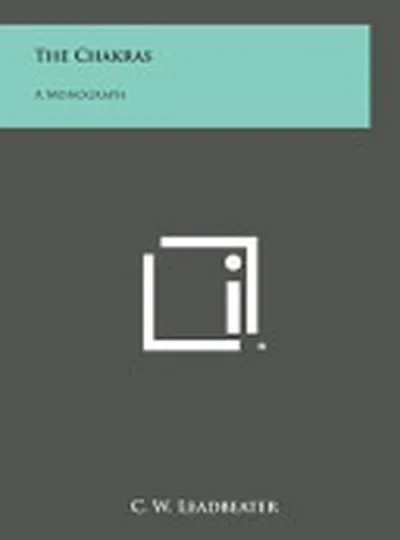
The Chakras
 78
78

The Chakras
Leadbeater’s approach to the chakras, as presented in this 1927 text, is remarkably systematic for its era. He meticulously details the symbolic lotus petals and their associated color spectra for each of the seven primary centers, a level of specificity that aids visualization. For instance, his description of the Manipura chakra, often associated with the solar plexus, as a vibrant yellow center of personal power, is particularly vivid and serves as a strong anchor for understanding its function. However, the work’s foundation in clairvoyant observation, while central to Leadbeater’s method, can sometimes present interpretations as absolute fact without offering the kind of empirical debate common in later esoteric literature. The text’s inherent Theosophical viewpoint, while historically significant, may require readers to contextualize certain pronouncements. Despite these considerations, the sheer volume of detail provided offers an unparalleled glimpse into early 20th-century Western esoteric understandings of these vital energy points.
📝 Description
78
C. W. Leadbeater published his detailed account of the human energy centers, The Chakras, in 1927.
The Chakras by C. W. Leadbeater provides a systematic description of the seven main energetic centers within the subtle human body. First appearing in 1927, the book maps these chakras, detailing their locations, functions, and associated energetic qualities. Leadbeater presents these concepts through a Western esoteric viewpoint, though the underlying system has roots in Indic traditions stretching back centuries. The work aims to clarify how these vital energy points influence physical, mental, and spiritual states.
This text is written for students of esoteric philosophy, Theosophy, and comparative religion. It also speaks to practitioners of yoga, meditation, and energy healing who want a deeper understanding of the subtle body's energetic architecture. Those interested in how Western occultism incorporated Eastern spiritual ideas will find it informative. Leadbeater, a notable member of the Theosophical Society, bases his descriptions on clairvoyant observation. He situates the chakras within a larger framework of astral and mental bodies, connecting their development to consciousness and spiritual growth.
Published in 1927, The Chakras by C. W. Leadbeater reflects a period of significant Western engagement with Eastern spiritual thought. Leadbeater, a prominent Theosophist, interpreted the chakra system through his clairvoyant perceptions and within the Theosophical model of subtle bodies. His work synthesized ancient Indic concepts with the developing Western esoteric tradition, aiming to provide a structured understanding of human energetic centers and their role in spiritual evolution.
💡 Why Read This Book?
• Gain a foundational understanding of the seven primary chakras and their specific energetic functions, as detailed in Leadbeater’s systematic 1927 analysis, offering a precise energetic anatomy. • Explore the concept of Kundalini energy and its relationship to spiritual awakening through the chakra system, a core tenet Leadbeater elucidates with considerable detail. • Understand the historical context of Western esoteric engagement with Indic spiritual traditions, specifically through the Theosophical Society's lens as applied by C. W. Leadbeater.
⭐ Reader Reviews
Honest opinions from readers who have explored this book.
❓ Frequently Asked Questions
What is the primary focus of C. W. Leadbeater's 'The Chakras'?
The book meticulously details the seven primary chakras, their locations, associated symbolic imagery (like lotus petals), and their influence on physical and subtle bodies, based on Leadbeater's clairvoyant investigations.
When was 'The Chakras' by C. W. Leadbeater originally published?
The work was first published in 1927, though this edition is a republication of that original text.
Does this book explain Kundalini energy?
Yes, Leadbeater dedicates significant attention to the concept of Kundalini, describing it as a potent spiritual energy coiled at the base of the spine and its potential for ascent through the chakras.
Who was C. W. Leadbeater and what was his background?
C. W. Leadbeater was a prominent Anglo-Irish author and occultist, a leading member of the Theosophical Society known for his writings on psychic phenomena and esoteric subjects, often based on his alleged clairvoyant abilities.
What esoteric tradition does 'The Chakras' primarily draw from?
While drawing heavily from Indic traditions like Yoga and Tantra, Leadbeater presents the chakra system through the framework of Western esoteric thought, particularly within the Theosophical movement.
Is this book suitable for beginners in esoteric studies?
It is suitable for beginners who are prepared for detailed, systematic descriptions grounded in a specific esoteric viewpoint, offering a comprehensive overview of the chakra system as understood in early 20th-century Theosophy.
🔮 Key Themes & Symbolism
Subtle Body Anatomy
Leadbeater maps the energetic architecture of the human form, detailing the seven primary chakras as distinct centers of consciousness and vitality. He assigns specific locations, symbolic petal counts, and associated colors to each, such as the vibrant yellow Manipura at the solar plexus or the deep blue Vishuddha in the throat. This framework posits that these centers are not merely metaphorical but are actual energetic vortices influencing our physical, emotional, and mental states, forming a crucial component of esoteric physiology.
Kundalini and Spiritual Ascent
A central theme is Kundalini, the dormant, potent spiritual energy residing at the base of the spine. Leadbeater describes its potential to awaken and ascend through the Sushumna nadi, the central energetic channel, activating each chakra sequentially. This process is presented as the mechanism for profound spiritual transformation and expanded consciousness, moving the individual from lower, mundane awareness towards higher, divine realization.
Theosophical Interpretation of Energy Centers
This work is deeply rooted in the Theosophical Society's teachings, particularly as developed by figures like Leadbeater and Annie Besant. The chakras are integrated into a broader evolutionary cosmology, linked to the development of consciousness across different planes of existence. Leadbeater's clairvoyant observations provide the basis for his detailed descriptions, presenting a unique Western esoteric interpretation of ancient Indic concepts.
Color, Sound, and Vibration
The book extensively explores the vibratory nature of the chakras, associating specific colors, sounds (mantras), and frequencies with each center. For example, the Ajna chakra is linked to indigo and the sound of OM. This emphasizes the idea that each chakra operates on a distinct energetic frequency, and understanding these correspondences allows for their influence and harmonization through focused intent, visualization, or sonic practices.
💬 Memorable Quotes
Direct passages from the work, attributed to the author.
“The chakras are the centres of force in the human body.”
— This statement underscores Leadbeater's view of chakras as dynamic energetic hubs, crucial for the functioning of both the physical and subtle human constitution. It sets the stage for understanding their importance in esoteric anatomy.
“The force that is coiled at the base of the spine is Kundalini.”
— This concisely introduces the concept of Kundalini, framing it as a foundational, dormant power residing within the physical form, awaiting activation for spiritual advancement.
“Each chakra has a different colour and a different number of petals.”
— This highlights the visual and symbolic language used to describe the chakras, emphasizing their distinct energetic signatures and the intricate detail Leadbeater provides for each center.
“The chakras govern the circulation of the astral body.”
— This points to the function of chakras beyond mere energetic points, suggesting they play a role in the movement and distribution of vital force within the non-physical subtle bodies.
“The Sahasrara is the centre of highest consciousness.”
— This identifies the crown chakra as the apex of the energetic system, the gateway to ultimate spiritual awareness and union, representing the culmination of the Kundalini's ascent.
🌙 Esoteric Significance
Tradition
This work is firmly situated within the Western Esoteric Tradition, specifically the Theosophical lineage that emerged in the late 19th century. Leadbeater adapts and systematizes ancient Indic concepts of subtle energy centers, presenting them through a framework that integrates evolutionary cosmology and clairvoyant observation. It represents a key effort to translate Yogic and Tantric philosophy into a language and conceptual structure understandable to Western occultists, moving beyond purely philosophical discussions to offer a detailed, albeit subjective, energetic anatomy.
Symbolism
The book extensively uses the symbolism of lotuses with varying numbers of petals to represent the complexity and vibratory nature of each chakra. For instance, the Muladhara is depicted with four petals, signifying its foundational role, while the Sahasrara, the crown chakra, possesses a thousand petals, symbolizing infinite consciousness. Colors are also paramount, with each chakra assigned a specific hue—like the green of the Anahata (heart chakra)—to denote its particular energetic quality and function within the subtle body.
Modern Relevance
Leadbeater's detailed descriptions of the chakras continue to influence modern practices in yoga, meditation, and energy healing. Contemporary teachers and practitioners often refer to his color associations, petal counts, and functional attributes, even if they are unaware of the Theosophical origins. His work provided a foundational text for many Western New Age and esoteric systems that explore the energetic body, making his interpretations a recurring point of reference in discussions of spiritual anatomy.
👥 Who Should Read This Book
• Aspiring practitioners of subtle body work and energy healing seeking a detailed, historical overview of the chakra system as understood in early 20th-century esoteric circles. • Students of Theosophy and comparative religion interested in C. W. Leadbeater's influential interpretations of Indian spiritual concepts and their integration into Western esoteric thought. • Meditators and yogis looking to deepen their theoretical comprehension of energetic centers, Kundalini, and their connection to consciousness as described in a classic esoteric text.
📜 Historical Context
Published in 1927, C. W. Leadbeater's 'The Chakras' emerged during a period of intense Western fascination with Eastern spiritual traditions, largely fueled by the Theosophical Society. Founded in 1875 by Helena Blavatsky, Theosophy sought to synthesize esoteric philosophies and religions, making concepts like chakras and Kundalini accessible to a Western audience. Leadbeater, a prominent Theosophist alongside Annie Besant, presented his work based on alleged clairvoyant perceptions, positioning it as empirical rather than purely theoretical. This era also saw the rise of other esoteric movements and figures, such as Aleister Crowley and the Hermetic Order of the Golden Dawn, though their approaches to energy systems often differed significantly from Leadbeater's systematic, Theosophical framework. While influential, Leadbeater's writings, particularly those concerning psychic phenomena and race, faced considerable controversy and criticism within and outside Theosophical circles, impacting the reception and perceived authority of his detailed anatomical descriptions of the subtle body.
📔 Journal Prompts
The precise vibratory quality of the Manipura chakra.
Leadbeater's description of Kundalini's ascent through the Sushumna nadi.
The symbolic meaning of the thousand petals of the Sahasrara.
The relationship between physical location and energetic function for each chakra.
The seven primary chakras as centers of force.
🗂️ Glossary
Chakra
A Sanskrit term meaning 'wheel' or 'vortex'. In esoteric traditions, chakras are understood as centers of spiritual, physical, and emotional energy located within the subtle body.
Kundalini
A primordial, divine feminine energy, often depicted as a coiled serpent, believed to reside at the base of the spine. Its awakening and ascent through the chakras are central to spiritual liberation in many Indian traditions.
Sushumna Nadi
The central energetic channel within the subtle body, running along the spinal column, through which the Kundalini energy is said to ascend during spiritual awakening.
Astral Body
A subtle or non-physical body composed of finer matter, often associated with emotions, desires, and the plane of consciousness experienced during dreams or out-of-body experiences.
Lotus Petals
Symbolic representations of the energetic whorls or sub-energies within a chakra. The number of petals varies for each chakra, indicating its complexity and vibrational frequency.
Muladhara
The root or base chakra, located at the base of the spine. It is associated with grounding, security, and the physical body, and is considered the seat of Kundalini.
Sahasrara
The crown chakra, located at the top of the head. It is associated with universal consciousness, spiritual enlightenment, and connection to the divine.