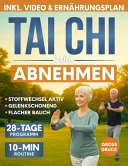
Tai Chi zum Abnehmen
 74
74

Tai Chi zum Abnehmen
Morgan Fujita's "Tai Chi zum Abnehmen" presents a novel application for a venerable practice, focusing on weight loss for the over-fifties demographic. The book's strength lies in its practical, accessible 28-day framework, which demystifies Tai Chi for a potentially intimidated audience. Fujita successfully translates the nuanced principles of Qi flow and mindful movement into actionable steps for metabolic enhancement. The approach is commendably gentle, directly addressing the common barriers of joint pain and fatigue that plague older adults seeking to shed weight. A particularly insightful section details the "Eight Brocades" (Ba Duan Jin) forms, explaining how each movement specifically targets key acupressure points believed to influence digestion and energy levels. However, the work occasionally leans into oversimplification regarding the complex interplay of diet, exercise, and metabolism. While Tai Chi is a potent tool, promising significant weight loss solely through its practice might set unrealistic expectations for some readers. Despite this, the book serves as an encouraging primer for a holistic approach to aging gracefully and healthily.
📝 Description
74
Morgan Fujita's "Tai Chi zum Abnehmen" outlines a 28-day plan for weight loss in adults over fifty.
This book details a 28-day Tai Chi program designed for gentle, sustainable weight loss, specifically for individuals over fifty. It frames Tai Chi as a metabolic catalyst, addressing age-related issues like joint pain and low energy. The approach uses Tai Chi's low-impact, mindful nature to help users regain physical vitality and achieve a healthier weight.
The program is for adults, particularly those 50 and older, who find traditional exercise difficult due to physical limitations or lack of motivation. It offers a non-strenuous, holistic method for weight management and well-being, suitable for those interested in Eastern philosophy applied to health.
The book traces Tai Chi's history as a Chinese martial art and meditative practice. It reinterprets its potential for modern health, adapting its principles to address contemporary concerns like metabolic slowdown and weight gain common after fifty. The focus is on accessible movements, breath control, and cultivating internal energy (Qi) to facilitate physical change through a progressive 28-day routine.
Tai Chi zum Abnehmen connects to traditions that view physical movement as a means to cultivate and direct internal energy, known as Qi. This perspective, rooted in Taoist principles and traditional Chinese medicine, sees the body as an energetic system where stagnation or imbalance can lead to physical ailments, including weight gain and reduced vitality. The book adapts these ancient concepts, emphasizing the mindful execution of forms and breathwork not just for physical conditioning but for influencing metabolic processes and promoting overall well-being. It positions this practice as a way to harmonize the body's internal forces for health, drawing from a lineage that prioritizes balance and flow.
💡 Why Read This Book?
• Gain a structured 28-day Tai Chi plan specifically designed to gently boost your metabolism and aid weight loss, addressing common age-related physical limitations. • Understand how the "Eight Brocades" (Ba Duan Jin) forms, a core element of this program, can be utilized to improve joint mobility and energy flow. • Discover a mindful, low-impact approach to physical well-being that integrates ancient practices with modern health goals, fostering a sustainable path to feeling lighter.
⭐ Reader Reviews
Honest opinions from readers who have explored this book.
❓ Frequently Asked Questions
Is "Tai Chi zum Abnehmen" suitable for complete beginners?
Yes, the book is specifically designed for beginners, especially those over fifty, who may have physical limitations. It breaks down the movements into simple, manageable steps within a 28-day program.
What is the primary goal of the 28-day program in "Tai Chi zum Abnehmen"?
The primary goal is to facilitate gentle and sustainable weight loss by stimulating metabolism through low-impact Tai Chi movements, addressing issues like joint pain and low energy.
Does the book focus on diet alongside Tai Chi exercises?
While the book emphasizes Tai Chi as a key component for weight loss and metabolic health, it primarily focuses on the movement and mindful practice rather than detailed dietary plans.
When was "Tai Chi zum Abnehmen" first published?
The book was first published on December 11, 2025.
What age group is "Tai Chi zum Abnehmen" primarily aimed at?
The book is primarily aimed at individuals over the age of fifty, recognizing the specific physical changes and challenges that can occur after this milestone.
Can Tai Chi truly help with weight loss as suggested in the book?
The book proposes that Tai Chi, through its gentle yet consistent stimulation of the body's energy (Qi) and metabolism, can contribute to sustainable weight loss, especially when practiced regularly over time.
🔮 Key Themes & Symbolism
Metabolic Rejuvenation Over Fifty
The work posits that post-fifties, the body's metabolic rate naturally declines, often leading to weight gain and reduced energy. "Tai Chi zum Abnehmen" offers a solution by presenting Tai Chi movements as a means to gently reactivate dormant metabolic processes. It focuses on cultivating internal energy (Qi) and improving circulation through specific, low-impact forms, suggesting that this mindful engagement can lead to a noticeable increase in calorie expenditure and overall vitality, counteracting age-related slowdown without the strain of conventional exercise.
Joint-Friendly Movement Therapy
Addressing the common complaint of joint pain among older adults, this book champions Tai Chi as an exceptionally suitable exercise. It details how the slow, deliberate, and flowing nature of Tai Chi movements enhances joint lubrication and flexibility without causing damage. The program emphasizes proper posture and weight distribution, crucial for protecting joints, thereby enabling individuals with arthritis or other mobility issues to engage in regular physical activity and experience its weight-loss benefits.
The 28-Day Sustainable Pathway
Fujita structures the learning process into a concise 28-day program, making the daunting task of adopting a new practice feel achievable. This time-bound approach is designed to build consistent habits, guiding users from basic stances to more complex sequences. The emphasis is on gradual progress and sustainable results, moving away from quick fixes towards a long-term integration of Tai Chi into daily life for ongoing health and weight management.
💬 Memorable Quotes
Direct passages from the work, attributed to the author.
“Gentle movement awakens the body's natural capacity for change.”
— This statement captures the book's core philosophy: that profound physical transformation, such as weight loss, can be achieved through subtle, non-strenuous methods like Tai Chi, rather than aggressive exercise regimes.
“Post-fifty, the body requires a different language of motion.”
— This highlights the book's understanding of age-related physiological shifts, suggesting that exercise approaches need to adapt to accommodate decreased joint flexibility and energy levels common after the age of fifty.
“The flow of Qi is the current that carries away excess weight.”
— This metaphorical quote links the concept of vital energy (Qi) in Tai Chi to the process of weight loss, implying that by cultivating and directing energy flow, one can facilitate the body's natural slimming mechanisms.
“Each posture is a step toward feeling lighter, inside and out.”
— This emphasizes the dual benefit of the Tai Chi practice presented: not only does it aim for physical lightness through weight reduction, but also an internal sense of ease and well-being.
“A steady practice, even brief, reshapes the body's relationship with gravity.”
— This suggests that consistent engagement with Tai Chi, focusing on balance and groundedness, can lead to significant physical changes over time, improving posture and body awareness.
🌙 Esoteric Significance
Tradition
This work draws heavily from the Taoist tradition, specifically the principles underlying Tai Chi Chuan and Qigong. It emphasizes the cultivation and circulation of Qi (vital energy) as a fundamental aspect of health and well-being. While not strictly a text of esoteric Taoist philosophy in its most complex forms, it translates core Taoist concepts of balance, flow, and harmony with nature into a practical, accessible system for physical transformation, departing from purely martial or meditative interpretations.
Symbolism
Key symbolism revolves around the concept of Qi, often visualized as a life force flowing through the body's meridians. The slow, circular movements themselves symbolize the cyclical nature of Taoist philosophy and the interconnectedness of mind and body. Specific forms within the practice, like the "Eight Brocades" (Ba Duan Jin), are imbued with symbolic meaning related to strengthening internal organs and harmonizing bodily functions, acting as micro-rituals for energetic balance.
Modern Relevance
In contemporary wellness circles, "Tai Chi zum Abnehmen" speaks to the growing demand for accessible, evidence-informed mind-body practices. It speaks to the modern search for sustainable health solutions that complement rather than compete with natural aging processes. Thinkers and practitioners in fields like integrative medicine and active aging research find value in its approach, which bridges ancient energetic principles with contemporary goals of weight management and chronic disease prevention.
👥 Who Should Read This Book
['• Individuals aged 50 and over seeking a gentle, joint-friendly method for weight loss who may find conventional exercise too strenuous.', '• Beginners interested in exploring the practice of Tai Chi for health benefits, looking for a structured program to start with.', '• Those interested in holistic wellness approaches that integrate mind-body practices for metabolic health and increased energy levels.']
📜 Historical Context
Morgan Fujita's "Tai Chi zum Abnehmen," published in 2025, emerges in an era increasingly focused on holistic health and longevity solutions, particularly for aging populations. While Tai Chi itself has a centuries-old lineage originating in China, its application for weight loss in individuals over fifty represents a contemporary adaptation. This work enters a crowded field of fitness and wellness literature, differentiating itself by offering a gentle, low-impact alternative to high-intensity training. Its approach implicitly contrasts with the more aggressive, calorie-burning focused methods prevalent in mainstream fitness culture. The book builds upon a growing interest in mind-body practices, influenced by trends in yoga and mindfulness that gained significant traction throughout the early 21st century. While specific contemporary scholars engaging directly with Fujita's work aren't noted, the book aligns with broader academic and popular interest in gerontology and the benefits of Qigong and Tai Chi for chronic condition management, a field seeing contributions from figures like Dr. Effie Chow.
📔 Journal Prompts
Reflect on the concept of Qi flow and its potential impact on your metabolic state.
Consider the "Eight Brocades" and how their specific movements might address your personal joint mobility challenges.
Analyze the 28-day program's structure and how it encourages sustainable habit formation.
How does the book's emphasis on gentle movement contrast with your previous fitness experiences?
Identify one Tai Chi posture from the book that you find particularly grounding and explore its energetic implications.
🗂️ Glossary
Tai Chi Chuan
An ancient Chinese martial art practiced for both defense training and its health benefits. Known for its slow, flowing movements and emphasis on balance, coordination, and mindfulness.
Qi (Chi)
In traditional Chinese medicine and philosophy, Qi is considered the vital life force or energy that flows through all living things. Its balanced circulation is believed to be essential for health.
Ba Duan Jin
Literally 'Eight Brocades,' this is a form of Qigong consisting of eight distinct movements, widely practiced for its health benefits, including improved circulation and joint flexibility.
Metabolism
The set of life-sustaining chemical processes within organisms. In common usage, it often refers to the rate at which the body burns calories for energy.
Meridians
In traditional Chinese medicine, these are pathways through which Qi is believed to flow throughout the body, connecting acupuncture points and vital organs.
Qigong
A practice involving coordinated body posture and movement, breathing, and meditation used for health, spirituality, and martial arts training. Tai Chi is a form of Qigong.
Stoffwechsel
The German term for metabolism, referring to the chemical processes that occur within a living organism in order to maintain life.