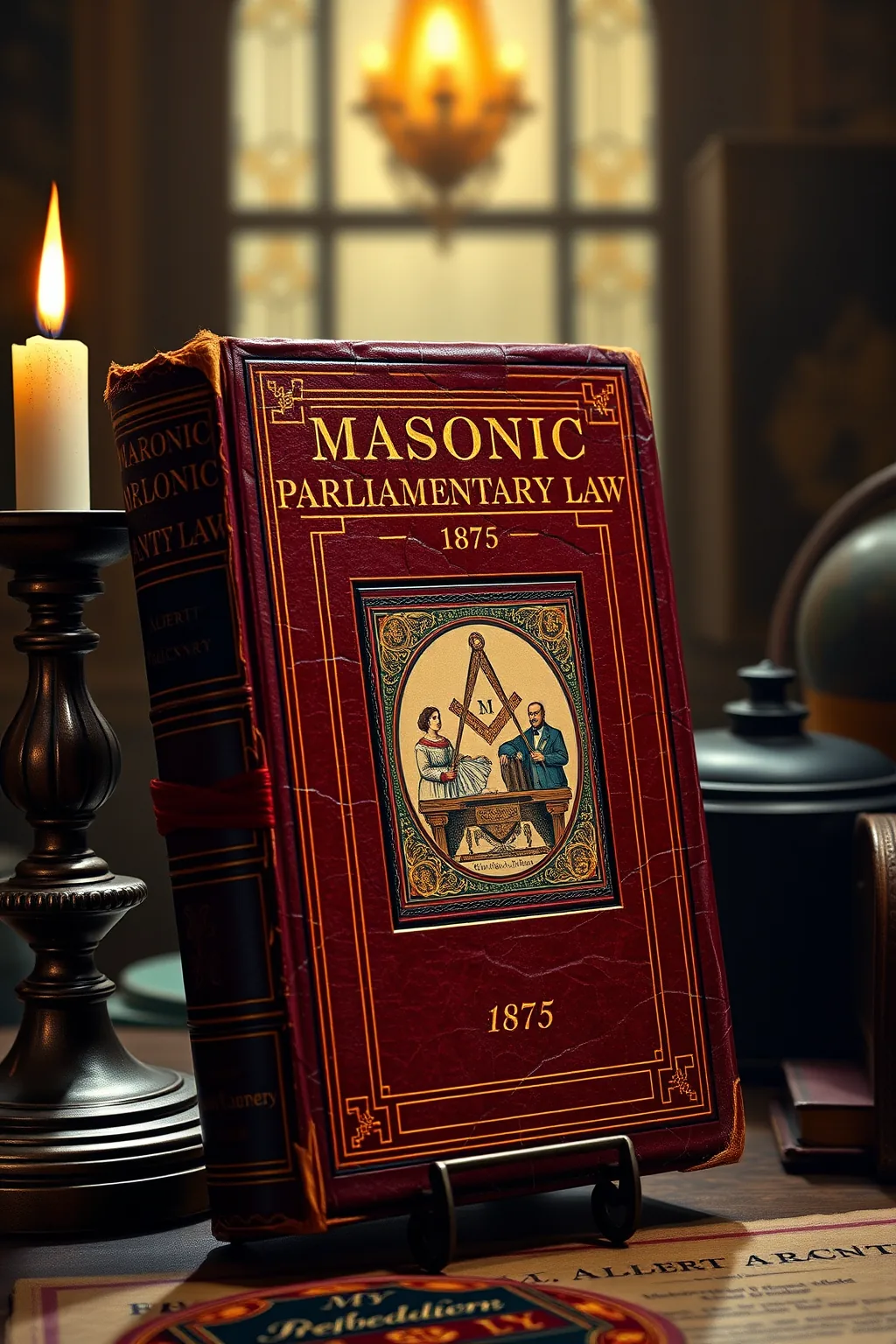
Masonic Parliamentary Law by Albert Mackey 1875
 77
77

Masonic Parliamentary Law by Albert Mackey 1875


Marcus Thorne, Esoteric Sciences Reviewer: Albert Mackey's "Masonic Parliamentary Law" is an indispensable key for unlocking the deeper currents of Masonic ritual. Far from a dry manual, it reveals the profound symbolic logic woven into the fabric of Lodge governance. Mackey masterfully demonstrates how seemingly mundane procedures are imbued with ancient wisdom, designed to foster order and illuminate the path toward higher understanding. This work is essential for any serious student of Freemasonry seeking to grasp the philosophical underpinnings of its practices. Its strength lies in its ability to connect the practical to the profound, making it a vital resource for those who wish to truly understand the 'why' behind the 'how' of Masonic assembly.
📝 Description
77
Albert Mackey's 1875 book connects Masonic meeting rules to ancient principles.
Albert Mackey's "Masonic Parliamentary Law," published in 1875, examines the procedural rules governing Masonic lodges. Mackey, a prominent Masonic author, argues that these rules are more than simple regulations for conducting business. He posits that they are a structured expression of deeper principles, specifically harmony, reason, and the group's shared pursuit of knowledge. The book details how each action within a lodge meeting, from making a motion to casting a vote, carries symbolic meaning.
Mackey presents these elements as ritualistic acts intended to clarify intentions and raise awareness. The text aims to show how these procedures uphold the integrity and spiritual effectiveness of Masonic gatherings. It invites readers to see the lodge not just as a place for meetings, but as a space where individuals and the group work to improve their character and spiritual understanding, guided by established wisdom.
This work situates parliamentary procedure within a framework of esoteric thought, common in 19th-century Masonic literature. It connects the practical organization of a fraternity's meetings to universal principles of order and spiritual development. By imbuing mundane rules with symbolic weight, Mackey aligns Masonic governance with traditions that see everyday actions as reflections of cosmic order. The emphasis on 'light' and 'purifying intent' places it within symbolic interpretations of Masonic ritual, suggesting that the structure of assembly itself is a path to inner refinement.
💡 Why Read This Book?
Unlock the hidden symbolic language of Masonic governance. Understand how parliamentary procedures are designed to foster spiritual growth and collective wisdom within the Lodge. Essential for Freemasons seeking deeper meaning, scholars of esoteric traditions, and practitioners of ritualistic arts who value the philosophical foundations of structured gatherings. Gain insights into the ancient principles that maintain order and elevate consciousness.
⭐ Reader Reviews
Honest opinions from readers who have explored this book.
❓ Frequently Asked Questions
What is the primary esoteric purpose of Masonic parliamentary law?
The primary esoteric purpose is to ensure that Lodge proceedings are conducted with order, reason, and harmony, reflecting the divine principles of creation and the pursuit of truth. It acts as a structured pathway for collective spiritual progress.
How does this book differ from standard parliamentary procedure guides?
Mackey's work transcends mere rules, infusing each procedural element with symbolic meaning and philosophical import relevant to the Masonic journey. It connects governance to spiritual advancement and the attainment of light.
Is this book suitable for non-Masons?
While written with Masons in mind, individuals interested in the philosophy of structured governance, symbolic systems, and the historical underpinnings of secret societies may find profound insights within its pages.
What era of Masonic thought does this book represent?
This book represents the mid-19th century era of Masonic scholarship, a period characterized by deep dives into historical origins, symbolic interpretation, and the philosophical underpinnings of the Craft, heavily influenced by figures like Mackey himself.
Can this book be applied to secular organizations?
While the core principles of order and respectful debate are universal, the esoteric and symbolic interpretations are specific to the Masonic context. However, the emphasis on reasoned discourse and harmony can offer valuable lessons.
🔮 Key Themes & Symbolism
The Lodge as a Microcosm of Order
This theme explores how the seemingly mundane rules of parliamentary procedure function as a sacred framework within the Masonic Lodge. Mackey posits that these regulations are not arbitrary but are a deliberate construction designed to mirror the divine order of the universe. Each rule, from the initiation of a motion to the final vote, is presented as an act of conscious creation, shaping the collective will and directing the Lodge's energies towards enlightenment. The text reveals how adherence to these protocols fosters an environment of respect, reason, and spiritual progress, transforming the physical space into a crucible for personal and collective transformation.
Symbolic Resonance of Procedure
Mackey explores the profound symbolic meanings embedded within each aspect of Masonic parliamentary law. He argues that the very act of proposing, debating, and voting carries a hidden significance, reflecting ancient wisdom traditions and the journey of the soul. The flow of discussion, the respect for dissenting voices, and the ultimate consensus are all presented as allegorical representations of spiritual principles. This section illuminates how these procedures are not merely functional but are integral to the ritualistic and esoteric purpose of Masonic assemblies, guiding members towards a deeper understanding of truth and harmony.
The Art of Harmonious Deliberation
This theme focuses on the cultivation of reason and fellowship through structured debate. Mackey emphasizes that Masonic parliamentary law is designed to facilitate the harmonious exchange of ideas, ensuring that all voices are heard with respect and that decisions are reached through logical and equitable processes. It highlights how mastering these procedures allows Masons to engage in profound intellectual and spiritual discourse, contributing to the collective pursuit of knowledge and virtue. The text serves as a guide to conducting assemblies where individual intellect and collective wisdom converge, fostering an atmosphere conducive to profound revelation.
💬 Memorable Quotes
Direct passages from the work, attributed to the author.
“Order is the first law of heaven.”
— This foundational statement underscores the cosmic significance of structure and regulation as divinely ordained principles essential for existence and progress.
“Reason must guide our deliberations.”
— This emphasizes the intellectual and rational approach required in Masonic assemblies, highlighting the importance of logic and thoughtful consideration in decision-making.
“The ballot is the voice of the Lodge.”
— This signifies the democratic and collective nature of Masonic decision-making, where the final vote represents the unified will and judgment of the brotherhood.
“Let truth be the aim of every discussion.”
— This highlights the ultimate spiritual and intellectual objective of Masonic discourse: the unwavering pursuit and attainment of truth in all matters.
💡 Key Ideas
Editorial paraphrase of the work's core concepts — not direct quotes.
Harmony is the soul of a well-ordered Lodge.
This quote points to the ideal state of a Masonic meeting – one characterized by agreement, mutual respect, and a shared sense of purpose, fostering spiritual unity.
🌙 Esoteric Significance
Tradition
This work is deeply rooted in the esoteric tradition of Western esotericism, specifically within the hermetic and alchemical philosophies that heavily influenced Freemasonry. It views the Lodge as a sacred space where the principles of universal order, divine geometry, and the transmutation of the self are enacted through ritual and regulated discourse. The parliamentary procedures are interpreted not just as rules but as symbolic representations of the soul's journey towards illumination and the creation of a harmonious inner and outer world.
Symbolism
The key symbols here are the Lodge itself as a representation of the cosmos, and the parliamentary procedures as the forces that govern and shape it. Motions symbolize the initial spark of creation or intent, debate represents the interplay of opposing forces or ideas, and the ballot signifies the ultimate judgment or manifestation of will. The very act of adhering to these rules is seen as a symbolic practice of creating order from chaos, reflecting the alchemical process of purification and refinement.
Modern Relevance
In an age often characterized by discord and unbridled expression, the principles of respectful deliberation and structured discourse championed by Mackey are profoundly relevant. The book offers a timeless blueprint for fostering constructive dialogue and achieving consensus, not just within Masonic Lodges but in any group seeking to make decisions harmoniously. It reminds us that true progress, both individual and collective, is often built upon a foundation of order, reason, and mutual respect, principles that resonate deeply in contemporary society.
👥 Who Should Read This Book
This indispensable text is recommended for a diverse audience. For Freemasons, it is a reference for understanding the philosophical and symbolic underpinnings of Lodge governance, enhancing their appreciation for the ritual and its deeper purpose. Scholars of esoteric traditions and secret societies will find it a valuable primary source, offering insights into 19th-century Masonic thought and its connection to broader metaphysical currents. Seekers of wisdom and practitioners of contemplative arts can learn from its exploration of order, reason, and harmonious collective action, applying these principles to their personal development and group endeavors. It is for those who believe that even the most practical aspects of life can be imbued with profound spiritual significance.
📜 Historical Context
Published in 1875, Albert Mackey's "Masonic Parliamentary Law" emerged during a rich period of Masonic scholarship in the United States. The mid-to-late 19th century saw a fervent interest in codifying Masonic teachings, exploring their historical roots, and articulating their philosophical underpinnings. Mackey himself was a prolific writer and a leading authority on Masonic jurisprudence and symbolism. This era was characterized by a desire to systematize the fraternity's knowledge, making it accessible yet maintaining its inherent mystery. The influence of parliamentary procedure, as developed in secular legislative bodies, was also growing, and Mackey masterfully adapted these principles, imbuing them with esoteric meaning relevant to the unique context of the Masonic Lodge. The book reflects a movement to demonstrate the intellectual and ethical sophistication of Freemasonry to both its members and the wider public.
📔 Journal Prompts
How can the principles of Masonic parliamentary law be applied to foster more harmonious communication in my daily life?
Reflect on a time when order and structure significantly aided a group endeavor. What were the key elements?
Consider a current debate or conflict you are involved in. How might applying principles of reasoned deliberation change its trajectory?
What does the concept of 'order as the first law of heaven' mean to you personally?
How can the symbolic act of voting in a Lodge be seen as a ritual of collective will and intention?
🗂️ Glossary
Lodge
In Freemasonry, the local assembly or organization of Masons, considered a sacred space for ritual and fellowship, symbolizing the temple of Solomon and the universe itself.
Parliamentary Law
The body of rules, customs, and traditions governing the procedure of legislative bodies and other deliberative assemblies, adapted by Mackey for Masonic use.
Motion
A formal proposal made in a deliberative assembly for the assembly to take a certain course of action or express an opinion.
Deliberation
The act of carefully considering or weighing a matter, especially in public assembly, through discussion and debate.
Ballot
The method of voting, especially in secret, where each member casts a vote, signifying the collective voice and judgment of the assembly.
This book appears in 2 collections
🔮 Readers Also Liked
Browse all →






From the “Secret Societies” Collection
View all →




More Free Freemasonry & Secret Societies Books
View all →