Killing Mr. Griffin
 72
72

Killing Mr. Griffin
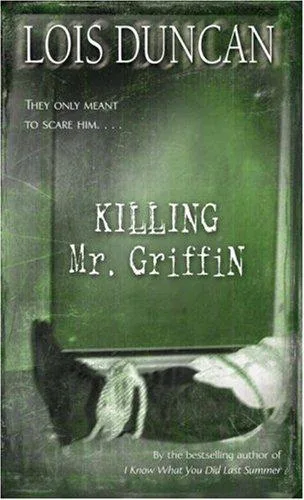
Lois Duncan's "Killing Mr. Griffin" opens with a chilling premise: a student-led plot to silence an abusive teacher that spirals into tragedy. The strength of the novel lies in its unflinching portrayal of the psychological unraveling that follows the students' desperate cover-up. Duncan skillfully captures the suffocating weight of guilt and the paranoia that infects the group, particularly through the character of Betsy, whose descent into delusion is palpable. However, the pacing falters somewhat in the middle section, where the narrative occasionally feels repetitive in its depiction of mounting anxiety. The initial setup, while effective in establishing motive, could have benefited from a slightly more nuanced exploration of Mr. Griffin’s own pathology beyond his role as a simple antagonist. Despite these minor shortcomings, the book delivers a potent, albeit grim, examination of adolescent recklessness and the devastating ripple effects of violence. It is a stark reminder that the road to hell is often paved with ill-considered intentions.
📝 Description
72
Lois Duncan's 1978 novel, Killing Mr. Griffin, centers on a prank gone fatally wrong.
A group of high school students plans to scare their tyrannical history teacher, Mr. Griffin, but their scheme results in his accidental death. The novel follows their subsequent panic and attempts to conceal their involvement.
Duncan scrutinizes the psychological toll of this event on the teenagers. The narrative traces their descent into fear and guilt as they grapple with the irreversible consequences of their actions. It is a story about how pressure, desperation, and group dynamics can push ordinary individuals toward extreme choices.
While not a traditional esoteric text, Killing Mr. Griffin touches upon themes that resonate with esoteric thought. The students' collective resentment towards Mr. Griffin and their descent into a dangerous "groupthink" dynamic mirror explorations of mass delusion and the subversion of societal norms found in certain psychological and philosophical traditions. The book examines how shared anxieties and a desire to escape perceived authority can lead a group to a destructive outcome, a phenomenon that has been analyzed in various studies of collective behavior and ritualistic transgression.
💡 Why Read This Book?
• Understand the mechanics of groupthink and diffusion of responsibility by examining how the students collectively decide to "deal with" Mr. Griffin, demonstrating how individual accountability can erode within a peer group. • Experience the intense psychological pressure of a cover-up, as the narrative meticulously details the paranoia and escalating guilt faced by the characters after the fatal accident in the desert. • Explore the theme of unintended consequences, learning how a poorly conceived plan to scare a teacher leads to murder and the subsequent breakdown of the students' lives.
⭐ Reader Reviews
Honest opinions from readers who have explored this book.
❓ Frequently Asked Questions
What is the central conflict in Lois Duncan's "Killing Mr. Griffin"?
The central conflict arises when a group of high school students, driven by resentment towards their abusive teacher, Mr. Griffin, plot to scare him. Their plan tragically backfires, leading to his death and forcing them into a desperate cover-up.
Who are the main characters involved in the plot against Mr. Griffin?
Key characters include Mark and Betsy, who orchestrate the plan; Jeff, who has a crush on Betsy; and Dave, who is reluctant but goes along with the group's coercion.
What is the significance of the desert setting in the book?
The remote desert location serves as the site for the intended prank and, ultimately, Mr. Griffin's death. It symbolizes isolation, a place where the students believe they can escape scrutiny and bury their crime.
Does "Killing Mr. Griffin" have a supernatural element?
No, "Killing Mr. Griffin" is a psychological thriller and does not contain supernatural elements. It focuses on realistic adolescent behavior, peer pressure, and the consequences of crime.
What year was "Killing Mr. Griffin" first published?
"Killing Mr. Griffin" by Lois Duncan was first published in 1978, not 2010 as sometimes misstated. It has since been reissued multiple times.
What is the primary message or theme of the novel?
The primary themes revolve around the dangers of peer pressure, the devastating consequences of poor choices, the corrupting nature of secrets, and the psychological impact of guilt and fear.
🔮 Key Themes & Symbolism
The Corrupting Nature of Secrets
The narrative meticulously details how the shared secret of Mr. Griffin's death festers among the students, creating an atmosphere of intense paranoia and distrust. Each character grapples with their involvement differently, leading to isolation and fractured relationships. The constant fear of exposure compels them to further deceit, demonstrating how a single transgression can unravel the fabric of their lives and friendships, pushing them towards increasingly desperate measures to maintain their facade.
The Psychology of Peer Pressure
Duncan examines the potent force of peer pressure in shaping adolescent behavior. Characters like Dave feel compelled to participate in the dangerous plan against their better judgment, fearing ostracization or retribution from the more dominant figures like Mark and Betsy. The book illustrates how the desire for acceptance and the fear of being an outsider can override personal ethics, leading individuals to commit acts they would never consider alone.
Consequences of Authoritarianism
While Mr. Griffin is portrayed as a tyrannical figure, the novel implicitly questions the effectiveness of extreme methods to counter his abuse. The students' plan, born from desperation and a desire to escape his oppressive teaching style, results in a far greater tragedy. The story serves as a cautionary exploration of how rebellion against perceived injustice, when executed without regard for ethical boundaries, can lead to irreversible harm and profound moral compromise.
The Fragility of Adolescent Identity
The characters' identities are deeply intertwined with their social circles and their ability to conform to group expectations. The pressure to participate in the plot, the subsequent cover-up, and the internal guilt challenge their developing sense of self. Betsy's psychological breakdown, in particular, highlights how extreme circumstances can shatter a young person's fragile sense of reality and moral compass, leaving them lost and unable to reconcile their actions with their perceived identity.
💬 Memorable Quotes
Direct passages from the work, attributed to the author.
“"The desert was a good place to hide a body."”
— This stark statement reflects the characters' grim pragmatism and the chilling realization of the finality of their actions. The vast, desolate landscape becomes a metaphor for their attempt to bury their guilt and the truth.
“"We all did it. We all have to pay."”
— This sentiment, likely felt by multiple characters, speaks to the shared responsibility and the inescapable consequences of their collective decision. It highlights the breakdown of individual agency and the burden of their joint transgression.
“Interpretation: The students realize that covering up the crime is more dangerous than the act itself.”
— This interpretation points to the escalating nature of their predicament. The initial act of violence leads to a series of lies and manipulations, creating a cycle of fear and desperation that proves more psychologically damaging than the original event.
💡 Key Ideas
Editorial paraphrase of the work's core concepts — not direct quotes.
"It was supposed to be a prank. Just a prank."
This line captures the tragic irony of the novel. It underscores the students' initial intention to merely scare Mr. Griffin, highlighting their naivety and the catastrophic escalation of their actions into murder and a subsequent cover-up.
Interpretation: Betsy's growing paranoia and delusion manifest as seeing Mr. Griffin everywhere, blurring the lines between her guilt and perceived reality.
This paraphrased concept describes Betsy's psychological deterioration. Her inability to cope with the guilt transforms her perception, making her believe Mr. Griffin's presence haunts her, a manifestation of her internal torment.
🌙 Esoteric Significance
Tradition
While "Killing Mr. Griffin" is primarily a psychological thriller, its exploration of collective action, hidden motives, and the consequences of transgressing societal norms can be viewed through a lens of shadow work and the darker aspects of the human psyche, often discussed in modern psychological and esoteric circles. It doesn't align with a specific historical esoteric lineage like Hermeticism or Gnosticism but rather touches upon universal themes of morality and consequence that underpin many spiritual and philosophical traditions.
Symbolism
The desert setting functions as a potent symbol of isolation, desolation, and a place where boundaries dissolve, allowing for transgression and the "burying" of guilt. Mr. Griffin himself, as the tyrannical teacher, can be seen as a symbol of oppressive authority or a harsh aspect of the collective shadow that the students attempt to eliminate, only to find that such eliminations create greater internal chaos.
Modern Relevance
Contemporary discussions around mental health, the impact of trauma, and the psychological effects of peer pressure and social media echo the themes in "Killing Mr. Griffin." Modern schools of thought focusing on shadow integration and confronting the darker aspects of human nature find resonance in the novel's portrayal of adolescent characters acting out destructive impulses. Its enduring popularity speaks to its relevance in understanding the pressures and moral ambiguities faced by young people.
👥 Who Should Read This Book
• Young adult readers interested in suspenseful narratives that explore moral dilemmas and the consequences of actions. • Students of psychology or sociology examining adolescent behavior, group dynamics, and the impact of peer pressure. • Fans of Lois Duncan's prior works seeking another gripping story that looks at darker, realistic themes within a young adult context.
📜 Historical Context
Lois Duncan’s "Killing Mr. Griffin," first published in 1978, emerged during a period when young adult literature began to tackle increasingly darker and more complex themes, moving beyond simple coming-of-age stories. The late 1970s saw a growing cultural anxiety surrounding adolescent behavior, school safety, and the pressures faced by teenagers. While not directly engaging with esoteric traditions, the novel tapped into a zeitgeist concerned with the hidden psychological turmoil beneath the surface of ordinary life. Its focus on a group of seemingly normal students committing a violent act and the subsequent moral fallout resonated with contemporary audiences grappling with societal shifts and a burgeoning interest in psychology. Contemporaries like Judy Blume, while often addressing more social issues, also pushed boundaries in YA fiction. Duncan’s work, however, often leaned into suspense and darker psychological territory, distinguishing itself within the genre.
📔 Journal Prompts
The students' collective decision to harm Mr. Griffin, considering the role of group dynamics.
Betsy's psychological breakdown and the perceived "haunting" by Mr. Griffin.
The symbolic meaning of the desert as a setting for the crime and cover-up.
Reflecting on the motivations behind each student's participation in the plot.
The concept of "prank gone wrong" versus deliberate malice in the narrative.
🗂️ Glossary
Cover-up
The act of concealing evidence or the truth about a crime or wrongdoing. In the book, the students' efforts to hide Mr. Griffin's death and their involvement.
Peer Pressure
Influence exerted by a peer group on an individual to conform to their attitudes, values, or behaviors. Key in driving characters to participate in the plot.
Psychological Thriller
A genre that uses suspense, tension, and a disturbed mental state to drive the plot. Focuses on the characters' internal states and motivations.
Tantamount
Equivalent in seriousness to; virtually the same as. Used to describe how the students' actions became tantamount to murder.
Tyrannical
Exerting cruel, unreasonable, or arbitrary power. Describes Mr. Griffin's teaching style and the students' perception of him.
Diffusion of Responsibility
A sociopsychological phenomenon whereby a person is less likely to take responsibility for action or inaction when others are present. Explains how the students could participate in the plot.
Moral Ambiguity
The quality of being open to more than one interpretation, or of involving the expression of opinions or feelings that are not clearly right or wrong. Central to the characters' actions and motivations.
🔮 Readers Also Liked
Browse all →![[The English physician] Culpeper's English physician; and complete herbal. To which are now first added, upwards of one hundred additional herbs, with a display of their medicinal and occult properties, physically applied to the cure of all disorders incident to banking. To which are annexed, rules for compounding medicine. 1789](/img/thumb/the-english-physician-culpeper-s-english-physician-and-complete-herbal-to-which-are-now-first-added-upwards-of-one-hundred-additional-herbs-with-a-display-of-their-medicinal-and-occult-properties-phys.webp)









More by Lois Duncan
All books →





More Free Occult Philosophy Books
View all →