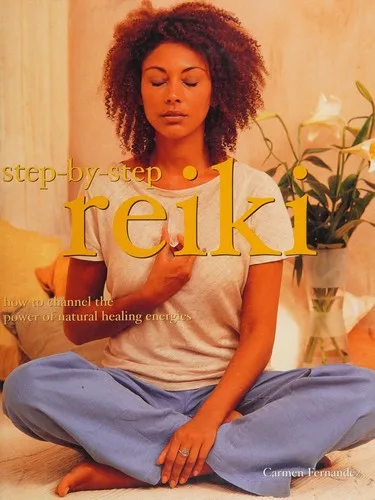
Step-by-step reiki
 74
74

Step-by-step reiki
Carmen Fernandez’s “Step-by-Step Reiki” presents a refreshingly direct manual for a practice often shrouded in mystique. Unlike many texts that lean heavily on spiritual narrative, Fernandez prioritizes clear, actionable instruction, particularly evident in her methodical breakdown of hand positions for self-treatment and client sessions. This no-nonsense approach is the book’s primary strength, making the core techniques of Usui Reiki feel attainable. However, this very focus can sometimes lead to a less developed exploration of the subtler energetic mechanics or the deeper philosophical underpinnings that inform the practice for some adherents. A passage detailing the second degree symbols, for instance, could benefit from more nuanced explanation regarding their energetic function beyond mere visualization. It is a solid primer, functioning effectively as a foundational guide. Fernandez’s work provides a practical entry point for those who learn best through clear, sequential steps.
📝 Description
74
Carmen Fernandez published "Step-by-Step Reiki" in 2003 to clarify Usui Reiki principles.
Carmen Fernandez's "Step-by-Step Reiki," published in 2003, offers a clear, sequential guide to learning and practicing Usui Reiki. The book breaks down the energy healing modality into manageable steps, beginning with an explanation of universal life force energy. It then guides readers through self-treatment techniques and methods for applying Reiki to others. Fernandez focuses on practical application, making complex ideas accessible for those new to the practice or seeking a more structured learning path. This approach suits individuals who prefer direct instruction over abstract or intuitive methods. The text is also valuable for anyone interested in self-healing, stress reduction, or developing complementary wellness skills.
Fernandez's book appeared as Usui Reiki gained significant traction in the West following its popularization in the late 20th century. While founded by Mikao Usui in Japan in the early 1900s, Reiki's global spread accelerated, prompting authors to codify its teachings for Western audiences. This volume emerged during a time when many writers adapted established lineages to suit different learning styles. It aims to present Reiki's core concepts and practices in a systematic manner, responding to a growing interest in alternative healing and energy work.
💡 Why Read This Book?
• You will learn a precise sequence of hand placements for self-healing and for treating others, directly applicable from Chapter 3, offering a tangible skill not found in purely theoretical texts. • You will understand the five Reiki principles as presented by Fernandez, providing a framework for personal growth alongside energetic practice, as detailed in the section on ethical guidelines. • You will gain clarity on the concept of “attunement” and its role in initiating practice, a specific energetic process crucial for practitioners, as explained in the dedicated section on initiation.
⭐ Reader Reviews
Honest opinions from readers who have explored this book.
❓ Frequently Asked Questions
What is the primary goal of Carmen Fernandez's "Step-by-Step Reiki"?
The book aims to provide a clear, sequential guide for learning and practicing Usui Reiki. It focuses on demystifying the energy healing modality and making its principles and techniques accessible for practical application by beginners.
When was "Step-by-Step Reiki" first published?
Carmen Fernandez's "Step-by-Step Reiki" was first published in 2003, reflecting a period of growing interest in alternative healing practices in the West.
Does the book cover different levels of Reiki?
While the book provides a comprehensive foundation, it primarily focuses on the initial stages of learning Reiki, suitable for beginners. It guides through fundamental concepts and basic techniques.
What makes this book different from other Reiki guides?
Its strength lies in its step-by-step, structured approach, which breaks down complex concepts into manageable parts. This is ideal for learners who prefer methodical instruction over more abstract or intuitive presentations.
What are the core concepts explained in "Step-by-Step Reiki"?
The book explains fundamental concepts like universal life force energy, chakras, intention, healing hand positions, attunement, and the five Reiki principles for balanced living.
Is this book suitable for someone completely new to energy healing?
Yes, the book is designed with beginners in mind. Its sequential format and clear explanations of core terms and practices make it an accessible entry point for those new to energy healing.
🔮 Key Themes & Symbolism
Structured Energy Practice
Fernandez emphasizes a methodical approach to Reiki, breaking down the practice into distinct, learnable steps. This theme is evident in the detailed descriptions of hand positions and treatment sequences, designed to build practitioner confidence. The work moves beyond abstract notions of energy to provide concrete actions, guiding the reader from initial understanding of universal life force energy to performing full healing sessions. This structured methodology is central to the book's aim of making Reiki accessible and repeatable for a broad audience.
The Five Principles
Central to the practice, the five Reiki principles serve as ethical and philosophical anchors within the book. Fernandez presents these not merely as abstract ideals but as practical guidelines for daily living that support the healing process. Concepts like 'Just for today, I will be calm' and 'Just for today, I will do my work with honesty' are explored as foundational elements that enhance both personal well-being and the effectiveness of Reiki energy transmission. This theme underscores the holistic nature of the practice.
Practical Application of Attunement
The concept of 'attunement' is presented as a critical, initiatory step for anyone wishing to practice Reiki. Fernandez explains this energetic transmission process, which is typically facilitated by a Reiki Master, as the key that unlocks the practitioner's ability to channel universal life force energy. The book focuses on the practical implications of attunement, positioning it as a prerequisite for engaging with the techniques described, thereby framing the learning process as a structured progression.
Holistic Well-being
Fernandez's work consistently frames Reiki as a tool for promoting holistic well-being, addressing physical, emotional, mental, and spiritual dimensions. The step-by-step approach extends to how Reiki can be applied to oneself and others for stress reduction, pain management, and overall balance. The integration of the five principles further reinforces this holistic perspective, suggesting that healing extends beyond the physical to encompass a balanced and conscious way of living.
💬 Memorable Quotes
Direct passages from the work, attributed to the author.
“The energy flows through the hands, guided by intention.”
— This concise statement captures the essence of Reiki practice as taught by Fernandez. It highlights the dual nature of the healing process: the physical conduit (hands) and the mental/energetic direction (intention), essential for effective energy transmission.
“Begin with self-treatment to understand the flow.”
— This instruction emphasizes the foundational importance of personal practice in learning Reiki. It suggests that internalizing the energetic experience through self-application is a key step before extending the practice to others.
“Calmness is the foundation of effective energy work.”
— This reflects the principle 'Just for today, I will be calm,' linking mental and emotional states to the ability to channel energy effectively. It underscores the importance of inner peace for the practitioner.
“Attunement is the gateway to channeling Reiki.”
— This highlights the crucial role of the initiation process. It frames attunement not as an optional step but as a necessary prerequisite for accessing and directing the healing energy of Reiki.
💡 Key Ideas
Editorial paraphrase of the work's core concepts — not direct quotes.
Reiki addresses the root cause, not just the symptoms.
This paraphrase points to Reiki's holistic approach, suggesting that the energy work aims for deeper healing by addressing underlying imbalances rather than solely alleviating surface-level discomfort or illness.
🌙 Esoteric Significance
Tradition
While Usui Reiki is a distinct system, its energetic principles align with broader esoteric traditions that posit a universal life force or vital energy (like Prana in Yoga or Qi in Taoism). Fernandez's work, by presenting a structured method, fits within the modern esoteric movement's tendency to systematize and make accessible ancient wisdom. It departs from purely philosophical or ritualistic approaches by focusing on direct energetic transmission and practical application, reflecting a more therapeutic and less overtly mystical bent common in early 21st-century esoteric literature.
Symbolism
The primary symbolism in "Step-by-Step Reiki" revolves around the hands as conduits of energy and light. The healing hand positions themselves can be seen as symbolic maps, indicating specific energetic centers or areas of focus within the body. The concept of 'light' often associated with Reiki represents purification, healing, and divine energy. While the book details specific Reiki symbols (often introduced in the second degree), its core symbolism lies in the tangible act of laying on hands and the intention behind it, representing connection and energetic exchange.
Modern Relevance
Fernandez's methodical approach continues to be relevant for contemporary practitioners and institutions seeking structured training in Usui Reiki. Modern wellness centers, independent practitioners, and online courses often draw from such foundational texts to build their curricula. The emphasis on practical application and accessibility appeals to current trends in mindfulness and self-care, making Reiki a popular choice for stress reduction and personal well-being, directly influenced by the kind of clear instructional guides like this one.
👥 Who Should Read This Book
['• Beginning students of Usui Reiki seeking a clear, sequential guide to foundational techniques and principles.', '• Individuals interested in self-healing and stress reduction who prefer practical, step-by-step instructions over abstract theory.', '• Wellness practitioners looking to integrate a simple, accessible energy healing modality into their existing services.']
📜 Historical Context
Carmen Fernandez's "Step-by-Step Reiki," published in 2003, arrived during a significant expansion of Reiki's global presence. While its origins trace back to Usui Mikao in Japan around 1922, the practice gained widespread Western recognition and adaptation primarily from the 1980s onwards. This period saw a surge of books aiming to codify and disseminate Reiki techniques, often presented in formats suitable for Western learning styles. Fernandez’s work emerged in a landscape populated by authors like Diane Stein, whose own influential Reiki books predated hers, and William Lee Rand, a key figure in the International Association of Reiki Professionals. The popularization of Reiki faced parallel developments in other holistic and New Age healing modalities, contributing to a broader cultural interest in alternative wellness. Reception was generally positive among those seeking accessible entry points to energy healing.
📔 Journal Prompts
The concept of 'Just for today, I will be calm' and its practical application in daily life.
Reflecting on the energy flow during a self-Reiki session as described in Chapter 4.
The role of 'intention' in channeling universal life force energy.
Analyzing the importance of the five Reiki principles for personal balance.
Exploring the feeling of energetic connection during a guided healing hand position sequence.
🗂️ Glossary
Usui Reiki
The original system of energy healing founded by Mikao Usui in Japan in the early 20th century, characterized by hands-on healing and specific principles.
Universal Life Force Energy
The fundamental energetic essence believed to permeate all things, which Reiki practitioners learn to channel for healing and well-being.
Chakras
Energy centers within the body, traditionally seven, that are believed to influence physical, emotional, and spiritual health. Reiki is often applied to balance these centers.
Attunement
An energetic initiation process, typically performed by a Reiki Master, that enables an individual to channel Reiki energy. It is considered essential for practitioners.
Hand Positions
Specific placements of the hands on the body used in Reiki practice to direct energy to different areas for healing and balancing.
Five Reiki Principles
A set of ethical guidelines and affirmations for daily living, intended to promote peace, balance, and well-being, forming the philosophical basis of Reiki practice.
Intention
The focused mental or energetic purpose behind the Reiki practice, directing the flow of energy towards healing and balance.
🔮 Readers Also Liked
Browse all →









More by Carmen Fernandez
All books →


More Free Occult Philosophy Books
View all →