Spiritual astrology
 73
73

Spiritual astrology
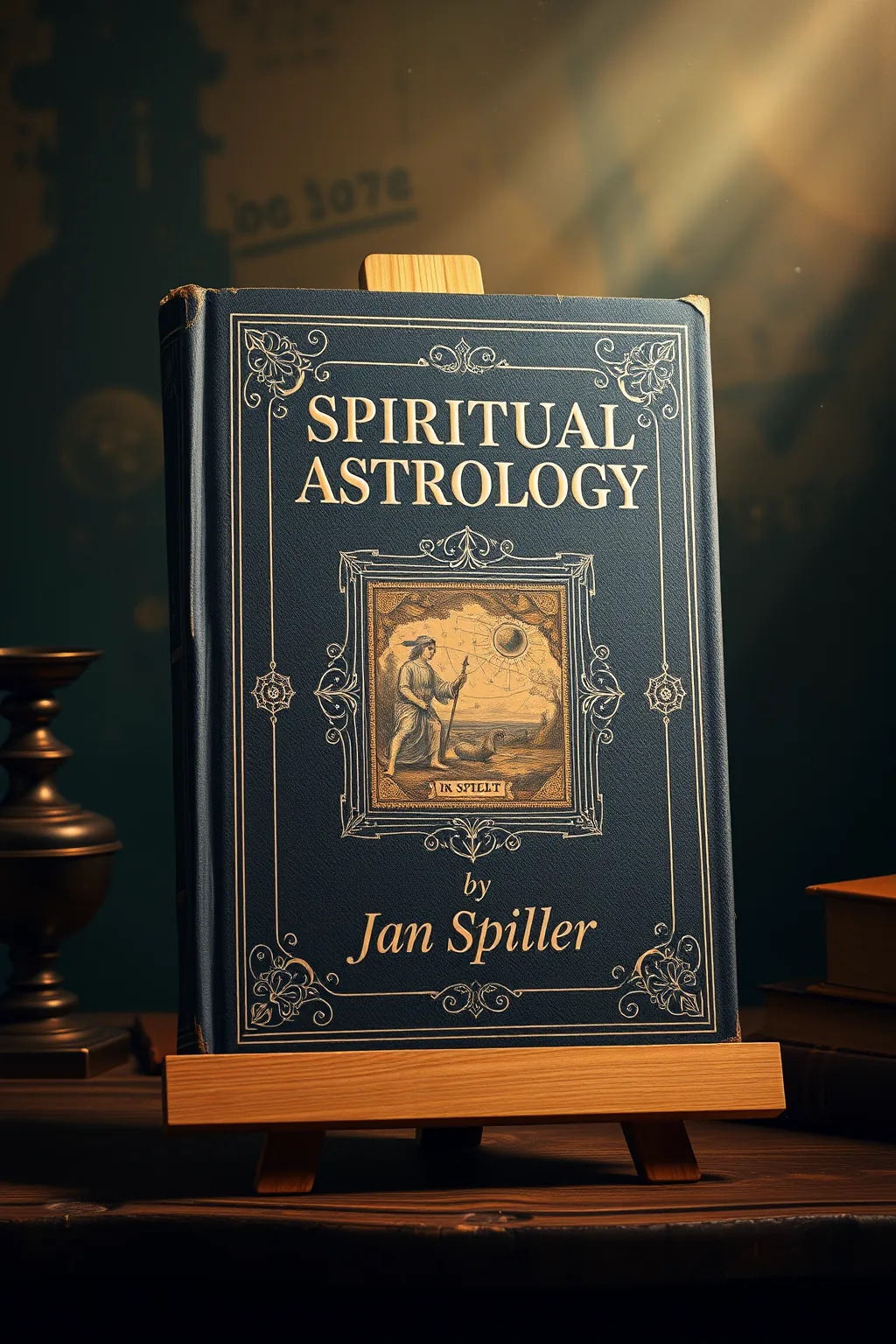
Jan Spiller's *Spiritual Astrology* presents a compelling case for astrology as a tool for soul evolution. The strength lies in its dedicated focus on the karmic dimension, particularly its detailed examination of the North and South Nodes as indicators of destiny and past burdens. However, the book's dense prose and reliance on complex astrological concepts might present a barrier for beginners. A particularly insightful passage is its discussion of Chiron, framing astrological challenges not as insurmountable obstacles but as potent catalysts for healing and spiritual growth. While not for the casual reader, it offers a rich resource for those committed to a deeper, soul-centered astrological practice.
📝 Description
73
Jan Spiller's 2000 book Spiritual Astrology frames natal charts around the soul's evolutionary path.
This book departs from predictive or personality-focused astrology. Instead, it concentrates on the soul's journey, examining karmic patterns and growth potential through planetary placements and aspects. Spiller's work aims to illuminate the deeper, often hidden, motivations and obstacles that shape individual lives. The goal is to foster spiritual awareness and personal liberation.
Readers interested in merging spiritual development with astrological study will find this approach valuable. It speaks to those who feel traditional astrology lacks depth or who desire a more thorough grasp of their life's purpose and recurring life themes. Individuals drawn to concepts of karma, reincarnation, and soul evolution will discover its perspective particularly relevant. The book encourages a view of the birth chart as a map of the soul's ongoing development.
Published in 2000, *Spiritual Astrology* appeared as interest in esoteric and metaphysical subjects grew. The late 20th century saw psychology, particularly Jungian thought, merge with older spiritual traditions. Spiller's book builds on this synthesis, offering a focused look at karmic astrology. This subgenre gained attention as practitioners moved beyond basic natal chart readings to explore deeper existential questions. It contrasts with earlier astrological trends that emphasized deterministic or event-based predictions.
💡 Why Read This Book?
• Gain a unique perspective on your life's purpose by learning to interpret the karmic axis (North and South Nodes) as detailed in Jan Spiller's work, moving beyond superficial personality readings. • Understand how to leverage "wounded healer" archetypes, specifically the role of Chiron as explored in the book, to transform personal suffering into spiritual insight and growth. • Discover the spiritual significance of outer planets like Uranus, Neptune, and Pluto, as presented in the text, for catalyzing profound personal and collective transformation.
⭐ Reader Reviews
Honest opinions from readers who have explored this book.
❓ Frequently Asked Questions
What is the central focus of Jan Spiller's Spiritual Astrology?
The book's central focus is on astrology as a tool for understanding the soul's evolutionary journey and karmic patterns, rather than solely for personality analysis or prediction.
When was Spiritual Astrology by Jan Spiller first published?
Spiritual Astrology by Jan Spiller was first published in the year 2000, marking its entry into the esoteric literature of the new millennium.
What astrological concept is key to understanding karmic patterns in this book?
The key concept for understanding karmic patterns in Jan Spiller's work is the karmic axis, defined by the North and South Nodes of the Moon.
Does Spiritual Astrology discuss the role of outer planets?
Yes, the book extensively discusses the spiritual significance and transformative potential of outer planets like Uranus, Neptune, and Pluto in an individual's evolutionary path.
Who would benefit most from reading Spiritual Astrology?
Individuals seeking a deeper, soul-centered understanding of their life's purpose, karmic influences, and spiritual growth through astrological inquiry would benefit most.
What is the 'wounded healer' archetype as discussed in Spiritual Astrology?
In Spiritual Astrology, the 'wounded healer' archetype, often associated with Chiron, represents personal suffering that, when integrated, becomes a source of profound healing and wisdom for oneself and others.
🔮 Key Themes & Symbolism
Karmic Axis Interpretation
The work places significant emphasis on the North and South Nodes of the Moon as a primary indicator of karmic lessons and soul direction. Spiller elucidates how the South Node represents ingrained patterns and past-life tendencies, while the North Node points towards the soul's growth objectives in the current lifetime. Understanding this axis is presented as crucial for navigating life's challenges and fulfilling one's destiny, moving from ingrained habits to conscious evolution.
The Wounded Healer Archetype
Central to the book's spiritual approach is the archetype of the 'wounded healer,' often linked to the planet Chiron. Spiller interprets Chiron's placement as revealing an individual's deepest wound, which, paradoxically, becomes the source of their greatest capacity for empathy and healing. This perspective reframes personal suffering not as a deficit, but as a potent gateway to spiritual service and profound self-understanding.
Evolutionary Astrology Principles
Spiller's framework aligns with evolutionary astrology, positing that the birth chart reflects not just personality, but the soul's journey through multiple incarnations. The book explores how outer planets—Uranus, Neptune, and Pluto—act as powerful agents of change, pushing individuals towards spiritual awakening and the shedding of old karmic ties. This perspective views astrological configurations as maps of the soul's developmental process.
Spiritual Significance of Retrograde Planets
The text offers a nuanced interpretation of retrograde planetary motion, suggesting these energies are internalized and require conscious integration rather than being merely externalized expressions. Retrogrades, particularly of personal planets, are seen as opportunities for profound inner work, self-reflection, and the re-evaluation of core beliefs and motivations, essential for soul growth.
💬 Memorable Quotes
Direct passages from the work, attributed to the author.
“The South Node represents what we carry from the past, our habitual patterns and karmic baggage.”
— This highlights the book's core idea that our past is not just history but an active force shaping our present, particularly through unconscious tendencies indicated by the South Node.
“Chiron's placement reveals the wound that can become our greatest source of healing and wisdom.”
— This emphasizes the transformative potential inherent in our deepest pains, a central tenet of spiritual astrology that pain can be a catalyst for profound growth and service.
“The North Node points to the soul's evolutionary direction and necessary growth experiences.”
— This interpretation underscores the forward-looking aspect of the chart, guiding individuals toward their higher purpose and the lessons they are meant to learn in this life.
“Retrograde planets signify internalized energies that require conscious integration.”
— This explains the book's unique take on retrogrades, suggesting they are not hindrances but calls for introspection and the development of inner resources.
“Outer planets trigger profound shifts, urging us towards spiritual liberation.”
— This points to the powerful, often disruptive, influence of Uranus, Neptune, and Pluto in facilitating radical transformation and breaking free from old karmic cycles.
🌙 Esoteric Significance
Tradition
Spiritual Astrology aligns with the Western Esoteric tradition, particularly its modern expressions rooted in Theosophy and Jungian psychology. It draws heavily from concepts like karma and reincarnation, which are central to Eastern philosophies but have been adapted and integrated into Western occult thought since the late 19th century. The work departs from classical Hellenistic or medieval astrology by prioritizing the soul's evolutionary arc over deterministic fate or mundane prediction.
Symbolism
Key symbols include the karmic axis (North and South Nodes of the Moon), representing the soul's past patterns and future trajectory, and Chiron, the 'wounded healer,' symbolizing the integration of personal suffering into a source of wisdom. The outer planets—Uranus, Neptune, and Pluto—are treated as potent archetypes of transformation, societal change, and the dissolution of egoic structures, facilitating spiritual evolution.
Modern Relevance
Spiller's work continues to influence contemporary evolutionary and psychological astrologers. Thinkers and practitioners focusing on soul purpose, karmic healing, and spiritual growth often cite her interpretations of the Nodes and Chiron. The book remains a foundational text for understanding how astrological charts can serve as maps for personal and spiritual development in the 21st century.
👥 Who Should Read This Book
• Students of evolutionary astrology seeking a deep dive into karmic patterns and soul purpose, as illuminated by the North and South Nodes. • Individuals exploring the intersection of psychology and spirituality who wish to understand personal challenges as catalysts for growth, particularly through the Chiron archetype. • Astrologers aiming to expand their practice beyond personality analysis to incorporate a soul-centered, karmic, and developmental perspective.
📜 Historical Context
Jan Spiller's *Spiritual Astrology*, published in 2000, emerged at a key moment for Western esotericism. The late 20th century witnessed a significant integration of psychological insights, heavily influenced by Carl Jung, into astrological practice. This era saw a departure from purely predictive or event-based astrology towards approaches that focused on inner development and self-understanding. Spiller's work belongs to the growing field of evolutionary astrology, which posits that the birth chart maps the soul's journey across lifetimes. It built upon the foundations laid by earlier astrologers like Dane Rudhyar and Liz Greene, who explored the psychological and spiritual dimensions of the horoscope. The book's emphasis on karma and soul purpose positioned it as a key text for those seeking a more profound, less materialistic interpretation of astrological symbolism, distinguishing it from more mainstream psychological astrology of the time.
📔 Journal Prompts
South Node patterns: How do habitual reactions, as indicated by your South Node, manifest in daily life?
Chiron's wound: Reflect on a personal vulnerability linked to your Chiron placement and its potential for healing.
North Node aspirations: What soul growth objectives, suggested by your North Node, feel most relevant now?
Retrograde integration: How can you consciously integrate the internalized energy of your retrograde planets?
Outer planet catalysts: Consider how Uranus, Neptune, or Pluto might be urging you toward spiritual transformation.
🗂️ Glossary
Karmic Axis
The line connecting the North Node and South Node of the Moon, representing the soul's past-life tendencies (South Node) and its evolutionary path or growth objectives (North Node) in the current lifetime.
North Node
In evolutionary astrology, the North Node indicates the direction of soul growth and the lessons the individual is meant to learn in this incarnation.
South Node
In evolutionary astrology, the South Node signifies ingrained patterns, talents, and karmic tendencies carried over from past lives that may need to be understood and released.
Chiron
An asteroid or comet in astrology often referred to as the 'wounded healer,' symbolizing deep personal wounds that can become sources of profound empathy, wisdom, and healing ability.
Retrograde Planets
Planets appearing to move backward in their orbit from Earth's perspective. In spiritual astrology, this is interpreted as internalized energy requiring conscious integration and inner work.
Evolutionary Astrology
A branch of astrology focused on the soul's journey, karma, reincarnation, and the psychological and spiritual development of the individual across lifetimes.
Outer Planets
The planets Uranus, Neptune, and Pluto, which orbit furthest from the Sun. They are associated with generational trends, profound societal shifts, and deep psychological or spiritual transformation.
🔮 Readers Also Liked
Browse all →


![Bayer, George ( 1936 38) A Treasure House Of Bayer [ 78 P.]](/img/thumb/bayer-george-1936-38-a-treasure-house-of-bayer-78-p.webp)






More by Jan Spiller
All books →




More Free Astrology & Cosmology Books
View all →