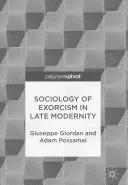
Sociology of Exorcism in Late Modernity
 82
82

Sociology of Exorcism in Late Modernity
Giuseppe Giordan and Adam Possamai’s "Sociology of Exorcism in Late Modernity" offers a compellingly pragmatic lens on a practice often relegated to the fringes of theological debate. The authors skillfully dissect the social mechanisms that propel exorcism into contemporary relevance, particularly its function as a marker of distinct religious identity and a tool for community cohesion in competitive spiritual markets. A particular strength lies in their analysis of exorcism as a "religious commodity," effectively illustrating how perceived spiritual power can be marketed to bolster a religion’s attractiveness. However, the work could benefit from more sustained engagement with the subjective, lived experiences of those who undergo or perform exorcisms, moving beyond the structural analysis to explore the phenomenological aspects. The discussion on the influence of media on the perception of exorcism, though present, feels somewhat underdeveloped. Despite these points, the book provides a vital sociological framework for understanding a persistent and evolving spiritual phenomenon.
📝 Description
82
Giuseppe Giordan and Adam Possamai analyze exorcism not just as a religious rite, but as a modern sociological phenomenon.
This book examines the resurgence of exorcism in late modernity, viewing it as a sociological phenomenon rather than solely a religious rite. The authors argue that in a competitive multi-faith environment, performing exorcisms helps religious groups solidify their authority and attract followers. The analysis moves beyond theological interpretations to focus on social dynamics, community impacts, and the commodification of spiritual authority. It offers a framework for understanding contemporary spiritual practices, particularly for scholars of sociology of religion, cultural studies, and anthropology. Individuals interested in religion's evolving role in secular societies, religious competition, and the cultural significance of paranormal beliefs will also find value. The work situates the contemporary rise of exorcism within trends of religious pluralism and the search for authenticity in post-traditional societies, tracing its evolution from historical antecedents to modern forms. It considers how media portrayals and the increased visibility of diverse spiritual offerings shape the phenomenon and engages with academic discourse on the sociology of the supernatural.
While not strictly an esoteric text itself, this book analyzes practices often found within esoteric traditions through a sociological lens. It engages with the academic study of the supernatural and paranormal beliefs, which intersect with many esoteric worldviews. By examining how 'spiritual authority' is contested and 'religious commodities' are created and consumed, the authors touch upon the social mechanisms that can give rise to and sustain belief in extraordinary experiences, a common feature in esoteric thought and practice.
💡 Why Read This Book?
• Understand how exorcism functions as a 'religious commodity' in multi-faith societies, a concept explored extensively through sociological analysis. • Gain insight into the dynamics of 'spiritual authority' and how competition between religious groups in the 21st century can revitalize ancient practices. • Learn about the social construction of belief and how communities validate extraordinary spiritual experiences, as detailed in the book's examination of contemporary exorcism.
⭐ Reader Reviews
Honest opinions from readers who have explored this book.
❓ Frequently Asked Questions
What is the primary sociological argument of 'Sociology of Exorcism in Late Modernity'?
The book argues that exorcism's resurgence in late modernity is driven by its utility as a 'religious commodity.' It helps religious groups strengthen their appeal and authority in competitive multi-faith environments by offering a visible, potent spiritual service.
When was 'Sociology of Exorcism in Late Modernity' first published?
The work by Giuseppe Giordan and Adam Possamai was first published on December 12, 2017, offering a contemporary sociological perspective on a long-standing practice.
What is the concept of 'spiritual authority' as discussed in the book?
'Spiritual authority' refers to the perceived power and legitimacy a religious group holds. The book suggests that in societies with diverse religious offerings, groups may leverage practices like exorcism to assert and enhance their spiritual authority over adherents.
How does the book explain the re-emergence of exorcism?
The authors explain the re-emergence not just by religious fervor, but by social factors. Intense competition between religious groups in multi-faith societies creates a demand for distinctive spiritual services that exorcism can fulfill.
Who are the authors of 'Sociology of Exorcism in Late Modernity'?
The authors are Giuseppe Giordan and Adam Possamai, who collaborated to provide a sociological analysis of exorcism in contemporary society.
What kind of communities does the book suggest are impacted by exorcism?
The book indicates that exorcism impacts various communities by serving as a mechanism for solidifying religious identity, attracting new members, and asserting a group's unique spiritual authority in diverse societal landscapes.
🔮 Key Themes & Symbolism
Exorcism as Religious Commodity
The work posits that exorcism has transformed into a 'religious commodity,' a tangible spiritual service that religious groups can offer to attract and retain adherents. In the competitive field of late modernity, its perceived efficacy and dramatic nature make it a potent tool for enhancing a religion's appeal. This commodification highlights the strategic adaptation of spiritual practices to meet the demands of a pluralistic society, where distinctiveness and perceived power are crucial for survival and growth.
Contestation of Spiritual Authority
A core theme is the ongoing contestation for 'spiritual authority' among various religious groups. In societies characterized by multi-faith environments and secularization, the struggle for influence intensifies. The book argues that the practice of exorcism serves as a performative assertion of a group's unique authority over the supernatural, differentiating it from rivals and reinforcing its claim to divine favor and adherents' loyalty.
Social Dynamics of Belief Validation
This theme explores how communities validate extraordinary spiritual experiences, such as those associated with alleged demonic possession and exorcism. The book examines the social mechanisms that lend credence to these events, moving beyond individual belief to understand how collective acceptance and ritual performance solidify the reality of the supernatural within specific social contexts. It highlights the role of community in shaping and confirming spiritual phenomena.
Adaptation in Late Modernity
The work focuses on how ancient religious practices like exorcism adapt and find new relevance in the context of late modernity. Factors such as media influence, increased religious pluralism, and the search for meaning in secularized societies contribute to its resurgence. The book analyzes this adaptation not as a regression, but as a strategic response by religious actors to contemporary social and cultural conditions.
💬 Memorable Quotes
Direct passages from the work, attributed to the author.
“exorcism has become a religious commodity with the potential to strengthen a religion’s attraction to adherents, whilst also ensuring its hold.”
— This statement captures the book's central thesis: that exorcism is now strategically employed by religious groups not just for spiritual reasons, but as a marketable service designed to enhance their appeal and solidify their grip on followers in a competitive religious market.
“religious groups are now competing for authority over the supernatural.”
— This highlights the intense rivalry between faiths in contemporary societies. The authors suggest that the performance of exorcism is one way religious entities vie for dominance and legitimacy by demonstrating their unique power and connection to the divine realm.
“analysis of the reasons for its contemporary re-emergence and impact on various communities.”
— This points to the book's analytical approach, focusing on the social, cultural, and competitive factors driving the renewed prominence of exorcism. It emphasizes understanding the 'why' and 'how' of its impact on different social groups.
“provides a sociological understanding of the phenomenon of exorcism.”
— This underscores the book's primary objective: to apply sociological theory and methods to the study of exorcism, viewing it as a social construct and practice rather than solely a theological or psychological issue.
“due to intense competition between religious groups in our multi-faith societies.”
— This phrase identifies a key driver for the phenomenon discussed. The authors link the rise of exorcism directly to the challenging environment of religious pluralism, where differentiation and perceived power are essential for a group's success.
🌙 Esoteric Significance
Tradition
While not strictly adhering to a single esoteric lineage, this work engages with the sociological manifestations of practices often found in folk magic, demonology, and certain branches of Christian mysticism. It analyzes these practices through a secular, academic lens, providing a framework for understanding their social function rather than their inherent spiritual validity within traditions like ceremonial magic or Gnosticism.
Symbolism
The book implicitly touches upon symbolic dimensions of exorcism, such as the symbolic battle between good and evil represented by the exorcist and the possessed individual. The ritual itself, with its incantations, prayers, and gestures, functions as a potent symbol of divine power and community protection against perceived malevolent forces, reinforcing shared beliefs and social boundaries.
Modern Relevance
Contemporary thinkers exploring the sociology of belief, the performance of ritual in secularizing societies, and the cultural impact of paranormal phenomena find this work highly relevant. It informs discussions on religious branding, the appeal of 'high-risk' spiritual practices, and the ways in which communities construct meaning and maintain cohesion through shared extraordinary experiences in the 21st century.
👥 Who Should Read This Book
• Comparative religion researchers seeking to understand the social functions of ritualistic practices in diverse contemporary faith communities. • Students of sociology and cultural studies interested in the adaptation of traditional beliefs and practices within modern, pluralistic societies. • Individuals curious about the intersection of media, belief, and the supernatural, particularly how social dynamics shape the perception and performance of exorcism.
📜 Historical Context
Published in 2017, "Sociology of Exorcism in Late Modernity" emerged during a period of heightened academic and public interest in the supernatural and the evolving role of religion. The intellectual currents of the time included post-secular theory, critical examination of religious marketplaces, and analyses of media's impact on belief. The work engaged with sociological approaches to religion that moved beyond traditional institutional focus to examine lived practices and cultural expressions. Contemporaries like Grace Davie, with her concept of 'believing without belonging,' explored similar shifts in religious engagement. While not subject to overt censorship, the academic reception of such works often navigated discussions about distinguishing sociological analysis from apologetics or sensationalism, positioning it within broader debates about the persistence and transformation of religious belief in secularizing Western societies.
📔 Journal Prompts
The concept of exorcism as a 'religious commodity' and its implications for faith-based marketing.
The performative aspects of 'spiritual authority' in multi-faith societies.
Societal validation mechanisms for extraordinary spiritual experiences.
The adaptive strategies of religious groups in competitive modern environments.
How media influences the social perception of religious practices like exorcism.
🗂️ Glossary
Religious Commodity
A spiritual service or belief offered by a religious group that is marketed or perceived as a valuable 'product' to attract and retain adherents, functioning similarly to goods in a consumer market.
Spiritual Authority
The perceived legitimacy, power, and right of a religious group or leader to command belief, obedience, and influence over adherents, often contested in multi-faith environments.
Late Modernity
A sociological term referring to the current era, characterized by globalization, advanced technology, secularization, and intense competition among diverse social and religious groups.
Multi-faith Societies
Societies where a significant number of different religious traditions coexist and interact, often leading to increased competition for adherents and influence.
Social Construction of Belief
The sociological theory that reality and meaning, including religious beliefs and experiences, are created and maintained through social interaction and shared cultural understanding.
Secularization
The process by which religion loses social and cultural significance, often characterized by a decline in religious adherence, institutional power, and the privatization of faith.
Adherents
Individuals who officially or unofficially follow or support a particular religion, belief system, or cause.