Simons J W A Familiar Treatise On The Principles & Practice Of Masonic Jurisprudence ( 1864)

 71
71

Simons J W A Familiar Treatise On The Principles & Practice Of Masonic Jurisprudence ( 1864)

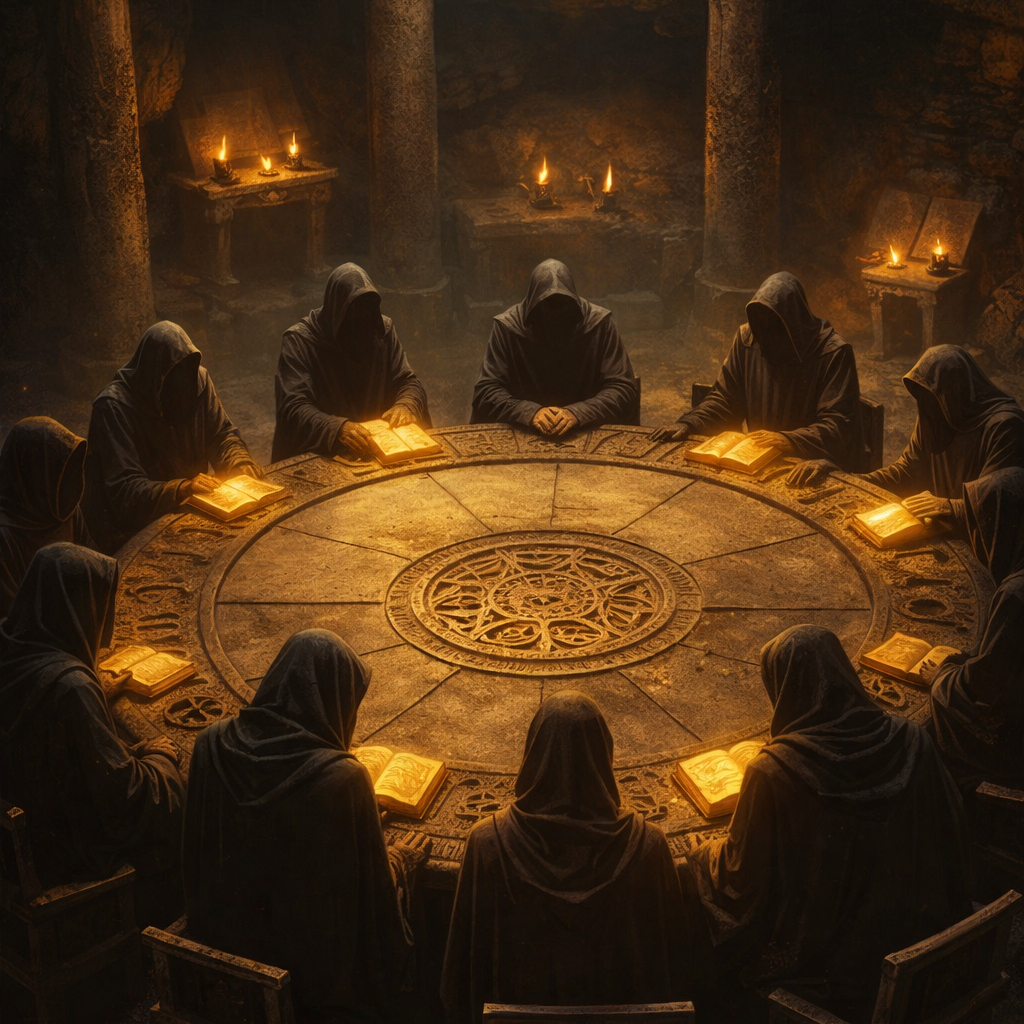

Isolde Whitaker, Sacred Texts Editor — 'A Familiar Treatise on the Principles & Practice of Masonic Jurisprudence' by J. W. Simons is an indispensable guide for serious students of Freemasonry. Published in 1864, its enduring value lies in its profound exploration of the esoteric philosophy woven into the fabric of Masonic law. Simons masterfully deciphers the symbolic language of jurisprudence, revealing the ethical and spiritual dimensions often overlooked. This work is a treasure trove for those seeking to understand the deeper currents of the Craft, offering clarity on principles that resonate with timeless wisdom. Highly recommended for practitioners and scholars alike.
📝 Description
71
Published in 1864, J. W. Simons' 'A Familiar Treatise on the Principles & Practice of Masonic Jurisprudence' examines Freemasonry's internal order.
This 1864 text moves beyond a simple legal explanation of Masonic governance. Instead, it examines the symbolic foundations that structure the fraternity's internal workings. Simons looks at the ethics, philosophy, and spiritual goals that exist alongside the rituals and degrees.
The book aims to clarify the esoteric aspects influencing Freemasonry's organizational framework. It discusses the connection between individual freedom and group obligation within the craft. This volume is for Masons, students of secret societies, and those interested in concealed knowledge. It shows the unique legal system that has guided this long standing mystical organization.
This treatise situates Masonic law within a tradition of esoteric thought that seeks deeper meaning in organizational structures. It connects the practical rules of the fraternity to a symbolic language and a spiritual framework, suggesting that its governance reflects broader cosmological or philosophical principles. The work implies that understanding these hidden connections is key to grasping the true nature of Freemasonry.
💡 Why Read This Book?
Unlock the hidden philosophical depths of Masonic governance. Understand the symbolic language underpinning the fraternity's structure and ethics. This treatise is essential for Masons seeking profound insight, scholars of esoteric traditions, and seekers of ancient wisdom within organizational frameworks. It reveals the sacred architecture of order.
⭐ Reader Reviews
Honest opinions from readers who have explored this book.
❓ Frequently Asked Questions
What is Masonic Jurisprudence?
Masonic Jurisprudence refers to the body of laws, rules, and customs that govern the operation and conduct of Masonic lodges and individual members. It is rooted in tradition and symbolic interpretation, aiming to maintain harmony and order within the fraternity.
Is this book only for Masons?
While written with Freemasons in mind, its exploration of governance, ethics, and symbolism holds significant interest for scholars of secret societies, comparative religion, and anyone interested in the philosophical underpinnings of fraternal organizations.
What is the esoteric significance of Masonic law?
The esoteric significance lies in viewing Masonic laws not merely as rules, but as symbolic representations of spiritual principles and the ideal ordering of human society. They reflect a path towards moral and spiritual perfection.
What era does this book reflect?
Published in 1864, it reflects the mid-Victorian era's intellectual climate, a time of significant interest in esoteric traditions, moral philosophy, and the formalization of fraternal organizations.
Can this book be read by beginners?
While comprehensive, beginners may find it beneficial to have some foundational understanding of Masonic terminology and rituals to fully grasp the nuances presented in this detailed treatise.
🔮 Key Themes & Symbolism
The Sacred Architecture of Order
This theme explores how Masonic jurisprudence constructs a symbolic framework for lodge governance, mirroring cosmic order and spiritual hierarchy. It studies the idea that laws and regulations are not arbitrary but are designed to reflect divine principles, guiding members towards moral and ethical development. The treatise illuminates how seemingly mundane rules carry profound esoteric meaning, acting as keys to unlocking a deeper understanding of the Craft and its purpose in the aspirant's journey.
Symbolism in Masonic Governance
The treatise meticulously examines the symbolic language embedded within Masonic laws and their practical application. It posits that the principles of jurisprudence are not merely textual but are infused with allegorical significance, offering insights into virtue, duty, and the pursuit of light. Understanding these symbols allows practitioners to perceive the esoteric underpinnings of their obligations, transforming legalistic adherence into a path of spiritual growth and self-discovery.
The Esoteric Path of Duty and Harmony
This theme highlights how Masonic jurisprudence guides individuals on a path of conscious duty and harmonious coexistence within the fraternity. It emphasizes the balance between personal freedom and collective responsibility, illustrating how adherence to established principles fosters spiritual progress and mutual respect. The text reveals that mastering these principles is akin to mastering oneself, leading to a more enlightened existence and a stronger, more unified brotherhood.
💬 Memorable Quotes
Direct passages from the work, attributed to the author.
“Harmony is the central to our sacred edifice.”
— This emphasizes that internal concord and mutual understanding are fundamental to the spiritual and structural integrity of the Masonic fraternity.
“To govern is to shepherd the soul towards light.”
— This profound statement frames leadership and jurisprudence not as control, but as a nurturing process designed to guide individuals toward enlightenment and moral betterment.
“Each statute, a symbol; each rule, a lesson.”
— This highlights the deeply symbolic nature of Masonic law, where every regulation is intended to impart a moral or spiritual teaching.
“The uninitiated sees but the form; the Brother, the essence.”
— This distinction underscores the esoteric aspect of Masonic jurisprudence, suggesting that true understanding comes from within, perceiving the deeper spiritual truths behind the outward structure.
💡 Key Ideas
Editorial paraphrase of the work's core concepts — not direct quotes.
The Law is but the manifestation of the Divine Will, guiding mortal steps.
This quote suggests that Masonic laws are more than human constructs; they are seen as reflections of a higher, divine order, intended to illuminate the path for individuals and the fraternity.
🌙 Esoteric Significance
Tradition
This treatise is deeply rooted in the Western Esoteric Tradition, particularly within the framework of Freemasonry. It draws upon Hermeticism, Kabbalah, and Neoplatonism to interpret Masonic principles as pathways to spiritual enlightenment and moral perfection. The work views Masonic law not as secular legislation, but as a symbolic language designed to reveal universal truths about creation, humanity, and the divine.
Symbolism
Key symbols within Masonic jurisprudence include the Square (representing morality and earthly duty), the Compasses (symbolizing restraint and the spiritual realm), and the Level (signifying equality and fraternity). Simons' work interprets these and other symbols not just as tools of the craft, but as profound philosophical concepts that inform the very structure and purpose of Masonic governance, guiding the aspirant towards balance and light.
Modern Relevance
In an age often characterized by fragmentation and a search for meaning, Simons' treatise offers a timeless blueprint for ethical conduct and communal harmony. Its emphasis on symbolic understanding and the integration of spiritual principles into daily life remains highly relevant for those seeking to build ordered, meaningful lives. The work provides a framework for understanding how structured traditions can foster personal growth and contribute to a more enlightened society.
👥 Who Should Read This Book
This volume is essential for active Freemasons seeking a deeper comprehension of their fraternity's legal and ethical underpinnings, moving beyond rote memorization to true understanding. Scholars of comparative religion, secret societies, and Western Esotericism will find its meticulous analysis useful for its historical and philosophical insights. Seekers of ancient wisdom and those interested in the intersection of governance and spirituality will discover a collection of thought. Practitioners of other esoteric disciplines may also find parallels and inspirations in its exploration of symbolic order and moral development.
📜 Historical Context
Published in 1864, 'A Familiar Treatise on the Principles & Practice of Masonic Jurisprudence' emerges from a period of intense intellectual and societal change in the Victorian era. Freemasonry, already a well-established institution, was undergoing its own evolution, with a growing emphasis on its philosophical and esoteric dimensions. This era saw a surge in interest in ancient mysteries, hermeticism, and the symbolic interpretation of religious and fraternal traditions. Simons' work reflects this trend, moving beyond a purely procedural understanding of Masonic law to explore its deeper ethical, spiritual, and symbolic significance. It stands as a evidence of the mid-19th century's engagement with the enduring quest for order, wisdom, and self-improvement, often sought through the structured symbolism of fraternal orders.
📔 Journal Prompts
How can the principles of Masonic jurisprudence be applied to personal ethical decision-making outside of the lodge?
Reflect on a time when adherence to a rule or law led to unexpected personal growth. What was the 'esoteric' lesson?
What does the concept of 'harmony' in governance mean to you, and how can it be cultivated in your own life or community?
Identify a common societal rule or law and consider its potential symbolic or philosophical meaning beyond its practical function.
How can the pursuit of 'light' or enlightenment be seen as a form of inner jurisprudence?
🗂️ Glossary
Jurisprudence
The theory and philosophy of law. In a Masonic context, it refers to the body of laws, customs, and principles that govern the fraternity and its members, often imbued with symbolic meaning.
Esoteric
Intended for or likely to be understood by only a small number of people with a specialized knowledge or interest; secret or mysterious.
Edifice
A building or structure, especially a large or imposing one. Metaphorically used to represent a complex system, organization, or body of thought, such as the Masonic fraternity.
Aspirant
A person who seeks or desires a position, achievement, or goal. In a spiritual or esoteric context, it refers to someone actively pursuing higher knowledge or spiritual development.
Statute
A written law passed by a legislative body. In Freemasonry, this refers to formal regulations or enactments governing the fraternity.
This book appears in 2 collections
🔮 Readers Also Liked
Browse all →




![Gould R F History Of Freemasonry Throughout The World V 1 [ 1936 Ed][ 437p]](/img/thumb/gould-r-f-history-of-freemasonry-throughout-the-world-v-1-1936-ed-437p.webp)
From the “Secret Societies” Collection
View all →





More Free Freemasonry & Secret Societies Books
View all →