Shodasha Varga
 71
71

Shodasha Varga
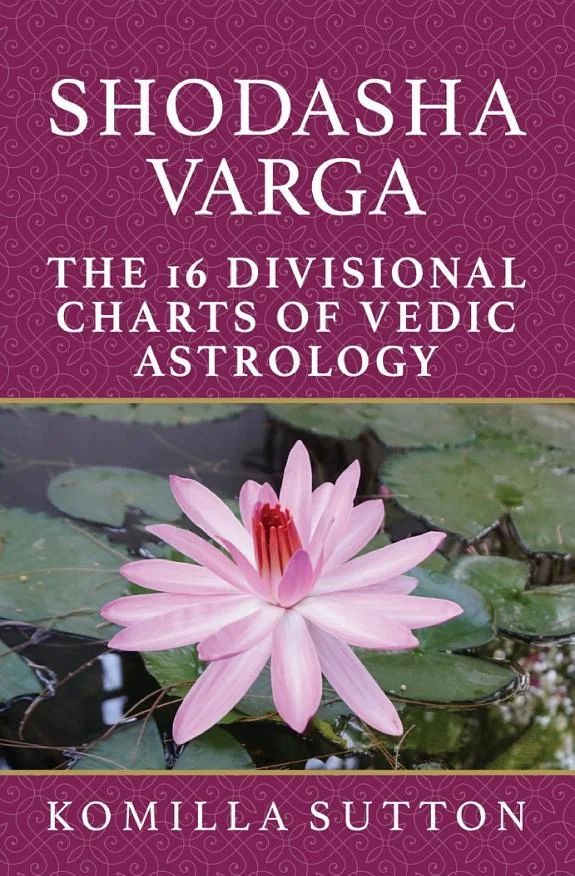
Komilla Sutton's "Shodasha Varga" provides an indispensable guide to the sixteen divisional charts of Vedic astrology. The strength of this work lies in its systematic approach, meticulously detailing each Varga's purpose and interpretation. Sutton’s use of case studies, including prominent figures like Prince William, effectively demonstrates the practical application of these complex charts, moving beyond theoretical explanations. A notable strength is the clear delineation of each chart's specific domain, preventing the confusion often associated with studying multiple Vargas. However, the sheer volume of information can be daunting for those new to advanced Jyotish; a more gradual introduction to the interplay between fewer charts initially might have eased the learning curve. A particularly illuminating section details the D-30 (Vimsamsa) and its connection to spiritual inclinations. Sutton's meticulous research and clarity make this a valuable, albeit demanding, resource for dedicated practitioners.
📝 Description
71
Komilla Sutton's 2004 work details the sixteen divisional charts of Vedic astrology.
Komilla Sutton's "Shodasha Varga" meticulously examines the sixteen divisional charts used in Vedic astrology. These Vargas are not simple extensions of the main birth chart; they are specialized tools for analyzing specific areas of life with considerable detail. The book systematically introduces each of the sixteen Vargas, explaining its particular focus and how it contributes to a complete astrological interpretation. Sutton argues that understanding these sub-charts alongside the birth chart is necessary for a full picture of an individual's destiny and inner life.
This text is intended for dedicated students and practitioners of Vedic astrology who want to advance beyond introductory chart analysis. It assumes a working knowledge of Jyotish principles and prepares readers for more complex techniques. Those looking to improve their predictive skills and gain deeper awareness of a person's life, covering areas like career, finances, relationships, and spiritual growth, will find this book valuable. It assists those who aim to provide more precise readings to clients or to enhance their personal understanding through these detailed charts.
The concept of Vargas is fundamental to the depth of Vedic astrology, setting it apart from simpler systems. The Shodasha Vargas offer a method developed over centuries to address the complex interplay of karma and consciousness. By studying these sixteen charts, astrologers can see how potentials shown in the birth chart manifest across different life areas. This approach allows for a more specific understanding of celestial influences and reflects a sophisticated cosmological view within the Jyotish tradition.
💡 Why Read This Book?
• Learn to interpret the D-9 (Navamsa) chart's specific revelations about marriage and one's core purpose, moving beyond its general application. • Understand how the D-10 (Dasamsa) chart provides precise indicators for career progression and professional achievements, offering predictive clarity. • Discover the unique insights offered by less commonly discussed Vargas, such as the D-24 (Chaturvimsamsa) for educational potential, enriching your astrological analysis.
⭐ Reader Reviews
Honest opinions from readers who have explored this book.
❓ Frequently Asked Questions
What are the Shodasha Vargas in Vedic astrology?
The Shodasha Vargas are sixteen divisional charts in Vedic astrology, each providing a magnified view of specific areas of life, such as marriage, career, or health, offering deeper insights beyond the main birth chart.
Who is Komilla Sutton and what is her background in astrology?
Komilla Sutton is an award-winning astrologer and author specializing in Vedic astrology, known for her clear explanations of complex astrological concepts. She has been practicing and teaching Jyotish for decades.
How do the Shodasha Vargas differ from the main Rashi chart (D-1)?
The Rashi chart (D-1) provides a general overview of personality and life potentials, while each of the sixteen Vargas offers a detailed, specific focus on particular life segments, revealing nuances not apparent in the D-1 alone.
Are the Shodasha Vargas used in Western astrology?
The concept of divisional charts is primarily a feature of Vedic astrology (Jyotish). While Western astrology uses house systems and aspects for similar analyses, the systematic breakdown into sixteen specific Vargas is unique to the Vedic tradition.
Can studying the Shodasha Vargas improve astrological predictions?
Yes, by examining the Vargas, astrologers can gain a more precise understanding of when and how specific potentials indicated in the birth chart are likely to manifest, thereby enhancing predictive accuracy.
Which Varga is most important for understanding marriage?
While multiple Vargas can offer insights, the D-9 (Navamsa) chart is considered the most significant for understanding marriage, relationships, and one's spiritual path or dharma.
🔮 Key Themes & Symbolism
Granular Life Analysis
The core of "Shodasha Varga" lies in its systematic dissection of life into sixteen distinct areas, each represented by a Vargas chart. This method allows for a level of specificity in astrological interpretation rarely found in other systems. Sutton demonstrates how each Varga, from the D-1 (Rashi) for overall personality to the D-30 (Vimsamsa) for spiritual matters, contributes a unique perspective. By analyzing these charts in conjunction with the birth chart, practitioners can pinpoint influences on specific life events and character traits, offering a far more detailed portrait than a single chart can provide.
Consciousness and Karma Mapping
Sutton presents the Shodasha Vargas not merely as predictive tools but as maps of consciousness and the unfolding of karma. Each chart reflects a different layer of an individual's being, from the manifest reality to subconscious tendencies. The D-9 (Navamsa), for instance, is linked to dharma, representing one's inherent purpose. The interplay between Vargas reveals how karmic patterns manifest across various life experiences, providing a framework for understanding the soul's journey and the intricate web of cause and effect.
Advanced Jyotish Techniques
This book is a significant resource for those looking to advance their practice of Vedic astrology. It moves beyond introductory concepts to explore the sophisticated methodology of divisional charts, a hallmark of advanced Jyotish. Sutton's detailed explanations and case studies, referencing figures like Bill Clinton, illustrate how to apply these complex techniques for accurate forecasting and in-depth psychological profiling. The work encourages a deeper engagement with the astrological tradition, emphasizing analytical rigor.
Interplay of Vargas
A crucial aspect of "Shodasha Varga" is the emphasis on how these sixteen charts do not function in isolation but interact dynamically. Sutton explains that a strong yoga in the D-1 might be modified by an affliction in the D-30 (Vimsamsa), or a positive placement in the D-10 (Dasamsa) for career could be supported by its corresponding Navamsa placement. Understanding these interconnections is key to holistic interpretation, allowing astrologers to synthesize information from multiple charts for a comprehensive and nuanced reading.
💬 Memorable Quotes
Direct passages from the work, attributed to the author.
“Each Varga focuses on a different area of life, and together they represent the complete picture.”
— This statement expresses the fundamental premise of the Shodasha Vargas: that no single astrological chart tells the whole story. It highlights the necessity of examining multiple perspectives to gain a comprehensive understanding of an individual's life and psyche.
“The Shodasa Vargas reflect human consciousness from reality to the subconscious.”
— This interpretation frames the divisional charts as a map of the psyche, suggesting that they chart not only outward circumstances but also inner states, motivations, and hidden potentials. It elevates their use from mere prediction to a tool for self-exploration.
“Komilla Sutton unravels the sixteen vargas and their secrets through the in-depth study of case histories.”
— This highlights Sutton's pedagogical approach, emphasizing her use of real-life examples to clarify complex astrological concepts. It signals to the reader that the book offers practical, applied knowledge rather than abstract theory.
“The D-9 chart is essential for understanding marriage and dharma.”
— This concise statement points to the specific significance of the Navamsa chart, a key Varga. It identifies its primary domains of interpretation, guiding the reader towards its critical role in astrological analysis, particularly concerning life purpose and partnerships.
“Understanding the interplay between Vargas is key to a complete astrological reading.”
— This emphasizes the dynamic nature of astrological interpretation within the Shodasha Varga system. It suggests that true mastery comes from synthesizing information across multiple charts, rather than analyzing them in isolation.
🌙 Esoteric Significance
Tradition
The Shodasha Vargas are a central to Vedic astrology (Jyotish), a tradition deeply rooted in ancient Indian cosmology and philosophy, particularly the concepts of karma, reincarnation, and dharma. This system is considered esoteric due to its intricate symbolism and its aim to map the subtle energies influencing human life and consciousness. Sutton's work fits within the lineage of sages like Parashara and Jaimini, who codified these techniques. It departs from purely predictive methods by framing the Vargas as reflections of the soul's journey and karmic blueprint, aligning with a broader spiritual understanding of astrology.
Symbolism
Key symbols within the Shodasha Vargas include the specific houses and signs they represent, each carrying inherent astrological meanings. For example, the D-9 (Navamsa) is often linked to the 'deeper self' or soul's purpose (dharma), while the D-10 (Dasamsa) symbolizes career and public status. The numbers themselves (e.g., D-7 for children, D-8 for longevity/accidents) act as symbolic keys, focusing the astrological interpretation onto specific life areas. The interaction between these Varga charts and the main Rashi chart (D-1) creates a symbolic language that translates celestial patterns into tangible life experiences.
Modern Relevance
In contemporary esoteric circles, the Shodasha Vargas are increasingly recognized as a sophisticated method for psychological and predictive astrology. Thinkers and practitioners in the Vedic astrology community, including students of B.V. Raman and K. N. Rao, continue to explore and apply these charts. Modern astrological software often includes calculations for Vargas, making them accessible. Contemporary astrologers utilize this framework to offer detailed readings that resonate with individuals seeking self-understanding and guidance on life purpose, career paths, and relationship dynamics, bridging ancient wisdom with modern psychological inquiry.
👥 Who Should Read This Book
• Advanced students of Vedic astrology seeking to deepen their interpretive skills beyond the basic birth chart. • Astrologers aiming to provide more precise and nuanced readings to clients by incorporating the specific insights offered by each of the sixteen divisional charts. • Individuals interested in comparative astrology who wish to understand the unique methodologies and depth of Jyotish, particularly its focus on layered chart analysis.
📜 Historical Context
Published in 2020, Komilla Sutton's "Shodasha Varga" arrives in an era where Vedic astrology has seen a resurgence in global interest, moving from niche circles to mainstream esoteric studies. This work builds upon a tradition dating back millennia, where the concept of divisional charts (Vargas) was refined by ancient Indian sages like Parashara. By the 20th century, scholars like B.V. Raman were instrumental in reintroducing and popularizing these advanced Jyotish techniques in the West, often contrasting them with the more generalized approach of Western astrology. Sutton’s contribution lies in consolidating and clearly explaining the intricacies of all sixteen Vargas, a scope that surpasses many earlier works which might focus on only a few key charts like the Navamsa (D-9) or Dasamsa (D-10). The book's detailed case studies, referencing figures from Sri Ramana Maharshi to Prince William, aim to demonstrate the practical efficacy of these layered charts in understanding complex lives within the framework of karma and destiny.
📔 Journal Prompts
The D-9 (Navamsa) chart's significance for dharma.
Reflect on the D-10 (Dasamsa) chart's indications for career.
Analyze the D-7 (Saptamsa) chart's connection to progeny.
Consider the D-30 (Vimsamsa) chart's relationship to spiritual inclinations.
How the interplay of the Rashi chart and a chosen Varga reveals deeper patterns.
🗂️ Glossary
Varga
A divisional chart in Vedic astrology, representing a magnified segment of the zodiac used for analyzing specific areas of life.
Shodasha Vargas
The term for the sixteen primary divisional charts used in Vedic astrology, each offering a unique perspective on an individual's life.
Jyotish
The traditional Indian system of astrology, also known as Vedic astrology, which uses sidereal calculations and a unique set of principles.
Rashi Chart (D-1)
The primary birth chart in Vedic astrology, representing the overall personality, general life potentials, and the positions of planets at the time of birth.
Navamsa Chart (D-9)
The ninth divisional chart, considered crucial for understanding marriage, relationships, dharma (life purpose), and the finer details of the soul's journey.
Dasamsa Chart (D-10)
The tenth divisional chart, primarily used for analyzing career, profession, status, reputation, and public life.
Dharma
In Vedic philosophy, dharma refers to one's duty, righteousness, purpose in life, or natural law. In astrology, it's often linked to the Navamsa chart.
This book appears in 1 collection
🔮 Readers Also Liked
Browse all →









From the “Vedic Astrology” Collection
View all →






More Free Astrology & Cosmology Books
View all →