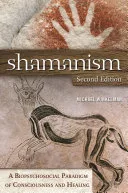
Shamanism
 78
78

Shamanism
Michael J. Winkelman's "Shamanism" provides a refreshingly scientific lens on a topic often shrouded in mysticism. The strength lies in its rigorous attempt to bridge evolutionary biology, neuroscience, and cultural anthropology, offering a coherent framework for understanding shamanic practices. Winkelman’s examination of the brain's activity during altered states, particularly in his discussion of neural circuitry involved in "soul journeys," is particularly illuminating. However, the dense academic prose can sometimes obscure the practical implications for readers less versed in scientific literature. While the comparison between chimpanzee rituals and human shamanism is intriguing, it occasionally feels speculative. Despite these minor hurdles, the book offers a robust, evidence-based perspective that moves the study of shamanism into new territory. It's a crucial text for anyone seeking to understand shamanism beyond its surface-level spiritual aspects.
📝 Description
78
Michael J. Winkelman's "Shamanism" examines shamanic practices with a science-informed evolutionary perspective.
Published in 2010, Michael J. Winkelman's "Shamanism" offers a science-informed examination of shamanic practices across cultures and history. It moves beyond purely anthropological descriptions to investigate the evolutionary and biological underpinnings of shamanism. Winkelman posits that shamanic rituals serve concrete functions in enhancing individual and group well-being. By analyzing altered states of consciousness and their neurological correlates, the author seeks to understand the core mechanisms of shamanic healing.
This work is for a diverse readership interested in the deep roots of human spiritual and healing practices. Academics in anthropology, psychology, and religious studies will find its interdisciplinary approach valuable. It also appeals to practitioners of various healing modalities, from traditional shamans to modern therapists, seeking to understand the biological basis of their work. Those curious about the evolutionary origins of consciousness and ritual will find ample material.
Winkelman situates shamanism within a long lineage of human spiritual expression, tracing its origins back to early hominid societies. His evolutionary perspective contrasts with earlier ethnographic accounts that often focused on exoticism. While acknowledging earlier scholars like Mircea Eliade, the book builds upon and updates such foundational texts with contemporary scientific understanding.
This book places shamanism within the broader context of human spiritual and healing traditions, tracing its lineage from early hominid societies. Winkelman's approach emphasizes the biological and evolutionary adaptive qualities of shamanic behavior. It engages with the history of shamanic studies, acknowledging foundational works while updating them with contemporary scientific research on consciousness and ritual function. The work positions shamanism not as a fringe practice but as a fundamental aspect of human experience with roots in our evolutionary past.
💡 Why Read This Book?
• Understand the evolutionary advantage of shamanic practices by examining how rituals, as discussed in the book's exploration of early hominid societies, enhance group function and survival. • Gain insight into the neurological basis of altered states of consciousness, learning what the brain does during 'soul journeys' as detailed in the book's biological perspective. • Differentiate shamanic healing from other modalities by exploring Winkelman's analysis of whether shamans are fundamentally different from other healers based on their unique practices and biological underpinnings.
⭐ Reader Reviews
Honest opinions from readers who have explored this book.
❓ Frequently Asked Questions
What is the evolutionary perspective on shamanism presented in Michael J. Winkelman's book?
Winkelman's work suggests shamanism is an evolutionarily adaptive human behavior. The book explores how rituals associated with shamanism enhance individual and group function, contributing to survival and well-being, with origins potentially tracing back to early hominid societies.
How does "Shamanism" by Michael J. Winkelman explain altered states of consciousness?
The book examines altered states of consciousness (ASC) from a biological and neurological standpoint. It discusses what the brain does during these states, often referred to as 'soul journeys,' and their significance for shamanic healing processes.
Is Michael J. Winkelman's "Shamanism" suitable for beginners?
While comprehensive, the book's academic approach and scientific terminology may be more accessible to readers with some background in anthropology, psychology, or religious studies. However, its clear explanations of key concepts like ASC make it a valuable resource for dedicated newcomers.
What are some key differences between shamans and other healers according to this book?
Winkelman investigates whether shamans are fundamentally different by analyzing their unique rituals, altered states of consciousness, and the biological underpinnings of their practices. The book seeks to identify universal aspects of shamanic healing.
Does the book discuss the biological origins of shamanism?
Yes, a central theme is the biological and evolutionary origins of shamanism. It posits that shamanic healing is rooted in specific brain states and rituals that have been advantageous for human societies throughout history.
What role do chimpanzee rituals play in the discussion of shamanism?
The book explores potential connections between rituals observed in chimpanzees and traditional shamanistic practices in humans. This comparison serves to investigate the deep evolutionary roots of ritualistic behavior and its biological basis.
🔮 Key Themes & Symbolism
Evolutionary Roots of Ritual
Winkelman argues that shamanism is not merely a cultural phenomenon but a deeply ingrained, evolutionarily advantageous human behavior. The work traces the potential origins of shamanic practices back to early hominid societies, suggesting that rituals, particularly those involving altered states of consciousness, played an important role in group cohesion, problem-solving, and survival. This perspective challenges purely symbolic interpretations by highlighting the adaptive functions of these ancient practices.
Neuroscience of Altered States
A significant focus is placed on understanding the neurological correlates of the altered states of consciousness (ASC) central to shamanism. The book examines what happens in the brain during 'soul journeys' and other trance states, exploring how these specific neural activities facilitate healing, insight, and spiritual experiences. Winkelman aims to explain these experiences by grounding them in biological processes.
Shamanic Healing Functions
The book systematically examines the functional aspects of shamanic healing, questioning how these practices enhance both individual and group well-being. It investigates whether shamans possess unique abilities or if their effectiveness stems from universally understood psychological and biological mechanisms. The work analyzes the impact of shamanic rituals on social bonding and community resilience.
Comparative Ritual Analysis
Winkelman employs a comparative approach, drawing parallels between traditional shamanic practices and behaviors observed in other species, such as chimpanzees. This comparison aims to shed light on the deep evolutionary history of ritualistic behavior. By looking at non-human primates, the author seeks to identify fundamental aspects of consciousness and social bonding that might predate complex human culture.
💬 Memorable Quotes
Direct passages from the work, attributed to the author.
“What does the brain do during "soul journeys"?”
— This question highlights the book's core scientific inquiry into the neurological processes underlying shamanic trance states, moving the discussion from purely symbolic interpretation to biological function.
“How do shamans alter consciousness and why is this important for healing?”
— This expresses the book's focus on the practical application of altered states of consciousness within shamanic traditions, linking specific techniques to therapeutic outcomes.
“Are shamans different from other kinds of healers?”
— This probes the unique position of shamans within the broader spectrum of healing practices, suggesting an investigation into the specific biological and ritualistic distinctions.
“Is there a connection between the rituals performed by chimpanzees and traditional shamanistic practices?”
— This points to the book's ambitious comparative methodology, seeking evolutionary precedents for human shamanism in primate behavior.
“The work examines shamanism from evolutionary and biological perspectives to identify the origins of shamanic healing in rituals that enhance individual and group function.”
— This is an interpretation of the book's primary thesis, emphasizing its interdisciplinary approach and functional analysis of shamanic traditions.
🌙 Esoteric Significance
Tradition
While not strictly adhering to a single Western esoteric lineage like Hermeticism or Theosophy, Winkelman's work engages with the universal human impulse towards altered states and spiritual experience. It provides a scientific validation for phenomena often explored in esoteric traditions, framing shamanism as a fundamental aspect of human consciousness that underpins many spiritual practices. It departs from traditional esoteric focus by emphasizing biological mechanisms over purely metaphysical explanations.
Symbolism
Key symbols explored include the 'soul journey,' representing the shaman's ascent or descent into non-ordinary reality, often visualized as a tunnel or bridge. The 'drumbeat' is analyzed as a psychoacoustic tool that facilitates entry into altered states, its rhythmic pulse mirroring brainwave activity. The 'spirit helper' or 'power animal' is examined not just as a symbolic guide but potentially as a neurobiological construct tied to instinctual archetypes.
Modern Relevance
Winkelman's integration of neuroscience and evolutionary biology into the study of shamanism informs contemporary fields such as transpersonal psychology, consciousness studies, and psychedelic research. Thinkers exploring the therapeutic potential of altered states, particularly in light of research into substances like psilocybin, often draw upon the foundational understanding of shamanic practices and their biological effects that Winkelman helped to solidify.
👥 Who Should Read This Book
• Anthropologists and Religious Studies scholars seeking to understand the evolutionary and biological underpinnings of shamanism, moving beyond purely ethnographic descriptions. • Psychologists and Neuroscientists interested in the biological basis of altered states of consciousness and their role in healing and human behavior. • Practitioners of alternative healing modalities and spiritual explorers curious about the deep historical and biological roots of ritualistic healing practices.
📜 Historical Context
Published in 2010, Michael J. Winkelman's "Shamanism" arrived at a time when anthropological studies of shamanism were well-established, notably following Mircea Eliade's seminal "Shamanism: Archaic Techniques of Ecstasy" (1951). While Eliade focused on comparative ethnography and phenomenology, Winkelman's work represents a significant shift towards integrating evolutionary biology and neuroscience. This approach distinguished it from earlier, more descriptive or purely symbolic interpretations prevalent in the field. The book emerged amidst growing interest in the scientific study of consciousness and altered states, influenced by figures like Charles Tart. It sought to provide a biologically grounded framework that could explain the universality and persistence of shamanic practices across diverse cultures, moving beyond discussions of animism or spirit possession as primary drivers.
📔 Journal Prompts
The brain's activity during 'soul journeys' as described in the book.
Evolutionary advantage of shamanic rituals for group function.
Winkelman's distinction between shamans and other healers.
The role of the drumbeat in altering consciousness.
Connecting chimpanzee rituals to human shamanism.
🗂️ Glossary
Altered States of Consciousness (ASC)
Refers to any mental state significantly different from a normal waking state, characterized by changes in perception, cognition, emotion, and sense of self. Shamanism heavily relies on inducing and navigating ASC for healing and spiritual purposes.
Soul Journey
A concept in shamanism describing a trance-like state where the shaman's consciousness is believed to travel to spirit realms or other dimensions to gain information, retrieve lost souls, or effect healing.
Evolutionary Psychology
A theoretical approach that explains mental and psychological traits—such as memory, perception, or language—as adaptations, or products of natural selection.
Neuroscience
The scientific study of the nervous system, including the brain. In the context of shamanism, it examines the biological and neurological mechanisms underlying trance states and spiritual experiences.
Ritual Function
The purpose or role that a ritual serves within a society or for an individual, often related to social cohesion, psychological well-being, healing, or marking significant life events.
Comparative Method
An analytical approach that involves examining similarities and differences between different phenomena (e.g., rituals across cultures or species) to understand underlying principles or evolutionary connections.
Psychoacoustics
The study of how humans respond to and interpret sound. In shamanism, it relates to the use of rhythmic sound, like drumming, to induce altered states of consciousness.