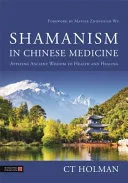
Shamanism in Chinese Medicine
 83
83

Shamanism in Chinese Medicine
CT Holman's "Shamanism in Chinese Medicine" attempts a bold synthesis, proposing that shamanic methods can revitalize and deepen the practice of Traditional Chinese Medicine. The book's strength lies in its concrete suggestions for integrating techniques like Qigong visualizations and verbal healing into contemporary TCM. Holman rightly identifies the need for a more holistic approach, moving beyond purely materialist interpretations of health. The discussion of shamanic drumming as a tool for energetic recalibration is particularly compelling, offering a tangible method for practitioners. However, the work occasionally suffers from a lack of historical nuance; while it gestures towards ancient connections, it could benefit from a more rigorous engagement with the specific historical evolution of shamanic elements within Taoism and early Chinese medicine, rather than presenting them as a monolithic tradition. A passage detailing how specific drumming rhythms might correspond to energetic meridians, for instance, would have been more impactful than general descriptions. Despite this, Holman provides a valuable framework for those looking to expand their practice beyond conventional boundaries.
📝 Description
83
CT Holman's 2020 book integrates indigenous spiritual healing with Traditional Chinese Medicine.
Shamanism in Chinese Medicine by CT Holman connects indigenous spiritual healing methods to the established system of Traditional Chinese Medicine (TCM). Published in 2020, the book gives TCM practitioners ways to go beyond purely physical treatments. It shows how to use shamanic techniques, like Qigong visualizations, healing chants, and drumming, for both physical and emotional issues. The central idea is to build a more complete approach to patient care, recognizing that mind, body, and spirit are all connected within TCM.
This book is mainly for practitioners of Chinese medicine, such as acupuncturists, herbalists, and Qigong instructors, who want to improve their healing skills. It will also interest practitioners of other holistic health methods looking into different ways of treating people. Individuals interested in personal spiritual growth or the link between old healing arts and modern wellness will find it useful. The book is for those ready to consider less common, but supported, methods to improve health and aid recovery.
Ancient Chinese medical texts often included spiritual and animistic beliefs, reflecting a time before medicine, religion, and philosophy were clearly separated. Early Taoist writings, for example, discussed the role of spirits and Qi in health and illness, showing an early understanding of these connections. Holman's work revisits these roots, suggesting that the separation between spiritual and medical practices in modern TCM is a recent phenomenon. It brings back a perspective where these elements are seen as naturally linked.
💡 Why Read This Book?
• Learn how to employ specific shamanic drumming patterns to address energetic stagnation, a concept central to both shamanism and Traditional Chinese Medicine (TCM), offering a unique method for practitioners beyond typical acupuncture or herbal protocols. • Discover practical Qigong visualizations designed to harmonize the 'Three Treasures' (Jing, Qi, Shen), a core TCM principle, providing guided exercises that deepen personal cultivation and therapeutic efficacy. • Understand the application of verbal healing techniques, drawing parallels between ancient shamanic incantations and the energetic intent behind TCM's diagnostic and treatment principles, for a more complete patient engagement.
⭐ Reader Reviews
Honest opinions from readers who have explored this book.
❓ Frequently Asked Questions
What is the primary goal of "Shamanism in Chinese Medicine"?
The book aims to equip Chinese medicine practitioners with shamanic techniques, such as Qigong visualizations and drumming, to address physical pathologies and emotional imbalances for a more holistic patient care approach.
Who is the intended audience for this book?
It is written for practitioners of Chinese medicine (acupuncturists, herbalists) and other holistic modalities, as well as individuals interested in personal spiritual cultivation and integrative health.
When was "Shamanism in Chinese Medicine" first published?
The book was first published in 2020 by CT Holman.
What specific shamanic techniques are discussed?
The book covers techniques including Qigong visualizations and movements, verbal healing, and shamanic drumming, among others.
What is the "whole-person approach" mentioned in the book?
It refers to integrating shamanic practices with modern Chinese medicine to address the interconnectedness of a person's physical, emotional, and spiritual well-being.
Does the book offer self-care methods?
Yes, it includes practical self-care methods for personal cultivation and for teaching patients, focusing on merging shamanic and TCM principles.
🔮 Key Themes & Symbolism
Holistic Integration
The book champions a unified approach, merging the energetic diagnostics and treatments of Traditional Chinese Medicine (TCM) with the spiritual and energetic methodologies of shamanism. It posits that by combining these traditions, practitioners can achieve a more profound level of healing. This involves understanding how shamanic tools, such as altered states induced by drumming or focused intent through Qigong visualizations, can directly influence the Qi and Shen (spirit) in ways that complement acupuncture and herbal medicine. The aim is to treat the entire person—body, mind, and spirit—rather than isolated symptoms, reflecting a return to more ancient, integrated healing paradigms.
Energetic Medicine
Fundamentally, the work explores energetic medicine, viewing both shamanism and TCM as systems concerned with the manipulation and balancing of vital life force (Qi). Holman details how shamanic practices can be understood and applied through the lens of TCM's meridian theory and Five Element philosophy. For instance, specific drumming patterns might be correlated with influencing different organ systems or energetic states, while verbal healing could be seen as a form of energetic projection or intention setting. This focus on unseen energies and their lasting impact on physical and emotional health is central to the book's unique contribution.
Personal Cultivation
Beyond its application in clinical practice, "Shamanism in Chinese Medicine" emphasizes the importance of personal cultivation for the practitioner. It provides practical self-care methods derived from the integrated shamanic-TCM approach, encouraging practitioners to engage in their own healing and spiritual development. Techniques like specific Qigong movements and guided meditations are presented as tools for enhancing vitality, emotional resilience, and spiritual connection. This aspect highlights the belief that a practitioner's own energetic and spiritual integrity is foundational to their ability to effectively facilitate healing in others.
Bridging Worlds
The book serves as a bridge between indigenous spiritual traditions and contemporary scientific or medical understanding. It seeks to validate and articulate the efficacy of shamanic practices within a framework that is familiar to modern healthcare providers, specifically TCM practitioners. By framing shamanic techniques through established TCM concepts like Qi, Yin/Yang, and the Five Elements, Holman makes these ancient healing arts accessible and applicable in a modern context. This bridging function is crucial for the re-integration of these potent, yet often marginalized, healing modalities into mainstream wellness practices.
💬 Memorable Quotes
Direct passages from the work, attributed to the author.
“The integration of shamanic techniques offers Chinese medicine practitioners effective means of addressing physical pathologies and emotional imbalances.”
— This statement expresses the book's core thesis: that combining shamanic practices with TCM provides a more comprehensive toolkit for healing, capable of treating deeper, less tangible aspects of illness.
“Shamanic techniques covering qigong visualisations/movements, verbal healing and Shamanic drumming among others.”
— This highlights the practical, hands-on nature of the methods presented, indicating specific tools that readers can learn and apply within their existing practice.
“Practitioners learn how to merge these practices with modern Chinese medicine for a whole-person approach.”
— This emphasizes the book's goal of creating a synergistic therapeutic model that honors both ancient wisdom and contemporary understanding of health.
“It includes many practical self-care methods for personal cultivation as well as for teaching.”
— This points to the dual benefit of the book: enhancing the practitioner's own well-being and providing them with tools to empower their patients or students.
“Addressing physical pathologies and emotional imbalances through a merged shamanic and TCM framework.”
— This succinctly states the dual focus of the therapeutic applications discussed, recognizing that physical and emotional health are intrinsically linked and can be treated concurrently.
🌙 Esoteric Significance
Tradition
The work fits within the broader Esoteric tradition of seeking hidden knowledge and applying it for transformation, specifically drawing from the lineage of shamanic practices found across indigenous cultures and the energetic philosophy of Taoism, a core component of Chinese Medicine. It departs from strict Hermeticism or Kabbalah by focusing on Earth-based spiritual technologies and energetic cultivation, yet shares the common goal of achieving a more integrated and enlightened state of being.
Symbolism
Key symbols include the 'Three Treasures' (Jing, Qi, Shen), representing essence, vital energy, and spirit, which are central to both Taoism and the book's integrated approach. Shamanic drumming acts as a potent symbol of rhythmic connection to the spirit world and the body's energetic frequencies, facilitating altered states. Qigong visualizations, often employing animal or elemental imagery, symbolize the practitioner's ability to channel and transform specific energetic qualities for healing.
Modern Relevance
Contemporary thinkers and schools focusing on somatic psychology, trauma-informed care, and consciousness studies increasingly find relevance in Holman's work. Practitioners in fields like Somatic Experiencing or even certain branches of depth psychology might draw parallels between shamanic journeying and therapeutic processes. The book's emphasis on mind-body integration also speaks to the growing field of psychoneuroimmunology and the broader movement towards personalized, holistic healthcare.
👥 Who Should Read This Book
• Acupuncturists and Herbalists seeking to expand their therapeutic modalities beyond traditional techniques to address deeper energetic and emotional layers in patients. • Students of Qigong and Tai Chi looking to deepen their understanding of the spiritual and healing applications of these practices, moving beyond mere physical exercise. • Holistic health practitioners and wellness coaches interested in integrating ancient spiritual healing arts with contemporary wellness frameworks for a more comprehensive client support system.
📜 Historical Context
CT Holman's "Shamanism in Chinese Medicine," published in 2020, emerges in an era characterized by a global resurgence of interest in indigenous healing traditions and integrative medicine. This period saw a growing dissatisfaction with purely biomedical models and a search for more holistic approaches to health. While Taoism has long incorporated spiritual and energetic practices that bear resemblance to shamanism, the explicit and systematic integration of shamanic methodologies into contemporary Traditional Chinese Medicine (TCM) represents a more recent development. The work arrives in dialogue with scholars like Joseph Needham, whose monumental "Science and Civilisation in China" documented the profound spiritual underpinnings of ancient Chinese practices, implicitly suggesting avenues for re-exploration. Unlike competing schools of thought that might strictly adhere to the biomedical model or focus solely on classical TCM texts, Holman's book actively seeks to bridge these worlds, making it a notable contribution to the evolving field of complementary and alternative medicine.
📔 Journal Prompts
Qigong visualizations as a means to harmonize the Three Treasures (Jing, Qi, Shen).
The role of shamanic drumming in altering consciousness for healing.
Connecting verbal healing techniques to energetic projection in TCM.
Personal cultivation through merged shamanic and TCM practices.
Addressing emotional imbalances with integrated shamanic and TCM methods.
🗂️ Glossary
Qi (Chi)
The fundamental vital life force energy believed to flow through all living things in Traditional Chinese Medicine and Taoist philosophy. It is considered the basis of health, vitality, and consciousness.
Shen
Often translated as 'spirit' or 'mind,' Shen is considered the most ethereal of the Three Treasures in TCM. It governs consciousness, mental clarity, emotional well-being, and spiritual awareness.
Jing
Translated as 'essence,' Jing is the foundational physical essence and reproductive energy in TCM. It is inherited from one's parents and is stored in the kidneys, influencing growth, development, and vitality.
Qigong
An ancient Chinese system of coordinated body posture and movement, breathing, and meditation used for health, spirituality, and martial arts training. It involves cultivating and balancing Qi.
Shamanism
A range of indigenous spiritual or healing practices characterized by a practitioner's ability to enter into an altered state of consciousness, often to interact with the spirit world for healing or guidance.
Meridian
In TCM, meridians are pathways or channels through which Qi and blood circulate throughout the body, connecting acupuncture points and internal organs.
Whole-person approach
A therapeutic philosophy that addresses the interconnectedness of an individual's physical, mental, emotional, and spiritual aspects, aiming for comprehensive well-being rather than treating isolated symptoms.