Secert Founding of America
 78
78

Secert Founding of America
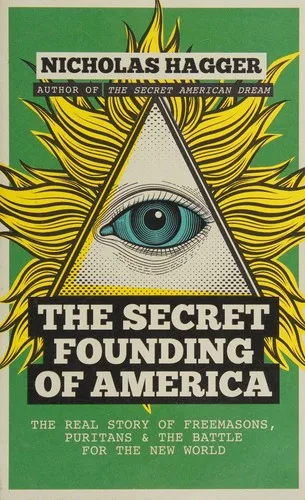
Nicholas Hagger's "Secret Founding of America" presents a bold, albeit speculative, thesis about the occult forces guiding the nascent United States. Hagger meticulously traces connections between early American figures and various esoteric orders, particularly Freemasonry and Rosicrucianism, suggesting a hidden agenda behind the nation's formation. The work's strength lies in its detailed cataloging of symbols and alleged connections, offering a compelling alternative to conventional historical accounts. However, the book often leans heavily on interpretation, with a tendency to equate association with direct causal influence. A notable passage discusses the significance attributed to the Great Seal of the United States, implying its design was a deliberate invocation of esoteric principles rather than a product of political compromise or aesthetic choice. While it provides a rich dataset for those inclined towards conspiratorial or esoteric readings of history, the lack of definitive, verifiable proof for many of its central claims remains its primary limitation. It's a challenging read for skeptics but a fascinating exploration for believers in hidden historical currents.
📝 Description
78
Nicholas Hagger's 2018 book argues that occult forces, not just politics, shaped the early United States.
Nicholas Hagger's "Secret Founding of America" examines how esoteric societies and mystical ideas may have influenced the birth of the United States. Published in 2018, the book suggests that the nation's origins involved deliberate occult actions alongside political and philosophical movements. Hagger questions conventional historical accounts by proposing that symbolic meanings and hidden agendas played a significant role.
The work focuses on the alleged impact of groups such as the Freemasons and Rosicrucians on the Founding Fathers. It analyzes national symbols and architecture, asserting they contain esoteric messages meant to direct the country's future. Hagger also investigates potential spiritual or astrological factors that he believes guided crucial moments of the American Revolution.
This book fits within a modern tradition of scholarship that revisits history through non-materialist perspectives, similar to Manly P. Hall's work on secret societies. It engages with debates between standard historical narratives and those that include mystical or conspiratorial interpretations of past events. Hagger's research situates itself within this ongoing re-evaluation of how hidden traditions might have shaped significant historical outcomes.
💡 Why Read This Book?
• Understand the purported esoteric symbolism embedded within American national iconography, such as the design of the Great Seal, and its claimed purpose for the nation's destiny. • Explore the alleged connections between key Founding Fathers, like Benjamin Franklin, and clandestine societies, offering a counter-narrative to standard historical accounts of their motivations. • Gain insight into the specific esoteric traditions, like Rosicrucianism and Freemasonry, that Hagger argues were actively shaping the foundational ideals and trajectory of the United States post-1776.
⭐ Reader Reviews
Honest opinions from readers who have explored this book.
❓ Frequently Asked Questions
What specific esoteric traditions does Nicholas Hagger claim influenced the founding of America?
Nicholas Hagger's work primarily focuses on the influence of Freemasonry and Rosicrucianism. He explores how these secret societies, with their rituals and symbolism, allegedly guided the actions and philosophical underpinnings of the American revolutionaries and early statesmen.
Are there any verifiable historical figures linked to the 'secret founding' narrative?
Yes, the book links figures such as Benjamin Franklin and other Founding Fathers to Masonic lodges and esoteric circles. Hagger interprets their involvement in these groups as evidence of a coordinated, occult effort behind the nation's establishment.
What kind of symbolism does the book analyze in relation to America's founding?
The book analyzes symbols found on currency, national monuments, and official seals, most notably the Great Seal of the United States. It suggests these symbols were not merely decorative but carried deliberate esoteric meanings related to destiny and spiritual power.
When was 'Secret Founding of America' first published?
Nicholas Hagger's 'Secret Founding of America' was first published in 2018, making it a contemporary exploration of historical esotericism.
Does the book present a conspiracy theory or an esoteric interpretation of history?
The book presents an esoteric interpretation of history, focusing on alleged occult influences and symbolic meanings. While it delves into secret societies and hidden agendas, it frames these as guiding principles rather than a conventional political conspiracy.
What alternative historical perspective does Hagger offer?
Hagger offers an alternative perspective that posits the United States was consciously founded as a spiritual or mystical experiment, influenced by esoteric knowledge and secret societies, rather than solely by Enlightenment political ideals.
🔮 Key Themes & Symbolism
Occult Societies and Governance
The work posits that secret societies, particularly Freemasonry and Rosicrucianism, played a central role not just in the lives of individuals like Benjamin Franklin but in the very architecture of American governance. Hagger argues that these groups used their clandestine networks and shared esoteric knowledge to influence political decisions, shape national symbols, and guide the nascent nation towards a specific, divinely ordained or cosmically aligned destiny. The book explores how rituals and initiations within these orders may have prepared leaders for their roles in establishing a new world order.
Symbolism and National Destiny
A central theme is the deliberate embedding of esoteric symbolism within American national emblems and architecture. Hagger meticulously analyzes elements like the Great Seal of the United States, including the unfinished pyramid and the all-seeing eye, interpreting them as potent talismans designed to manifest specific energies and guide the nation's future. He suggests these symbols are keys to understanding the true, hidden purpose behind America's creation, a purpose rooted in ancient wisdom traditions and mystical philosophies intended to shape global events.
Esoteric Lineage and World Order
Hagger connects the founding of America to a long lineage of esoteric movements aiming to establish a new spiritual or philosophical world order. He suggests that the American Revolution and subsequent nation-building were orchestrated steps within a larger, ancient plan originating from traditions like Hermeticism and Kabbalah. The book explores how Enlightenment ideals were, in this view, merely a public face for deeper, hidden currents of mystical thought that sought to manifest a unique destiny for the American experiment on a global scale.
Spiritual Underpinnings of Revolution
The book challenges the purely secular interpretation of the American Revolution, asserting that spiritual and mystical forces were actively at play. Hagger suggests that key moments and decisions were guided by astrological alignments, prophetic insights, or the collective will of esoteric practitioners. This perspective reframes the revolution not just as a political upheaval but as a divinely or cosmically sanctioned event intended to usher in a new era, with America playing a crucial role.
💬 Memorable Quotes
Direct passages from the work, attributed to the author.
“The Great Seal was not merely a political emblem but a magical talisman.”
— This interpretation highlights Hagger's central thesis that national symbols carry potent, active energies. It suggests the design of the Seal was a deliberate act of occult craftsmanship, intended to invoke specific powers and guide the nation's destiny beyond mundane political considerations.
“America was conceived as a spiritual experiment, not just a political republic.”
— This interpretation captures the essence of Hagger's argument that the nation's foundation had a deeper, mystical purpose. It suggests that the political structures were designed to serve a higher, esoteric objective, aligning the new nation with ancient spiritual traditions and cosmic laws.
“The symbolism of the pyramid on the Seal represents a hidden spiritual hierarchy.”
— This interpretation focuses on a specific visual element of the Great Seal. It suggests that the unfinished pyramid is not just an architectural representation but a symbol of a secret, unfolding spiritual structure or hierarchy guiding the nation's development and eventual completion.
💡 Key Ideas
Editorial paraphrase of the work's core concepts — not direct quotes.
Founding Fathers like Benjamin Franklin were initiates preparing for a hidden destiny.
This paraphrased concept underscores the book's focus on secret societies. It implies that the public roles of figures like Franklin were secondary to their initiation into esoteric orders, which allegedly prepared them for a grand, hidden purpose in establishing the United States.
Rosicrucian ideals informed the hidden philosophical framework of the new nation.
This paraphrased concept points to the specific influence of Rosicrucianism, a prominent esoteric tradition. It suggests that the core principles and symbolic language of this order were secretly integrated into the philosophical underpinnings of the United States, shaping its long-term trajectory.
🌙 Esoteric Significance
Tradition
Hagger's work draws heavily from the Western Esoteric Tradition, particularly its Hermetic, Kabbalistic, and Rosicrucian branches. It positions the founding of America as a central event within a long-standing esoteric lineage aiming to manifest a divine plan or a new spiritual epoch. The book departs from purely historical accounts by asserting that these esoteric currents were not peripheral but central to the nation's conception and intended purpose.
Symbolism
Key symbols analyzed include the Great Seal of the United States, with its unfinished pyramid and all-seeing eye, interpreted as talismans for spiritual and national development. The number thirteen, frequently appearing in early American iconography, is linked to esoteric numerology and transformative cycles. Hagger also examines architectural symbolism, suggesting that specific alignments and designs were intended to channel cosmic energies for the nation's benefit.
Modern Relevance
Contemporary interest in alternative history, conspiracy theories, and the intersection of spirituality and politics shows the enduring appeal of Hagger's themes. Thinkers exploring syncretic spirituality, geopolitical esotericism, and the symbolic language of power structures may find his work a useful, albeit controversial, reference point for understanding hidden currents in societal formation.
👥 Who Should Read This Book
• Students of Western Esotericism seeking to understand how esoteric traditions are applied to historical analysis, particularly concerning nation-building narratives. • Researchers of secret societies like Freemasonry and Rosicrucianism interested in their alleged influence on political and social movements during the 18th century. • Skeptical readers of history who enjoy exploring alternative, symbolic, or 'hidden history' perspectives, even if they do not fully accept the premises presented.
📜 Historical Context
Nicholas Hagger's "Secret Founding of America," published in 2018, emerges within a contemporary resurgence of interest in esoteric interpretations of history. This trend follows earlier works by authors like Manly P. Hall in the mid-20th century, who explored secret societies and their alleged influence on world events. Hagger's work implicitly engages with ongoing academic debates by challenging purely secular or materialist explanations for historical phenomena. While not directly engaging with specific contemporary scholars in the text, his approach offers a counterpoint to mainstream historical narratives that often overlook or dismiss the significance of mystical beliefs and secret organizations. The reception of such works typically divides audiences between those who find them revelatory and those who view them as speculative or conspiratorial, a dynamic common to esoteric literature since the Enlightenment.
📔 Journal Prompts
The symbolism of the All-Seeing Eye on the Great Seal and its meaning for personal vigilance.
The alleged influence of Rosicrucianism on the Founding Fathers and its implications for modern organizational structures.
How might Benjamin Franklin's involvement in Freemasonry have shaped his public and private actions?
Reflect on the concept of a nation being founded as a 'spiritual experiment' versus a political entity.
Consider the potential power of national symbols, beyond their conventional meanings.
🗂️ Glossary
Rosicrucianism
A mystical and esoteric tradition founded in the early 17th century, associated with secret knowledge, alchemy, and spiritual transformation, often linked to legendary figures and manifestos.
Freemasonry
A fraternal organization originating in the late 16th to early 17th century, known for its ritualistic practices, moral teachings, and emphasis on brotherhood, often associated with esoteric symbolism and philosophy.
Esoteric
Relating to or accessible only by a small number of people with a specialized knowledge or interest; intended for or likely to be understood by only a small number of people with a particular interest or knowledge.
Talismans
Objects believed to possess magical properties, often inscribed with symbols or words, intended to bestow protection, power, or good fortune upon the bearer or location.
Great Seal of the United States
The official emblem of the United States, featuring a complex design including a bald eagle, shield, and unfinished pyramid with an eye above it, often subject to esoteric interpretation.
Hermeticism
A philosophical and religious tradition based on writings attributed to Hermes Trismegistus, emphasizing divine wisdom, the interconnectedness of all things, and the pursuit of spiritual enlightenment through knowledge.
Numerology
The belief in a divine or mystical relationship between a number and one or more coinciding events; the study of the numerical value of letters in words, names, and ideas.
🔮 Readers Also Liked
Browse all →





More Free Freemasonry & Secret Societies Books
View all →