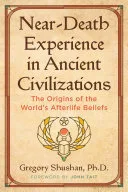
Near-Death Experience in Ancient Civilizations
 79
79

Near-Death Experience in Ancient Civilizations
Gregory Shushan’s "Near-Death Experience in Ancient Civilizations" undertakes a compelling, if ambitious, comparative study. The book's strength lies in its systematic exploration of five distinct cultural spheres—Egypt, Mesopotamia, India, China, and Mesoamerica—to find common threads in their afterlife beliefs, linking them plausibly to NDE phenomena. Shushan avoids romanticizing, instead presenting textual evidence and scholarly interpretations of ancient cosmologies. A limitation, however, is the inherent difficulty in definitively proving a direct causal link between NDEs and the formation of these complex belief systems, especially when dealing with texts centuries removed from any potential experiential event. The analysis of Egyptian funerary texts, for instance, is robust, but the leap to NDE correlation, while intriguing, remains interpretive. The verdict: a significant scholarly contribution for those interested in the experiential underpinnings of ancient religion.
📝 Description
79
Gregory Shushan's 2019 book examines near-death experiences in five ancient civilizations.
Gregory Shushan's "Near-Death Experience in Ancient Civilizations" investigates the impact of encounters with death and return on early cultures' beliefs. The book offers a comparative analysis of afterlife concepts across five distinct ancient regions: Old and Middle Kingdom Egypt, Sumer and Old Babylonian Mesopotamia, Vedic India, pre-Buddhist China, and Mesoamerica (Maya and Aztec). Shushan proposes a link between reported near-death phenomena and the development of religious doctrines and ritualistic practices.
The study meticulously examines the afterlife cosmologies of these regions. It charts the evolution of Egyptian beliefs about the journey through the Duat, explores Mesopotamian chthonic underworlds and death-adjacent experiences, and analyzes Vedic doctrines of reincarnation and celestial realms. Pre-Buddhist China's focus on ancestral spirits and the afterlife is discussed, alongside Mesoamerican mythologies surrounding death and the underworld. Shushan's central thesis suggests that striking similarities among these disparate ancient afterlife beliefs, when correlated with known near-death phenomena, point to a common origin rooted in universal human experiences.
This work engages with the esoteric tradition of exploring consciousness and altered states of awareness beyond conventional materialist explanations. It situates the near-death experience within a historical and cross-cultural framework, suggesting that such phenomena are not solely modern or individual occurrences but have been interpreted and integrated into religious and spiritual systems for millennia. By examining ancient cosmologies, the book touches upon perennial philosophies that seek to understand the nature of existence, death, and what may lie beyond, connecting them to a recurring pattern of human experience.
💡 Why Read This Book?
• Gain insight into how near-death experiences (NDEs) might have shaped the afterlife beliefs of Old Kingdom Egypt, a period crucial for developing concepts of the Duat. • Understand the potential influence of NDE-like phenomena on the formation of Vedic India's complex doctrines regarding reincarnation and realms beyond the physical. • Discover concrete parallels between documented NDE features and the afterlife cosmologies of Maya and Aztec Mesoamerica, revealed through Shushan's comparative analysis.
⭐ Reader Reviews
Honest opinions from readers who have explored this book.
❓ Frequently Asked Questions
Did ancient civilizations record near-death experiences specifically?
While ancient texts don't always use the modern term 'near-death experience,' Gregory Shushan's work identifies descriptions within religious literature, mythology, and funerary texts from regions like Mesopotamia and Egypt that exhibit characteristics analogous to contemporary NDE accounts.
What specific ancient regions are covered in the book?
The book focuses on Old and Middle Kingdom Egypt, Sumer and Old Babylonian Mesopotamia, Vedic India, pre-Buddhist China, and Maya and Aztec Mesoamerica.
What is the author's main argument about NDEs and ancient beliefs?
Gregory Shushan argues that the similarities among afterlife beliefs across these diverse ancient cultures, when correlated with NDE phenomena, suggest they stem from universal truths experienced by humans confronting death.
Is this book about spiritualism or modern NDE testimonies?
No, the book is primarily an academic study of ancient religious and mythological texts. It uses modern NDE research as a comparative framework to interpret ancient afterlife beliefs, not to analyze modern testimonies.
When was 'Near-Death Experience in Ancient Civilizations' first published?
The book was first published on February 4, 2025.
Who is the author of this comparative study?
The author is Gregory Shushan, who first published this work on February 4, 2025, examining ancient civilizations' views on death and the afterlife.
🔮 Key Themes & Symbolism
Afterlife Cosmologies
The book maps the diverse yet often strikingly similar conceptions of the afterlife held by ancient cultures. From the Egyptian Duat to the Mesopotamian underworld and Vedic realms, Shushan examines how these visions of existence post-mortem were constructed. He explores the symbolic geography, the beings encountered, and the trials faced, proposing that NDE phenomena provide a crucial lens through which to understand the experiential foundations of these elaborate cosmologies.
Ritual and Religious Formation
Shushan investigates the powerful influence of NDEs on the development of religious practices and doctrines. He suggests that accounts of encounters with the divine, spiritual realms, or the process of soul separation and reintegration, often present in NDE narratives, directly informed the creation of sacred rituals, myths, and theological frameworks in ancient societies, solidifying communal beliefs about life, death, and the cosmos.
Comparative Mythology
A core component of the work is its comparative approach across disparate ancient civilizations. By juxtaposing the afterlife beliefs of regions as diverse as pre-Buddhist China and Maya Mesoamerica, the study highlights recurring motifs and thematic correspondences. This comparative analysis aims to reveal universal patterns in human responses to death-related experiences, suggesting a shared psychological or spiritual substrate.
Experiential Basis of Belief
The central argument posits that many foundational religious and mystical beliefs, particularly concerning the afterlife, have their roots in direct, albeit often altered, human experiences. Shushan uses NDEs as a historical interpretive tool, arguing that these profound encounters with the liminal state between life and death provided the raw material for humanity's earliest theological and cosmological systems.
💬 Memorable Quotes
Direct passages from the work, attributed to the author.
“The traces of the dying’s return shaped the very architecture of ancient afterlife beliefs.”
— This statement expresses the book's core thesis: that experiences at the brink of death were not just isolated incidents but formative influences on the grand narratives of the afterlife developed by early civilizations.
“Similarities in underworld descriptions across Sumer and Maya suggest a shared experiential wellspring.”
— This interpretation highlights Shushan's comparative methodology, pointing to specific cultural examples (Sumer and Maya) to illustrate how common features in their afterlife myths might stem from universal NDE-like phenomena.
“Vedic concepts of transmigration bear resemblances to the disembodied journeys reported in NDEs.”
— This points to a direct correlation proposed by the author between the complex reincarnation doctrines found in Vedic India and the out-of-body or soul-travel experiences characteristic of near-death encounters.
“Egyptian funerary texts offer glimpses into consciousness grappling with the dissolution of the physical form.”
— This highlights the author's focus on specific textual evidence, such as Egyptian funerary literature, as a source for understanding ancient perspectives on consciousness and the transition through death.
“The impulse to codify the beyond likely arose from profound encounters with its perceived reality.”
— This suggests that the act of formalizing religious beliefs and mythologies about the afterlife was driven by the powerful, often transformative, experiences individuals had when facing death.
🌙 Esoteric Significance
Tradition
This work does not strictly adhere to a single esoteric lineage but functions as a bridge between academic historical studies and perennialist philosophies. It aligns with traditions that posit universal truths underlying diverse religious expressions, echoing Gnostic or Hermetic notions of shared spiritual knowledge accessible through altered states or mystical experiences, particularly those at the threshold of death.
Symbolism
The book likely explores symbols common to NDEs and ancient myths, such as tunnels of light (representing transition), encounters with luminous beings (divine or guide figures), and the concept of a life review. In Egyptian cosmology, the journey through the Duat and its trials can be seen as a symbolic representation of the soul's passage, mirroring NDE narratives of navigating challenging spiritual landscapes.
Modern Relevance
Contemporary thinkers and practitioners in fields like transpersonal psychology, consciousness studies, and comparative mysticism may find Shushan's work highly relevant. It provides a historical and cultural grounding for the profound subjective experiences reported in modern NDEs, suggesting that these are not entirely novel phenomena but part of a long human tradition of encountering the transcendent aspects of existence.
👥 Who Should Read This Book
• Comparative religion scholars seeking to understand the experiential underpinnings of ancient afterlife beliefs across diverse cultures. • Students of ancient Egypt, Mesopotamia, India, China, and Mesoamerica interested in a novel framework for interpreting their mythologies and funerary practices. • Researchers and enthusiasts of near-death experiences looking for historical context and evidence of similar phenomena in antiquity.
📜 Historical Context
Published in 2025, Gregory Shushan's "Near-Death Experience in Ancient Civilizations" arrives in an academic landscape increasingly open to interdisciplinary approaches to religion and consciousness. The work builds upon decades of scholarship in comparative mythology, religious studies, and psychology of religion, fields that have seen figures like Mircea Eliade explore universal religious phenomena. Shushan's specific focus on NDEs as a unifying factor for ancient afterlife beliefs offers a novel perspective, potentially challenging purely sociological or historical explanations prevalent in 20th-century scholarship. While not directly engaging with contemporary figures like Stanislav Grof, whose work on transpersonal psychology often touches on NDEs, Shushan grounds his arguments firmly in ancient textual analysis, distinguishing his approach from more speculative New Age interpretations. The book's reception is anticipated within academic circles focused on ancient Near Eastern studies, Indology, and Mesoamerican cultures.
📔 Journal Prompts
The Egyptian Duat's trials as a parallel to NDE accounts of facing judgment.
Mesopotamian underworld imagery and its potential connection to NDE visions.
Vedic concepts of soul transmigration and the subjective experience of NDEs.
Pre-Buddhist Chinese ancestral beliefs and the NDE phenomenon.
Maya and Aztec underworld journeys and their resonance with NDE narratives.
🗂️ Glossary
Near-Death Experience (NDE)
A profound personal experience associated with death or dying, often involving altered states of consciousness, feelings of peace, out-of-body sensations, and encounters with light or spiritual beings.
Duat
The Egyptian concept of the underworld, a realm inhabited by gods and demons, through which the sun god Ra traveled nightly and the souls of the dead passed during their afterlife journey.
Vedic India
Refers to the period and culture associated with the Vedas, the oldest scriptures of Hinduism, characterized by complex philosophical and religious ideas, including concepts of karma and reincarnation.
Sumer and Mesopotamia
The region and ancient civilizations of the Tigris-Euphrates river valley, known for early developments in writing, law, and complex religious systems that included beliefs about a gloomy underworld.
Pre-Buddhist China
The historical period in China before the widespread introduction and influence of Buddhism, focusing on indigenous philosophical and religious traditions like Taoism and Confucianism, and ancestor veneration.
Maya and Aztec Mesoamerica
Refers to the indigenous civilizations of Mesoamerica, specifically the Maya and Aztec empires, known for their sophisticated calendars, cosmology, and intricate mythologies surrounding life, death, and the underworld.
Afterlife Beliefs
The doctrines, myths, and understandings held by a culture or religion regarding what happens to the consciousness or soul after physical death.