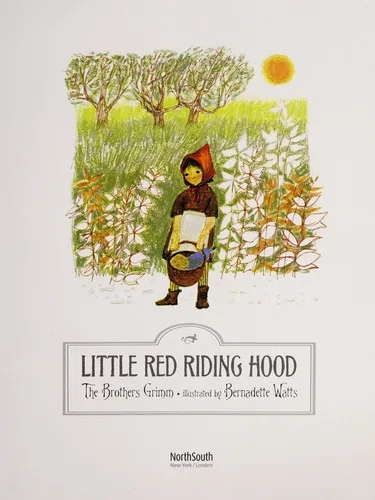
Rotkäppchen
 79
79

Rotkäppchen
The dual presentation of Perrault's and the Brothers Grimm's "Rotkäppchen" offers a fascinating comparative study in narrative evolution. Perrault’s 1697 version, with its unvarnished ending where the wolf devours the girl, starkly emphasizes moral consequence and the dangers lurking outside polite society. In contrast, the Grimm brothers' 1812 rendition, incorporating a huntsman to rescue them, shifts the focus towards salvation and a more conventionally comforting resolution. The strength here lies in this juxtaposition, allowing readers to trace the tale's didactic purpose and cultural reception over time. A limitation, however, is the lack of extensive scholarly annotation that would typically accompany such a dual-text presentation, leaving some symbolic interpretations for the reader to uncover independently. The starkness of Perrault's wolf, a predator of uncanny intelligence and directness, remains a potent symbol of untamed nature confronting civilization. This edition is valuable for understanding how stories adapt to societal expectations, offering a more nuanced view than single-text presentations.
📝 Description
79
Charles Perrault published his stark version of Rotkäppchen in 1697, predating the Brothers Grimm's 1812 retelling.
Rotkäppchen, or Little Red Riding Hood, is a European fairy tale whose enduring appeal comes from its direct narrative and archetypal figures. The story describes a young girl, her grandmother, and a wolf, but its apparent simplicity conceals deeper meanings. Perrault's 1697 publication in 'Histoires ou contes du temps passé' offered a starker version, while the Brothers Grimm later adapted it for their 1812 collection, 'Children's and Household Tales'. This dual publication shows how the story changed across cultures and time.
The tale addresses innocence facing peril, the dangers of not following instructions, and the nature of deception. The wolf acts as a symbol for both outside threats and inner turmoil. The forest path itself serves as a metaphor for life's choices. Readers interested in folklore's development and its symbolic aspects will find this version valuable, particularly those who appreciate Perrault's earlier, unvarnished account and the Grimms' careful collection of oral traditions.
This version of Rotkäppchen connects to a tradition of cautionary tales that use animal archetypes to represent primal forces and societal dangers. The wolf, a recurring figure in folklore, embodies the wild, the predatory, and the unknown that lies beyond the safety of the hearth. The narrative's structure, with its clear moral lesson and symbolic journey through the woods, aligns with older shamanic or initiation narratives where a protagonist confronts inner or outer demons to achieve transformation. The tale's survival and adaptation across centuries suggest its resonance with persistent human anxieties about vulnerability and the hidden threats in the world.
💡 Why Read This Book?
• Learn about the evolution of a foundational European fairy tale, noting the specific differences between Charles Perrault's 1697 cautionary version and the Brothers Grimm's 1812 adaptation. • Understand the symbolic weight of the wolf archetype, recognizing its representation of primal threat and deception as presented in both distinct narrative frameworks. • Gain insight into the historical context of 17th and 19th-century European storytelling, appreciating how societal anxieties influenced the moral lessons embedded within the Rotkäppchen narrative.
⭐ Reader Reviews
Honest opinions from readers who have explored this book.
❓ Frequently Asked Questions
What is the primary difference between Perrault's and the Grimm brothers' versions of Rotkäppchen?
Perrault's 1697 version concludes with the wolf eating Rotkäppchen, serving as a stark warning. The Brothers Grimm's 1812 version includes a huntsman who rescues Rotkäppchen and her grandmother, offering a more hopeful resolution.
When were the earliest literary versions of Little Red Riding Hood published?
Charles Perrault's version was first published in 1697 as part of his collection 'Histoires ou contes du temps passé'. The Brothers Grimm published their adaptation in 1812 in their 'Children's and Household Tales'.
What does the wolf symbolize in Rotkäppchen?
The wolf typically symbolizes primal dangers, predatory instincts, and deception. In some interpretations, it can represent the dark, untamed aspects of nature or even hidden desires that threaten innocence.
Is Rotkäppchen a historical account or a myth?
Rotkäppchen is a fairy tale, not a historical account. It originates from oral folklore and was later codified into literary form, serving as a narrative to convey moral lessons and explore archetypal themes.
What is the esoteric interpretation of the path through the woods in Rotkäppchen?
The path through the woods often symbolizes life's journey, choices, and the transition from innocence to experience. Straying from the path can represent succumbing to temptation or external dangers, deviating from a prescribed moral or spiritual course.
Who are the key figures in the Rotkäppchen narrative?
The central figures are Rotkäppchen (Little Red Riding Hood), her grandmother, and the wolf. A huntsman often appears in later versions, notably the Grimm brothers', as a rescuer.
🔮 Key Themes & Symbolism
Innocence and Danger
The narrative starkly contrasts the innocence of Rotkäppchen, often depicted as naive and trusting, with the predatory danger embodied by the wolf. This duality highlights the vulnerability of purity when confronted by deceit and primal forces. The journey through the woods, a liminal space, amplifies this tension. The tale serves as a cautionary narrative, exploring the consequences of straying from prescribed paths or succumbing to persuasive, dangerous elements that masquerade as benign.
Deception and Appearance
A central theme is the wolf's ability to deceive through disguise and manipulation. By impersonating the grandmother, the wolf exploits trust and blurs the lines between familiar safety and lurking threat. This motif underscores the esoteric concept that appearances can be profoundly misleading, and that true danger often hides behind a facade of innocence or familiarity. The story warns against judging solely by outward presentation, urging vigilance against hidden intentions.
Moral Instruction and Consequences
Both Perrault's and the Grimm brothers' versions function as moral fables, albeit with different emphases. Perrault's stark ending directly links disobedience and naivete to fatal consequences. The Grimm brothers' version, while still cautionary, introduces a rescue element, suggesting that even in dire straits, intervention or a shift in fortune is possible. The tale explores the societal need for clear moral boundaries and the perceived outcomes of adhering to or transgressing them.
Archetypes of the Feminine and the Wild
Rotkäppchen embodies the archetype of the maiden, representing youth, purity, and transition. The grandmother figure signifies wisdom and the elder feminine. The wolf, conversely, represents the wild, untamed masculine energy, or the 'shadow' aspect of nature and instinct. The interaction between these archetypes explores themes of initiation, vulnerability, and the confrontation between civilized order and primal forces.
💬 Memorable Quotes
Direct passages from the work, attributed to the author.
“The wolf said: 'What big arms you have!' 'All the better to hug you with, my dear,' replied the wolf.”
— This exchange highlights the wolf's deceptive mimicry. It takes a loving gesture ('hug') and twists it into a predatory act, symbolizing how danger can be masked by false affection or comforting words.
“When the girl entered the woods, she met a wolf who asked her where she was going.”
— This opening establishes the narrative's core conflict: innocence (the girl) entering a dangerous, untamed space (the woods) and encountering a primal threat (the wolf).
“She saw that the wolf had put on his grandmother's clothes and cap, and was lying in her bed.”
— This image is central to the theme of deception. The familiar setting of the grandmother's bed is violated by the wolf's disguise, representing a profound betrayal of trust and safety.
“But whoever wants to avoid the wolf must not stray from the path.”
— This interpretation, often associated with Perrault's intent, directly links disobedience and deviation from the 'path' (literal and metaphorical) to encountering danger.
💡 Key Ideas
Editorial paraphrase of the work's core concepts — not direct quotes.
And when the huntsman came into the house, he immediately knew that the wolf had been there.
This line, from the Grimm version, signifies the arrival of order and rescue. The huntsman's immediate recognition of the wolf's presence represents a restoration of clarity and protection against unseen threats.
🌙 Esoteric Significance
Tradition
While not explicitly part of a formal esoteric school like Hermeticism or Kabbalah, "Rotkäppchen" deeply engages with archetypal symbolism prevalent in Western esotericism. Its narrative structure and character archetypes align with initiation myths found across various traditions, exploring themes of confronting the shadow self, navigating liminal spaces, and the perilous journey from innocence to knowledge. It echoes Gnostic narratives of the soul's descent and potential ascent through trials.
Symbolism
The wolf represents the primal shadow, untamed instinct, and the predatory forces both external and internal. The woods symbolize the unconscious or the unknown, a place of trial and transformation. Rotkäppchen's red cloak, often interpreted esoterically, can symbolize menstruation, the blood of life, passion, or even a sacrifice, marking her as distinct and potentially vulnerable, yet also vital.
Modern Relevance
Contemporary depth psychology, particularly Jungian analysis, frequently draws upon the archetypes present in "Rotkäppchen" to explore individuation and the integration of the shadow. Modern feminist interpretations also analyze the narrative's portrayal of female vulnerability and agency. The tale continues to inform contemporary discussions on childhood education, the psychology of fear, and the enduring power of symbolic storytelling in understanding human nature.
👥 Who Should Read This Book
• Students of comparative mythology and folklore seeking to understand the cross-cultural evolution of foundational stories. • Readers interested in the psychological underpinnings of fairy tales, particularly the archetypal roles of the innocent, the predator, and the rescuer. • Individuals exploring the historical context of European storytelling and the moral frameworks presented in 17th and 19th-century literature.
📜 Historical Context
The literary life of "Rotkäppchen" began in earnest with Charles Perrault's 1697 publication in Paris. His version, appearing in *Histoires ou contes du temps passé*, was a stark, unadorned moral lesson intended for the aristocratic salons of Louis XIV's court. Perrault's narrative reflected a growing interest in folklore among the elite, but also served a didactic purpose, warning against the dangers young women faced from predatory men, particularly in the context of arranged marriages and social maneuvering. Later, in 1812, Jacob and Wilhelm Grimm included their adaptation in the first edition of their *Children's and Household Tales* in Berlin. Their version, compiled from oral traditions circulating in Germany, significantly altered the ending by introducing a huntsman who saves the protagonists. This shift reflects a different cultural sensibility and a desire for more comforting, albeit still cautionary, tales for children, diverging from Perrault's grim conclusion and the broader, often darker, European oral tradition.
📔 Journal Prompts
The wolf's deception and Rotkäppchen's trust, analyze the interplay.
Analyze the symbolism of the red cloak's significance.
Contrast the resolution in Perrault's versus the Grimm's versions.
The journey through the woods as a metaphor for initiation.
Reflect on the grandmother's role and vulnerability.
🗂️ Glossary
Rotkäppchen
German for 'Little Red Riding Hood'. The protagonist of the fairy tale, typically characterized by her red cloak or cap.
Fairy Tale
A genre of folklore, typically featuring mythical creatures, magical elements, and a moral lesson, often originating from oral tradition.
Archetype
A universally understood symbol, character, or theme that recurs across cultures and literature, representing fundamental human experiences (e.g., the hero, the shadow).
Didactic
Intended to teach, particularly in having moral instruction as an ulterior motive.
Liminal Space
A transitional or in-between state or place, often associated with transformation, danger, or the crossing of boundaries (e.g., the woods).
Folklore
The traditional beliefs, customs, and stories of a community, passed through generations by word of mouth.
Shadow Self
In Jungian psychology, the unconscious aspect of the personality that the conscious ego does not identify in itself, often representing repressed desires or primitive instincts.
🔮 Readers Also Liked
Browse all →









More by Charles Perrault, Gebrüder Grimm [Brothers Grimm]
All books →
More Free Occult Philosophy Books
View all →