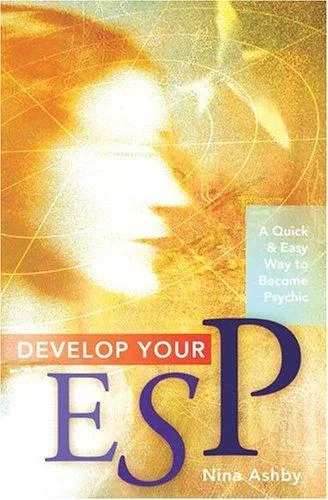
Develop Your ESP
 73
73

Develop Your ESP
Nina Ashby's 'Develop Your ESP' sidesteps the usual mystical jargon to present a surprisingly pragmatic guide to psychic development. The initial chapters lay out a clear, if somewhat optimistic, thesis: ESP is an inherent human trait awaiting activation. Ashby's strength lies in her methodical approach, offering a series of exercises that feel less like speculative leaps and more like cognitive training. One particularly effective section details techniques for mental shielding, a concept often overlooked in beginner guides. However, the book occasionally falters by oversimplifying the profound psychological and philosophical implications of what it proposes. While the exercises are actionable, the underlying theoretical framework could benefit from deeper engagement with the philosophical debates surrounding consciousness and perception. Ashby's work is a valuable, accessible entry point, but it doesn't fully grapple with the complexities it introduces.
📝 Description
73
Nina Ashby's 2004 book, Develop Your ESP, offers practical methods for cultivating psychic abilities.
Develop Your ESP, published in 2004, presents a practical guide for readers interested in understanding and developing their psychic abilities. Ashby moves beyond abstract ideas, instead giving readers exercises and techniques they can use directly. The book aims to clear up common misunderstandings about ESP, treating it not as something supernatural but as a natural extension of human abilities. Ashby's central idea is that ESP is something that can be trained, much like any other human faculty. This book is for anyone interested in personal growth and exploring consciousness. It speaks to those curious about telepathy, precognition, or clairvoyance who might be put off by overly academic or obscure writing. Readers looking for clear, usable methods to improve their intuition and perception will find this book helpful. It is especially suited for those who approach spiritual subjects with an open but questioning mind, wanting to test ideas through their own experiences.
Published in 2004, Develop Your ESP appeared during a time of growing public interest in parapsychology. Ashby's work follows in the tradition of researchers like J.B. Rhine, who sought to study ESP using systematic methods. Unlike some more fringe material from the era, Ashby's text stresses a step-by-step, repeatable approach, suggesting a desire for observable results within the field of psychic phenomena.
💡 Why Read This Book?
• Learn specific mental exercises for enhancing intuition, such as those focused on developing 'mental clarity' as outlined in the early chapters, offering a tangible method for sharpening your perceptual awareness. • Gain practical techniques for identifying and overcoming personal blocks to psychic awareness, drawing on Ashby's methods for 'energetic hygiene' to foster a more receptive state. • Understand the foundational concepts of ESP development as presented in the 2004 publication, providing a structured introduction to topics like telepathy and clairvoyance rooted in a specific historical moment.
⭐ Reader Reviews
Honest opinions from readers who have explored this book.
❓ Frequently Asked Questions
What are the primary ESP abilities discussed in Nina Ashby's 'Develop Your ESP'?
The book primarily focuses on telepathy, the ability to communicate thoughts directly; clairvoyance, the perception of distant events or objects; and precognition, the foreknowledge of future events, presenting them as trainable faculties.
When was 'Develop Your ESP' first published, and what does this timing suggest about its context?
First published in 2004, the book emerged during a period of growing public interest in parapsychology and consciousness studies, reflecting a broader cultural engagement with these topics.
Does 'Develop Your ESP' require any prior knowledge of esoteric subjects?
No, the book is designed for beginners and aims to demystify ESP. It explains concepts clearly and provides practical exercises without assuming prior esoteric background knowledge.
What kind of exercises does Nina Ashby recommend for developing ESP?
Ashby suggests a range of exercises focusing on mental clarity, focused attention, visualization, and intuitive awareness, often presented in a step-by-step format for easy implementation.
Is 'Develop Your ESP' based on scientific research or more spiritual principles?
The book attempts to bridge both, drawing inspiration from parapsychological research while framing ESP development within a practical, self-help, and somewhat spiritual context focused on personal experience.
How does 'Develop Your ESP' differentiate itself from other books on psychic abilities?
It distinguishes itself through its emphasis on systematic, repeatable exercises and a grounded approach that treats ESP as a natural, albeit underdeveloped, human capacity rather than a supernatural gift.
🔮 Key Themes & Symbolism
Intuition as a Natural Faculty
Ashby posits that intuition is not an external force but an intrinsic human capability, akin to sight or hearing, that can be consciously honed. The work provides exercises designed to sharpen this inner sense, moving beyond passive reception to active engagement. This perspective aims to explain psychic phenomena, framing them as extensions of natural cognitive processes rather than supernatural anomalies. By focusing on mental clarity and focused awareness, Ashby provides tools for readers to 'tune in' to their intuitive channels more effectively, fostering a belief in the inherent potential within each individual.
Overcoming Mental Blocks
A significant portion of 'Develop Your ESP' addresses the internal barriers that inhibit psychic development. Ashby identifies common mental and emotional patterns – such as fear, self-doubt, and ingrained skepticism – that act as filters, blocking intuitive signals. The book offers specific techniques for identifying and releasing these limitations, promoting a state of psychological openness. This process involves cultivating self-awareness and challenging limiting beliefs, creating a receptive mental environment where ESP phenomena can manifest more readily. The emphasis is on internal work as a prerequisite for external psychic perception.
Systematic Practice and Validation
Unlike purely theoretical or spiritual treatises, Ashby's work champions a systematic, exercise-driven approach to ESP development. The book is structured around actionable techniques intended for regular practice. This methodology echoes early 20th-century parapsychological research which sought empirical evidence through controlled experiments. By providing concrete steps and encouraging personal experimentation, Ashby empowers readers to validate these concepts through their own experiences. The emphasis on consistency and repetition suggests that like any skill, ESP requires dedicated training and refinement over time.
Energetic Principles of Perception
The book touches upon the concept that perception, including psychic perception, operates on subtle energetic principles. Ashby explores how thoughts, emotions, and intentions generate distinct energetic signatures that can be sensed or influenced. Understanding these energetic dynamics is presented as crucial for both developing one's own psychic abilities and for interacting with the subtle environment. This includes concepts related to psychic protection and maintaining energetic balance, ensuring that the development of ESP is grounded in a holistic understanding of consciousness and its energetic interactions.
💬 Memorable Quotes
Direct passages from the work, attributed to the author.
“ESP is not a gift from an external source, but an inherent capacity waiting to be awakened.”
— This statement reframes psychic abilities as natural human potentials, similar to talents that require cultivation rather than mystical bestowal, encouraging an active approach to development.
“Mental clutter is the greatest impediment to intuitive clarity.”
— This highlights the importance of mental discipline and focus, suggesting that quieting the noise of everyday thoughts is a primary step toward accessing subtler forms of perception.
“Practice the exercises consistently, even when results seem slow; persistence builds the energetic pathways.”
— This emphasizes the need for diligent, regular effort in developing psychic skills, likening the process to building physical or mental strength through sustained training.
“Learn to shield your awareness, protecting your energy from external psychic influences.”
— This points to the practical necessity of energetic hygiene and self-protection when engaging with psychic phenomena, ensuring personal well-being during development.
“Observe the subtle signs your intuition offers daily; they are the building blocks of stronger psychic connection.”
— This encourages readers to pay attention to everyday intuitive nudges and feelings, framing them as foundational data for recognizing and strengthening their psychic faculties.
🌙 Esoteric Significance
Tradition
While not strictly aligned with a single esoteric lineage like Hermeticism or Kabbalah, 'Develop Your ESP' draws from a general Western esoteric milieu influenced by Theosophy and New Thought. It adopts the New Thought premise that mental states and focused intention can influence reality and personal capabilities. The emphasis on cultivating inner faculties aligns with many esoteric traditions that view spiritual development as an internal process of unlocking latent potentials, rather than receiving external grace. Ashby's approach prioritizes practical application and personal experience, fitting within a modern esoteric current that seeks tangible results.
Symbolism
The book primarily utilizes symbolic concepts rather than specific visual symbols. 'Mental clarity' functions as a symbol for a purified consciousness, a receptive state often represented in esoteric traditions by light or clear water. 'Energetic pathways' symbolizes the interconnectedness of consciousness and the subtle body, akin to the nadi or meridians found in Eastern traditions. The concept of 'shielding' acts as a symbolic representation of personal boundaries and energetic integrity, crucial for working through the subtle realms safely, much like protective circles or wards in ceremonial magic.
Modern Relevance
Ashby's work continues to be relevant for contemporary practitioners of mindfulness, energy healing, and intuitive development. Its practical, exercise-based approach appeals to modern self-help and personal development trends that emphasize actionable steps. Thinkers and practitioners in fields like consciousness studies and parapsychology often reference accessible guides like this to introduce foundational concepts. Furthermore, the book's emphasis on personal empowerment through internal cultivation aligns with the ethos of many modern spiritual and wellness movements seeking to unlock human potential beyond conventional paradigms.
👥 Who Should Read This Book
• Aspiring psychics and sensitives seeking a structured, step-by-step guide to developing their innate abilities without complex jargon. • Individuals interested in parapsychology and consciousness exploration who prefer practical exercises over theoretical study, looking for tangible ways to test ESP concepts. • Personal development enthusiasts seeking to enhance intuition, focus, and self-awareness through techniques that bridge psychological principles and subtle perception.
📜 Historical Context
Nina Ashby's 'Develop Your ESP,' published in 2004, arrived at a time when popular interest in consciousness studies and parapsychology was experiencing a resurgence, fueled partly by the internet's accessibility to information and community forums. This era followed decades of rigorous, often controversial, research into ESP, most notably initiated by figures like J.B. Rhine at Duke University in the mid-20th century. Ashby's work can be seen as part of a broader trend in self-help and New Age literature that sought to integrate psychological principles with explorations of the subtle mind. It offered a practical, accessible counterpoint to more academic or esoteric traditions. While contemporary authors like Dean Radin were publishing more scientifically-oriented works on psi phenomena, Ashby's book aimed at a general audience, providing direct techniques rather than theoretical debate, reflecting a desire for personal empowerment through direct experience.
📔 Journal Prompts
Reflect on the 'mental clutter' you identified and how it might obscure intuitive signals.
Describe a time you experienced a subtle intuitive nudge and how it relates to Ashby's concept of 'energetic pathways'.
Analyze the effectiveness of the 'mental shielding' exercise you practiced this week.
Consider how developing 'intuition as a natural faculty' might alter your daily decision-making.
Document your progress with the systematic exercises for cultivating 'overcoming mental blocks'.
🗂️ Glossary
ESP
Acronym for Extrasensory Perception, encompassing abilities such as telepathy, clairvoyance, and precognition, viewed in this work as natural, trainable human faculties.
Telepathy
The direct transmission of thoughts or feelings from one person to another without the use of the known senses.
Clairvoyance
The ability to perceive objects, people, or events outside the range of normal sensory perception, often through mental visualization.
Precognition
The faculty of perceiving future events before they happen, often experienced as intuitive insights or visions.
Mental Clarity
A state of focused, uncluttered consciousness achieved through specific mental exercises, considered essential for heightened intuitive awareness.
Energetic Pathways
Conceptual channels through which subtle energies, including thoughts and emotions, are believed to flow, which can be strengthened through practice.
Psychic Shielding
Techniques designed to protect one's own energy field from unwanted external psychic influences or intrusions.
🔮 Readers Also Liked
Browse all →









More Free Occult Philosophy Books
View all →