REPLY TO WILLIAM T DWIGHT
 78
78

REPLY TO WILLIAM T DWIGHT
Jabez C. Woodman's "Reply to William T. Dwight" functions less as a profound theological treatise and more as a historical artifact of a specific, perhaps localized, religious dispute. The strength of this reproduction lies in its faithful presentation of the original document, allowing direct engagement with 19th-century polemical style. Woodman's direct address to Dwight, evident in passages where he meticulously dissects specific points of contention, offers a window into the argumentative strategies of the period. However, without substantial historical context provided within the pamphlet itself, the specific theological or philosophical disagreements remain opaque to the uninitiated reader. The work's primary value is archival, offering a raw, unmediated glimpse into a forgotten debate. It serves its purpose as a historical record, but offers limited standalone intellectual engagement for a contemporary audience.
📝 Description
78
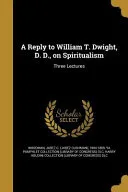
Jabez C. Woodman published "Reply to William T. Dwight" in the mid-19th century, defending his views against a critic.
This pamphlet records Jabez C. Woodman's direct response to criticisms made by William T. Dwight. Published around the mid-1800s, it is a valuable artifact for understanding specific theological and philosophical arguments of that period. The text originates from original library copies, retaining details like stamps and copyright notices, which attest to its historical authenticity. This work offers insight into religious and intellectual disagreements common in 19th-century America.
Its audience includes academics specializing in 19th-century American religious history, theological debates, and the intellectual currents around reformist religious movements. Collectors of historical theological tracts and those interested in the history of Protestant theological disputes will also find it useful. The pamphlet serves as a case study in historical religious argumentation and direct refutation.
While not esoteric in the sense of occultism, this pamphlet belongs to a tradition of intense textual debate within reformist religious communities of the 19th century. Such exchanges often involved deep dives into scriptural interpretation and theological doctrine, functioning as a form of intellectual and spiritual wrestling. These debates, though sometimes obscure to modern readers, were central to the formation and differentiation of various religious groups, reflecting a desire to purify or establish correct understanding of divine truth. The preservation of these polemical works highlights their importance in tracing the development of religious thought.
💡 Why Read This Book?
• Engage with 19th-century theological debate by examining Jabez C. Woodman's specific arguments against William T. Dwight, understanding the nature of religious discourse in that era. • Appreciate the preservation of historical religious texts through the reproduction of "Reply to William T. Dwight," noting its inclusion in prominent collections like the Library of Congress. • Analyze the practice of apologetics as demonstrated by Woodman's direct refutation of criticisms, offering insight into how differing interpretations were defended publicly.
⭐ Reader Reviews
Honest opinions from readers who have explored this book.
❓ Frequently Asked Questions
What is the primary subject matter of "Reply to William T. Dwight"?
The pamphlet is a direct response by Jabez C. Woodman to criticisms made by William T. Dwight. It functions as a theological or philosophical defense, refuting specific points raised by Dwight.
When was "Reply to William T. Dwight" originally published?
While the reproduction date is August 29, 2016, the work itself originates from the mid-19th century, reflecting the period's intellectual and religious debates.
Why is this pamphlet considered culturally important?
Scholars deem it important for its contribution to the knowledge base of civilization, representing specific historical religious discourse and debates from 19th-century America.
What can be observed about the original artifact in this reproduction?
The reproduction faithfully retains elements of the original artifact, such as copyright references, library stamps from institutions like the Library of Congress, and other notations.
Is "Reply to William T. Dwight" still under copyright?
No, the work is in the public domain in the United States, meaning its content is freely available for use and reproduction.
Who was William T. Dwight?
William T. Dwight was the individual to whom Jabez C. Woodman directed this reply. Specific biographical details beyond his role as a critic are not provided in the blurb.
🔮 Key Themes & Symbolism
Theological Polemics
This work exemplifies the practice of theological polemics, a vigorous form of argumentation common in 19th-century religious discourse. Jabez C. Woodman directly confronts and refutes the points raised by William T. Dwight. The text serves as a case study in how religious figures of the era defended their doctrines or interpretations against perceived opposition, highlighting the confrontational yet structured nature of intellectual debate within specific religious communities.
Historical Preservation
The reproduction of "Reply to William T. Dwight" underscores the importance of historical preservation for understanding past intellectual currents. Its selection by scholars and inclusion in prestigious collections like the Ya Pamphlet Collection at the Library of Congress indicate its value as a primary source document. The faithful reproduction, retaining original library stamps and copyright notices, allows contemporary readers to connect directly with the artifact's history and its journey through time.
Apologetics and Defense
Fundamentally, this pamphlet is an act of apologetics – a reasoned defense of beliefs or positions. Woodman's 'reply' is not merely a statement but a structured argument designed to counter criticism. This highlights a key aspect of intellectual history: the need for individuals and groups to justify their views when challenged. The work provides insight into the methods and rhetorical strategies employed in such defenses during the mid-19th century.
19th Century American Religious Landscape
This document offers a window into the fragmented and dynamic religious field of 19th-century America. The existence of such specific debates between individuals like Woodman and Dwight points to the numerous theological discussions, schisms, and reform movements that characterized the era. Understanding this pamphlet requires situating it within the broader context of American religious history and the intellectual ferment of the period.
💬 Memorable Quotes
Direct passages from the work, attributed to the author.
“This work has been selected by scholars as being culturally important, and is part of the knowledge base of civilization as we know it.”
— This statement emphasizes the book's recognized value not just for its specific content, but as a representative artifact of historical intellectual discourse and a building block of civilization's documented thought.
“This work was reproduced from the original artifact, and remains as true to the original work as possible.”
— This highlights the publisher's commitment to fidelity, ensuring that the reader experiences the text with minimal alteration, preserving its original form and context.
“Therefore, you will see the original copyright references, library stamps (as most of these works have been housed in our most important libraries around the world), and other notations in the work.”
— This note prepares the reader for visual cues of the document's history, signaling that the artifact's provenance and institutional journey are considered integral to its value.
“This work is in the public domain in the United States of America.”
— This declaration confirms the legal status of the text, indicating it is freely available for public use, reproduction, and study without copyright restrictions.
“Jabez C. Woodman's Reply to William T. Dwight.”
— This serves as the explicit title and authorial attribution, clearly stating the document's purpose as a direct response from Woodman to Dwight.
🌙 Esoteric Significance
Tradition
While not overtly tied to a single esoteric lineage like Hermeticism or Gnosticism, "Reply to William T. Dwight" represents a facet of historical intellectual engagement that underpins many esoteric traditions: the rigorous defense of specific worldviews against external or internal challenges. Its value lies in demonstrating the application of logic and argumentation within a religious context, a practice mirrored in the scholastic traditions that informed later esoteric developments.
Symbolism
The pamphlet itself, as an artifact, functions symbolically. Its reproduction from original sources, complete with library stamps, symbolizes the lineage and preservation of knowledge across time. The 'reply' format symbolizes intellectual combat and the defense of truth as perceived by the author, a recurring motif in spiritual and philosophical traditions where adherents defend their path.
Modern Relevance
Contemporary scholars of American religious history and the sociology of belief systems can draw from this work to understand the micro-level dynamics of theological disputes. Researchers examining the evolution of apologetic strategies or the historical development of specific religious communities will find this document a valuable case study in direct intellectual engagement from the 19th century.
👥 Who Should Read This Book
• Students of 19th-century American religious history seeking primary source material on theological disputes. • Researchers investigating the history of religious polemics and apologetics in the United States. • Collectors and scholars interested in rare pamphlets and the preservation of historical documents from collections like the Library of Congress.
📜 Historical Context
The "Reply to William T. Dwight" by Jabez C. Woodman emerges from the intellectually charged atmosphere of mid-19th century America, a period marked by intense religious revivals and theological disputations. This era witnessed the proliferation of numerous Protestant denominations and reform movements, often leading to sharp disagreements over doctrine and practice. Woodman's pamphlet is a direct product of such a dispute, serving as a polemical defense against criticisms leveled by William T. Dwight. Its preservation within the Ya Pamphlet Collection and the Harry Houdini Collection at the Library of Congress underscores its significance as a primary source for understanding these specific historical religious debates. The context likely involves competing interpretations within nascent Adventist movements or similar millennialist groups, where precise theological claims were fiercely debated and publicly defended.
📔 Journal Prompts
Woodman's direct refutation of Dwight's points.
The act of publishing a 'reply' in the 19th century.
Significance of library stamps on historical documents.
Woodman's defense against William T. Dwight's criticisms.
The role of preserved pamphlets in understanding civilization's knowledge base.
🗂️ Glossary
Polemics
Arguments or writings that strongly attack or defend a particular opinion, doctrine, or policy; characterized by controversial and often aggressive debate.
Apologetics
A branch of theology or philosophy that defends religious doctrines or beliefs through systematic reasoning and argumentation.
Theological Discourse
The communication or debate concerning matters of theology; the exchange of ideas and arguments about the nature of God and religious beliefs.
Artifact
An object made by a human being, typically an item of cultural or historical interest, especially one from an earlier time.
Public Domain
The status of a work that is not protected by copyright and may be freely used, copied, and distributed by anyone.
Knowledge Base
A collection of facts, information, and data that forms the foundation for understanding a particular subject or field.
Provenance
The history of ownership or location of a work of art or artifact, providing evidence of its authenticity and origin.