Reading the Runes in Old English and Old Norse Poetry
 62
62

Reading the Runes in Old English and Old Norse Poetry



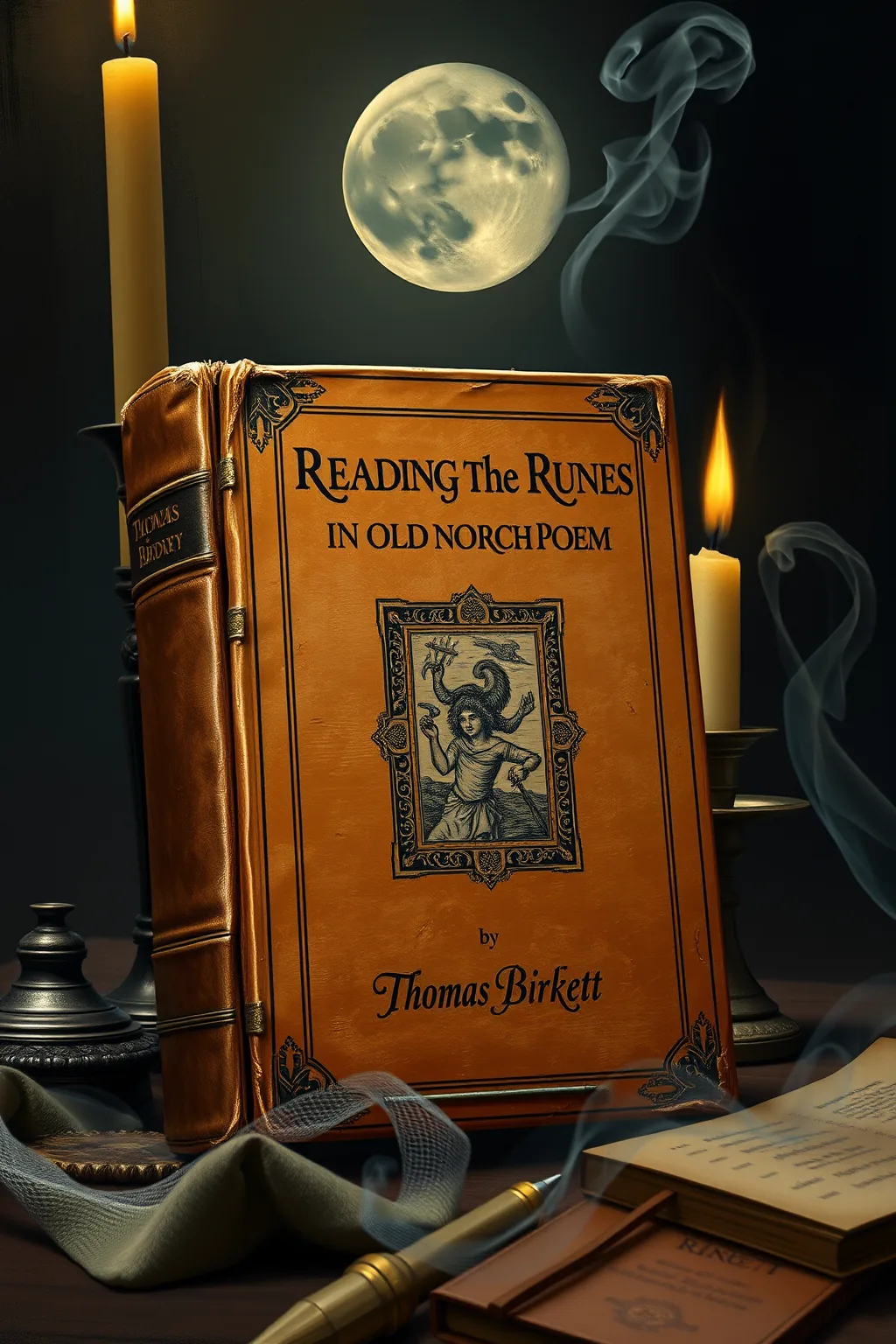
By Evander Ashcroft (Alchemy & Hermeticism Editor) — A masterful synthesis of philology and esoteric insight, Thomas Birkett’s 'Reading the Runes' is an indispensable key for unlocking the deeper currents of Old English and Old Norse poetry. Birkett masterfully reveals how the runic alphabet functioned not merely as script, but as a living system of symbolic power, deeply interwoven with divination and cosmological understanding. His scholarship breathes life into ancient verses, exposing the hidden layers of meaning that have long eluded conventional interpretation. This work is essential for scholars, practitioners, and anyone drawn to the potent, untamed magic of the North. A truly illuminating and transformative read.
📝 Description
62
Thomas Birkett's 2023 study examines the use of runes in Old English and Old Norse poetry.
Thomas Birkett's 'Reading the Runes in Old English and Old Norse Poetry' looks at how runes functioned in early Germanic literature. The book moves past simple language study to show the spiritual connections present in Anglo-Saxon and Norse verse. Birkett explains that runes were more than just inscriptions; they were seen as channels for prophecy, destiny, and the structure of the cosmos.
The text guides readers through sagas and epic poems, pointing out how stanzas marked with runes convey hidden knowledge and the powerful forces that influenced human fate. It is aimed at those interested in esoteric subjects, scholars of ancient lore, and practitioners seeking a link to the ancient magic within our linguistic past. The book opens a philosophical door to a time when poetry was a sacred practice and written words possessed real influence, touching upon fundamental aspects of existence.
This book situates rune study within a tradition that views ancient scripts as more than communication tools. It aligns with esoteric thought that sees symbols as keys to hidden knowledge and cosmic principles. The focus on prophecy, fate, and divine inspiration connects to broader occult traditions that explore divination and the magical properties of language. Birkett's work engages with the idea that certain forms of writing can act as conduits for spiritual power and shape human destiny, a concept found in various mystical and magical systems.
💡 Why Read This Book?
For those who seek to bridge the gap between poetic artistry and ancient, primal magic, this book is a vital bridge. It offers a unique lens through which to understand the runes not just as symbols, but as active forces within the narrative and spiritual landscape of Old English and Old Norse literature. Ideal for practitioners seeking to deepen their runic practice through historical context, scholars of linguistics and mythology, and seekers of forgotten wisdom.
⭐ Reader Reviews
Honest opinions from readers who have explored this book.
❓ Frequently Asked Questions
What is the primary focus of this book regarding runes?
The book focuses on the deep integration of runic symbolism and practice within the literary traditions of Old English and Old Norse poetry, revealing their use as tools of divination, magic, and profound symbolic communication.
Is prior knowledge of Old English or Old Norse required?
While an appreciation for ancient literature is beneficial, Birkett's work is written to be accessible. He provides necessary context, making the exploration of runic poetry engaging for both specialists and enthusiastic newcomers.
How does this book differ from standard runic divination guides?
Unlike many modern guides, this book grounds runic interpretation in its original poetic and historical context, exploring how the runes were perceived and utilized by ancient Germanic peoples within their literary and spiritual frameworks.
What kind of 'hidden knowledge' does the book reveal?
It uncovers the esoteric understanding of the runes as conduits of fate, divine will, and magical power, demonstrating how poets and mystics embedded these concepts into their verses to invoke specific energies and insights.
Can this book enhance my personal runic practice?
Absolutely. By understanding the deep historical roots and poetic applications of the runes, readers can gain a more profound and nuanced approach to their own runic divination and magical work.
🔮 Key Themes & Symbolism
The Rune as a Cosmic Key
This theme explores the profound philosophical concept of the runes as more than mere characters; they are viewed as keys to unlocking the fundamental forces of the cosmos, destiny, and the divine. Birkett illustrates how ancient poets understood and employed runes to tap into these universal energies, influencing events and revealing hidden truths through their verses. The connection between the spoken word, written symbol, and the fabric of reality is a central tenet, highlighting a worldview where magic and poetry were inextricably linked.
Poetry as a Vehicle for Divination
This section examines the ancient practice of tying divinatory insight directly into poetic compositions. Birkett demonstrates how Old English and Old Norse bards and skalds used their verses as a sophisticated medium for prophecy, communication with the spiritual realm, and the interpretation of fate. The poems themselves become oracles, with each stanza and carefully chosen word carrying potential for revelation, offering a unique perspective on the symbiotic relationship between creative expression and the pursuit of hidden knowledge.
Elements of the Primal Magic
This theme focuses on the enduring power and resonance of the runic tradition as a source of primal, untamed magic. Birkett traces the lineage of runic knowledge from its earliest manifestations into the body of medieval poetry, revealing how these ancient practices continued to inform and infuse the cultural consciousness. It speaks to the deep human need to connect with ancestral wisdom and the natural world, and how the runes offer a direct pathway to this potent, foundational magic, accessible even in our modern age.
💬 Memorable Quotes
Direct passages from the work, attributed to the author.
“In every stanza, a potential prophecy lies hidden.”
— This highlights the book's central argument that ancient poetry was often intentionally crafted to contain divinatory insights, making the act of reading a form of augury.
“Fate is etched not only in stone, but in the cadence of the verse.”
— Emphasizes the interconnectedness of destiny, the runic alphabet (often inscribed on stone), and the rhythmic, powerful structure of poetry in shaping and revealing one's path.
“To read the runes is to commune with the ancestors.”
— This speaks to the ancestral and spiritual lineage connected to runic practice, suggesting that engaging with runes is a way to connect with the wisdom and essence of past generations.
“The ancient tongue still sings with forgotten power.”
— A poetic assertion of the continued potency of Old English and Old Norse, implying that their languages, especially when imbued with runic meaning, hold untapped magical and spiritual force.
💡 Key Ideas
Editorial paraphrase of the work's core concepts — not direct quotes.
The runes are not merely letters; they are whispers of the gods.
This quote expresses the core esoteric idea that runes possess a divine origin and inherent spiritual power, acting as direct conduits for divine communication and cosmic understanding.
🌙 Esoteric Significance
Tradition
The primary esoteric tradition explored is the indigenous Germanic paganism and its later syncretic forms, which deeply valued divination, fate, and the invocation of natural and divine forces. This includes elements of Norse Asatru and Anglo-Saxon heathenry, where the runes were considered gifts from the gods, imbued with specific powers and associated with cosmic principles. The book connects this to Hermeticism and Gnosticism through the shared emphasis on hidden knowledge, symbolic interpretation, and the pursuit of spiritual enlightenment through arcane means.
Symbolism
The runes themselves are the central symbols, each embodying complex meanings related to natural forces, human emotions, deities, and abstract concepts. Birkett highlights how these symbols, when woven into poetry, act as potent sigils, capable of influencing perception, invoking energies, and revealing hidden truths about fate and the divine. The very act of inscribing or speaking a rune was believed to manifest its power, making poetic composition a form of ritualistic creation and divination.
Modern Relevance
In an age often disconnected from ancient wisdom, this book offers a vital link to the primal spiritual currents that shaped Western culture. It revitalizes the understanding of runes as living symbols of power and insight, relevant for contemporary practitioners of divination, witchcraft, and spiritual seeking. By grounding runic interpretation in its rich historical and poetic context, Birkett provides a more authentic and potent framework for engaging with these ancient symbols, fostering a deeper connection to ancestral knowledge and the mysteries of existence.
👥 Who Should Read This Book
This book is a treasure for several distinct groups. **Beginners** in runic studies will find an accessible yet profound introduction to the historical and spiritual context of the runes, moving beyond rote memorization to genuine understanding. **Scholars** of linguistics, mythology, and early literature will appreciate the rigorous philological analysis and the novel interpretations of canonical texts. **Seekers** of esoteric knowledge and ancient wisdom will discover a body of belief systems and practices that resonate with modern spiritual quests. **Practitioners** of runic divination and magic will gain invaluable historical depth and nuanced insights to enhance their craft and deepen their connection to the source of runic power.
📜 Historical Context
This work is situated within the vibrant, yet often mystical, milieu of the early medieval Germanic world, spanning the Anglo-Saxon period (roughly 5th to 11th centuries) and the Viking Age (8th to 11th centuries). This was an era where literacy was often intertwined with sacred knowledge, and the runes, predating the Latin alphabet in many regions, held a potent association with magic, prophecy, and cosmic order. The poetry of this period, from epic lays to skaldic verses, served not only as entertainment or historical record but as a vital medium for spiritual exploration and the transmission of cultural wisdom. Birkett's exploration examines how the runic inscriptions found on artifacts, weapons, and amulets were not isolated acts but were deeply connected to the symbolic language and worldview expressed in their rich oral and written literary traditions. Understanding this context is crucial for grasping the profound significance of runes as more than mere script.
📔 Journal Prompts
Reflect on a poem or verse that has always resonated with you. How might the presence of runes, even unseen, have contributed to its power?
Imagine you are an ancient skald. Choose a rune and compose a short verse that expresses its meaning and potential divinatory significance.
Consider the concept of fate as presented in Old English or Old Norse tales. How do the runes, as depicted in this book, interact with or represent this concept?
Explore the connection between the spoken word and magical intent. How does the act of reciting poetry containing runic symbolism differ from simply reading it?
If you were to create a modern 'runic poem' for a specific purpose (e.g., healing, protection, inspiration), what runes would you choose and how would you tie them into the narrative?
🗂️ Glossary
Elder Futhark
The oldest known runic alphabet, used by Germanic tribes from the 2nd to 8th centuries CE. It is the foundational runic system explored in relation to early poetry.
Younger Futhark
A later development of the runic alphabet, primarily used in Scandinavia during the Viking Age. It is characterized by a simplified set of runes.
Skald
A poet in Old Norse society, known for composing complex and often elaborate verse, frequently recounting heroic deeds and mythological themes.
Augury
The practice of divination, particularly by observing omens or the flight of birds. In this context, it refers to the interpretation of runes and poetic verses for prophetic insight.
Galdr
An Old Norse term for a type of magical chant or incantation, often associated with the use of runes and spoken spells to invoke power or influence events.
This book appears in 3 collections
🔮 Readers Also Liked
Browse all →







From the “Tarot” Collection
View all →





More Free Divination & Tarot Books
View all →