The Visual I Ching
 62
62

The Visual I Ching



Isolde Whitaker (Sacred Texts Editor) — Oliver Perrottet's 'The Visual I Ching' is a revelation for anyone seeking to deepen their understanding of this ancient divination system. Perrottet's unique approach, weaving potent visual symbolism with insightful commentary, unlocks layers of meaning previously obscured. This is an adaptation that respects the I Ching's profound philosophical underpinnings while making its esoteric wisdom accessible. It’s an indispensable resource for practitioners looking for fresh perspectives, scholars delving into the I Ching's rich history, and anyone drawn to the mystical art of self-discovery through symbolic language. A truly inspired rendering.
📝 Description
62
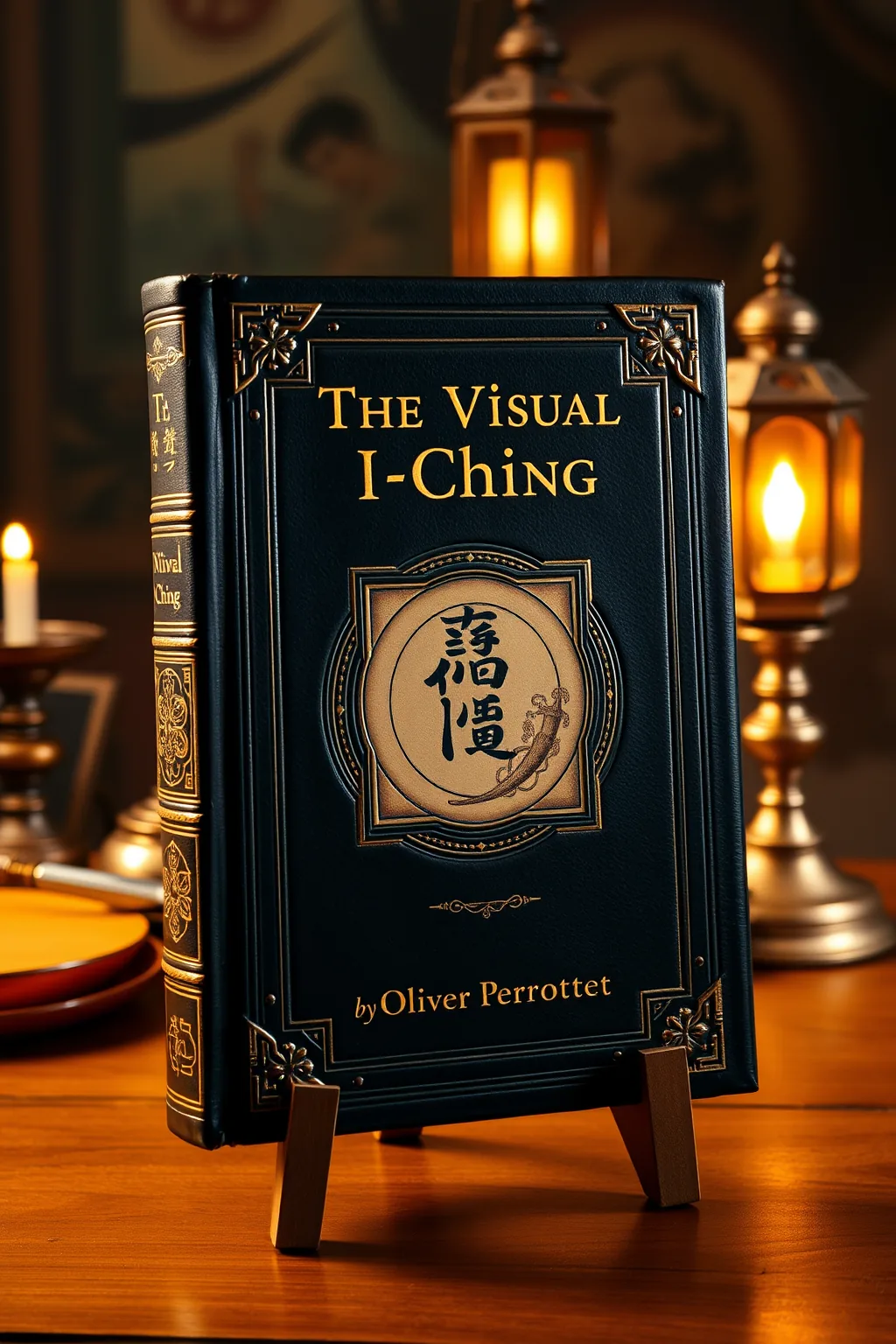
Oliver Perrottet's 'The Visual I Ching' (2013) presents the oracle through original artwork.
This book reimagines the ancient Chinese oracle, the I Ching, through a unique visual approach. Oliver Perrottet created original artwork for each of the 64 hexagrams, aiming to make the oracle's symbolism more accessible. The text explains the traditional meanings of the hexagrams while the illustrations provide a new interpretive layer. Perrottet's intention was to move beyond a simple translation or divinatory manual.
Instead, the book invites readers to engage with the I Ching's philosophical underpinnings and its concept of cosmic change. It connects the hexagrams to broader archetypal energies and the flow of the Tao. The work is intended for those interested in the esoteric and contemplative aspects of the I Ching, rather than solely its predictive uses. It seeks to foster a deeper understanding of universal patterns through visual and textual engagement.
The I Ching is a cornerstone of Chinese esoteric traditions, influencing Taoism, Confucianism, and various schools of divination and spiritual practice for millennia. Its hexagrams are seen as maps of cosmic and human processes, reflecting principles of change, balance, and interconnectedness. 'The Visual I Ching' places itself within this lineage by using art to re-interpret and re-animate these ancient symbols. It aligns with modern esoteric approaches that seek to find new pathways into established wisdom systems, often through artistic or experiential means, rather than purely academic study.
💡 Why Read This Book?
Uncover the I Ching's visual language, revealing hidden symbolic connections and archetypal patterns. 'The Visual I Ching' offers a fresh, intuitive gateway to this ancient oracle, perfect for seekers who learn through imagery. It's ideal for practitioners seeking deeper resonance and scholars exploring unique interpretations of this profound wisdom tradition. Engage with the I Ching on a new, visceral level.
⭐ Reader Reviews
Honest opinions from readers who have explored this book.
❓ Frequently Asked Questions
What is the I Ching?
The I Ching, or 'Book of Changes,' is an ancient Chinese divination text and philosophical classic, used for centuries to understand the present and anticipate future developments through symbolic interpretation of hexagrams.
What makes 'The Visual I Ching' unique?
This adaptation emphasizes the visual and symbolic nature of the I Ching's hexagrams, presenting them as potent visual narratives that illuminate their inherent meanings and connections in an intuitive and accessible manner.
Is this book suitable for beginners?
Yes, its visual approach makes it highly accessible for beginners, offering a more intuitive entry point into the complex symbolism of the I Ching compared to purely text-based translations.
Can 'The Visual I Ching' be used for practical divination?
Absolutely. The book provides a rich framework for personal reflection and practical application, enabling users to consult the I Ching for guidance on life's myriad challenges.
What is the philosophical significance of the I Ching?
The I Ching is deeply rooted in Taoist philosophy, exploring concepts of change, balance, duality, and the interconnectedness of all things, offering a profound understanding of the cosmic order.
🔮 Key Themes & Symbolism
The Art of Visual Divination
This theme explores how 'The Visual I Ching' transcends traditional textual interpretations by harnessing the power of imagery. Perrottet's adaptation transforms the abstract lines of the hexagrams into evocative visual landscapes, making the I Ching's profound wisdom more accessible and intuitive. It highlights how visual symbolism can unlock deeper layers of meaning, connecting the reader directly to the archetypal energies and cosmic patterns that underpin the oracle. This approach appeals to those who find strength and clarity through visual contemplation, offering a unique pathway to understanding the flow of change and destiny.
Archetypal Symbolism and Cosmic Patterns
Look at the collection of archetypal symbols that form the bedrock of the I Ching, as masterfully depicted in Perrottet's work. This theme examines how each hexagram and its constituent trigrams represent fundamental forces and universal patterns of existence. 'The Visual I Ching' illuminates these symbols, revealing their deep connections to the natural world, human psychology, and the overarching order of the cosmos. It is an exploration of the hidden language of reality, inviting readers to recognize these recurring motifs in their own lives and the world around them, fostering a profound sense of interconnectedness.
The Dialogue Between Heaven and Earth
Fundamentally, the I Ching represents a dialogue between the celestial and terrestrial realms, a bridge between the seen and unseen. Perrottet’s visual interpretation amplifies this dialogue, illustrating the dynamic interplay of yin and yang, the receptive and the creative. This theme focuses on how the book facilitates a profound connection between the inner spiritual field of the reader and the external manifestations of reality. It is an invitation to perceive the universe not as a collection of separate entities, but as a unified, evolving organism, where personal destiny is intricately woven into the grand cosmic design.
💬 Memorable Quotes
Direct passages from the work, attributed to the author.
“Within the lines, the universe unfolds.”
— This highlights the profound depth and comprehensive nature of the I Ching, implying that all of existence and its patterns can be found and understood within its symbolic structure.
“See the pattern, know the path.”
— This succinctly captures the essence of divination through the I Ching: by understanding the symbolic configurations, one gains insight into the direction and potential outcomes of their circumstances.
“Wisdom whispers through the image.”
— Emphasizes the intuitive and visual nature of Perrottet's interpretation, suggesting that clear insights are conveyed not just through words, but through the evocative power of the accompanying imagery.
“The oracle mirrors the soul's deep query.”
— This points to the introspective and personal nature of I Ching consultation, where the answers received are a reflection of the querent's inner state and the questions they are truly seeking to resolve.
💡 Key Ideas
Editorial paraphrase of the work's core concepts — not direct quotes.
The hexagrams are not static pronouncements, but living currents.
This quote suggests that the I Ching's wisdom is dynamic and fluid, reflecting the ever-changing nature of reality rather than offering fixed answers.
🌙 Esoteric Significance
Tradition
The I Ching is a core part of East Asian esoteric traditions, deeply intertwined with Taoism and Confucianism, but also resonating with broader metaphysical principles found in Hermeticism and Gnosticism. Its cosmology posits a universe governed by dynamic forces (yin and yang) and cyclical change, a concept central to many mystical paths. The hexagrams act as symbolic maps of these cosmic energies and their interactions, offering insights into the universal laws that govern both the macrocosm and the microcosm, making it a profound tool for spiritual growth and self-realization.
Symbolism
The core symbolism of the I Ching lies in its 64 hexagrams, each composed of six lines that can be either solid (yang) or broken (yin). These lines and their arrangements represent fundamental archetypes, natural phenomena, and human situations. The trigrams (three-line combinations) are foundational, symbolizing heaven, earth, fire, water, mountain, lake, wind, and thunder. Perrottet's 'Visual I Ching' amplifies this by translating these abstract symbols into evocative visual metaphors, enhancing the intuitive understanding of their interconnectedness and dynamic interplay.
Modern Relevance
In a world often characterized by uncertainty and rapid change, the I Ching's emphasis on adaptability and understanding cyclical patterns offers profound relevance. 'The Visual I Ching' makes this ancient wisdom accessible to the modern seeker, providing a framework for navigating complexity with insight and equanimity. Its focus on symbolic communication and intuitive understanding aligns with contemporary interest in mindfulness, personal development, and the exploration of consciousness, offering a timeless guide for aligning oneself with the natural flow of life.
👥 Who Should Read This Book
This remarkable work is a treasure for a diverse spectrum of readers. For the **beginner** to the I Ching, 'The Visual I Ching' offers an exceptional, intuitive entry point, clarifying its complex symbolism through compelling imagery. **Scholars** will appreciate the nuanced interpretation and fresh perspective on this ancient text, adding a valuable dimension to their studies. **Seekers** of spiritual insight and personal growth will find a profound guide for self-reflection and understanding life's unfolding journey. **Practitioners** of divination and esoteric arts will discover a powerful new tool to deepen their practice, fostering a richer connection with the oracle's wisdom. It is for anyone yearning to connect with timeless wisdom through a visually resonant medium.
📜 Historical Context
Emerging from the crucible of ancient Chinese civilization, the I Ching, or 'Book of Changes,' boasts a lineage stretching back over three millennia. Its origins are shrouded in myth, often attributed to the legendary sage Fu Xi, who is said to have conceived of the eight trigrams. Over centuries, it evolved, with contributions from figures like King Wen and the Duke of Zhou, culminating in its canonical form, enriched by the philosophical commentaries of Confucius and his disciples. During periods of intellectual ferment and spiritual seeking, the I Ching served as a crucial guide, informing statecraft, personal decision-making, and philosophical inquiry. Its influence permeated East Asian culture, shaping not only divination practices but also art, medicine, and strategic thinking. Perrottet's modern adaptation arrives in an era increasingly drawn to ancient wisdom and alternative modes of understanding, seeking to bridge the gap between historical text and contemporary consciousness, reintroducing its potent symbolism to a global audience.
📔 Journal Prompts
Reflect on a recent situation where you felt a significant shift or transition. How does the imagery of a particular hexagram in 'The Visual I Ching' resonate with this experience?
Consider the interplay of yin and yang in your daily life. Which visual representations from the book best capture these dual energies and their balance (or imbalance)?
If you were to consult the I Ching today, what core question or theme would you explore, and what visual metaphor from the book comes to mind first?
How can understanding the archetypal symbolism presented in 'The Visual I Ching' help you navigate a current challenge or decision?
Explore the concept of 'change' as depicted visually in the I Ching. What does this visual narrative suggest about embracing or resisting transformation in your own life?
🗂️ Glossary
Hexagram
A symbol in the I Ching composed of six stacked lines, each either solid (yang) or broken (yin), representing a specific cosmic situation or principle.
Trigram
A basic building block of a hexagram, consisting of three lines. There are eight fundamental trigrams, each representing core elements and forces.
Yang
In I Ching symbolism, represented by a solid line, embodying active, masculine, light, and creative principles.
Yin
In I Ching symbolism, represented by a broken line, embodying passive, feminine, dark, and receptive principles.
Tao (Dao)
The fundamental principle and ultimate reality in Taoism, often translated as 'the Way,' representing the natural order and flow of the universe.
This book appears in 2 collections
🔮 Readers Also Liked
Browse all →








More by Oliver Perrottet
All books →


From the “I Ching” Collection
View all →









More Free Divination & Tarot Books
View all →